
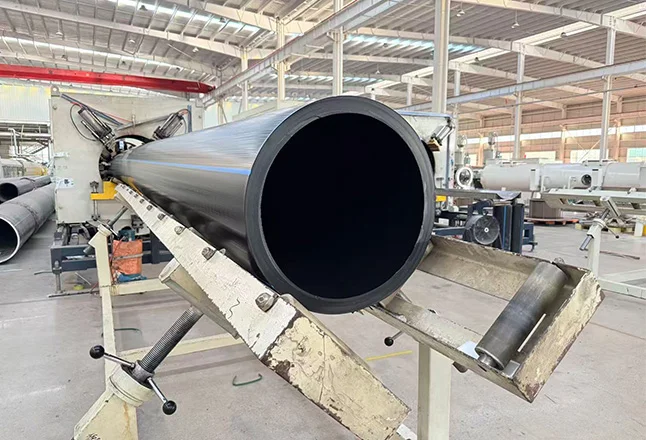

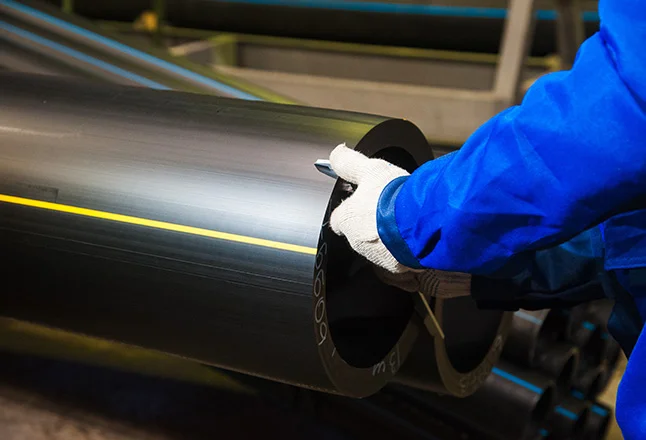
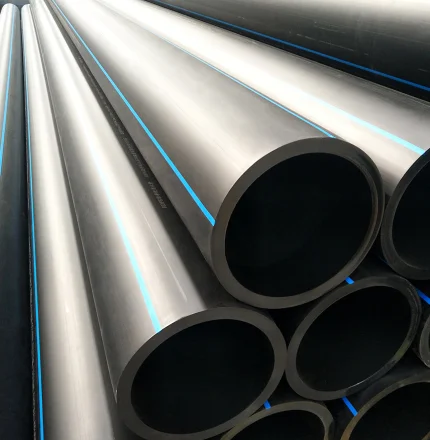
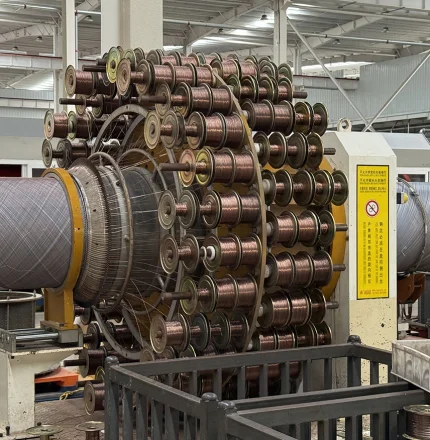
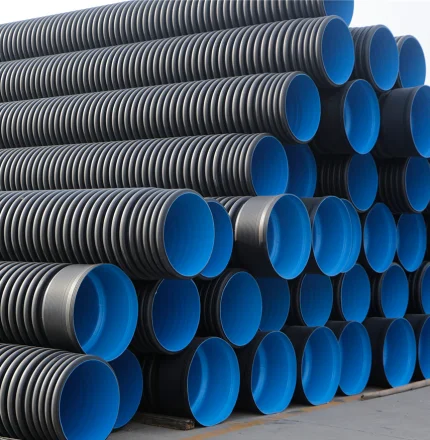
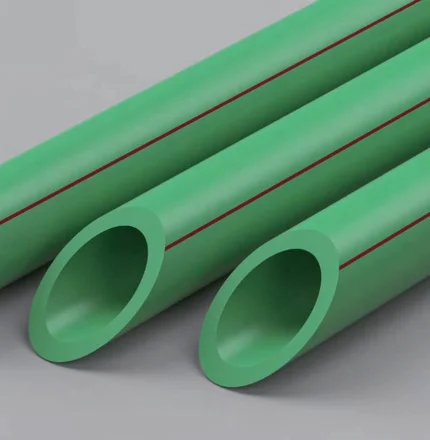
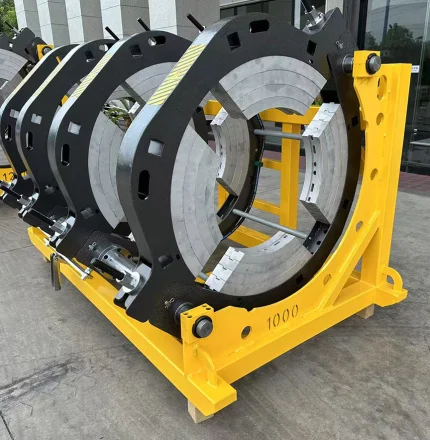
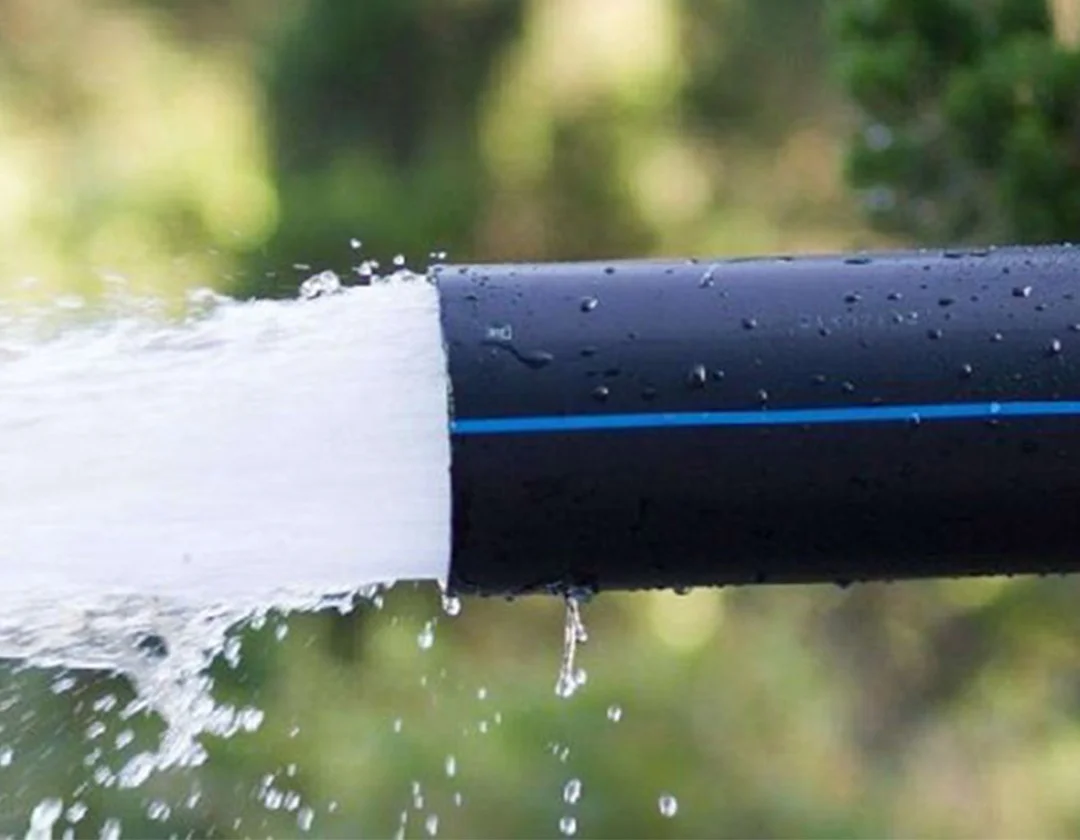
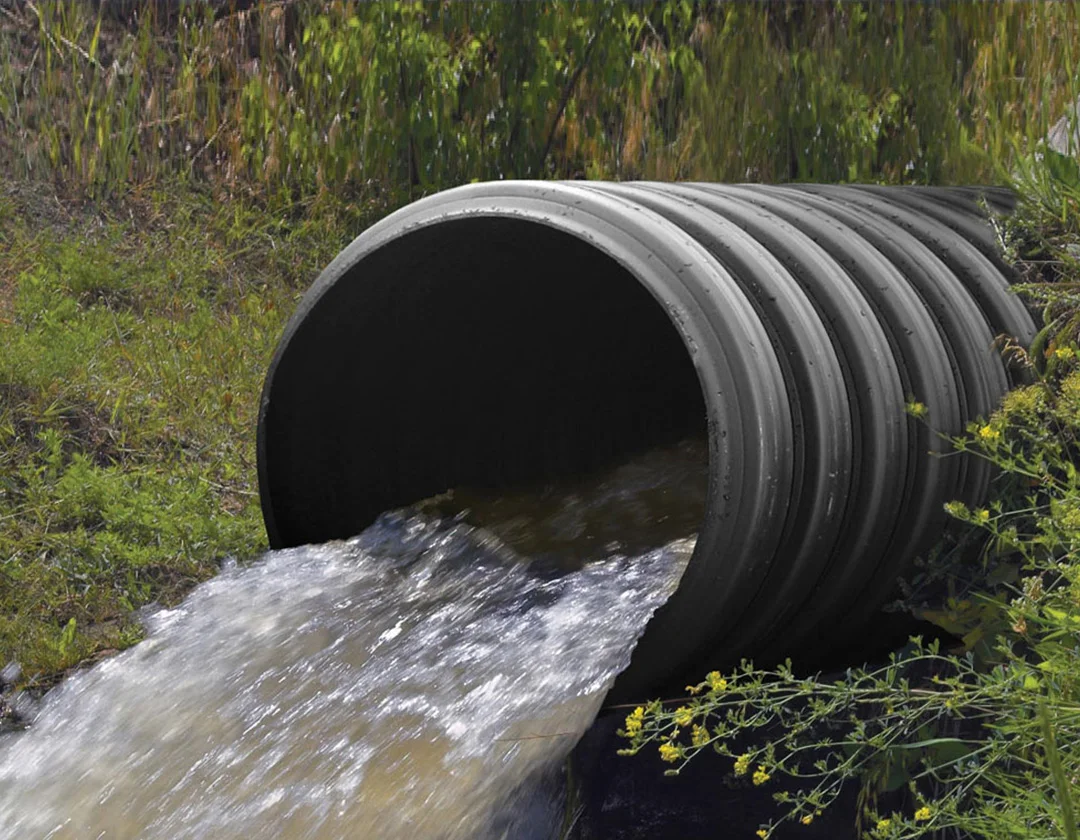
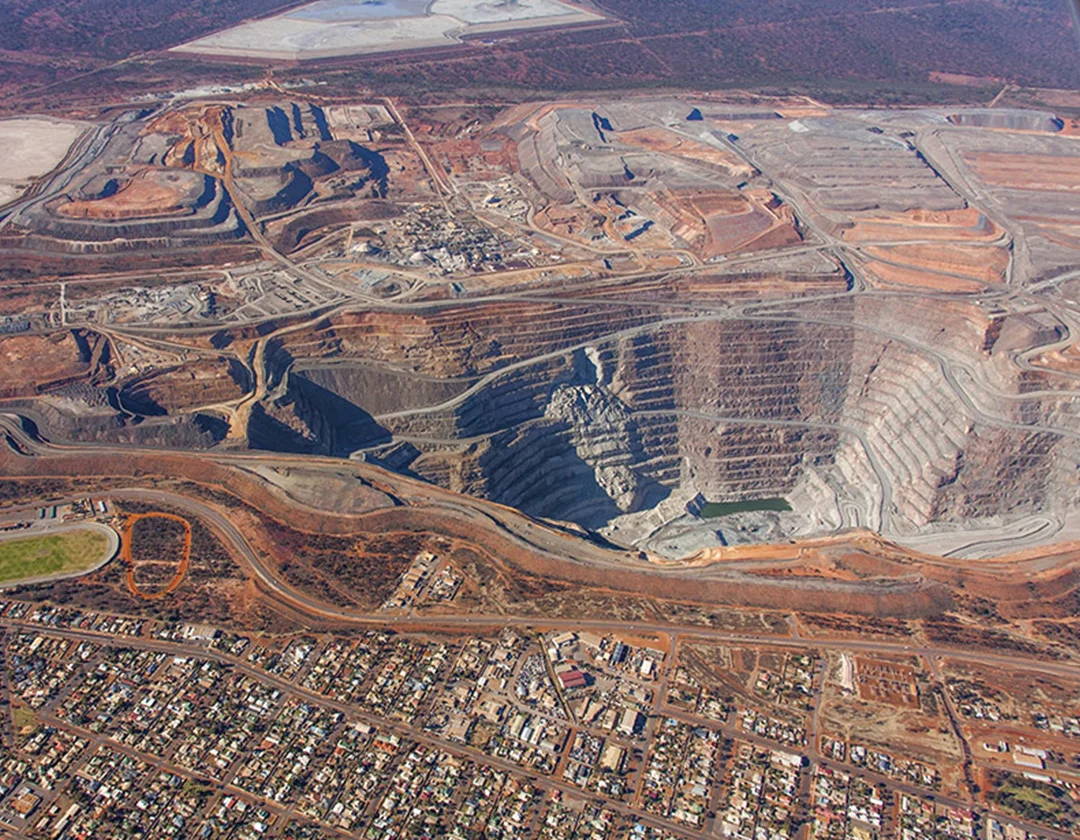
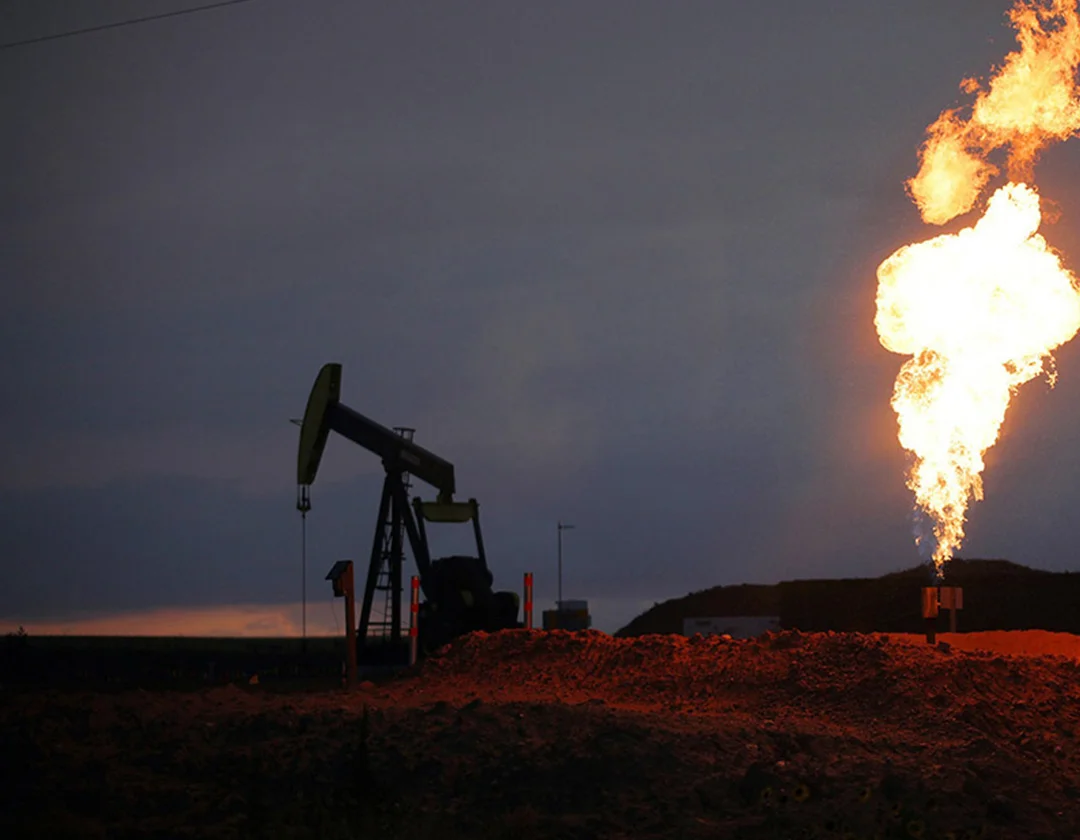
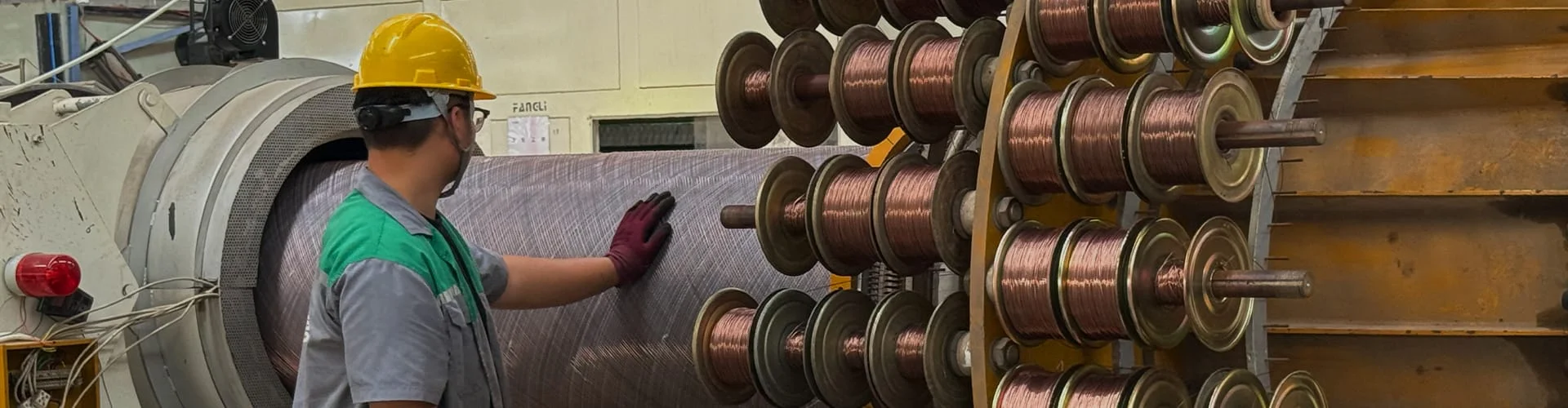

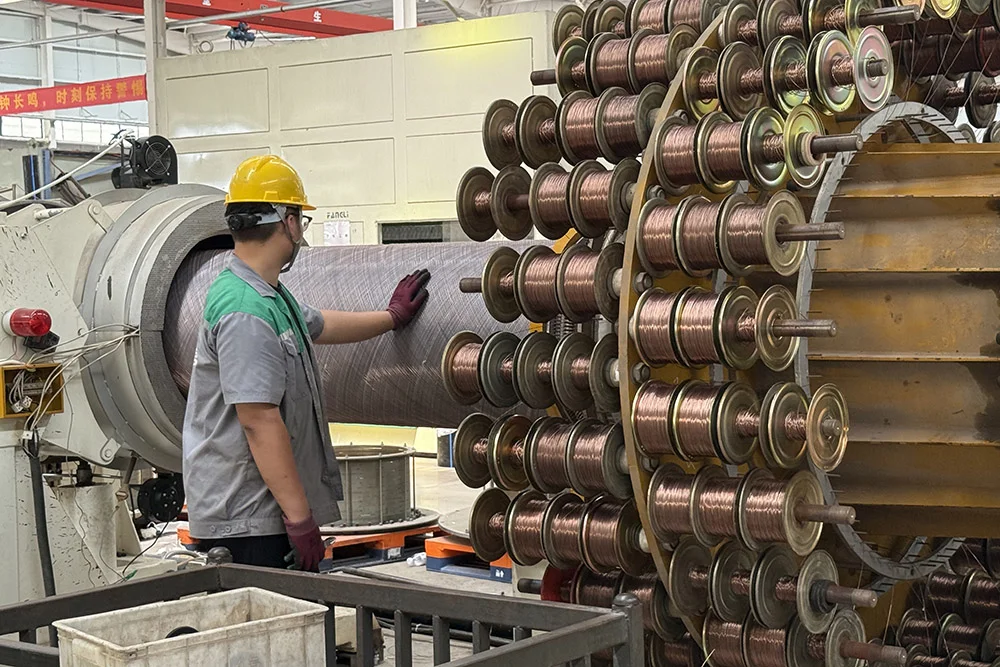
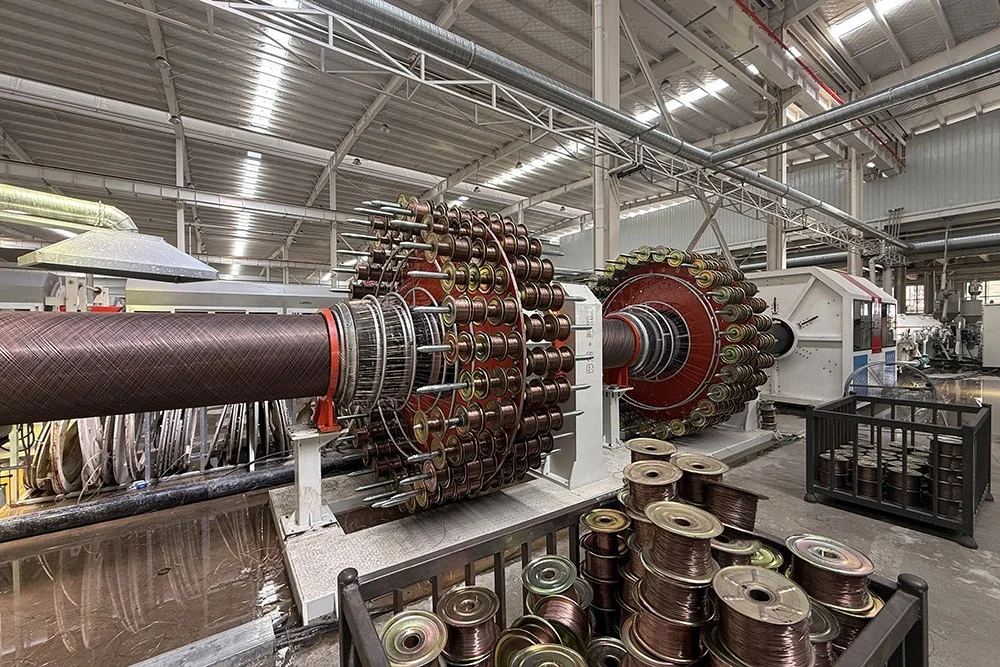
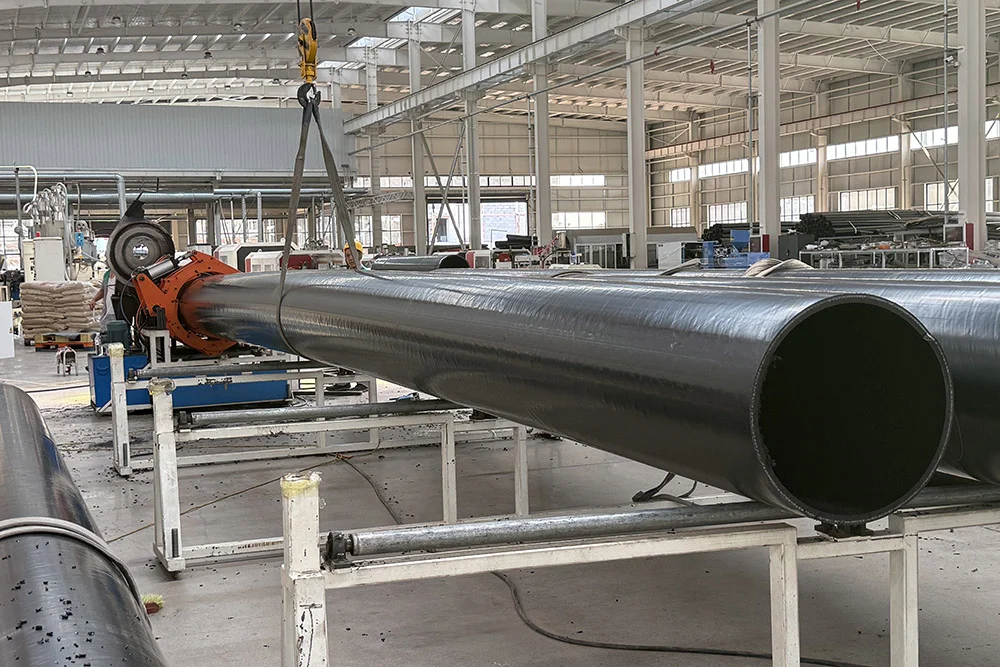
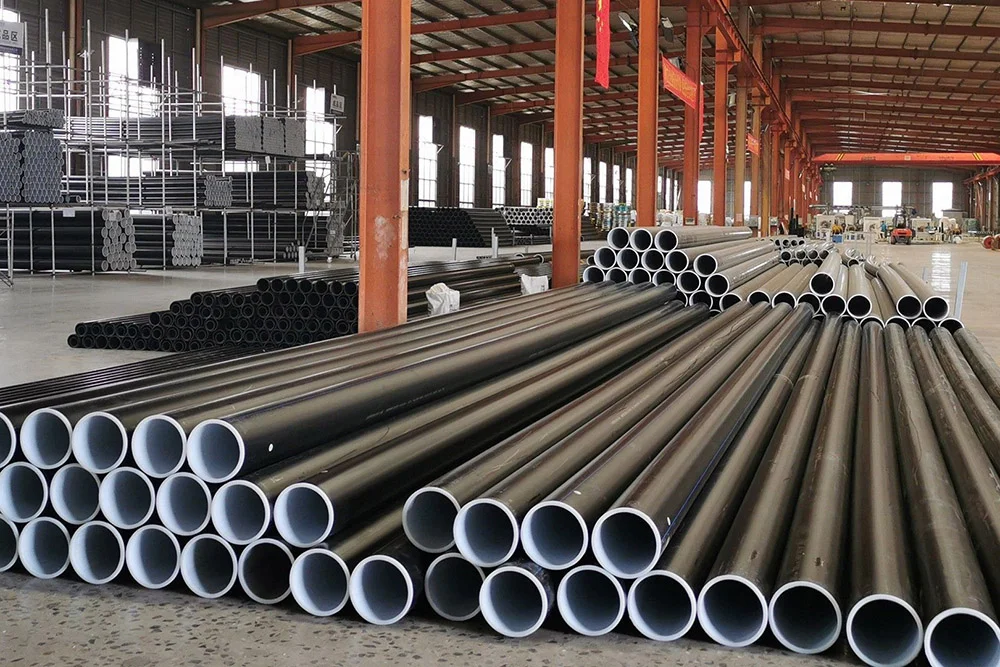
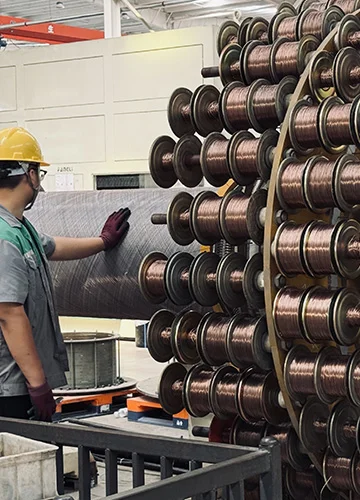
SIFFO HDPE Steel Wire Mesh Reinforced Composite Pipe (SRTP Pipe or SRPE Pipe) is an advanced piping solution combining high-density polyethylene (HDPE) with a high-tensile steel wire mesh skeleton. It integrates the corrosion resistance of plastic pipes with the strength of metal pipes, widely used in municipal water supply/drainage, oil & gas transmission, chemical fluid transport, mining tailings disposal, and agricultural irrigation—especially for high-pressure, long-distance, and geologically challenging projects.
Product Name | SIFFO Steel Wire Reinforced PE Pipe (SRTP,SRPE) |
Specification | DN50 - DN1000mm |
Pressure | PN8,PN10,PN16,PN20,PN25,PN30,PN35,PN40,PN50,PN63,PN70 |
Raw Material | 100% Virgin Material PE100 and steel wire |
Standards | ISO4437, EN1555, GB/T15558, ASTM D3035, AS/NZS4130, GOST18599, ASTM D2513,CJ/T189 |
Application | water supply, oil transportation, natural gas, mining,methane,, fire fight. |
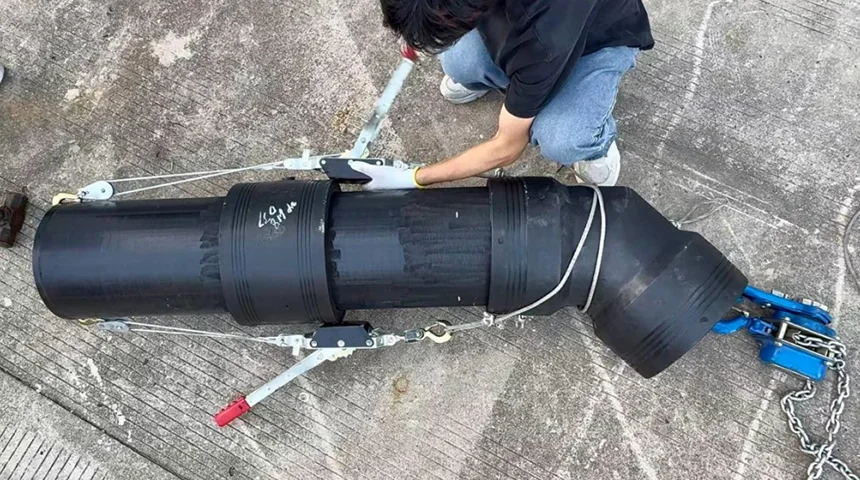
Connection | Electrofusion Connection,Flange Connection |
Color | Black or Customized |
▎Product Series
Standard Type: For general pressure applications.
Reinforced Type: Higher pressure tolerance (up to 7.0MPa).
High-Temperature Type: Resists fluids up to 80°C (short-term 100°C).
▎Steel Wire Reinforced PE Pipe Features
1. High Strength and High Pressure Resistance
The steel wire winding layer provides extremely high ring stiffness and impact resistance, with a pressure resistance far superior to pure PE pipes, reaching tens of megapascals (MPa), suitable for high-pressure transportation applications.
2. Excellent Flexibility and Deformation Resistance
The polyethylene matrix gives the pipe flexibility, adapting to foundation settlement or terrain changes; the steel wire reinforcement layer effectively resists external loads, preventing flattening or deformation.
3. Corrosion and Wear Resistance
The PE layer resists chemical media (acids, alkalis, salts) and electrochemical corrosion, requiring no anti-corrosion treatment; the smooth inner wall provides strong wear resistance and low resistance to the transported media.
4. Long Service Life and Low Maintenance Costs
Service life can reach over 50 years, with anti-aging properties (added UV stabilizers), requiring less frequent maintenance and resulting in low overall operation and maintenance costs.
5. Lightweight and Convenient Construction
Weighted significantly less than metal or concrete pipes, resulting in high transportation and installation efficiency; reliable sealing can be achieved through hot-melt butt welding, flange connections, etc.
6. Hygienic and Environmentally Friendly
PE material is non-toxic and odorless, meeting drinking water transportation standards; the production process has low energy consumption and is recyclable.
▎Steel Wire Reinforced PE Pipe Applications
Municipal Water Supply and Drainage Systems
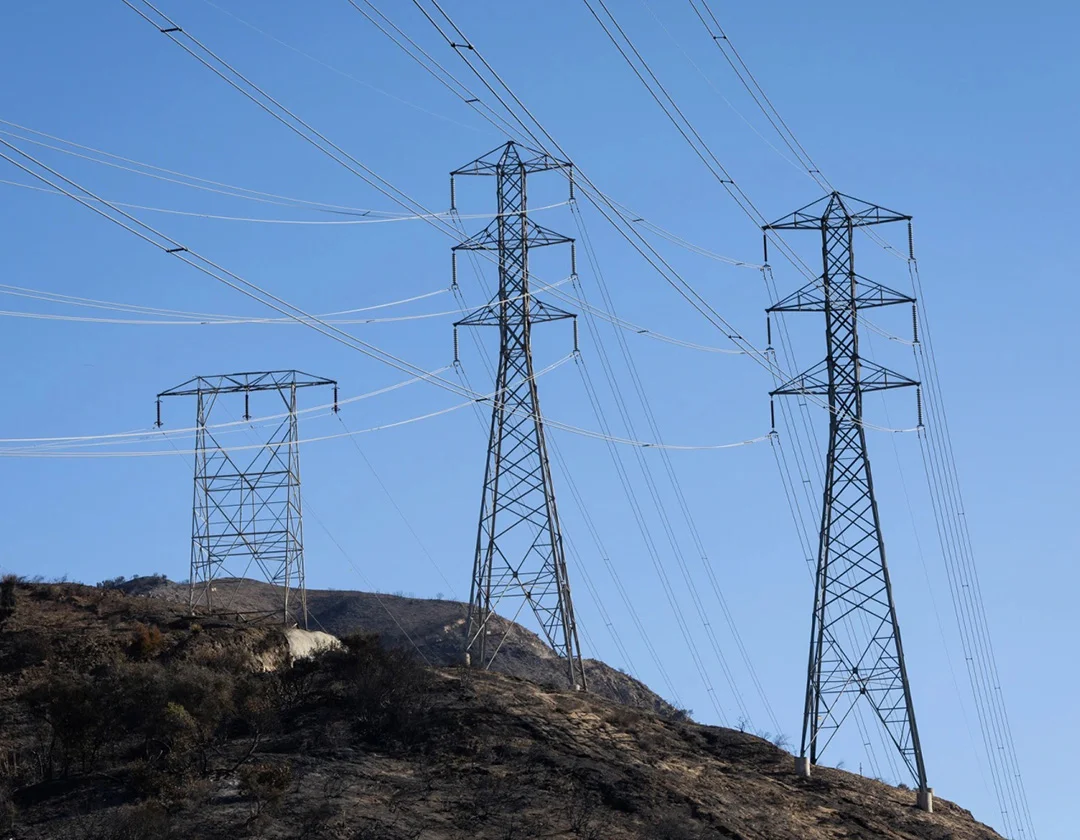
High-pressure water supply, greywater reuse, rainwater discharge, especially suitable for deeply buried or geologically unstable areas.
Industrial Fluid Transportation
Mine tailings transportation, power plant ash and slag discharge, chemical media pipelines (high corrosion resistance required).
Agricultural Irrigation and Water Conservancy Projects
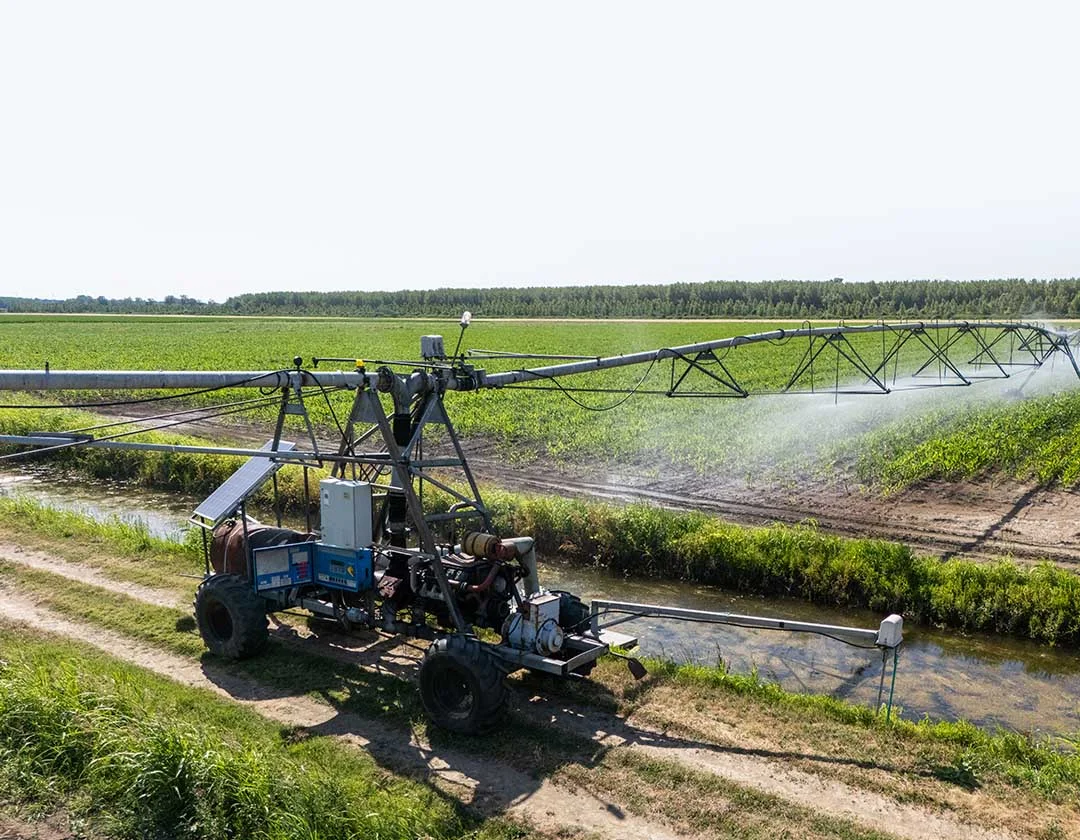
High-standard farmland sprinkler and drip irrigation systems, reservoir water conveyance, inter-basin water transfer projects.
Oil, Gas and Mining Sector
Oilfield water injection, coalbed methane transportation, high-pressure slurry pipelines, replacing some steel pipes to reduce corrosion risk.
Special Environmental Applications
Marine water pipelines (salt corrosion resistant), desert water transportation (UV resistant), earthquake zone pipeline projects (tensile strength resistant).
▎Steel-Wire Reinforced HDPE Composite Pipe vs. Standard HDPE Pipe
Steel-wire reinforced HDPE composite pipe and standard HDPE pipe are both based on high-density polyethylene and offer excellent corrosion resistance, flexibility, and long-term durability. However, their structural designs are different.
Standard HDPE pipe relies entirely on the strength and wall thickness of the polyethylene material to withstand internal pressure and external loads. It is widely used for municipal water supply, irrigation, drainage, gas distribution, and other applications where the required pressure and mechanical loads can be handled by conventional PE pipe.
Steel-wire reinforced HDPE composite pipe, on the other hand, incorporates a high-strength steel-wire mesh or steel-wire reinforcement structure within the HDPE composite wall. The HDPE layers provide corrosion resistance, chemical resistance, and flexibility, while the steel-wire reinforcement improves pressure resistance, stiffness, dimensional stability, and resistance to external loads.
This composite structure makes steel-wire reinforced HDPE pipe particularly suitable for high-pressure water transmission, mining, industrial pipelines, geothermal systems, large-diameter water supply, and other demanding applications.
Performance | Steel-Wire Reinforced HDPE Composite Pipe | Standard HDPE Pipe |
Structure | HDPE layers combined with a high-strength steel-wire reinforcement layer | Homogeneous HDPE structure |
Pressure Capacity | Higher pressure capability can be achieved with a reinforced structure | Pressure capacity depends mainly on PE grade, wall thickness, and SDR |
Mechanical Strength | Higher structural strength and dimensional stability | Good strength with greater dependence on pipe wall thickness |
External Load Resistance | Better resistance to external mechanical loads and deformation | Good, but installation conditions and SDR have a greater influence |
Large-Diameter Applications | Well suited to high-pressure and large-diameter pipeline systems | Widely used, but very large diameters may require greater wall thickness |
Flexibility | Retains significant flexibility compared with conventional rigid metal pipes | Excellent flexibility and bending capability |
Corrosion Resistance | Excellent due to the HDPE protective layers | Excellent |
Chemical Resistance | Excellent for many aggressive environments | Excellent for many aggressive environments |
Weight | Generally lighter than equivalent metal pressure pipes | Very lightweight compared with metal pipes |
Connection | Can use specialized fusion or mechanical connection systems depending on design | Butt fusion and electrofusion are widely used |
Installation | Suitable for demanding projects requiring higher structural performance | Simple and efficient installation |
Typical Applications | High-pressure transmission, mining, industrial, geothermal, municipal trunk lines | Water supply, irrigation, drainage, gas, and general utility pipelines |
Cost Position | Higher initial material cost due to reinforced structure | Generally more economical for standard applications |
Steel-Wire Reinforced HDPE vs. Standard HDPE: Which One Should You Choose?
The choice should be based on the project's pressure requirements, diameter, installation conditions, external loads, operating environment, and required service life.
For conventional water supply, irrigation, drainage, and utility projects with moderate pressure requirements, standard PE100 HDPE pipe is often the more economical and practical solution.
For high-pressure transmission systems or applications where greater structural strength and dimensional stability are required, steel-wire reinforced HDPE composite pipe can provide a more suitable engineering solution.
▎Steel-Wire Reinforced HDPE vs. Metal Pipe
Compared with steel or ductile iron pipes, steel-wire reinforced HDPE composite pipe combines a reinforced structure with the inherent advantages of polyethylene.
Metal pipes generally provide high mechanical strength, but they can be vulnerable to corrosion and may require additional external or internal protection. They are also heavier, which can increase transportation, lifting, and installation requirements.
Steel-wire reinforced HDPE composite pipe offers lower weight, excellent corrosion resistance, good chemical resistance, and easier handling, while the embedded steel-wire reinforcement provides greater structural performance than a conventional unreinforced HDPE pipe.
Therefore, for projects where corrosion resistance, reduced maintenance, flexible installation, and high pressure performance are all important, a steel-wire reinforced HDPE composite system can be an attractive alternative to conventional metal pipelines.
▎Important Engineering Consideration
Steel-wire reinforced HDPE composite pipe should not be selected solely because it has a higher nominal strength. Pipe pressure rating, reinforcement structure, diameter, wall construction, connection method, operating temperature, installation conditions, and applicable standards must all be considered together.
The appropriate pipe specification should therefore be determined according to the project's hydraulic calculations and mechanical design requirements rather than simply comparing nominal pressure ratings between different pipe structures.
For international projects, buyers should also verify the manufacturer's material grade, reinforcement structure, pressure rating, dimensional tolerances, applicable standards, testing procedures, and quality-control documentation before procurement.
▎SRTP Pipe FAQ
1. What is Steel-Wire Reinforced HDPE Composite Pipe?
Steel-Wire Reinforced HDPE Composite Pipe is a composite pressure pipe that combines high-density polyethylene (HDPE) with a high-strength steel-wire reinforcement structure. The HDPE layers provide corrosion and chemical resistance, while the steel-wire reinforcement improves mechanical strength, pressure resistance, and dimensional stability.
2. What are the advantages of Steel-Wire Reinforced HDPE Pipe over standard HDPE pipe?
The main advantage is its reinforced structure. Compared with conventional HDPE pipe, steel-wire reinforced HDPE pipe can provide higher structural strength and improved resistance to internal pressure and external mechanical loads. It is particularly suitable for high-pressure and demanding pipeline applications.
3. Is Steel-Wire Reinforced HDPE Pipe suitable for high-pressure water transmission?
Yes. Steel-wire reinforced HDPE composite pipe is designed for applications where higher pressure and structural performance are required. It can be used for high-pressure water transmission, municipal trunk pipelines, industrial water systems, mining projects, and other engineered pressure applications. The actual pressure rating should be selected according to the pipe design, diameter, temperature, and project requirements.
4. What applications are suitable for Steel-Wire Reinforced HDPE Pipe?
Typical applications include:
High-pressure water transmission
Municipal water supply
Mining and mineral processing
Industrial fluid transportation
Geothermal pipeline systems
Long-distance water transmission
Large-diameter pressure pipelines
Infrastructure projects with demanding external-load conditions
5. Is Steel-Wire Reinforced HDPE Pipe resistant to chemicals and corrosion?
Yes. The HDPE layers provide excellent resistance to corrosion and many common chemicals. Unlike conventional steel pipelines, the HDPE material does not rust under normal service conditions. Chemical compatibility should nevertheless be verified for specific fluids, concentrations, temperatures, and operating conditions.
6. How is Steel-Wire Reinforced HDPE Pipe connected?
The connection method depends on the specific pipe construction and manufacturer's design. Depending on the system, connections may involve specialized fusion, electrofusion, flange, or mechanical connection technologies. SIFFO can recommend the appropriate connection solution based on pipe specifications and project requirements.
7. Can Steel-Wire Reinforced HDPE Pipe be used for large-diameter pipelines?
Yes. The reinforced structure makes this type of composite pipe particularly suitable for demanding large-diameter pressure applications. The final pipe diameter, pressure class, reinforcement structure, and connection system should be determined through project-specific engineering calculations.
8. Is Steel-Wire Reinforced HDPE Pipe flexible?
Yes. Although the steel-wire reinforcement increases structural strength, the composite pipe retains significantly more flexibility than conventional rigid metal pipelines. This can simplify installation in projects involving uneven terrain, long pipeline routes, or moderate changes in alignment.
9. What is the service life of Steel-Wire Reinforced HDPE Pipe?
The service life depends on operating pressure, temperature, fluid characteristics, installation conditions, material quality, and maintenance. Properly designed and installed HDPE-based pipeline systems can provide a long service life. SIFFO can provide product-specific technical documentation and design recommendations for project evaluation.
10. Can SIFFO customize Steel-Wire Reinforced HDPE Pipe?
Yes. Pipe specifications can be engineered according to project requirements, including diameter, pressure rating, reinforcement structure, connection system, and application conditions. For large infrastructure and industrial projects, SIFFO can evaluate project parameters and recommend a suitable pipe configuration.
11. What information should I provide when requesting a quotation?
For an accurate quotation and pipe selection, buyers should ideally provide:
Required pipe diameter
Operating pressure
Design pressure
Pipeline length
Fluid or medium being transported
Operating temperature
Installation method
Project location
Required standard or certification
Required fittings and connection method
Providing these details allows SIFFO's technical team to recommend a suitable reinforced HDPE pipe specification rather than simply quoting a standard product.
▎Get a Steel-Wire Reinforced HDPE Pipe Solution for Your Project
Need a high-pressure, large-diameter, or reinforced HDPE pipeline system?
SIFFO provides steel-wire reinforced HDPE composite pipes designed for demanding applications including municipal water transmission, mining, industrial pipelines, geothermal projects, and high-pressure fluid transportation.
Tell us your pipe diameter, pressure requirement, pipeline length, application, and project location. Our technical team can help you select the appropriate pipe structure, pressure rating, connection system, and fittings for your project.
Request a Technical Consultation & Quote Today
Contact SIFFO for:
Steel-Wire Reinforced HDPE Composite Pipe
High-Pressure HDPE Pipeline Solutions
Large-Diameter Reinforced HDPE Pipes
Customized Pipe Specifications
Matching HDPE Pipe Fittings
Project-Specific Technical Support
Send Your Project Requirements → Get a Customized Pipe Solution & Quotation
Pressure Rate | 0.8 Mpa | 1.0 Mpa | 1.25 Mpa | 1.6 Mpa | 2.0 Mpa | 2.5 Mpa | 3.0 Mpa | 3.5 Mpa | 4.0 Mpa | 5.0 Mpa | 6.3 Mpa | 7.0 Mpa |
Diameter (mm) | Wall thickness(mm) | |||||||||||
50 | - | 4.50 | 4.50 | 4.50 | 5.00 | 5.50 | 5.50 | 5.50 | 6.00 | 8.50 | 9.00 | 9.00 |
63 | - | 4.50 | 4.50 | 4.50 | 5.00 | 5.50 | 5.50 | 5.50 | 6.50 | 8.50 | 9.00 | 9.00 |
75 | - | 5.00 | 5.00 | 5.00 | 5.00 | 5.50 | 6.00 | 6.00 | 9.50 | 9.50 | 9.50 | 9.50 |
90 | - | 5.50 | 5.50 | 5.50 | 5.50 | 5.50 | 6.00 | 6.00 | 10.00 | 10.50 | 10.50 | 10.50 |
110 | - | 5.50 | 5.50 | 7.00 | 7.00 | 7.50 | 8.50 | 8.50 | 11.00 | 12.00 | 12.00 | 12.00 |
125 | - | 5.50 | 5.50 | 7.50 | 8.00 | 8.50 | 9.50 | 9.50 | 11.00 | 12.00 | 12.00 | 12.00 |
140 | - | 5.50 | 5.50 | 8.00 | 8.50 | 9.00 | 9.50 | 9.50 | 11.00 | 12.00 | 13.00 | 13.00 |
160 | - | 6.00 | 6.00 | 9.00 | 9.50 | 10.00 | 10.50 | 10.50 | 11.00 | 12.00 | 14.00 | 14.00 |
200 | - | 6.00 | 6.00 | 9.50 | 10.50 | 11.00 | 12.00 | 12.00 | 13.00 | 13.00 | 15.00 | 15.00 |
225 | - | 8.00 | 8.00 | 10.00 | 10.50 | 11.00 | 12.00 | 12.00 | 13.00 | 13.00 | ||
250 | 8.00 | 10.50 | 10.50 | 12.00 | 12.00 | 12.50 | 14.00 | 14.00 | 14.00 | 15.00 | ||
280 | 9.50 | 11.00 | 11.00 | 12.00 | 13.00 | 15.00 | 15.00 | 17.00 | 18.00 | |||
315 | 9.50 | 11.50 | 11.50 | 13.00 | 13.00 | 15.00 | 15.00 | 18.00 | ||||
355 | 10.00 | 12.00 | 12.00 | 14.00 | 14.00 | 17.00 | 17.00 | 19.00 | ||||
400 | 10.50 | 12.50 | 12.50 | 15.00 | 16.00 | 17.00 | 17.00 | - | ||||
450 | 11.50 | 13.50 | 13.50 | 16.00 | 18.00 | 18.00 | - | - | ||||
500 | 12.50 | 15.50 | 15.50 | 18.00 | 19.00 | 22.00 | - | - | ||||
630 | 20.00 | 23.00 | 23.00 | 26.00 | 26.00 | - | - | - | ||||
710 | 23.00 | 26.00 | 26.00 | 30.00 | - | - | - | - | ||||
800 | 27.00 | 30.00 | 30.00 | 34.00 | - | - | - | - | ||||
900 | 29.00 | 33.50 | 33.50 | 38.00 | - | - | - | - | ||||
1000 | 34.00 | 37.00 | - | - | - | - | ||||||
As project lead, I commend the steel wire reinforced HDPE pipe. Its exceptional high-pressure resistance ensured system integrity under peak loads—exceeding all performance requirements.