

Potable Water Supply
With global population growth, accelerated urbanization, and uneven water resource distribution due to climate change, safe drinking water supply has become one of the most important public health issues of the 21st century. According to a joint monitoring report by the World Health Organization (WHO) and United Nations Children's Fund (UNICEF), billions of people worldwide still lack access to safely managed drinking water services. In developing countries, aging pipe networks suffer from leakage rates as high as 30%–50%, resulting not only in enormous water waste but also a significant increase in the risk of secondary water pollution.
In modern drinking water supply systems, the choice of pipe materials directly impacts water supply safety, engineering costs, and operation and maintenance efficiency. Currently, the mainstream drinking water pipe materials include: high-density polyethylene (HDPE) pipes, polyvinyl chloride (PVC) pipes, HDPE steel wire mesh reinforced composite pipes, and HDPE steel skeleton reinforced composite pipes. These four types of pipes each have their own strengths in structure, performance, and application scenarios, forming the current technical matrix of water supply network materials.
-
HDPE pipe (high-density polyethylene pipe)01
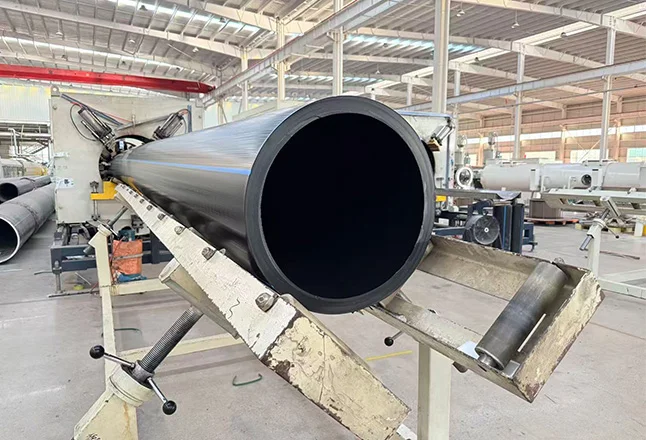
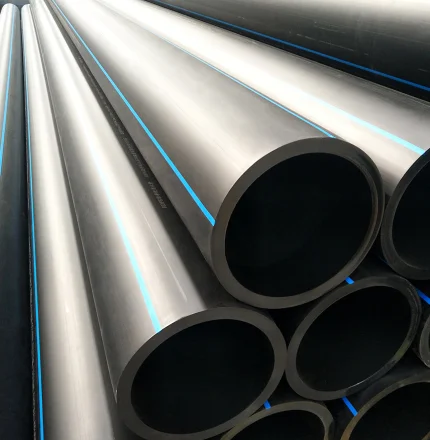
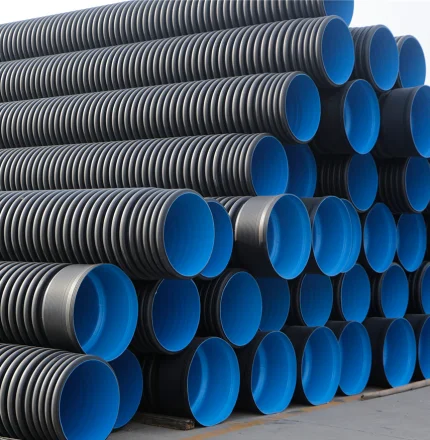
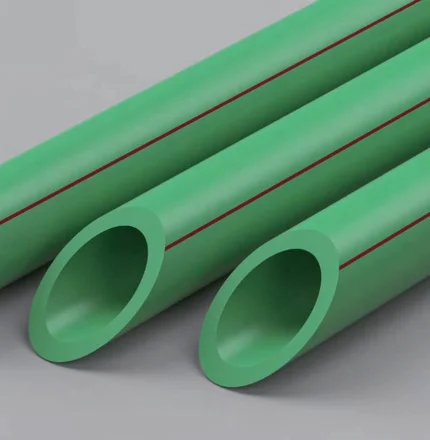
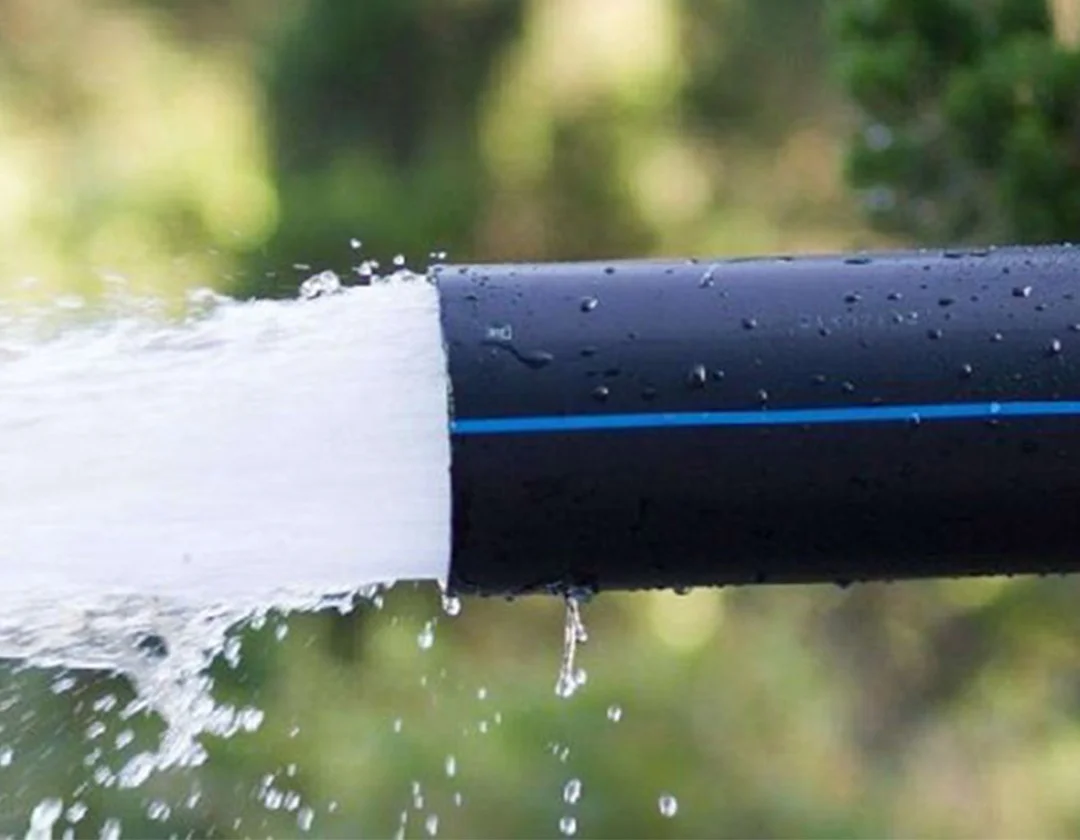
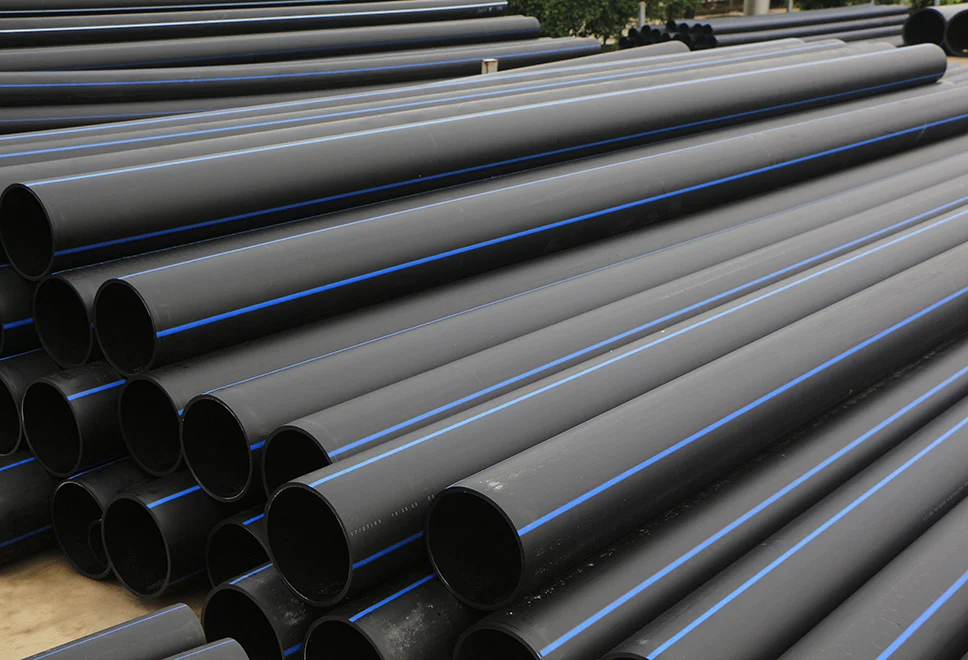
HDPE (High-Density Polyethylene) pipes are thermoplastic pipes made primarily from high-density polyethylene resin through extrusion molding. This material has a regular molecular chain and high crystallinity, giving the pipes excellent mechanical properties and chemical stability.
Key Advantages for Drinking Water Applications
Corrosion Resistance: HDPE is chemically inert, resisting acids, alkalis, salts, and most organic solvents. Unlike metal pipes, it requires no protective coatings or cathodic protection.
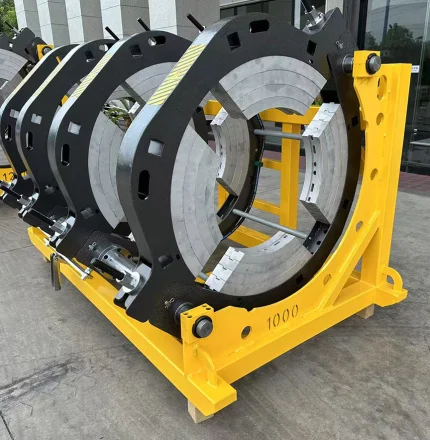
Leak-Free Systems: Heat-fused joints (butt fusion or electrofusion) create monolithic, seamless connections that eliminate leakage paths. This is critical for reducing non-revenue water, which costs utilities billions annually.
Flexibility and Seismic Resistance: HDPE's flexibility allows it to accommodate ground movement, settlement, and seismic activity without cracking. This makes it ideal for earthquake-prone regions and areas with unstable soils.
Hydraulic Efficiency: With an equivalent roughness of approximately 0.008 mm, HDPE pipes reduce head loss by approximately 30% compared to steel pipes, significantly reducing pumping energy costs over the system lifecycle.
Trenchless Installation: HDPE's flexibility enables non-excavation installation methods (Horizontal Directional Drilling, pipe bursting), minimizing disruption to urban environments.
-
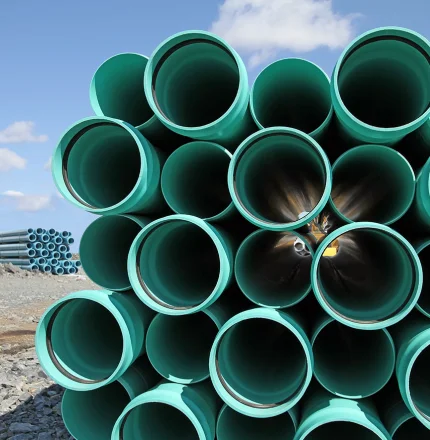
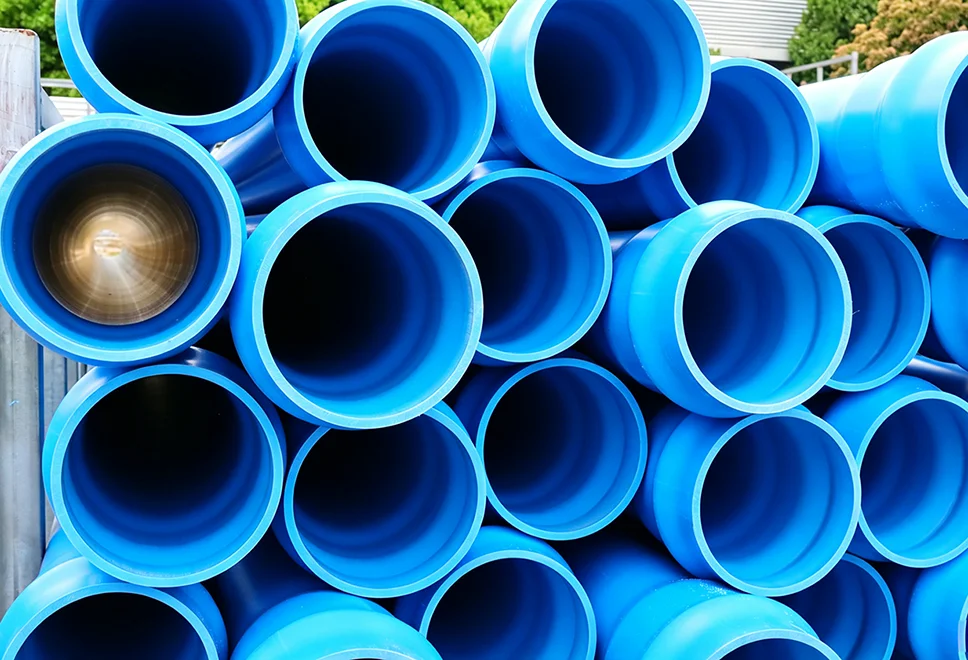
PVC (Polyvinyl Chloride) Pipes02
Key Advantages for Drinking Water Applications
Economic Efficiency: PVC pipes offer the lowest initial cost among major piping materials, making them accessible for large-scale municipal projects and developing regions.
Proven Safety Record: Modern UPVC pipes certified to NSF/ANSI 61 standards have been extensively tested since 1989. Over 10 million tests have consistently shown "non-detect" levels of vinyl chloride monomer leaching. The material is approved by the U.S. FDA, EPA, and WHO for potable water contact.
Corrosion and Biofilm Resistance: Unlike metal pipes, PVC does not tuberculate (internal corrosion) or support bacterial growth, eliminating risks of Legionella and E. coli contamination common in iron pipes.
Smooth Interior Surface: With roughness coefficient of approximately 0.009 mm, PVC maintains hydraulic efficiency throughout its service life without scaling or degradation.
Low Carbon Footprint: From production through end-of-life, PVC has a lower overall carbon footprint than iron, steel, or copper alternatives.
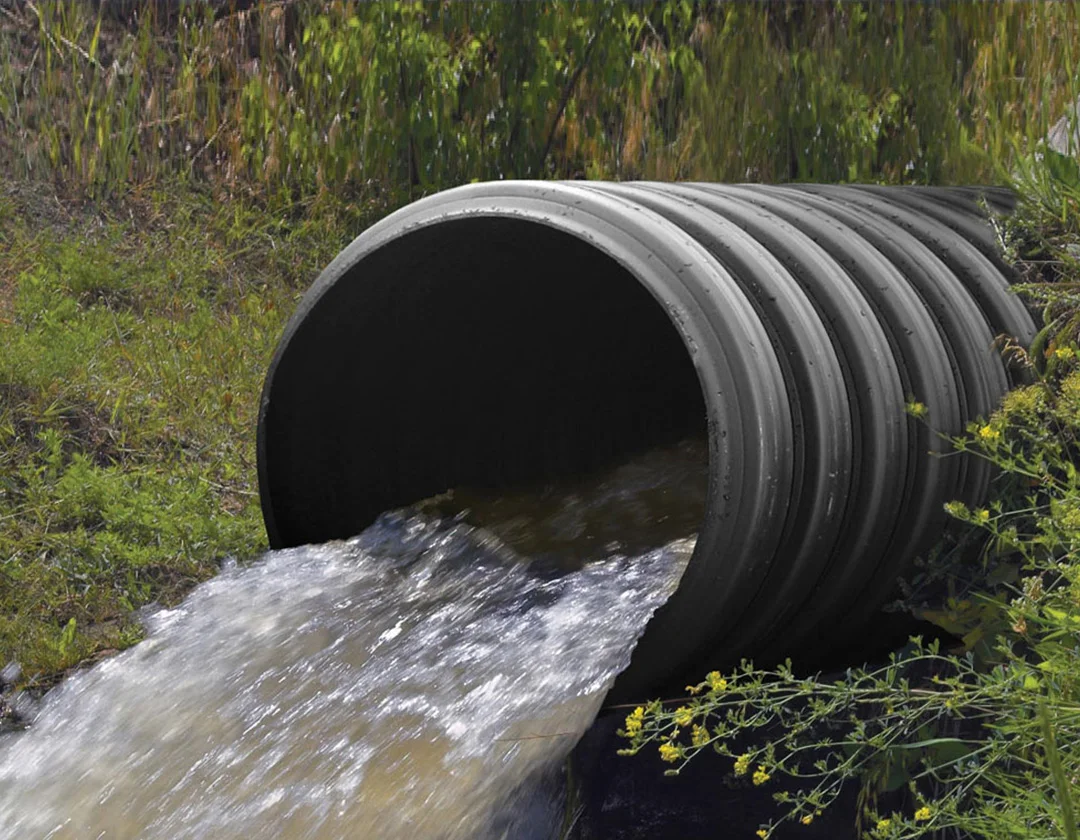
Usage Evaluation: PVC pipes are more suitable for non-potable water applications such as drainage and irrigation. In drinking water supply, due to the risks of chemical leaching and hygiene hazards, their application is gradually being replaced by safer materials such as HDPE. Their service life is typically 20-30 years, significantly shorter than HDPE pipes.
-
SRTP Pipe03
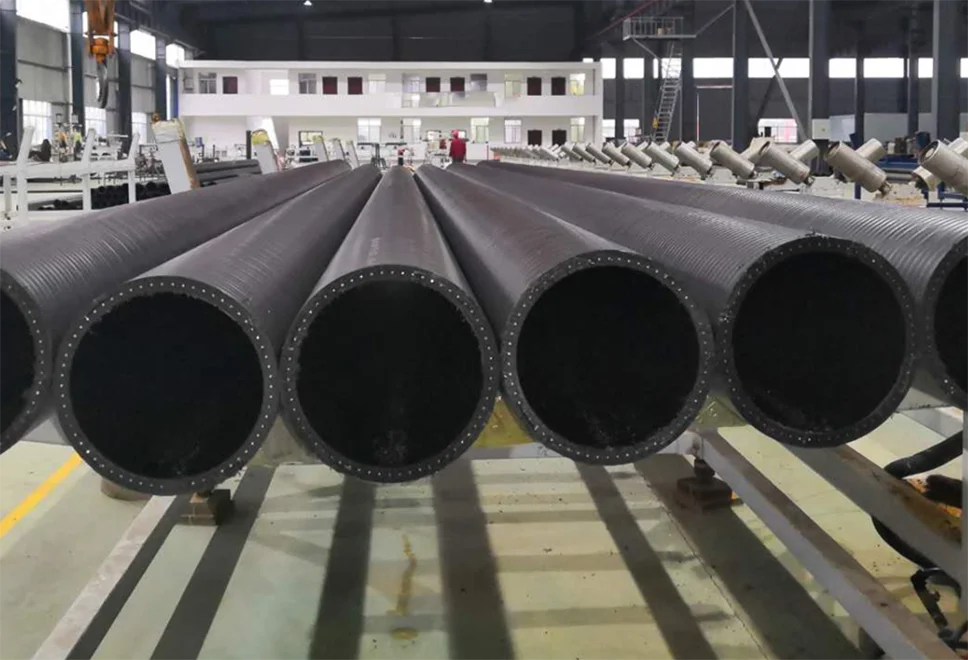
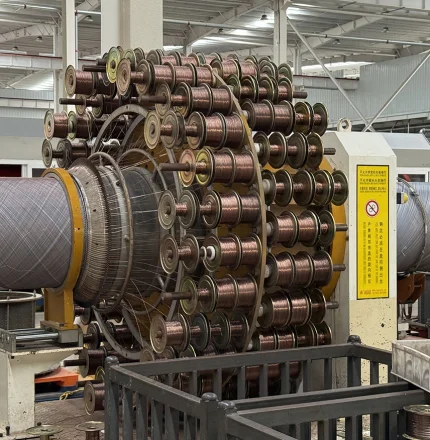
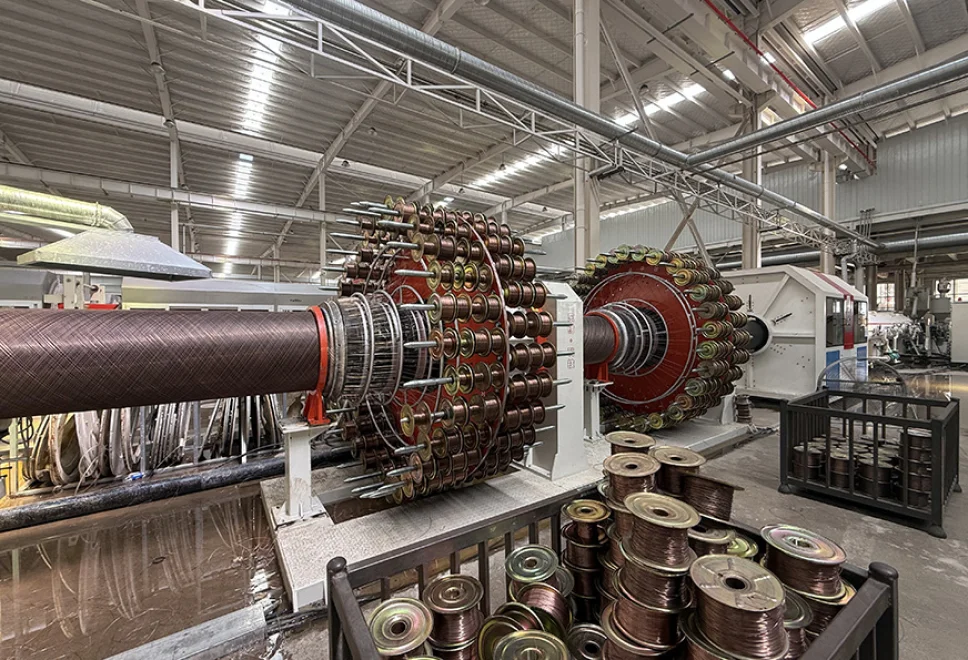
HDPE steel wire mesh reinforced composite pipe (also known as SRTP pipe) is a new type of composite pipe with high-strength plastic-coated steel wire mesh as the skeleton reinforcement and HDPE as the matrix.
Advantages for Drinking Water Applications
Enhanced Pressure Capability: The steel wire mesh skeleton significantly increases both circumferential and axial strength, allowing the pipe to handle medium-to-high pressure applications (up to 3.5 MPa) that exceed pure HDPE capabilities.
Rapid Crack Resistance: The composite structure effectively prevents rapid crack propagation (RCP), a catastrophic failure mode that can destroy kilometers of pure plastic pipe in seconds.
Creep Resistance: Steel reinforcement constrains polyethylene creep deformation, maintaining dimensional stability under long-term loading.
Comprehensive Corrosion Protection: The steel reinforcement is completely encapsulated in HDPE, isolated from both internal water and external soil environments, eliminating electrochemical corrosion.
Seismic and Settlement Adaptability: Despite the steel reinforcement, the pipe maintains adequate flexibility to accommodate ground movement and soil settlement, particularly valuable in earthquake zones.
User evaluation: This pipe is widely used in municipal water supply trunk lines, community main pipes, industrial water supply and rural drinking water safety projects.
-
SRPE pipe04
Advantages for High-Demand Applications
Ultra-High Pressure Capability: The rigid steel skeleton provides exceptional resistance to both internal pressure and external loads, making it suitable for high-pressure industrial water systems and critical infrastructure.
Superior Ring Stiffness: The grid-like steel structure provides higher ring stiffness than wire mesh configurations, enabling use in deep burial applications without concrete encasement.
Temperature Resistance: High-temperature variants can operate continuously at 80°C or higher, expanding applications to hot water transmission and industrial processes.
Dimensional Stability: The rigid skeleton minimizes thermal expansion and contraction, maintaining system integrity across temperature extremes.
Anti-Creep Performance: The steel framework effectively prevents polyethylene creep under sustained pressure, ensuring long-term dimensional stability.