
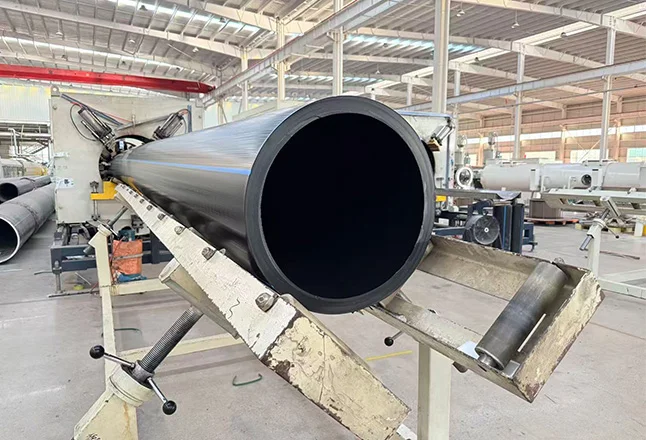

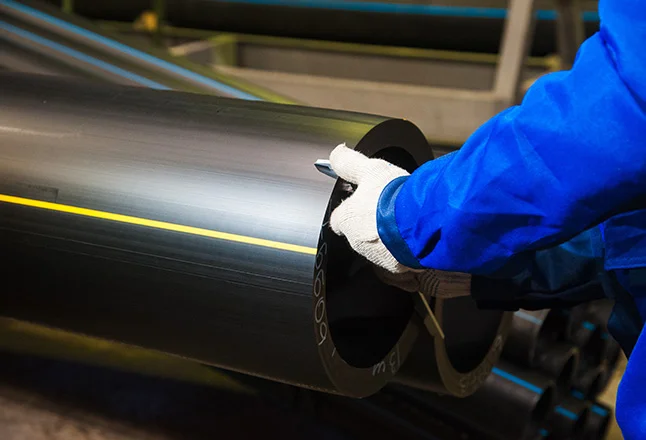
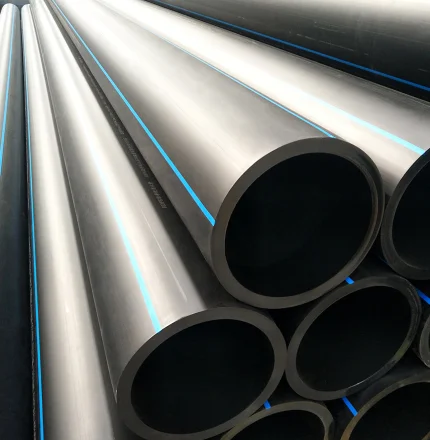
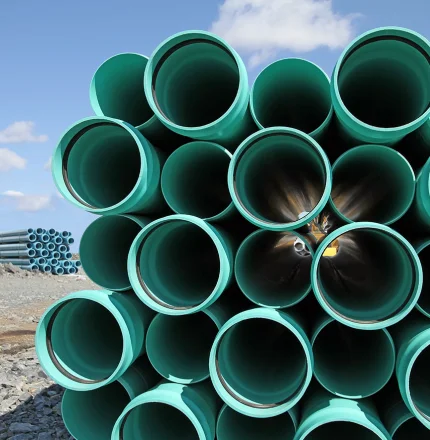
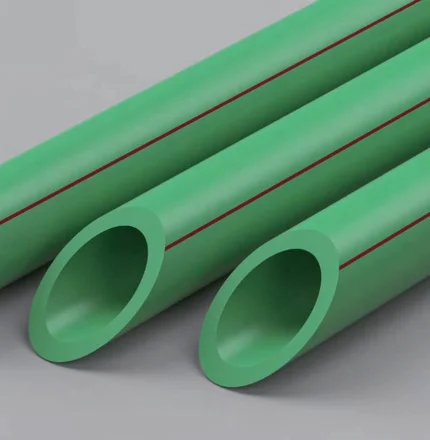
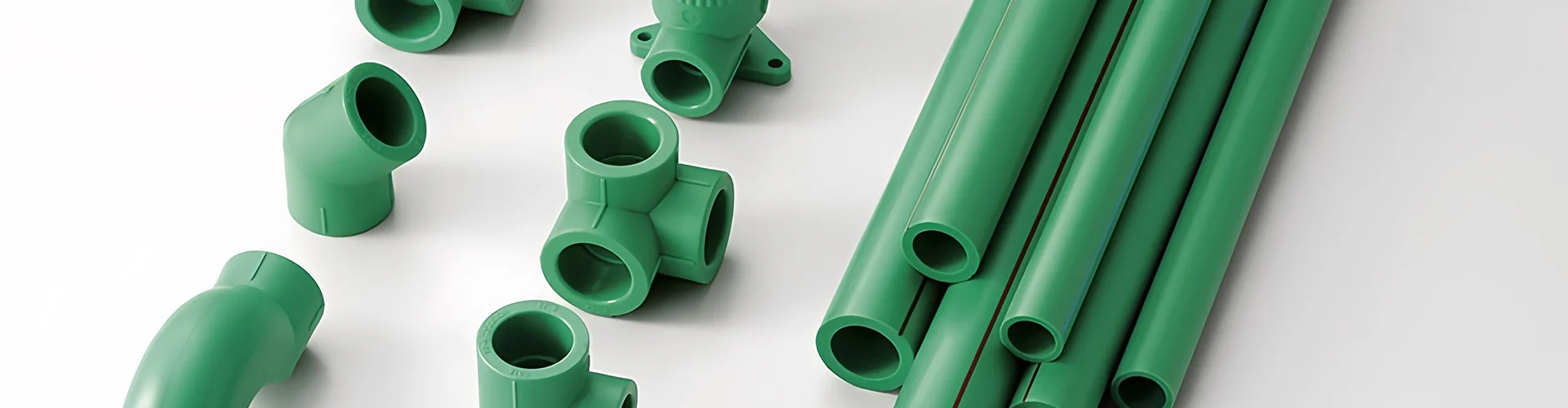
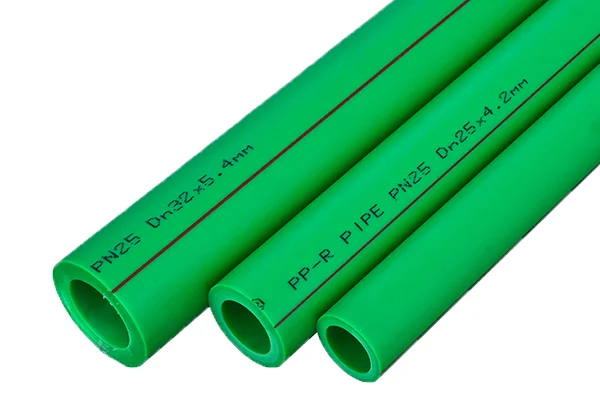

Designed for performance and built to last, Siffo PPR pipes represent the pinnacle of thermoplastic technology for potable water and heating applications. Certified to meet global standards, our pipes provide the reliability your project demands, whether you are constructing a high-rise residential complex or a private villa.
Material | PP-R Type 3 |
Standard | ISO 15874、DIN 8077/8078、ASTM F2389 |
Outside Diameter | DN20–DN160 |
Pressure Class | PN12、PN16、PN20、PN25 |
Operating Temperature | 70℃ |
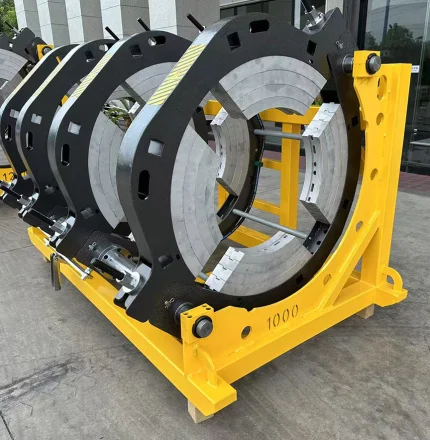
Connection | Socket heat fusion / polyfusion welding |
Standard Length | 5.8m、12m |
Color | Green, white, grey or customized |
Application | Hot water, heating and potable water |
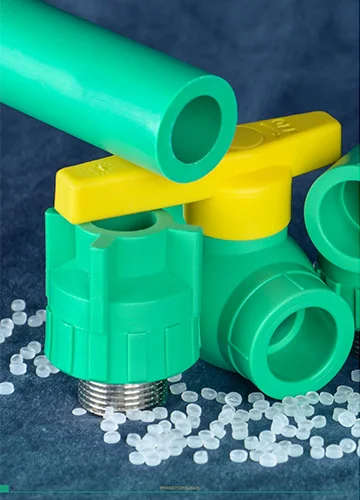
Fittings | Couplers, elbows, tees, valves |
▎PPR Pipe Features
Superior Temperature & Pressure Resistance
Engineered from high-quality Random Copolymer Polypropylene (PP-R), Siffo pipes excel under pressure. They are designed to withstand continuous operating temperatures up to 70°C (with peaks up to 95°C), making them the ideal choice for hot water supply and central heating systems without deformation or fatigue.
Leak-Proof Reliability
Say goodbye to joint failures. Siffo PPR systems utilize heat-fusion welding technology. When the pipe and fitting are melted and fused together, they form a single, homogeneous, monolithic joint that is actually stronger than the pipe itself. This eliminates the risk of leakage common in threaded or glued systems.
100% Corrosion & Scale Resistance
Unlike traditional metal piping, Siffo PPR is chemically inert. It will never rust, corrode, or promote internal scaling. This ensures the water quality remains pure and the internal diameter of the pipe stays consistent throughout its decades-long lifespan.
Eco-Friendly & Food-Grade Safety
Health and safety are our priority. Our pipes are manufactured from non-toxic, eco-friendly materials using 100% virgin raw material . They comply with international drinking water standards, guaranteeing the hygienic transportation of potable water without any metallic taste or chemical contamination.
Thermal & Acoustic Insulation
With low thermal conductivity (only 1/1500 of brass pipe), Siffo PPR pipes effectively minimize heat loss in hot water lines and prevent condensation on cold water lines . Additionally, their material composition naturally dampens the sound of rushing water, providing a quieter environment compared to metal pipes.
Long Service Life
Under normal operating conditions, Siffo PPR pipes offer a long-term service life, providing a durable and maintenance-free solution for more than 50 years.
▎Temperature and Pressure Performance of PPR Hot Water Pipe
PPR pipe is widely used in hot water systems because it maintains reliable mechanical performance across a broad temperature range. However, the allowable working pressure of a PPR pipeline decreases as the water temperature increases. Engineers and buyers should therefore evaluate temperature, pressure, pipe series and expected service life together instead of selecting a pipe based only on its nominal pressure rating.
Understanding PN Ratings at Different Temperatures
The PN rating of a PPR pipe—such as PN20 or PN25—is generally referenced to water service at approximately 20°C. It does not mean that a PN20 pipe can continuously withstand 20 bar at 70°C.
As the operating temperature rises, the long-term strength of polypropylene decreases, and a temperature-related pressure reduction factor must be applied. The actual allowable working pressure depends on:
PPR material grade
Pipe diameter and wall thickness
SDR or pipe series
Continuous operating temperature
Maximum and malfunction temperatures
Required service life
Applicable standard and application class
Safety factor required by the project
For this reason, the final pipe selection should always be based on the manufacturer’s pressure-temperature performance data and the relevant project design standard.
Continuous and Short-Term Temperature Limits
SIFFO PPR hot water pipes are designed for continuous hot water service at temperatures commonly used in residential and commercial plumbing systems. A continuous operating temperature of up to 70°C may be permitted when the pipe series and design pressure are selected correctly.
Temperatures approaching 95°C should be treated as short-term malfunction or peak conditions rather than normal continuous operating conditions. Frequent or prolonged exposure to excessively high temperatures can reduce the allowable pressure and shorten the expected service life of the piping system.
Operating Condition | Temperature Range | Design Consideration |
Cold water supply | Around 20°C | PN is used as a reference rating, subject to the applicable standard |
Domestic hot water | Up to approximately 60°C | Apply the appropriate pressure reduction factor |
High-temperature hot water | Up to approximately 70°C | Select the correct application class, SDR and design pressure |
Temporary temperature peak | Up to approximately 95°C | Short-term malfunction condition only; not intended for continuous service |
The values above are general selection guidance. The permitted pressure and exposure time must be confirmed against the SIFFO technical datasheet and the applicable piping standard.
▎PPR Pipe Main Application Areas
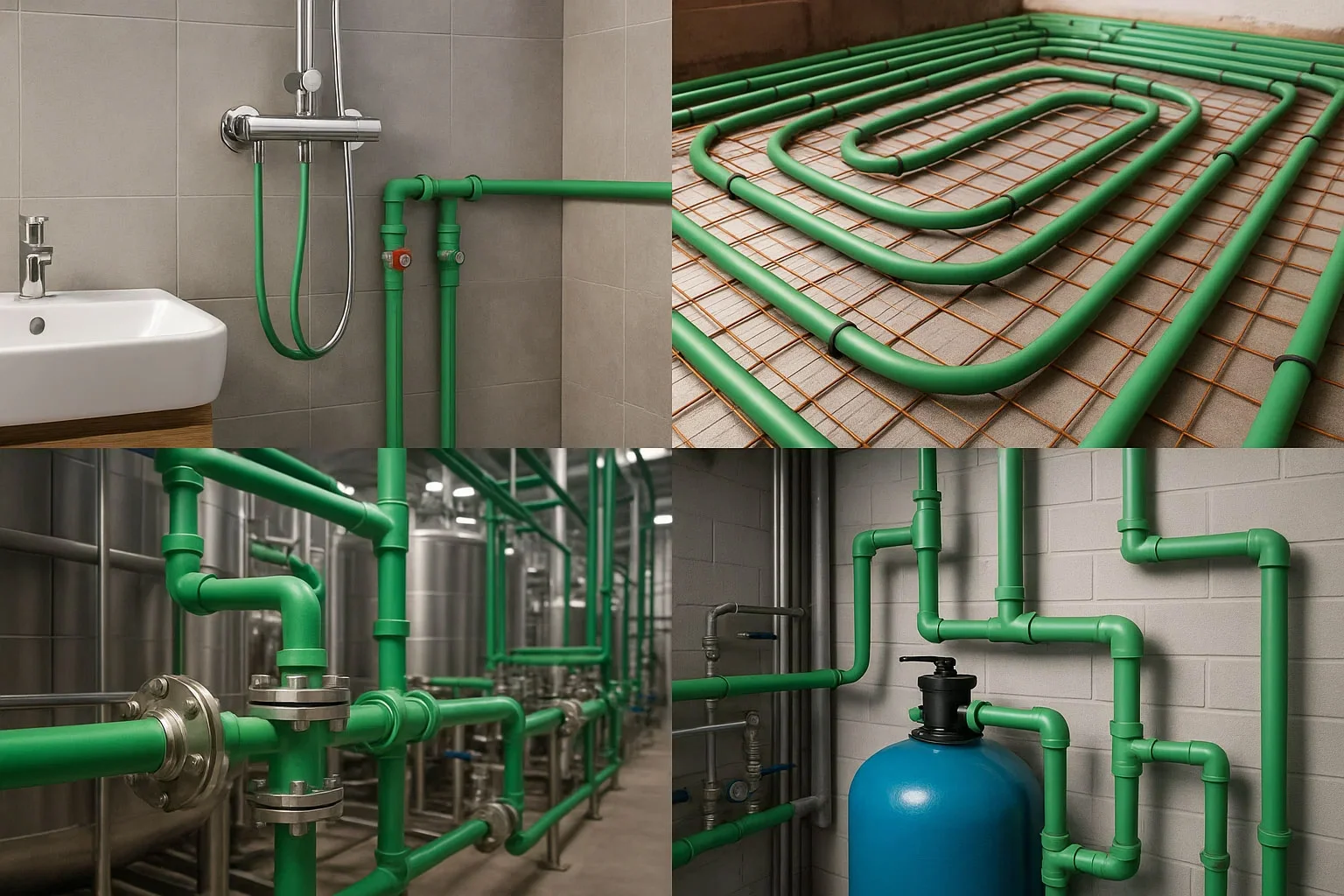
✓ Residential Buildings – Underfloor heating, potable hot water supply
✓ Hospitality & Healthcare – Hotels, hospitals, sanitary hot water systems
✓ Commercial Complexes – Office buildings, shopping centers, schools
✓ Industrial Facilities – Process hot water, chemical transfer, compressed air
✓ Renewable Energy – Solar water heating systems, heat pump connections
▎How to Select the Correct PPR Pipe
Before requesting a quotation, buyers should provide the following project information:
Required pipe standard
Pipe diameter
Normal operating temperature
Maximum operating temperature
Normal working pressure
Maximum or surge pressure
Intended application
Required design life
Installation environment
Destination country and local regulations
SIFFO can use this information to recommend a suitable PPR material grade, pressure class, SDR, pipe diameter and compatible fitting system for the project.
Send SIFFO your required pipe size, operating temperature, working pressure, application and order quantity. Our technical team can provide product selection support, compatible PPR fittings and a project-based quotation.
▎FAQ About PPR Pipe for Hot Water
1. What is the maximum operating temperature of PPR pipe?
PPR pipe is commonly designed for continuous hot water service at temperatures up to approximately 70°C when the correct pipe series and pressure class are selected. Temperatures approaching 95°C should normally be treated as short-term malfunction or peak conditions rather than continuous operating temperatures. Always confirm the allowable temperature and exposure time against the manufacturer’s technical datasheet.
2. Can PPR pipe continuously operate at 95°C?
PPR pipe should not normally be designed for continuous operation at 95°C unless the specific product documentation and applicable standard explicitly permit it. Under ISO 15874, temperatures around 95°C are generally associated with short-term malfunction conditions. Continuous exposure to excessive temperatures can reduce pressure capacity and shorten the service life of the pipeline.
3. What pressure can PPR pipe withstand at 70°C?
The allowable working pressure at 70°C depends on the PPR material grade, SDR, wall thickness, application class and required service life. A PN20 pipe does not automatically withstand 20 bar at 70°C because the PN rating is generally referenced to water service at approximately 20°C. A temperature-related pressure reduction factor must be applied when designing a hot water system.
4. Which standard applies to PPR hot water pipe?
ISO 15874 is one of the main international standards for polypropylene piping systems used in hot and cold water installations and heating systems. Other specifications may include DIN 8077/8078, ASTM F2389 or relevant national standards. Buyers should specify the required standard, application class and local certification requirements when requesting a quotation.
5. What sizes of PPR hot water pipe are available?
SIFFO can supply PPR pipes in outside diameters from approximately 20 mm to 160 mm, subject to the selected pressure class and product specification. Common sizes include 20, 25, 32, 40, 50, 63, 75, 90, 110 and 160 mm. Buyers should also confirm wall thickness, SDR, pipe length and fittings requirements for each diameter.
6. How are PPR pipes and fittings connected?
PPR pipes and fittings are normally joined by socket heat fusion, also known as polyfusion welding. The pipe end and fitting socket are heated simultaneously and then joined without adhesive or mechanical threads. After cooling, they form a homogeneous connection. Correct heating time, insertion depth, alignment and cooling time are essential for achieving a reliable joint.
7. How long does PPR hot water pipe last?
A properly selected and installed PPR piping system may provide a service life of 50 years or more under specified operating conditions. Actual service life depends on water temperature, working pressure, thermal cycling, joint quality, system support, chemical exposure and UV protection. Operating above the specified temperature or pressure can significantly reduce long-term performance.
8. Does PPR pipe lose pressure capacity at higher temperatures?
Yes. The long-term pressure capacity of PPR pipe decreases as the operating temperature rises. This is why engineers must use pressure-temperature performance data instead of relying only on the PN marking. The pipe’s material grade, SDR, application class, design pressure and intended service life should all be considered during selection.
9. Can PPR hot water pipe be installed outdoors?
Standard PPR pipe should be protected from prolonged direct sunlight because continuous ultraviolet exposure can cause material degradation. For outdoor installation, the pipe should have a suitable UV-resistant protective layer or be installed inside insulation, conduit or another protective covering. Thermal expansion and temperature changes must also be considered.
10. Can PPR pipe be buried underground?
Yes, PPR pipe can be installed underground when the pipeline is properly protected and the installation follows the project specification. The trench foundation, backfill material, external loads, joint quality and thermal movement should be evaluated. Underground connections should be pressure-tested and inspected before backfilling.
PPR PIPE Specification | ||||||||
Pressure | size | Pressure | size | Pressure | size | Pressure | size | Meters/bag |
PN12 | 20x2.0 | PN16 | 20x2.3 | PN20 | 20x2.8 | PN25 | 20x3.4 | 240 |
25x2.3 | 25x2.8 | 25x3.5 | 25x4.2 | 160 | ||||
32x2.9 | 32x3.6 | 32x4.4 | 32x5.4 | 100 | ||||
40x3.7 | 40x4.5 | 40x5.5 | 40x6.7 | 80 | ||||
50x4.6 | 50x5.6 | 50x6.9 | 50x8.3 | 60 | ||||
63x5.8 | 63x7.1 | 63x8.6 | 63x10.5 | 40 | ||||
75x6.8 | 75x8.4 | 75x10.3 | 75x12.5 | 28 | ||||
90x8.2 | 90x10.1 | 90x12.3 | 90x15.0 | 16 | ||||
110x10.0 | 110x12.3 | 110x15.1 | 110x18.3 | 12 | ||||
160x14.6 | 160x17.9 | 160x21.9 | 160x26.6 | 4 | ||||
I highly recommend this PPR pipe for hot water systems. The product quality is reliable, but what truly stands out is the exceptional service—timely delivery, responsive support, and professional guidance throughout. A trusted partner for any project requiring dependable hot water piping solutions.