
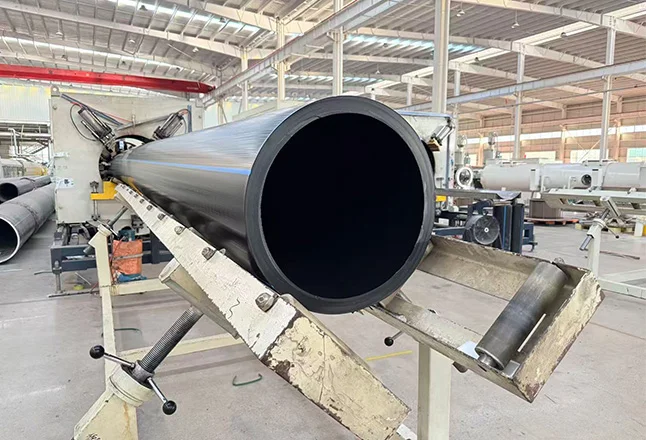

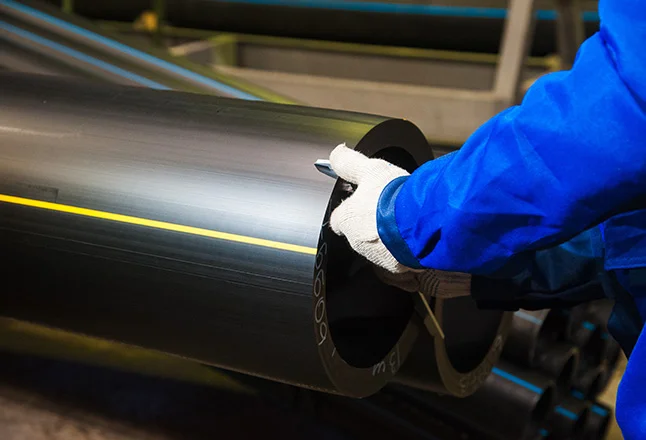
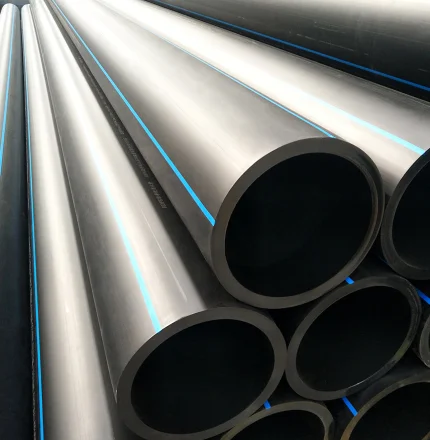
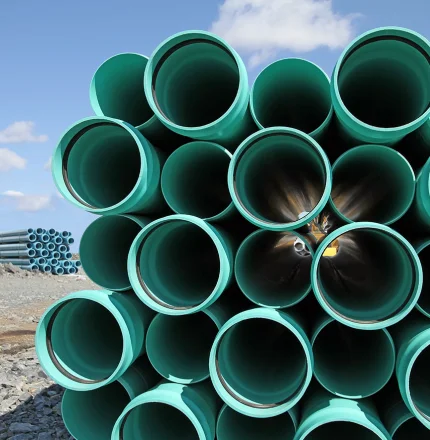
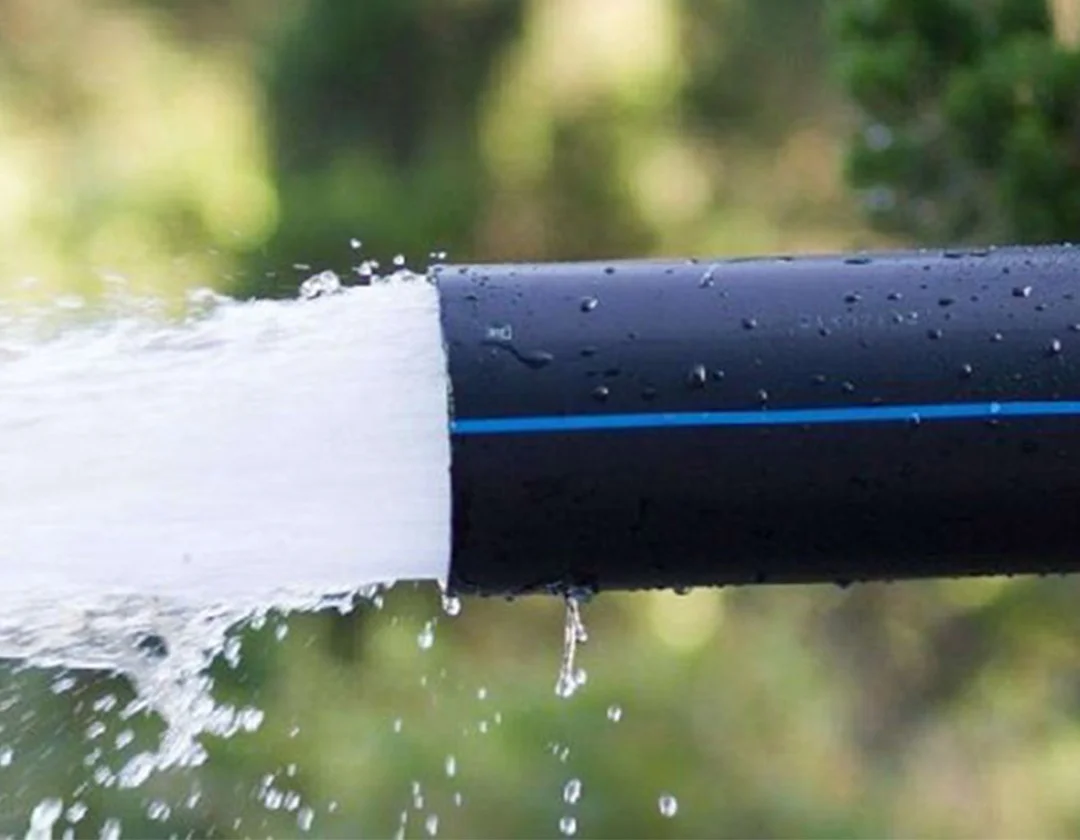
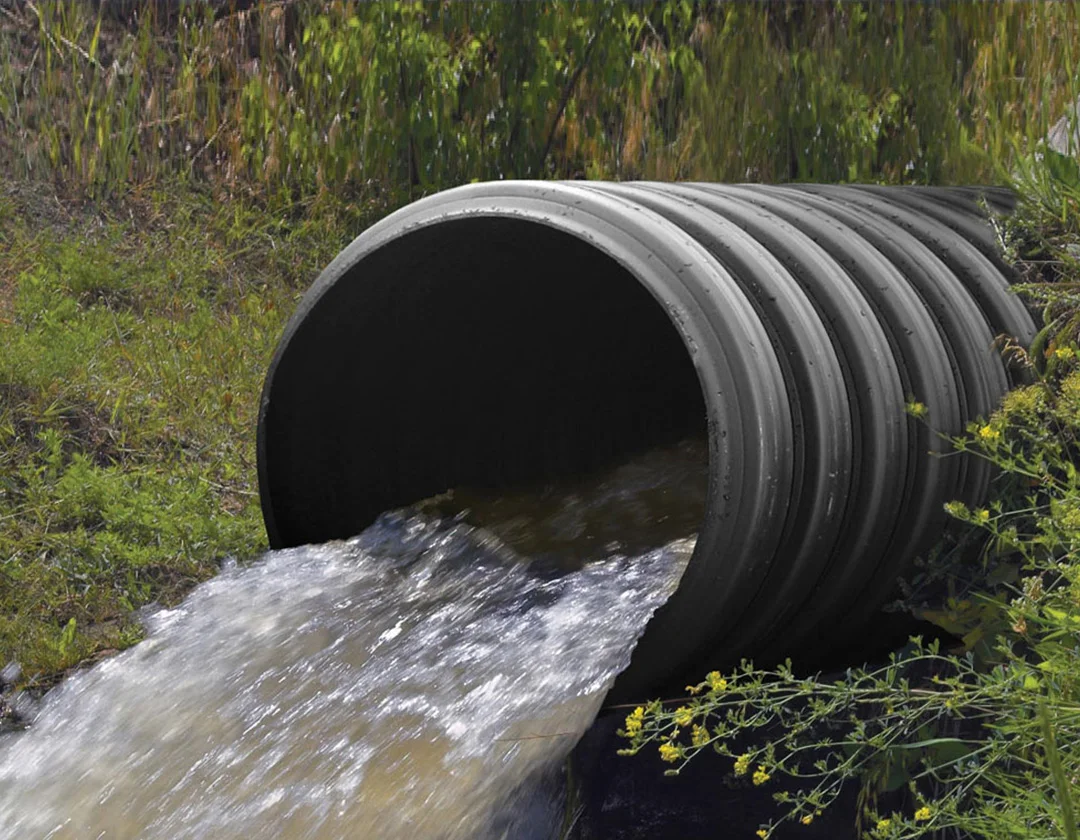
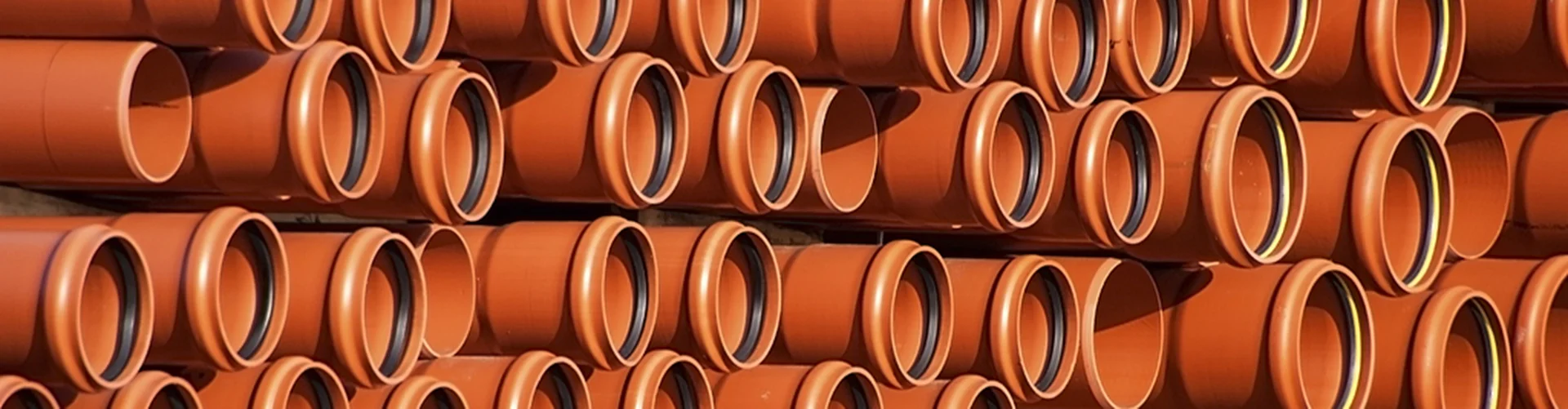
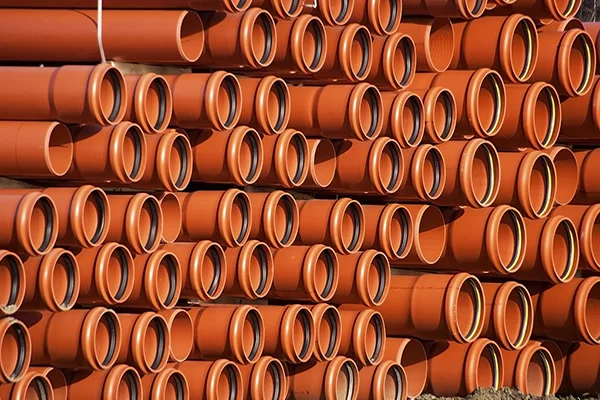

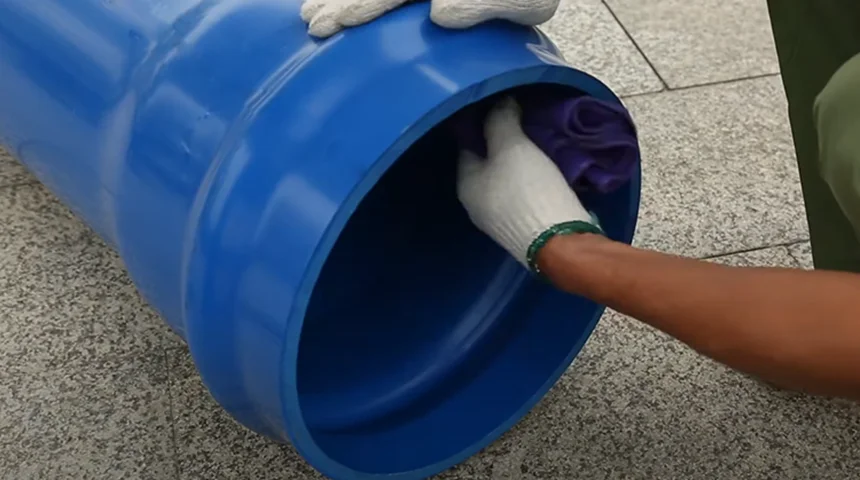
All gravity sewers produced by SIFFO comply with the requirements of BS EN 1401-1 and ASTM D3034. Standard lay lengths are 14' and 20' lengths, available upon request. These pipes are produced with integral bell ends sealed with gaskets and reinforced with steel rings, bands or other rigid material that permanently locks the gaskets in place during manufacture.
This product is a PVC (Polyvinyl Chloride) drainage pipe compliant with BS EN 1401-1 standards, designed for building drainage, wastewater discharge, and underground drainage systems. It offers excellent corrosion resistance, high strength, and long service life, making it suitable for residential, commercial, and industrial drainage applications.
Product Name | SIFFO UPVC Gravity Sewer & Drainage pipe |
Specification | DN110 - DN1000mm |
SDR | SDR51,SDR41,SDR34 |
Raw Material | UPVC |
Standards | BS EN 1401-1 ,ASTM D3034 ,ISO1452, DIN 8062 |
Application | Sewage discharge. |
Connection | Rubber Socket Joint, |
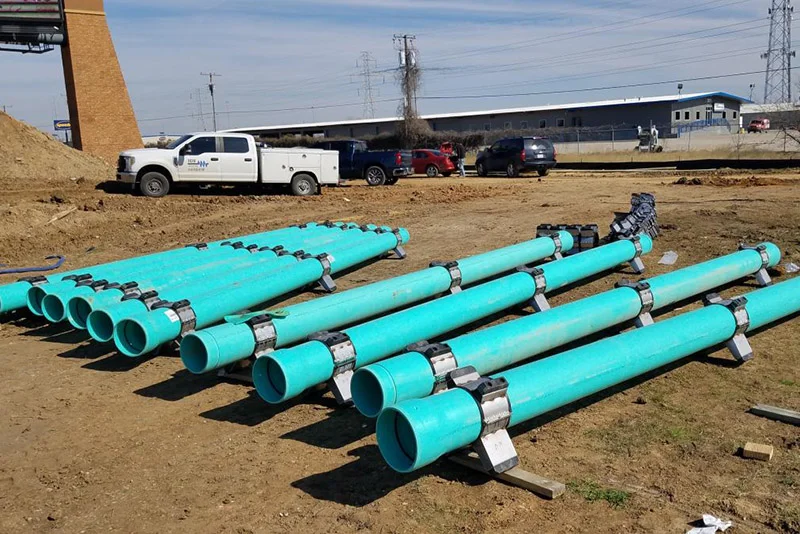
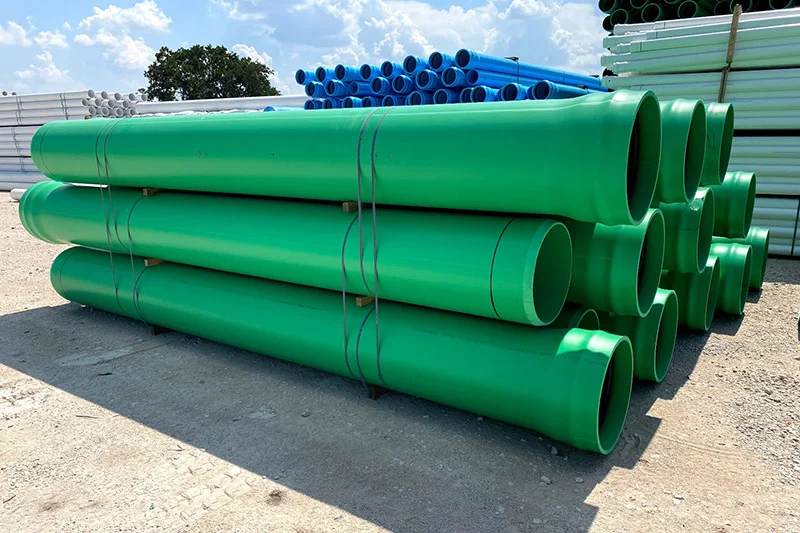
Color | Orange,Green,Grey,White |
▎UPVC Gravity Sewer Pipe Features
In addition to good physical and chemical properties of UPVC pipes and fittings, the following outstanding features are also available.
1. High Strength & Durability
PVC material provides excellent impact resistance and mechanical strength, capable of withstanding external pressure when buried underground.
Resistant to chemical corrosion, suitable for domestic sewage, industrial wastewater, and rainwater discharge.
2.Lightweight & Easy Installation
Compared to traditional concrete or cast iron pipes, PVC drainage pipes are lighter, facilitating transportation and installation.
Features push-fit joints or rubber ring seals for quick and secure assembly, reducing construction time.
3.Superior Hydraulic Performance
Smooth inner surface with low friction coefficient minimizes blockages and enhances drainage efficiency.
Ideal for gravity drainage systems, ensuring long-term stable performance.
4.Eco-Friendly & Sustainable
PVC material is recyclable, meeting modern environmental standards.
UV-resistant and long-lasting, with a service life exceeding 50 years, reducing maintenance costs.
5.Compliance with International Standards
Manufactured in strict accordance with BS EN 1401-1,ASTM D3034 ,ISO1452, ensuring quality and safety.Suitable for drainage system regulations in Europe and many other countries.
▎Non-Pressure Underground UPVC Gravity Sewer Pipe Specifications
Material:UPVC (Unplasticized Polyvinyl Chloride)
Connection Methods: Rubber Ring Socket Joint,Solvent cement jointing
Size Range:DN20mm ~ DN1000mm (custom sizes available)
Standard: BS EN 1401-1,ASTM D3034,ISO 4422-2; ISO 1452-2,DIN 8062;
Operating Temperature:-20°C ~ +60°C
Color:Orange,Grey,Blue, White,Green (custom colors also are available)
▎UPVC Gravity Sewer Pip Applications Field
Municipal Engineering and Public Utility Drainage
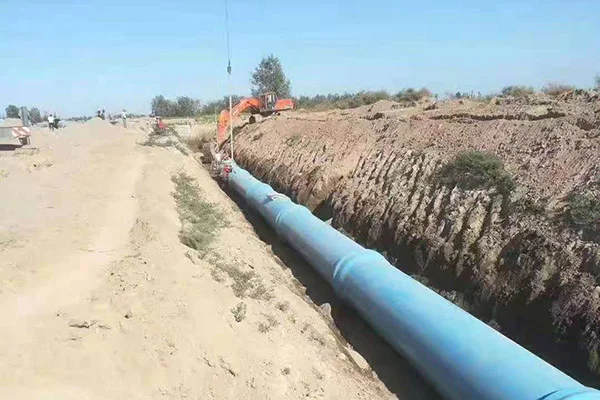
This is the primary application area for UPVC gravity-flow sewage pipes, mainly within urban underground piping networks. They serve as main and secondary drainage lines, transporting domestic sewage, industrial wastewater, and stormwater to treatment plants or natural water bodies.
Building Drainage
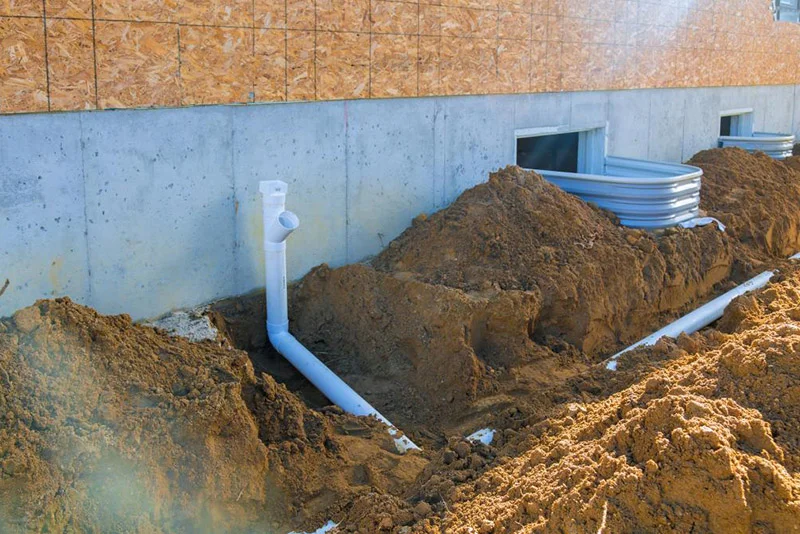
UPVC pipes are a common choice for indoor and outdoor drainage systems across various types of buildings:
Indoor gravity drainage: Widely used for domestic sewage and wastewater discharge systems in mid-to-high-rise residential buildings, hotels, hospitals, and office buildings.
Specialized drainage: Suitable for gravity-flow roof drainage and air-conditioning condensate drainage.
Industrial Sector
Leveraging their excellent chemical corrosion resistance, UPVC pipes play a significant role in industry:
Industrial wastewater discharge: Used to transport industrial wastewater containing corrosive substances such as acids and alkalis.
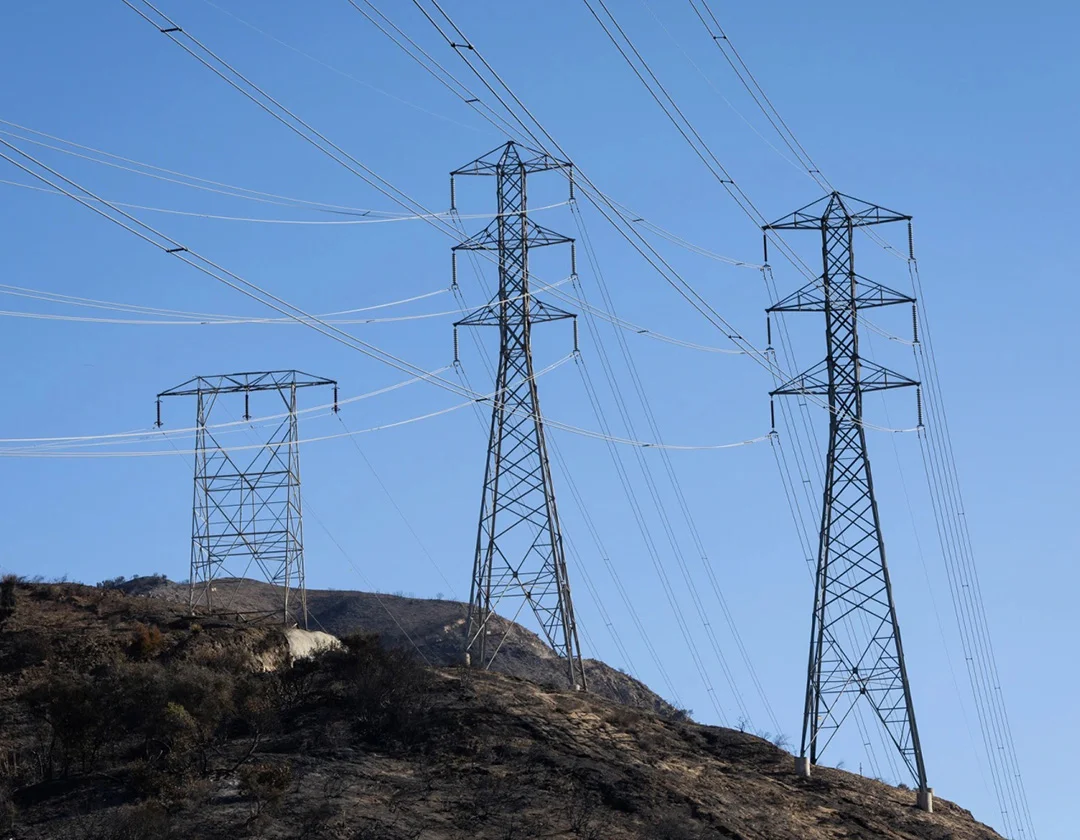
Power and telecommunications: Can serve as protective conduits for underground cables, shielding them from corrosion.
Agriculture and Rural Areas
They are also widely used in agricultural and rural infrastructure:
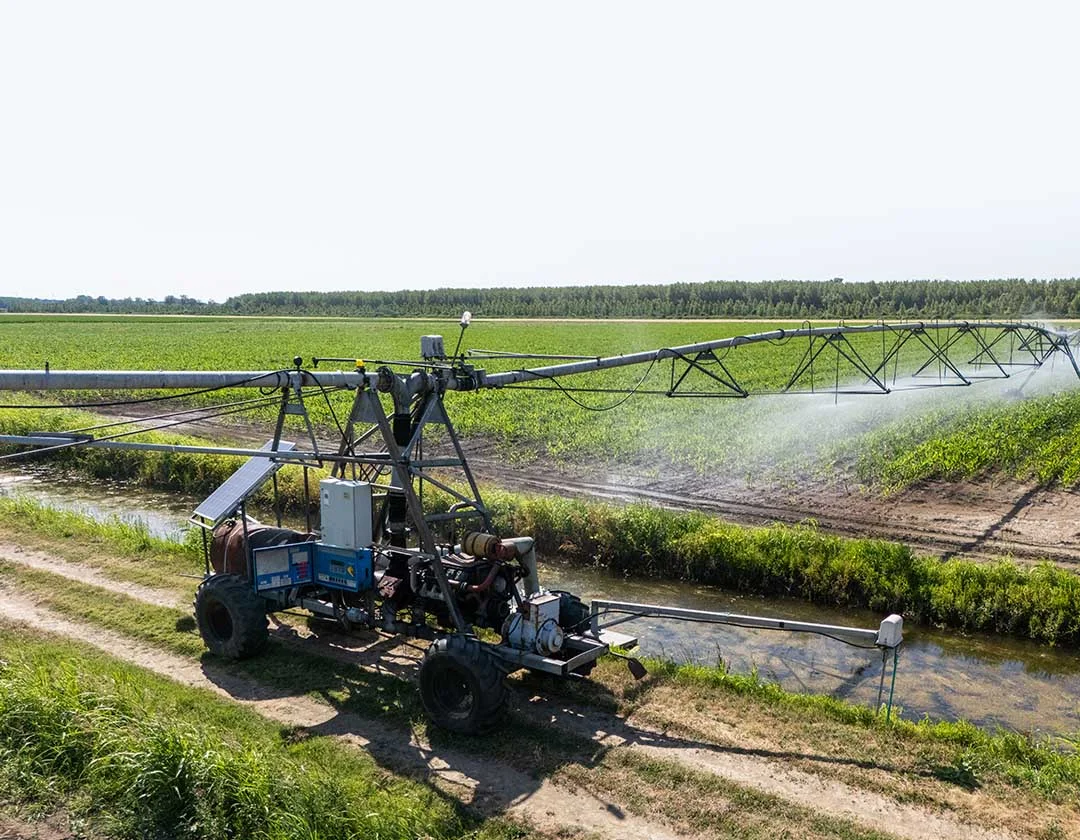
Farmland drainage and irrigation: Suitable for field drainage and low-pressure irrigation water delivery systems.
Rural sewage management: UPVC pipes are frequently selected for household connection lines (with diameters of 160mm or less) in rural sewage treatment projects.
Application Considerations
Despite their widespread use, specific design and construction factors must be considered:
Gravity-flow systems: These pipes are primarily intended for non-pressurized or gravity-flow drainage systems. Applications requiring pressurized transport call for specialized pressure-rated piping materials.
Temperature limits: For indoor building applications, the continuous discharge water temperature generally should not exceed 40°C, and the instantaneous temperature should not exceed 80°C.
Low-temperature environments: UPVC pipes exhibit brittleness at low temperatures; therefore, careful assessment is required when using them in extremely cold regions.
▎UPVC vs HDPE vs Ceramic Sewer Pipe
UPVC vs HDPE vs Ceramic Sewer Pipe: Which Is Better for Gravity Sewer Systems?
UPVC, HDPE, and ceramic pipes are all used in gravity sewer and drainage applications, but they offer different performance characteristics. The right choice depends on pipe diameter, installation conditions, soil environment, chemical exposure, hydraulic requirements, structural loading, and project budget.
UPVC gravity sewer pipe is particularly suitable for municipal sewer networks, residential drainage, stormwater systems, and underground gravity applications where low weight, corrosion resistance, smooth internal surfaces, and efficient installation are important.
HDPE pipe provides excellent flexibility, impact resistance, and chemical resistance. It is especially advantageous for projects with ground movement, difficult terrain, trenchless installation, or demanding installation conditions. HDPE is also widely used where butt fusion or electrofusion joints are preferred.
Ceramic or vitrified clay pipe has traditionally been used in sewer systems because of its excellent chemical resistance, high stiffness, and long-term durability. However, ceramic pipes are heavier and more fragile during transportation and installation, making handling and installation more demanding than plastic pipe systems.
Feature | UPVC Gravity Sewer Pipe | HDPE Sewer Pipe | Ceramic / Vitrified Clay Pipe |
Material | Unplasticized PVC | High-Density Polyethylene | Vitrified clay / ceramic |
Typical Application | Gravity sewer, drainage, stormwater | Sewer, drainage, industrial wastewater | Municipal sewer and gravity drainage |
Weight | Lightweight | Very lightweight | Heavy |
Transportation | Easy | Very easy | More difficult |
Installation | Fast and relatively simple | Fast, but fusion equipment may be required | More labor-intensive |
Flexibility | Moderate | Excellent | Low |
Impact Resistance | Good | Excellent | Relatively low |
Corrosion Resistance | Excellent | Excellent | Excellent |
Chemical Resistance | Good–Excellent | Excellent | Excellent |
Internal Surface | Very smooth | Very smooth | Smooth, but joint configuration varies |
Hydraulic Efficiency | High | High | Good–High |
Jointing | Rubber-ring/socket joints or specified systems | Butt fusion / electrofusion / mechanical systems | Bell-and-spigot or specialized joints |
Leakage Risk at Joints | Low with properly installed sealed joints | Very low with properly fused joints | Depends on joint system and installation |
Ground Movement | Moderate tolerance | Excellent tolerance | Limited |
Trenchless Suitability | Application-dependent | Excellent | Limited |
Installation Equipment | Relatively simple | Fusion equipment may be required | More handling equipment may be required |
Maintenance | Low | Low | Low–Moderate |
Handling on Site | Easy | Easy | More difficult |
Typical Project Advantage | Cost-effective and easy installation | Flexibility and fusion-jointed system | High stiffness and chemical durability |
Best Fit | Municipal & building drainage | Difficult terrain & demanding sewer systems | Heavy-duty gravity sewer applications |
UPVC vs HDPE for Sewer and Drainage
UPVC and HDPE are both strong choices for modern sewer and drainage systems. The main difference is their mechanical behavior. UPVC is a relatively rigid pipe material, making it well suited to conventional buried gravity sewer systems where the trench, bedding, and backfill provide the required structural support.
HDPE is more flexible and can accommodate ground movement and differential settlement more effectively. This makes HDPE attractive for areas with unstable soil, seismic activity, difficult terrain, or projects requiring trenchless installation.
For standard municipal and residential gravity sewer projects, UPVC can provide a practical balance between hydraulic performance, installation efficiency, corrosion resistance, and project cost. For projects where flexibility and joint integrity under ground movement are major priorities, HDPE may have an advantage.
UPVC vs Ceramic Sewer Pipe
UPVC and ceramic pipes have significantly different characteristics. Ceramic sewer pipes have been used for decades because of their high stiffness, excellent chemical resistance, and long service life. They remain suitable for certain municipal and industrial sewer applications.
However, ceramic pipes are substantially heavier than UPVC. Transportation, unloading, cutting, alignment, and installation can therefore require more labor and handling equipment. Ceramic pipes can also be more susceptible to damage from impact during transportation and construction.
UPVC provides a much lighter alternative while offering excellent corrosion resistance and a smooth internal surface. For many modern municipal drainage and sewer projects, this combination can help simplify construction and reduce installation complexity.
Why Choose SIFFO UPVC Gravity Sewer Pipe?
For contractors, distributors, and project procurement teams, the key advantage of SIFFO UPVC gravity sewer pipe is not simply the material itself, but the overall pipe system solution.
The lightweight construction can simplify transportation and site handling, while the smooth internal surface supports efficient gravity flow. UPVC's resistance to corrosion also makes it suitable for wastewater and drainage environments where conventional metallic materials may face corrosion concerns.
For conventional buried sewer and drainage networks, UPVC offers a practical combination of hydraulic efficiency, corrosion resistance, installation convenience, and cost control.
▎FAQ About UPVC Gravity Sewer & Drainage Pipe
1. What is UPVC gravity sewer pipe used for?
UPVC gravity sewer pipes are designed for non-pressure wastewater, sewage, stormwater, and drainage systems where flow is primarily driven by gravity. They are commonly used in municipal sewer networks, residential developments, commercial buildings, industrial drainage, and underground infrastructure projects.
2. Why choose UPVC pipe for gravity sewer and drainage systems?
UPVC offers excellent corrosion resistance, a smooth internal surface, low friction, and good resistance to many chemicals commonly found in wastewater. Its relatively low weight also makes transportation, handling, and installation easier compared with traditional concrete or metal drainage pipes.
3. Can UPVC gravity sewer pipe be installed underground?
Yes. UPVC gravity sewer and drainage pipes are widely used for underground applications. Proper trench preparation, bedding, jointing, backfilling, and installation according to the applicable project requirements are important to ensure long-term system performance.
4. What sizes of UPVC gravity sewer pipe does SIFFO supply?
SIFFO can provide UPVC gravity sewer and drainage pipes in different diameters and wall thicknesses to meet project requirements. Available dimensions, stiffness classes, lengths, and other specifications can be customized according to the required standard and application.
5. What connection methods are available for UPVC sewer pipe?
UPVC gravity sewer pipes can commonly be connected using socket-and-spigot joints with elastomeric rubber ring seals or other jointing systems specified for the project. The appropriate connection method depends on the pipe design, standard, installation conditions, and project requirements.
6. Is UPVC suitable for municipal sewer systems?
Yes. UPVC is widely used in municipal wastewater, sanitary sewer, stormwater, and drainage networks. Its corrosion resistance, smooth bore, low maintenance requirements, and ease of installation make it suitable for many municipal infrastructure projects.
7. Does UPVC sewer pipe resist corrosion and chemicals?
UPVC has strong resistance to corrosion and many chemicals found in wastewater and drainage environments. Unlike conventional steel pipes, UPVC does not rust, which can help reduce corrosion-related maintenance problems over the service life of the drainage system.
8. What is the expected service life of UPVC sewer pipe?
The service life depends on pipe design, material quality, installation conditions, operating environment, and compliance with applicable standards. When properly designed, manufactured, installed, and maintained, UPVC sewer and drainage systems can provide long-term underground service.
9. How does UPVC gravity sewer pipe compare with concrete or metal pipe?
UPVC is significantly lighter than many traditional sewer pipe materials, which can simplify transportation and handling. It also provides corrosion resistance and a smooth internal surface, while its jointing system can facilitate efficient installation. The best material depends on pipe diameter, loading conditions, installation depth, soil conditions, and project specifications.
10. Can UPVC gravity sewer pipe be used for stormwater drainage?
Yes. UPVC drainage pipes can be used for gravity-flow stormwater systems when the selected pipe class, diameter, stiffness, and installation design are suitable for the expected hydraulic and structural conditions.
11. How do I choose the right UPVC sewer pipe size?
Pipe diameter should be selected according to the required flow capacity, design slope, wastewater or stormwater volume, installation conditions, and applicable engineering standards. For large municipal or infrastructure projects, SIFFO can provide technical recommendations based on the project's required flow rate, diameter, burial depth, and installation conditions.
12. What standards can SIFFO UPVC gravity sewer pipes comply with?
The applicable standard depends on the destination market and project specification. SIFFO can manufacture UPVC sewer and drainage pipes according to relevant international or regional standards and provide the required technical documentation and product specifications for project approval.
13. Can SIFFO supply UPVC sewer pipes for large infrastructure projects?
Yes. SIFFO can support distributors, contractors, engineering companies, and municipal infrastructure projects with UPVC pipes and related pipe system solutions. Product specifications, quantities, packaging, delivery requirements, and technical documentation can be discussed according to the project.
14. Can SIFFO provide technical support for UPVC drainage pipe installation?
Yes. SIFFO can provide product specifications and technical guidance related to pipe selection, jointing, handling, storage, and installation. For project-specific requirements, the installation method should also follow the applicable local standards and engineering specifications.
Need UPVC Gravity Sewer Pipes for Your Project?
Looking for UPVC gravity sewer pipes for a municipal, residential, commercial, or drainage project?
SIFFO provides UPVC gravity sewer and drainage pipe solutions for international infrastructure projects, with flexible specifications, reliable quality, and technical support for project requirements.
Tell us your project requirements and get a customized pipe solution and quotation.
What we can help with:
UPVC gravity sewer & drainage pipe selection
Pipe diameter and specification recommendations
Project quantities and delivery planning
Pipe and fitting system solutions
Technical documentation and product specifications
Installation and jointing guidance
Send Us Your Requirements Today
Outside Diameter | Wall Thickness(mm) | |||||
SN2 | SN4 | SN8 | ||||
SDR51 | SDR41 | SDR34 | ||||
Min | Max | Min | Max | Min | Max | |
110 | — | — | 3.2 | 3.8 | 3.2 | 3.8 |
125 | — | — | 3.2 | 3.8 | 3.7 | 4.3 |
160 | 3.2 | 3.8 | 4 | 4.6 | 4.7 | 5.4 |
200 | 3.9 | 4.5 | 4.9 | 5.6 | 5.9 | 6.7 |
250 | 4.9 | 5.6 | 6.2 | 7.1 | 7.3 | 8.3 |
315 | 6.2 | 7.1 | 7.7 | 8.7 | 9.2 | 10.4 |
355 | 7.0 | 7.9 | 8.7 | 9.8 | 10.4 | 11.7 |
400 | 7.0 | 8.9 | 9.8 | 11.0 | 11.7 | 13.1 |
450 | 8.8 | 9.9 | 11.0 | 12.3 | 13.2 | 14.8 |
500 | 9.8 | 11.0 | 12.3 | 13.8 | 14.6 | 16.3 |
630 | 12.3 | 13.8 | 15.4 | 17.2 | 18.4 | 20.5 |
710 | 13.9 | 15.5 | 17.4 | 19.4 | — | — |
800 | 15.7 | 17.5 | 19.6 | 21.8 | — | — |
900 | 17.6 | 19.6 | 22.0 | 24.4 | — | — |
1000 | 19.6 | 21.8 | 24.5 | 27.2 | — | — |
I recommend this UPVC gravity sewer pipe. It complies with BS EN 1401, offers excellent hydraulic performance, and is lightweight. Ideal for reliable, long-term drainage in municipal or residential projects.