
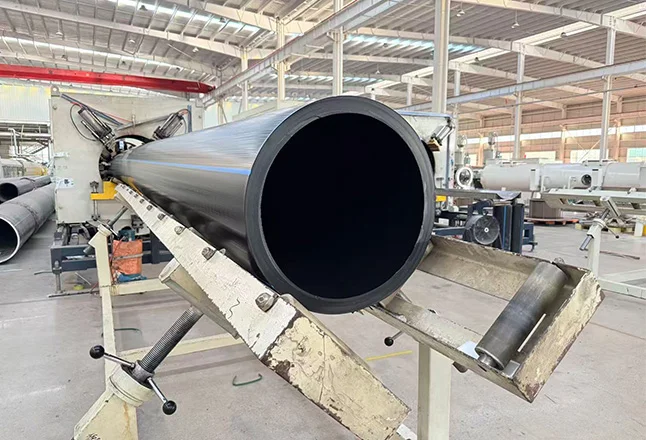

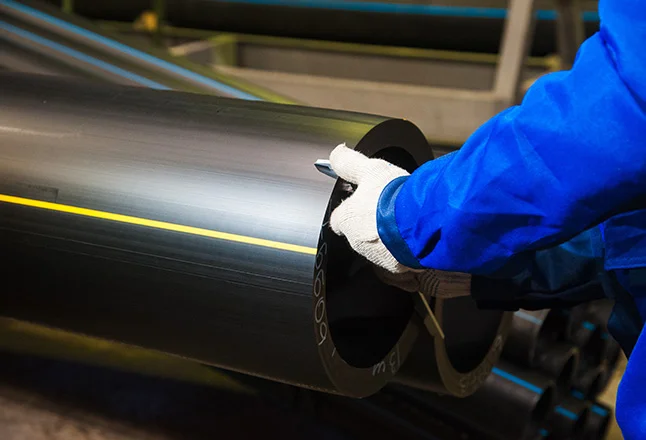
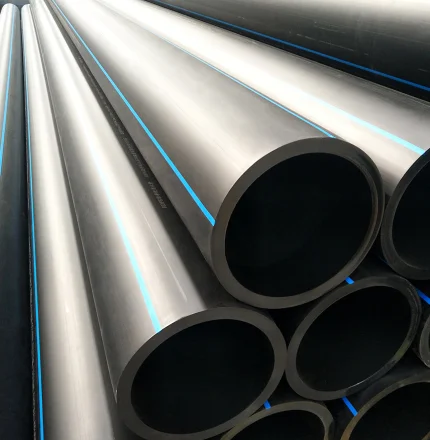
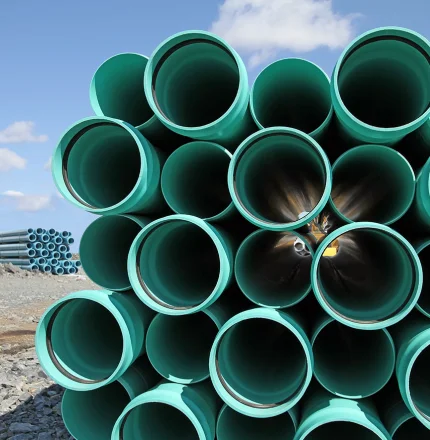

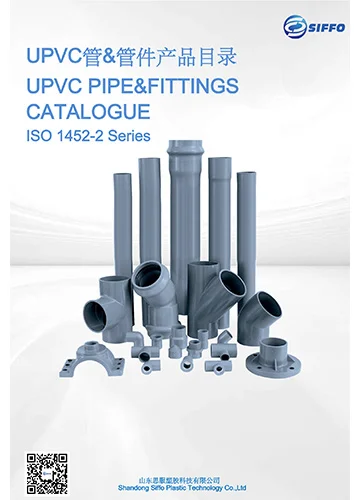
SIFFO is a leading manufacturer specializing in high-performance plastic piping systems, dedicated to providing safe, durable, and eco-friendly UPVC water supply pipes for global clients. With advanced production technology, stringent quality control, and exceptional customer service, SIFFO has become a trusted brand in the industry, serving municipal, construction, agricultural, and industrial applications.
| Product Name | SIFFO UPVC Water Pipe |
| Specification | DN20 - DN1000mm |
| Pressure | SDR9-PN20, SDR11-PN16, SDR13.6-PN12.5, SDR17-PN10, SDR21-PN8, SDR26-PN6 |
| Raw Material | PVC-U |
| Standards | ISO1452, DIN 8062 |
| Application | Urban drink water supply |
| Agricultural irrigation. | |
| Sewage discharge. | |
| Landscape garden water supply | |
| Electrical Cable protection. | |
| Connection | Rubber Socket Joint, Glue Connection Joint |
SIFFO UPVC (Unplasticized Polyvinyl Chloride) pressure water pipes are pipe systems manufactured primarily from polyvinyl chloride resin through an extrusion molding process, specifically designed for water supply systems.
▎Core Characteristics of UPVC Pipes
1. Corrosion Resistance: Chemical Stability Exceeds Traditional Limitations
PVC-U pipes are primarily made of sanitary-grade polyvinyl chloride resin and employ a lead-free stabilization system, enabling them to resist corrosion from acids, alkalis, salts, and organic solvents. In the case of chemical wastewater discharge, an electronics factory used Siffo pipes to transport highly acidic wastewater. After three years of continuous operation, the pipe's inner wall remained smooth, without corrosion or leaks, and its service life was more than twice that of traditional metal pipes.
2. Fluid Efficiency: Optimized Inner Wall Improves Water Delivery Capacity
The pipe's inner wall friction coefficient is as low as 0.009, resulting in a 30% increase in flow rate compared to cast iron pipes. After adopting DN160 pipes in the rainwater drainage system of a large shopping mall, drainage efficiency during heavy rains increased by 40%, effectively preventing damage to the building structure from roof rainwater.
3. Lightweight Design: Optimized Construction Efficiency and Cost
The density of this pipe is only one-fifth that of iron pipes, and the weight of a DN110 pipe section is only one-eighth that of a cast iron pipe of the same size. In a water supply and drainage project for a 30-story residential building, the use of Siffo pipes reduced hoisting time by 60% and overall construction costs by 35%.
4. Excellent Mechanical Properties: High strength and rigidity, suitable for high-pressure water supply systems.
This pipe possesses excellent ring stiffness and impact resistance, with a compressive strength more than 1.5 times that of traditional PVC pipes. In a high-pressure water supply network project in an industrial park, the use of Siffo pipes resulted in stable operation under a continuous pressure of 1.6 MPa without any deformation or rupture. The overall safety and durability of the pipeline system were significantly improved, and maintenance frequency was reduced by approximately 50%.
5. Long Service Life: Designed for a service life exceeding 50 years, with low maintenance costs.
The pipes utilize an anti-aging formula and UV stabilization technology, maintaining stable performance even under long-term sunlight and temperature fluctuations. In a municipal water supply renovation project in a coastal city, Siffo pipes have been in continuous use for over 20 years. Testing showed that their physical properties degraded by less than 5% compared to brand-new pipes, and the estimated maintenance cost over their entire lifespan is more than 40% lower than traditional material systems.
6. Hygiene and Safety: Meets drinking water hygiene standards, is non-toxic, and does not easily breed bacteria.
The pipe's inner wall is smooth and does not pose a risk of plasticizer migration. It has passed national drinking water hygiene and safety certification, and the total bacterial count is far below the standard limit. In a newly built residential area's direct drinking water system in a certain city, after the full adoption of Siffo pipes, the bacterial count of the terminal water decreased by more than 60%, effectively protecting residents' drinking water health. Simultaneously, there is no biofilm accumulation inside the pipes, maintaining clear and odorless water quality even after long-term use.
7. Flame Retardancy and Safety: Self-extinguishing performance meets standards.
Oxygen index ≥45, meeting the flame retardant standards for building materials. In an underground parking lot ventilation duct renovation project, the pipes self-extinguished within 3 seconds after an open flame test, effectively preventing the spread of fire and ensuring safe evacuation of personnel.
8. Environmentally Friendly Recycling: Sustainable Management Throughout the Entire Lifecycle
Waste pipes can be 100% recycled through crushing and granulation processes. In municipal projects, pipes produced using recycled materials meet the standards of brand-new pipes in terms of ring stiffness and pressure resistance, reducing carbon emissions by 28% per kilometer of pipe.
▎UPVC Water Supply Pipe Specifications
Material:UPVC (Unplasticized Polyvinyl Chloride)
Connection Methods: Rubber Ring Socket Joint,Solvent cement jointing
Pressure Rating:PN1.0MPa, PN1.6MPa PN2.0Mpa
Size Range:DN20mm ~ DN1000mm (custom sizes available)
Standard: ISO 4422-2; ISO 1452-2,DIN 8062;
Operating Temperature:-20°C ~ +70°C
Color:Grey,Blue, White,Green (custom colors also are available)
▎UPVC Water Supply Pipe Application Fields
Municipal Water Supply Network:
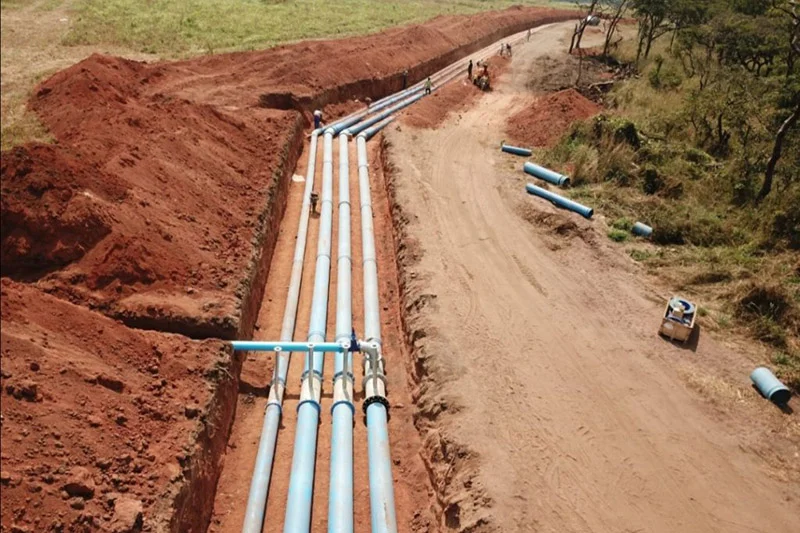
Main urban water supply pipelines and distribution networks, replacing traditional cast iron and cement pipes.
Building Water Supply System:
Outdoor buried water supply mains and indoor cold water pipelines for residential and public buildings (commonly found in office buildings, schools, hospitals, etc.).
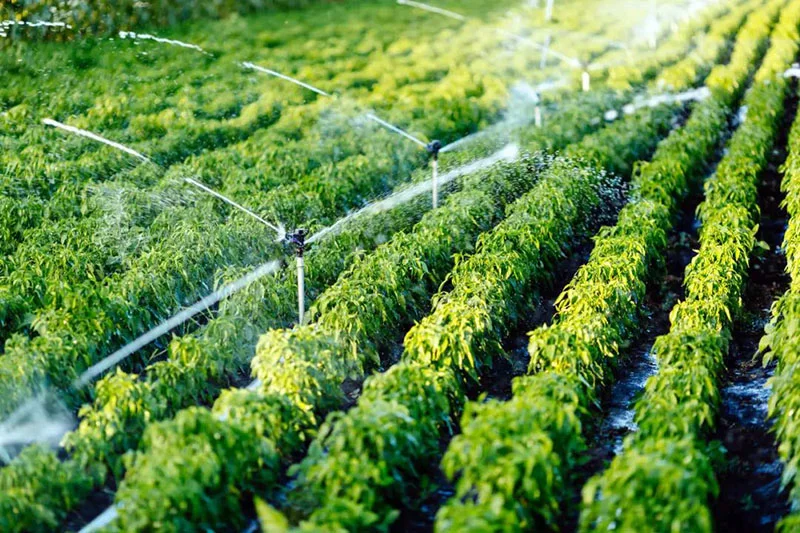
Agricultural Irrigation System:
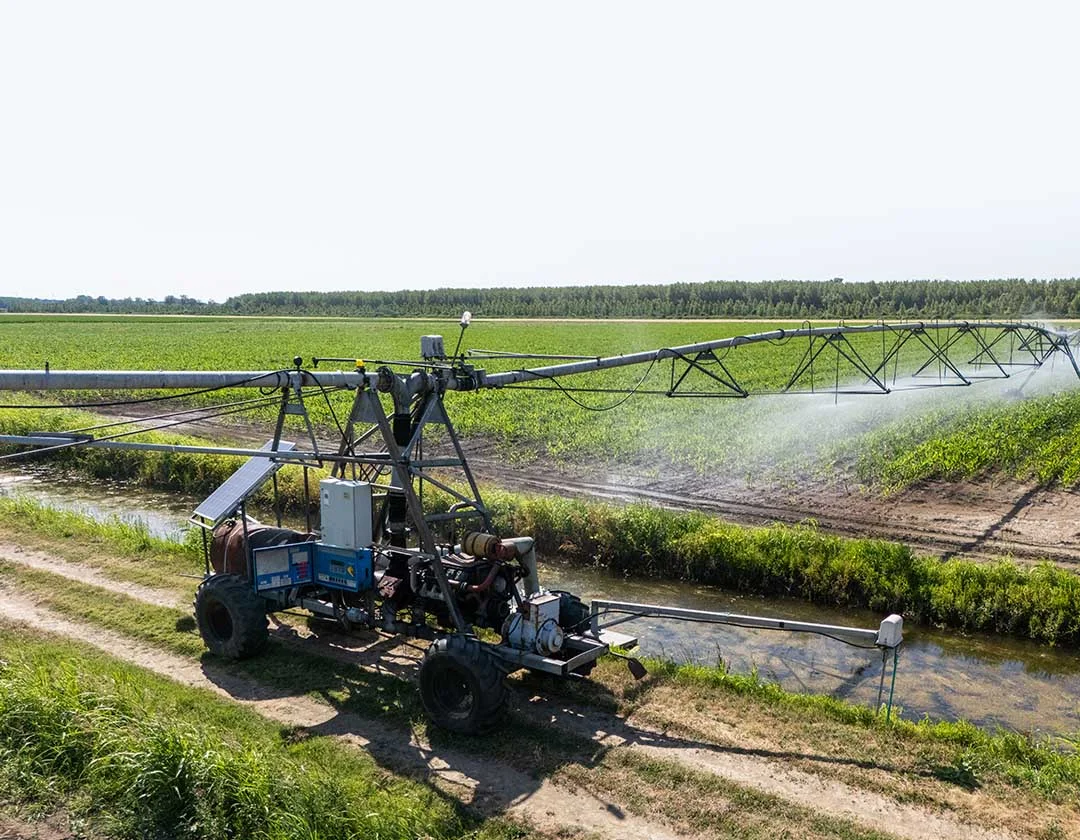
Main pipelines for water-saving irrigation and drip irrigation systems; corrosion-resistant and cost-effective.
Industrial Water:
Used for cooling circulating water and transporting chemically stable wastewater.
Residential Community and Industrial Park Network:
Underground water supply networks within residential communities and industrial parks.
▎Comparison of UPVC, HDPE, and steel pipes in water supply systems
Selecting the right piping material is critical for long-term performance, cost efficiency, and system reliability in water supply projects. UPVC (Unplasticized Polyvinyl Chloride), HDPE (High-Density Polyethylene), and Steel pipes are three of the most widely used materials, each with distinct mechanical properties, installation methods, and application scenarios.
| Parameter | UPVC Pipe | HDPE Pipe | Steel Pipe |
Material Type | Rigid Thermoplastic | Flexible Thermoplastic | Metal |
Flexibility | Low | Excellent | Low |
Corrosion Resistance | Excellent | Excellent | Poor (needs protection) |
Weight | Lightweight | Lightweight | Heavy |
Joint Method | Rubber ring / solvent | Heat fusion (welding) | Welding / flange |
Leakage Risk | Medium | Very Low | Medium |
Pressure Resistance | Medium | High | Very High |
Installation Cost | Low | Medium | High |
Maintenance Cost | Low | Low | High |
Lifespan | 30–50 years | 50+ years | 20–50 years |
Best Application | Water supply, irrigation | Underground pipelines | High-pressure systems |
UPVC Water Supply pipes
UPVC pipes are rigid thermoplastic pipes widely used in municipal water supply and irrigation systems. They are known for their corrosion resistance, lightweight structure, and cost-effectiveness.
UPVC does not react with most chemicals and offers a smooth internal surface, reducing friction loss and improving flow efficiency. However, due to its rigidity, it has limited flexibility and may be prone to cracking under extreme impact or ground movement.
Best suited for:
Urban water distribution
Agricultural irrigation
Building plumbing systems
HDPE Pipe
HDPE pipes are flexible thermoplastic pipes designed for high-performance and long-distance water transmission systems. They are highly resistant to impact, pressure, and environmental stress.
One of the key advantages of HDPE is its heat fusion welding, which creates leak-free joints and enhances system integrity. Its flexibility allows it to withstand ground movement, making it ideal for seismic zones and trenchless installations.
Best suited for:
Underground water pipelines
Industrial fluid transport
Mining and dredging systems
Steel Pipe
Steel pipes are traditional piping materials used in high-pressure and large-diameter infrastructure projects. They provide excellent mechanical strength and can withstand extreme internal and external loads.
However, steel pipes are susceptible to corrosion, requiring protective coatings or cathodic protection systems. They are also heavier and involve higher installation and maintenance costs compared to plastic pipes.
Best suited for:
High-pressure transmission lines
Oil & gas pipelines
Large-scale infrastructure projects
▎FAQ – UPVC Water Supply Pipes
1.What is UPVC pipe used for?
UPVC (Unplasticized Polyvinyl Chloride) pipes are widely used in potable water supply systems, irrigation networks, municipal infrastructure, and industrial fluid transportation. Due to their corrosion resistance and smooth internal surface, UPVC pipes are ideal for delivering clean water with minimal pressure loss.
2.Is UPVC safe for drinking water?
Yes, UPVC pipes are safe for drinking water applications when manufactured according to international standards. They are non-toxic, do not leach harmful substances, and are commonly certified for potable water use under standards such as ISO, ASTM, and NSF.
3.What is the lifespan of UPVC pipes?
UPVC pipes typically have a service life of 50 years or more under normal operating conditions. Their resistance to corrosion, scaling, and chemical degradation contributes to long-term durability with minimal maintenance.
4.What pressure ratings are available?
UPVC water supply pipes are available in a range of pressure ratings, commonly including:
PN6 , PN8 , PN10 , PN12.5 , PN16
The appropriate pressure class depends on system design, operating pressure, and safety requirements.
5.What is the difference between UPVC and PVC?
The key difference lies in plasticizers:
UPVC (Unplasticized PVC): Rigid, strong, and suitable for pressure applications such as water supply.
PVC (Plasticized PVC): More flexible due to added plasticizers, typically used in cables, hoses, or non-pressure applications.
UPVC is preferred for infrastructure and potable water systems due to its strength and safety.
6.Can UPVC pipes be used underground?
Yes, UPVC pipes are suitable for underground installation. They offer excellent resistance to soil corrosion, chemicals, and biological growth. Proper bedding and installation practices should be followed to ensure long-term performance.
7.What standards do your pipes meet?
Our UPVC pipes are manufactured in compliance with major international standards, including:
ASTM D1785 / ASTM D2241
ISO 1452
DIN standards (where applicable)
We can also provide certification and testing reports upon request.
8.How to choose the right pipe size?
Selecting the correct pipe size depends on:
Required flow rate
Operating pressure
Pipeline length
System design
Our technical team can assist with engineering calculations and product selection to ensure optimal performance.
Get the Right UPVC Pipe Solution for Your Project
Looking for reliable UPVC water supply pipes for your next project? We provide high-quality products, competitive pricing, and global export support.
Contact us today for:
Product catalogs & technical datasheets
Custom specifications & OEM service
Fast quotation within 24 hours
Send your inquiry now and get expert support from our engineering team.
DN (mm) | Wall thickness(mm) | |||||
Nominal pressure | PN6 | PN8 | PN10 | PN12.5 | PN16 | PN20 |
20 | - | - | - | - | - | 2.00 |
25 | - | - | - | - | 2.00 | 2.30 |
32 | - | - | - | 2.00 | 2.40 | 2.90 |
40 | - | - | 2.00 | 2.40 | 3.00 | 3.70 |
50 | - | 2.00 | 2.40 | 3.00 | 3.70 | 4.60 |
63 | 2.00 | 2.50 | 3.00 | 3.80 | 4.70 | 5.80 |
75 | 2.30 | 2.90 | 3.60 | 4.50 | 5.60 | 6.90 |
90 | 2.80 | 3.50 | 4.30 | 5.40 | 6.70 | 8.20 |
110 | 2.70 | 3.40 | 4.20 | 5.30 | 6.60 | 8.10 |
125 | 3.10 | 3.90 | 4.80 | 6.00 | 7.40 | 9.20 |
140 | 3.50 | 4.30 | 5.40 | 6.70 | 8.30 | 10.30 |
160 | 4.00 | 4.90 | 6.20 | 7.70 | 9.50 | 11.80 |
180 | 4.40 | 5.50 | 6.90 | 8.60 | 10.70 | 13.30 |
200 | 4.90 | 6.20 | 7.70 | 9.60 | 11.90 | 14.70 |
225 | 5.50 | 6.90 | 8.60 | 10.80 | 13.40 | 16.60 |
250 | 6.20 | 7.70 | 9.60 | 11.90 | 14.80 | 18.40 |
280 | 6.90 | 8.60 | 10.70 | 13.40 | 16.60 | 20.60 |
315 | 7.70 | 9.70 | 12.10 | 15.00 | 18.70 | 23.20 |
355 | 8.70 | 10.90 | 13.60 | 16.90 | 21.10 | 26.10 |
400 | 9.80 | 12.30 | 15.30 | 19.10 | 23.70 | 29.40 |
450 | 11.00 | 13.80 | 17.20 | 21.50 | 26.70 | 33.10 |
500 | 12.30 | 15.30 | 19.10 | 23.90 | 29.70 | 36.80 |
560 | 13.70 | 17.20 | 21.40 | 26.70 | - | - |
630 | 15.40 | 19.30 | 24.10 | 30.00 | - | - |
710 | 17.40 | 21.80 | 27.20 | - | - | - |
800 | 19.60 | 24.50 | 30.60 | - | - | - |
900 | 22.00 | 27.60 | - | - | - | - |
1000 | 24.50 | 30.60 | - | - | - | - |
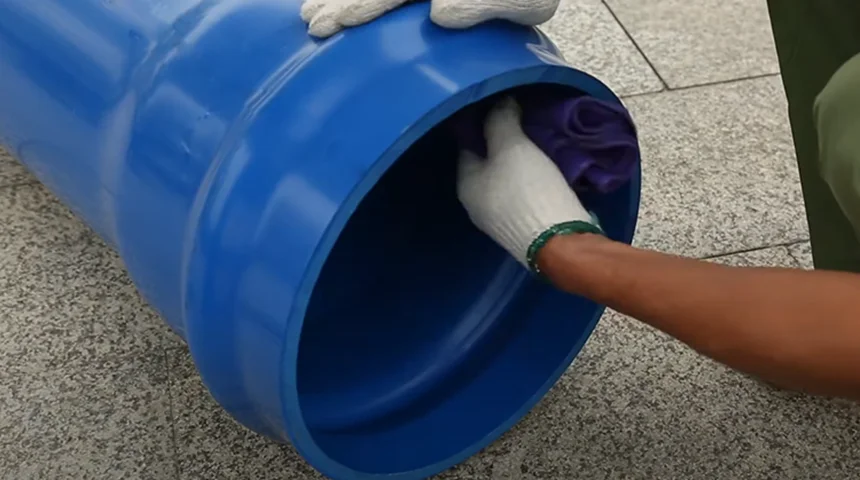
As a buyer, I'm impressed with SIFFO's UPVC pipe. Wide size range, high pressure ratings, and detailed specs. Ideal for reliable, long-lasting water supply systems. Highly recommended.