

▎Client Profile
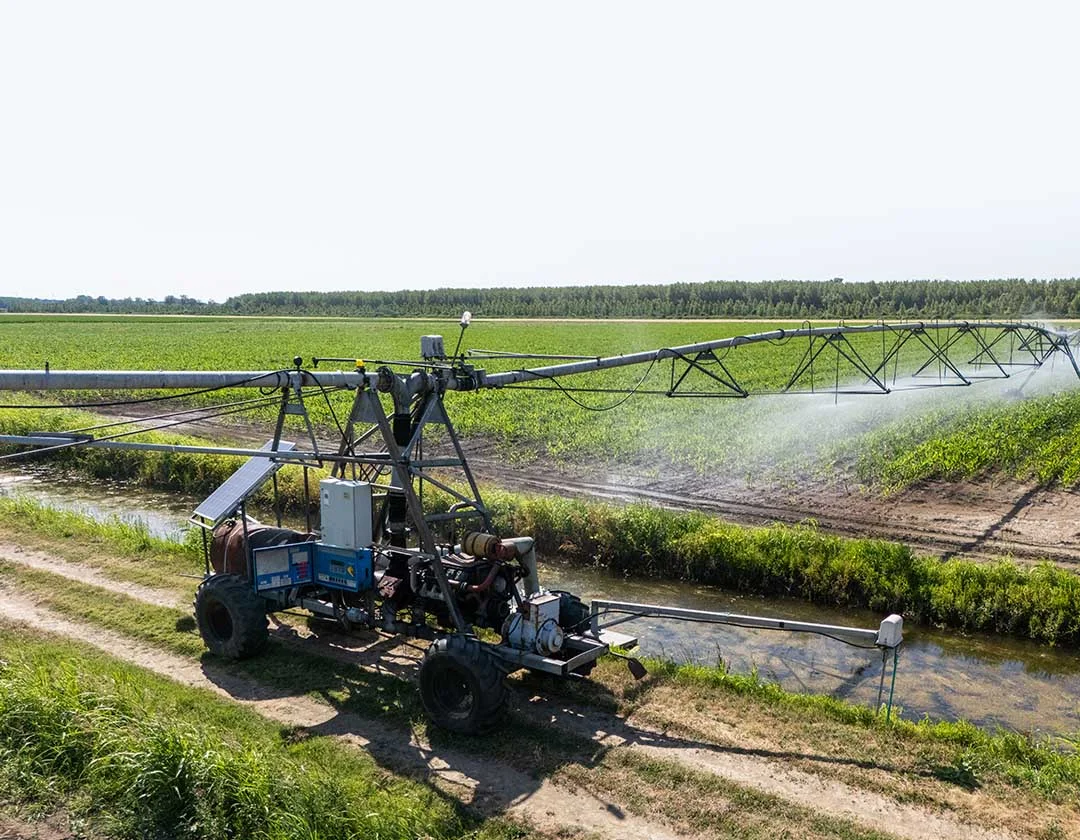
The project is situated within the agricultural heartland of the Kyrgyz Republic, a landlocked nation in Central Asia where agriculture constitutes approximately 20% of GDP and employs over 50% of the labor force . The farm operates in a region characterized by semi-arid climatic conditions and significant topographical variations typical of the Tien Shan mountain foothills, where irrigation infrastructure serves as the critical lifeline for agricultural productivity. The specific implementation site relies heavily on seasonal meltwater from mountain glaciers and snowpack, with declining river flows and increasing climate variability creating urgent pressure for modernization . This location places the farm at the center of national food security concerns, where reliable water access directly determines agricultural viability and rural economic stability.
The farm operates within the broad-acre agricultural sector, focusing on crop cultivation in a continental climate characterized by hot, dry summers with temperatures frequently exceeding 35°C and cold winters plunging below -20°C . Annual precipitation averages less than 400mm in many agricultural zones, with drought periods becoming increasingly frequent due to climate change impacts on the region's cryosphere . This arid and semi-arid climate classification places extraordinary demands on irrigation infrastructure, as evapotranspiration rates frequently exceed precipitation during the critical growing season from May through September. The sector faces mounting pressure from accelerated glacial retreat and increasingly irregular precipitation patterns, prompting the Kyrgyz government to prioritize water-saving irrigation expansion targeting 200,000 hectares by 2030, up from the current 16,000 hectares under modern irrigation systems .
▎Challenges
Inland Water Scarcity and Climate Extremes: The continental climate results in high evaporation rates and virtually no rainfall during the summer; consequently, there is a severe imbalance between water demand and supply during the critical crop growth stages.
Aging Infrastructure: Existing earthen and concrete canals suffer from high rates of deterioration; approximately 30% of the irrigation channels are unlined earthen ditches, resulting in water transmission losses reaching as high as 40%.
Requirement for Large-Scale Uniform Irrigation: The 1,500-acre (approximately 607-hectare) farm requires a solution that ensures uniform water pressure distribution across long distances and significant elevation differences.
Balancing Cost-Effectiveness and Durability: Given the limited financial capacity of local agriculture, there is a need for affordable yet long-lasting solutions to avoid the additional costs associated with frequent replacement and maintenance.
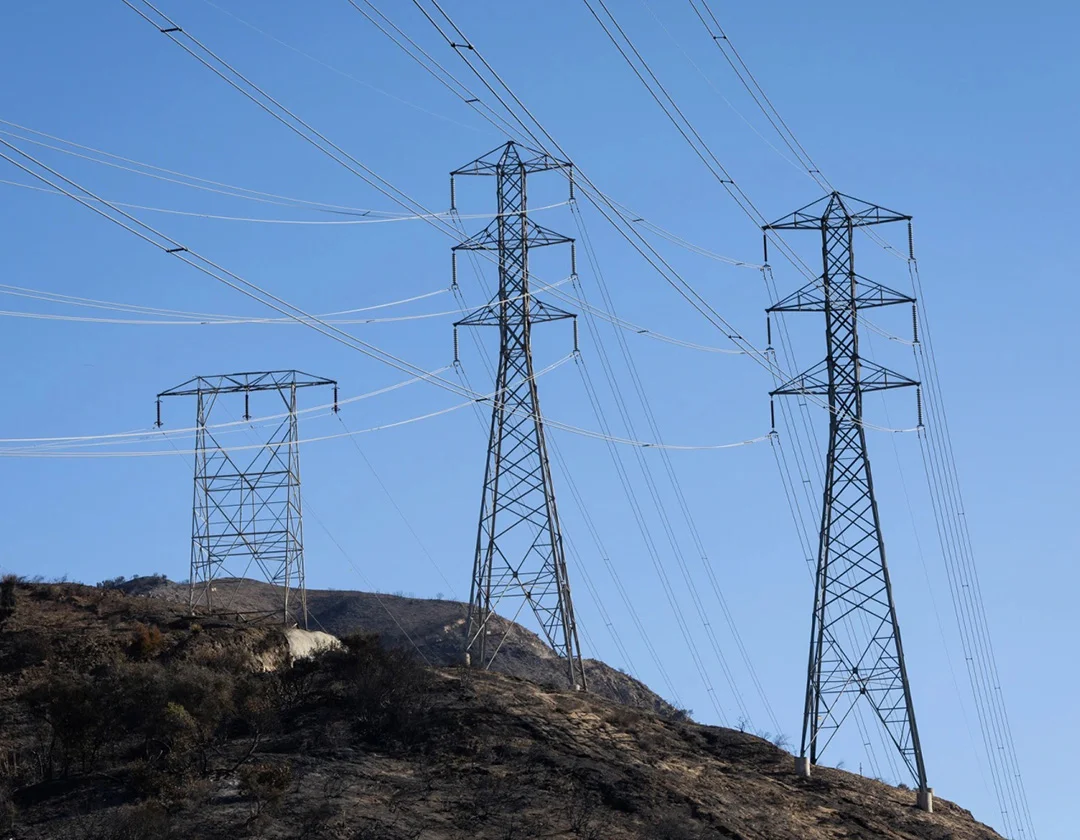
Terrain and Pressure Fluctuations: The farm features undulating terrain, making traditional piping systems susceptible to pressure fluctuations caused by elevation differences and the "water hammer" effect.
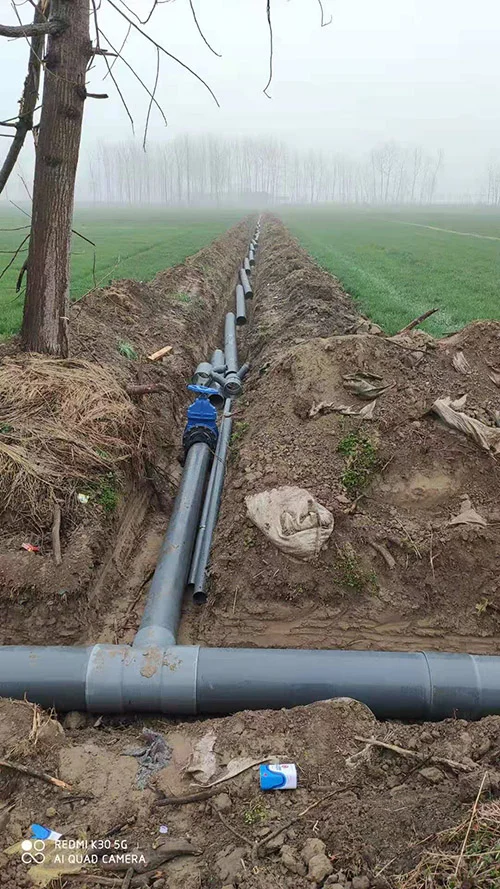
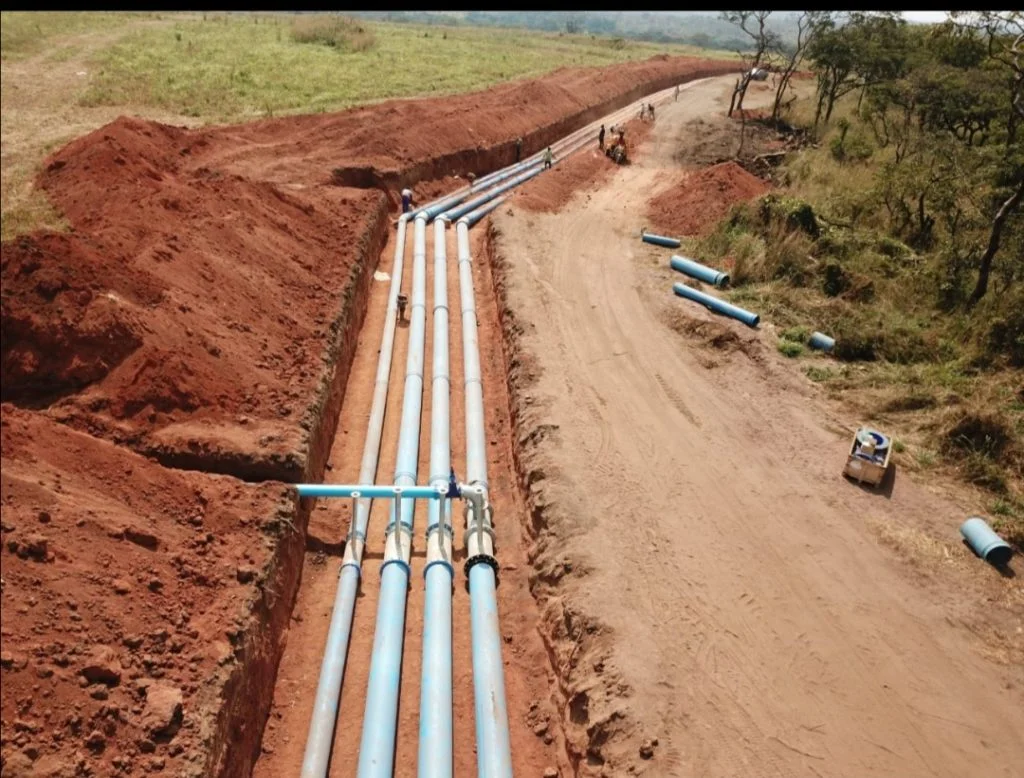
▎The SIFFO Solution
Shandong SIFFO Plastic Technology Co., Ltd. engineered a comprehensive PVC pressure irrigation system tailored to Central Asian agricultural realities:
High-Performance Infrastructure
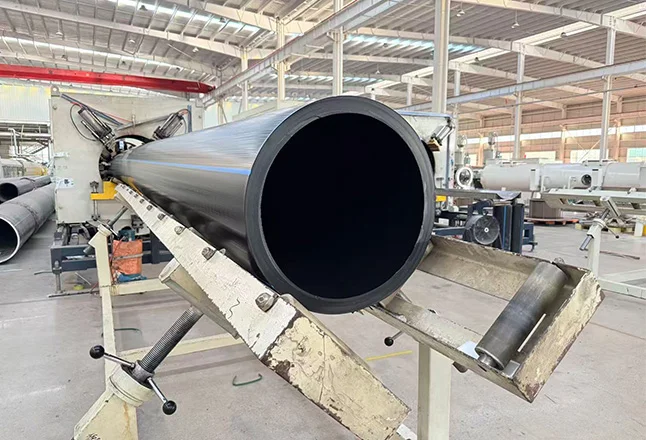
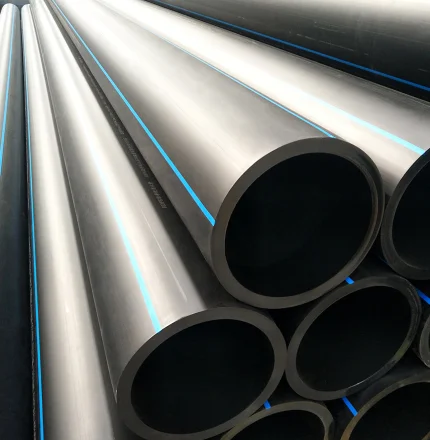
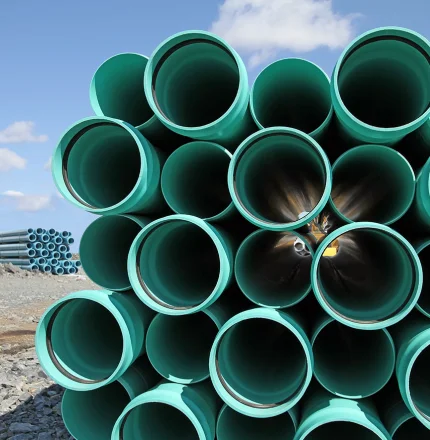
Main Pipeline Specifications: 160mm–200mm diameter, PN16-rated (16 bar) PVC pressure piping, offering exceptional structural integrity and resistance to pressure surges.
Differentiated Pressure Rating: The technical team has specified a PN16 pressure rating—significantly exceeding standard PN10 agricultural norms—to ensure the system remains resilient against pressure fluctuations caused by undulating terrain and against water hammer effects.
Material Standards: Constructed using 100% virgin PVC-U material, guaranteeing a service life of over 50 years; features include UV resistance, corrosion resistance against fertilizers, and high impact resistance at low temperatures (remaining crack-free at -10°C).
Ring-Rubber Joint System: Advanced elastomeric seal connections enabling rapid, tool-free assembly while accommodating thermal expansion and ground movement
Precision Sprinkler Integration: Compatible high-efficiency rotator sprinklers delivering uniform water distribution with <5% evaporation loss
Technical Differentiation
Our technical team specified PN16 pressure ratings significantly exceeding standard PN10 agricultural norms, ensuring system resilience against water hammer effects and topography-induced pressure variations across the farm's undulating terrain.
Economic Value
Total installed cost remained 35% below comparative metal or HDPE alternatives, delivering IRR-positive returns within the first growing season through yield improvements and water cost savings.
▎Implementation
Engineering & Logistics
SIFFO's project engineers conducted hydraulic modeling to optimize pipe routing across the 100-hectare parcel, minimizing material waste while ensuring full-field coverage. Despite Kyrgyzstan's challenging logistics corridor, our manufacturing facility delivered 12km of customized pipe lengths within 18 days.
SIFFO Engineers Dispatched to Kyrgyzstan Project Site
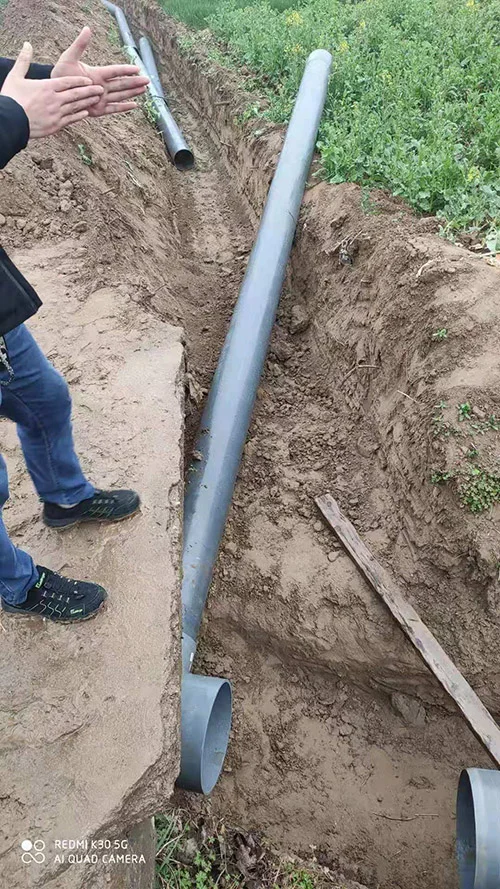
ecognizing the critical importance of proper installation for system longevity and performance, SIFFO provided comprehensive on-site technical supervision throughout the construction phase, with experienced engineers deployed to the Kyrgyzstan farm to oversee critical installation procedures . These technical experts provided real-time guidance on trench excavation standards (minimum 1.0 meter depth for frost protection, 0.3 meter sand bedding for pipe protection), pipe handling procedures (avoiding impact damage during unloading and stringing), and joint assembly techniques (proper lubrication and insertion depths for rubber ring connections) . The presence of SIFFO engineers ensured that installation practices conformed to international standards (ISO 4422 for PVC pipe installation) while adapting to local construction capabilities and equipment limitations.
Practical Instruction for Local Farm Technicians
A critical component of SIFFO's service delivery involved comprehensive training programs for the farm's technical staff and maintenance personnel, transferring knowledge necessary for independent system operation and basic troubleshooting . Training modules covered pipe system maintenance (leak detection, joint inspection, pressure testing procedures), sprinkler adjustment and replacement, winterization protocols (draining systems to prevent freeze damage during Kyrgyzstan's harsh winters), and basic hydraulic troubleshooting (identifying blockages, pressure irregularities, or pump issues) . The hands-on approach ensured that local technicians developed practical competencies in rubber ring joint assembly, valve operation, and filtration system maintenance, reducing long-term dependency on external technical support.
Supervision of Rubber Ring Connection Procedures and Pressure Testing
SIFFO engineers implemented rigorous quality control protocols during the installation phase, supervising critical connection procedures to ensure that rubber ring joints were properly lubricated, pipes fully inserted to reference marks, and joint alignments maintained within allowable tolerances (maximum 2 degrees angular deflection) . Following installation completion, SIFFO supervised hydrostatic pressure testing procedures in accordance with international standards, involving gradual pressurization to 1.5 times the working pressure (approximately 9-10 bar for this PN16 system) and holding for minimum periods to verify joint integrity and absence of leakage . This quality assurance process identified and rectified several installation issues (improper gasket seating, insufficient insertion depths) before system commissioning.
▎Results
Conservation Achievement: 50% Reduction in Water Consumption vs. Flood Irrigation
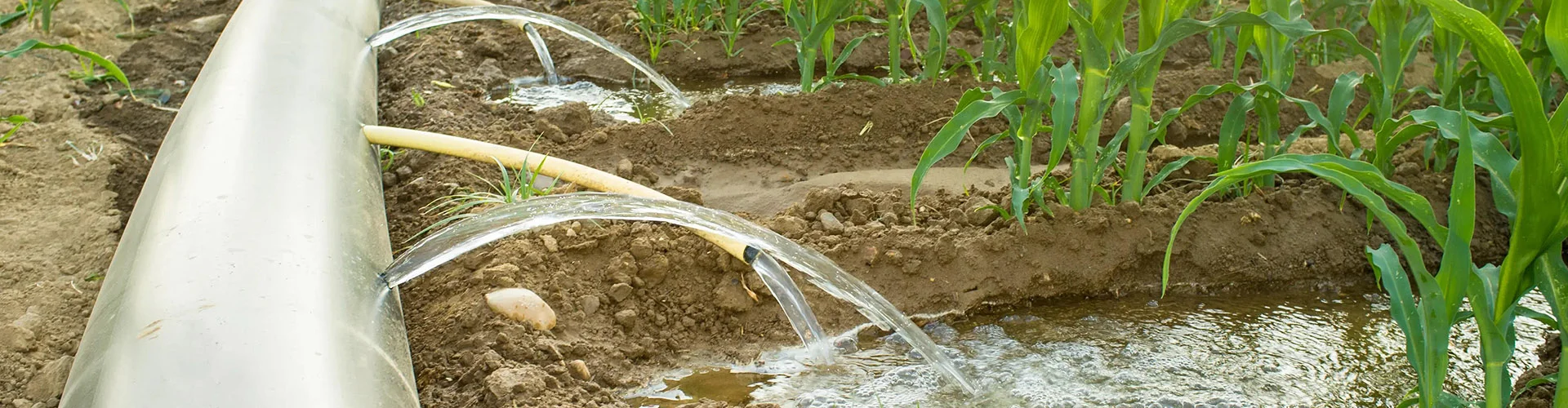
The implemented system achieved the targeted approximately 50% reduction in water consumption compared to the farm's previous flood irrigation practices, representing a transformation from water-intensive surface application to precision pressurized delivery . This conservation resulted from the combination of pressurized distribution eliminating seepage losses (previously 20-30% in unlined earthen canals), reduction of application losses through controlled sprinkler precipitation rates matching soil infiltration capacities (eliminating the runoff common in flood systems), and elimination of deep percolation losses through precise application depth control . For the 1,500 mu farm, this 50% reduction translates to annual water savings of 250,000-400,000 cubic meters, assuming typical irrigation requirements of 5,000-8,000 m³/ha/season.
Operational Cost Reduction: 40% Decrease in Annual Irrigation Expenses
The operational cost structure of the SIFFO irrigation system offers significant advantages over traditional irrigation methods, with annual operating expenses projected to decrease by approximately 40% compared to the farm's previous flood irrigation practices . These reductions stem primarily from decreased energy consumption (smaller pumps operating for shorter durations due to higher application efficiency), reduced labor requirements (one operator managing 1,500 mu via automated controls versus multiple workers managing flood irrigation), and elimination of the land preparation costs associated with maintaining flood irrigation furrows and leveling requirements.
Yield Enhancement: 30% Increase in Crop Production Through Optimized Hydration
The improved water management capabilities of the SIFFO irrigation system contributed to documented yield enhancements of approximately 30% compared to pre-installation flood irrigation baselines . This yield improvement resulted from the ability to maintain optimal soil moisture levels throughout the growing season, eliminating both water stress periods that limit plant growth and waterlogging conditions that cause root hypoxia and nutrient leaching. The uniformity of water distribution achieved through pressure-regulated sprinklers (Christiansen Uniformity Coefficient >85%) ensures that all plants within the 1,500 mu area receive identical water volumes, producing uniform crop maturity that facilitates mechanized harvesting.
Projected Lifespan: 15+ Years Operational Durability in Central Asian Climate
Based on SIFFO's material specifications and the performance characteristics of PVC-U materials, the irrigation system is projected to provide operational service exceeding 15 years under the Central Asian climate conditions . This exceptional longevity derives from the material's inherent resistance to corrosion, chemical degradation, and biological attack, combined with UV-stabilized formulations that prevent photodegradation from intense high-altitude sun exposure. The PN16 pressure class provides substantial safety margins against fatigue failure and creep rupture over extended service periods.
▎Client Testimonial
"We were hesitant about the installation complexity for such a large area, but Shandong SIFFO's team stayed with us through the entire setup. The rubber joint system proved incredibly forgiving on our uneven ground, and the PN16 pressure rating gives us confidence during peak pumping periods. This system has fundamentally changed our water security."
— Farm Operations Manager, Chuy Valley Agricultural Cooperative
▎About Shandong SIFFO Plastic Technology Co., Ltd.
SIFFO specializes in manufacturing high-quality PVC piping systems for agricultural, industrial, and civil applications. With a focus on innovation, reliability, and customer support, we provide tailored solutions to clients worldwide. Our products are designed to perform in challenging environments, delivering long-term value and efficiency.
▎Why PVC Pipe Was Selected for the Farm Irrigation System
For large-scale agricultural irrigation, the pipeline system must provide reliable water delivery while keeping installation and maintenance costs under control. PVC pressure pipes are well suited to farm irrigation because of their corrosion resistance, smooth internal surface, lightweight construction, and long service life.
Compared with conventional metal pipelines, PVC irrigation pipes are resistant to rust and many common agricultural chemicals. Their smooth inner wall also helps reduce friction losses, allowing efficient water transportation across large irrigation networks.
For the 1,500-acre farm project in Kyrgyzstan, the PVC irrigation system provided a practical solution for distributing irrigation water across agricultural areas while supporting reliable and efficient farm operations.
▎PVC Irrigation Pipe vs HDPE Irrigation Pipe
Feature | PVC Irrigation Pipe | HDPE Irrigation Pipe |
Corrosion Resistance | Excellent | Excellent |
Weight | Lightweight | Very lightweight |
Rigidity | Higher | More flexible |
Flexibility | Moderate | Excellent |
Hydraulic Performance | Excellent | Excellent |
Installation | Relatively simple | Fusion welding required |
Long Straight Runs | Suitable | Highly suitable |
Uneven Terrain | Suitable with fittings | Excellent flexibility |
Agricultural Irrigation | Excellent | Excellent |
Best Use | Pressure irrigation networks | Flexible and complex irrigation networks |
PVC and HDPE are both widely used for agricultural irrigation, but their strengths are different. PVC is particularly attractive for structured pressure irrigation networks where rigidity, dimensional stability, hydraulic efficiency, and cost-effective installation are important. HDPE offers greater flexibility and is often preferred where the pipeline must accommodate ground movement, uneven terrain, or complex installation conditions.
▎FAQ
1. Is PVC pipe suitable for large-scale agricultural irrigation?
Yes. Pressure-rated PVC pipes can be used for large agricultural irrigation networks, including main lines, branch pipelines, and field distribution systems. Pipe diameter and pressure class should be selected according to the required flow rate, operating pressure, pipeline layout, and irrigation method.
2. What are the advantages of PVC irrigation pipe compared with metal pipe?
PVC irrigation pipe does not rust, is considerably lighter than many metal alternatives, and has a smooth internal surface that helps reduce hydraulic friction. It can also simplify transportation and installation, particularly for large agricultural projects.
3. Can PVC irrigation pipes be used for buried farm pipelines?
Yes. Properly specified PVC pressure pipes can be installed underground for agricultural irrigation. Correct trench preparation, bedding, jointing, backfilling, and pressure testing are important to ensure reliable long-term performance.
4. What pipe size is suitable for a large farm irrigation system?
There is no single pipe diameter suitable for every farm. The appropriate size depends on irrigation water demand, required flow rate, operating pressure, pipeline length, elevation changes, and the number of irrigation zones. SIFFO can recommend pipe dimensions and pressure ratings based on project requirements.
5. How are PVC irrigation pipes connected?
PVC irrigation systems can use different jointing methods depending on the pipe specification and project requirements, including solvent-cement joints, rubber-ring joints, or other approved connection systems. The appropriate connection method should be selected according to the applicable pipe standard and installation conditions.
6. Is PVC irrigation pipe resistant to corrosion?
Yes. PVC is inherently resistant to rust and corrosion, which is a major advantage in agricultural irrigation applications where water quality, soil conditions, fertilizers, or other chemicals may affect conventional metal pipelines.
7. How long can a PVC irrigation pipe system last?
A properly designed, manufactured, installed, and maintained PVC pressure irrigation system can provide long-term service. Actual service life depends on operating pressure, temperature, water quality, installation conditions, UV exposure, and compliance with the applicable design and installation requirements.
8. Can SIFFO supply a complete PVC irrigation pipeline system?
Yes. SIFFO can supply PVC irrigation pipes together with compatible fittings and pipeline components for agricultural irrigation projects. For large-scale projects, the pipe diameter, pressure class, connection method, fittings, and installation requirements can be coordinated according to the project design.
9. Can SIFFO provide PVC irrigation pipes for overseas agricultural projects?
Yes. SIFFO supplies PVC pipe systems for international agricultural and irrigation projects. Project-specific requirements such as pipe diameter, pressure rating, standards, fittings, quantities, packaging, and delivery arrangements can be evaluated before quotation.
▎Need a PVC Irrigation System for Your Farm Project?
Planning a large-scale agricultural irrigation project? SIFFO can provide PVC irrigation pipes and fittings based on your required flow rate, operating pressure, pipe diameter, pipeline layout, and project conditions.
Get a Project-Based PVC Irrigation Pipe Solution
Send us your project details, including:
Farm area or irrigation area
Required pipe diameter
Flow rate and operating pressure
Pipeline length
Irrigation method
Required standards
Estimated quantity
Contact SIFFO for a PVC Irrigation Pipe & Fittings Quote