
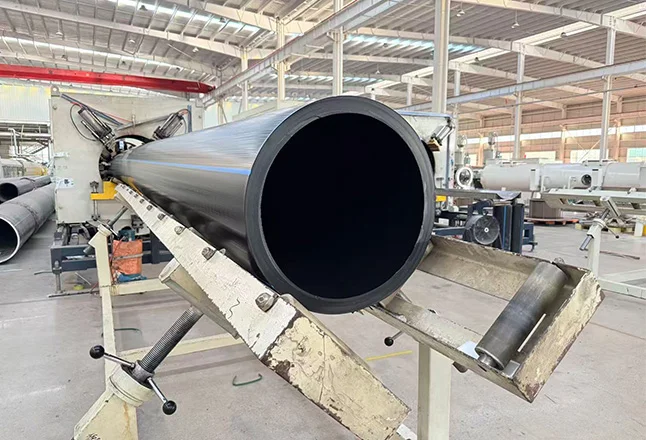

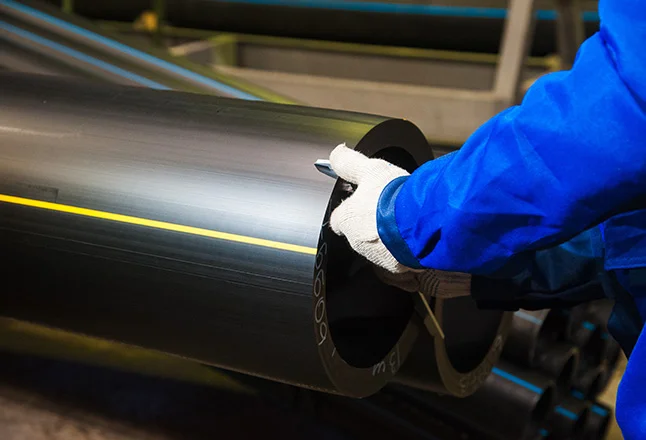
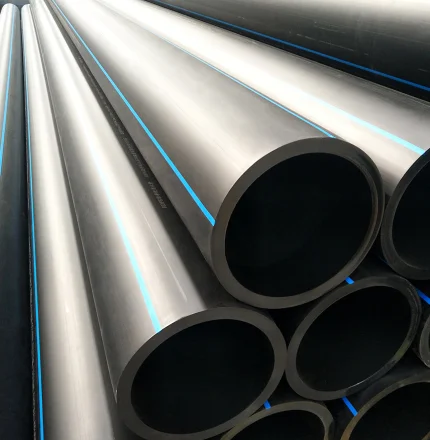
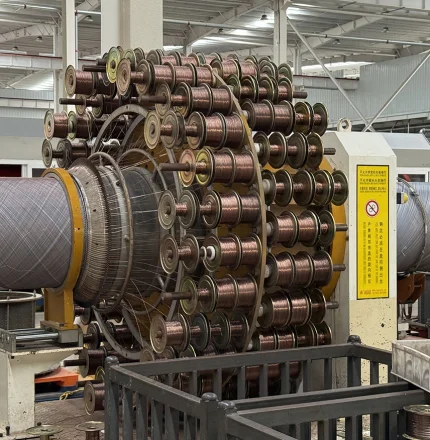
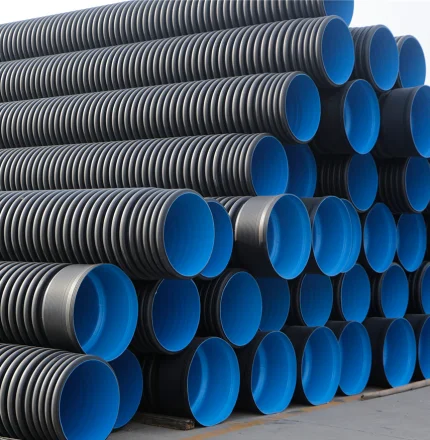
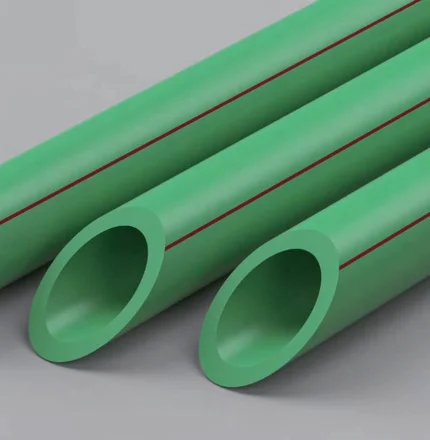
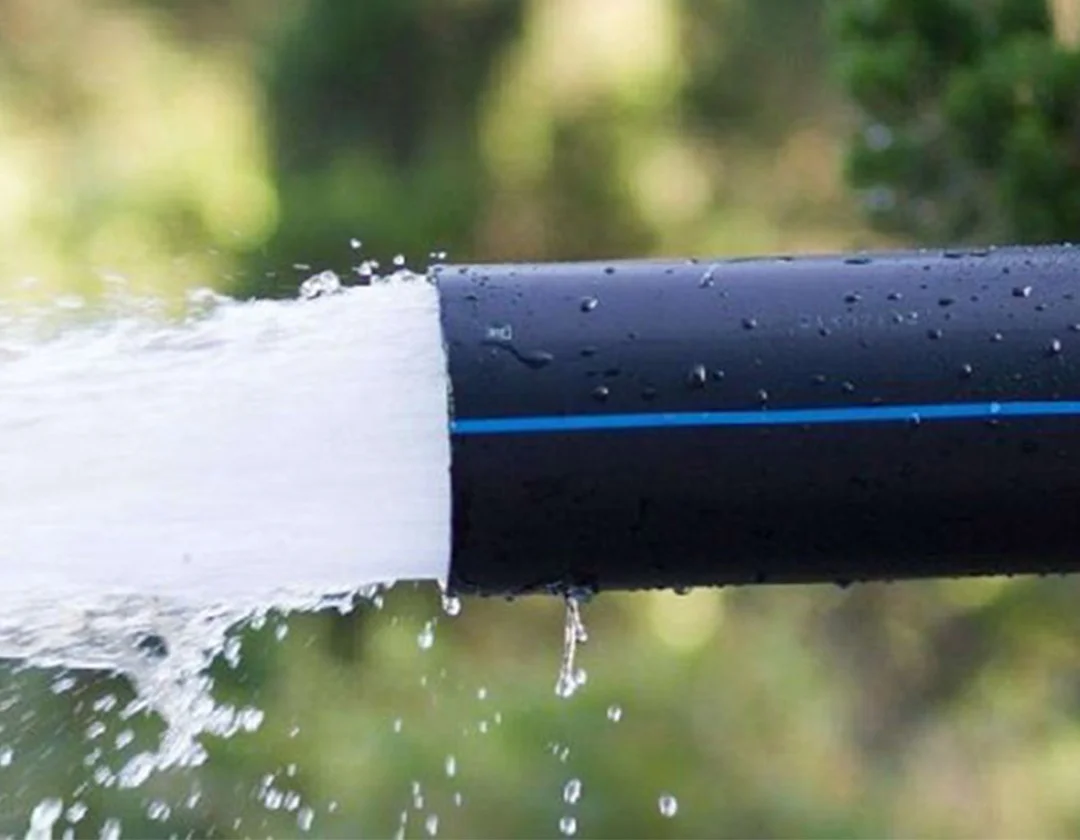
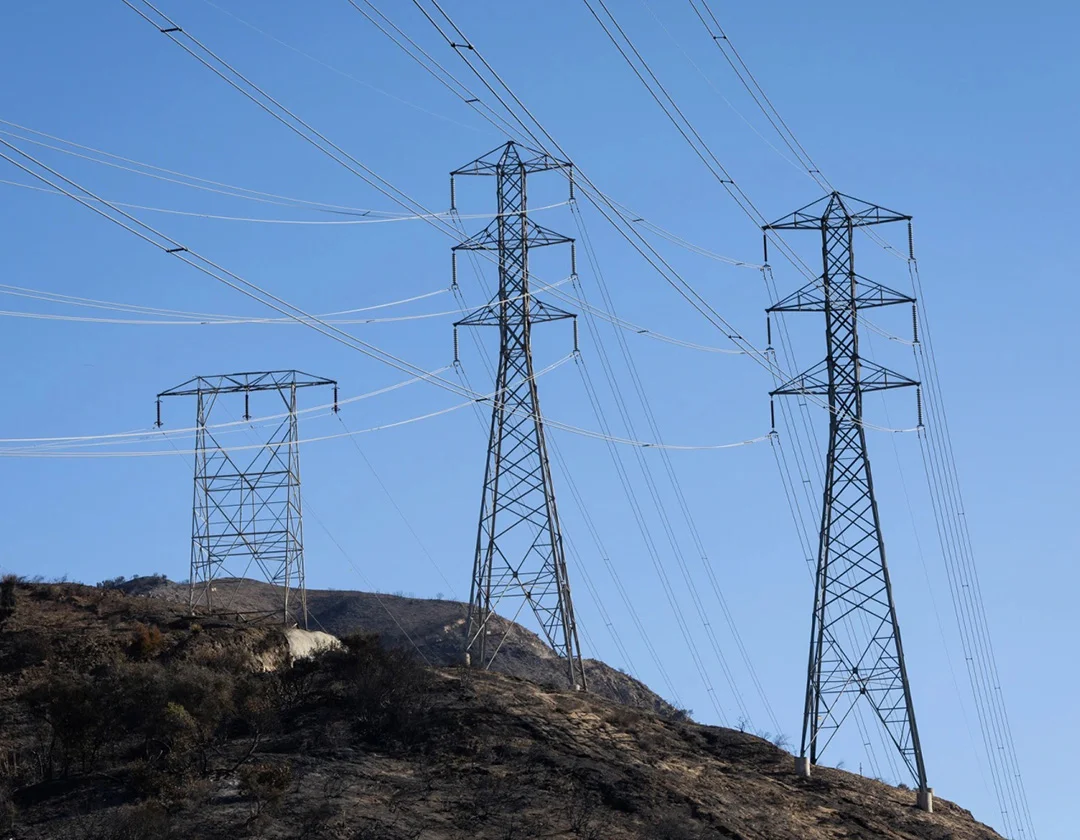
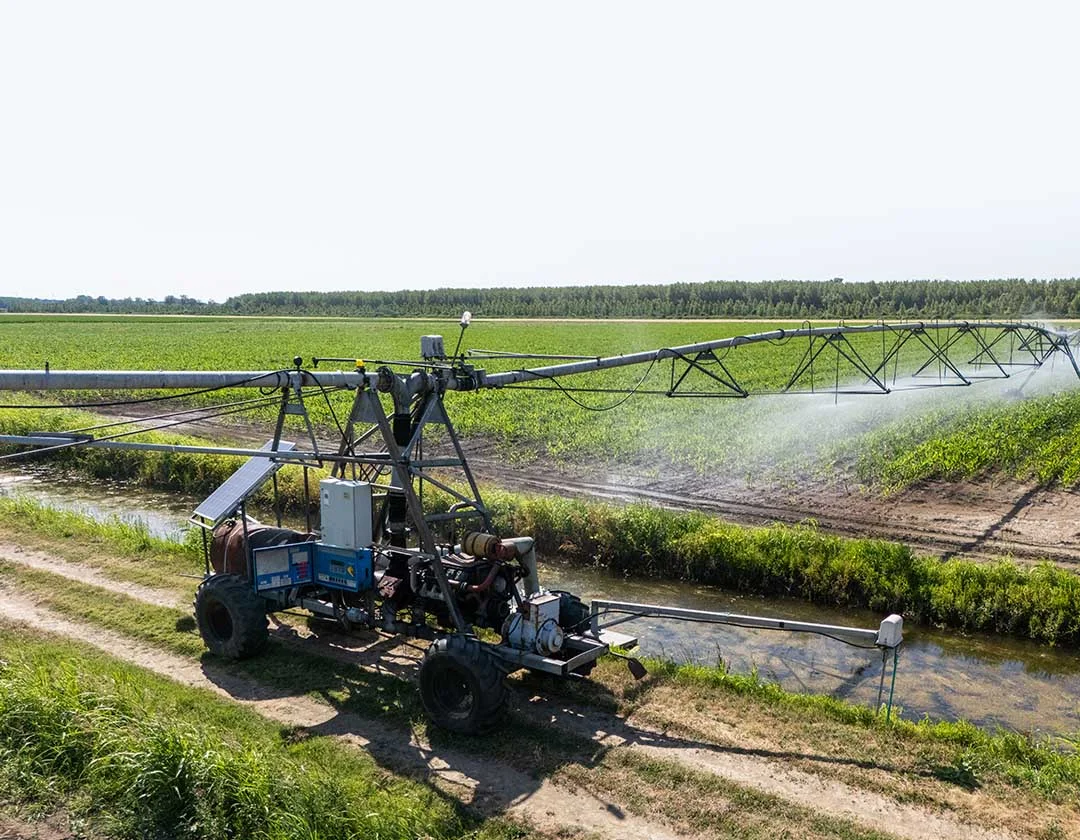
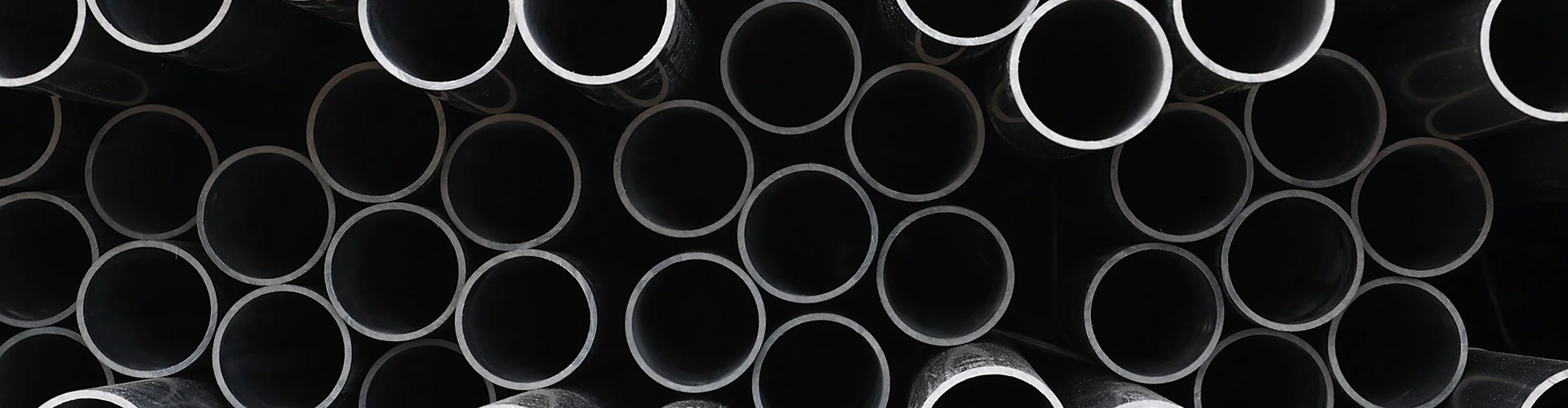
SDR11 PN16 HDPE pipes represent the gold standard in high-pressure water supply systems. The Standard Dimension Ratio (SDR) 11 indicates a pipe wall thickness that provides an optimal balance between pressure resistance and material efficiency, while PN16 denotes a pressure rating of 16 bar (1.6 MPa)—making these pipes ideal for municipal water distribution, industrial applications, and high-rise building supply systems.
Manufactured from PE100-grade high-density polyethylene, these pipes deliver exceptional performance characteristics that have revolutionized the global piping industry. With a density of ≥0.945 g/cm³ and the ability to withstand bending at 30 times their outer diameter without jointing, SDR11 PN16 pipes are engineered for durability and flexibility.
echnical Deep Dive: Understanding SDR11 & PN16
When selecting pipes for water supply, you will often see the specification SDR11 PN16. But what does it actually mean for your project?
PN16 (Nominal Pressure 16): This indicates the pipe can safely handle a maximum operating pressure of 16 bar (approximately 232 psi) at 20°C. This makes it suitable for main transmission lines, high-rise building supply, and hilly terrains where high static pressure is a factor.
SDR11 (Standard Dimension Ratio 11): SDR is the ratio of pipe diameter to wall thickness. An SDR11 rating means the wall is thick enough to sustain the PN16 pressure. The lower the SDR number, the thicker the wall. SDR11 offers a perfect balance between strength and material efficiency.
Key Advantages of HDPE Pipes
1. Superior Durability & Longevity
HDPE pipes boast a service life exceeding 50 years, even under aggressive environmental conditions. Their resistance to corrosion, chemical attack, and UV degradation makes them superior to traditional metallic pipes. Unlike steel or cast-iron pipes that suffer from rust and scaling, HDPE maintains its smooth internal surface throughout its lifecycle, ensuring consistent flow rates and reduced pumping energy.
2. Leak-Free Jointing Technology
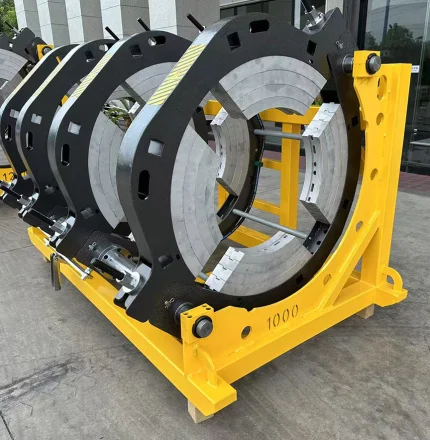
The fusion welding technology used in HDPE pipe installation creates homogeneous, leak-free joints with strength exceeding the pipe itself. Electrofusion and butt-fusion techniques have reduced joint leak rates to below 0.1% . This is critical in an era where water loss reduction is a global priority—municipalities replacing aging metallic mains with HDPE have reported 45% reductions in annual leakage .
3. Flexibility & Installation Efficiency
HDPE's flexibility enables trenchless installation methods like Horizontal Directional Drilling (HDD), which reached 6,300 km globally in 2024 . This minimizes surface disruption in urban areas and reduces restoration costs by 28% . The ability to coil smaller diameter pipes (≤63mm) further streamlines logistics and installation time.
4. Chemical & Abrasion Resistance
HDPE pipes withstand pH ranges from 2 to 12, making them suitable for transporting aggressive fluids in industrial settings. Their smooth inner surface (Manning's n ≈ 0.009) reduces friction losses and prevents biofilm accumulation, ensuring water quality integrity.
5. Environmental Sustainability
As 100% recyclable materials, HDPE pipes align with global sustainability goals. Their lightweight nature reduces transportation emissions, and the elimination of corrosion-related maintenance lowers lifecycle environmental impact. European manufacturers are increasingly utilizing green bonds to finance sustainable production, with one recent €180 million issuance offsetting 68,000 tCO₂e annually.
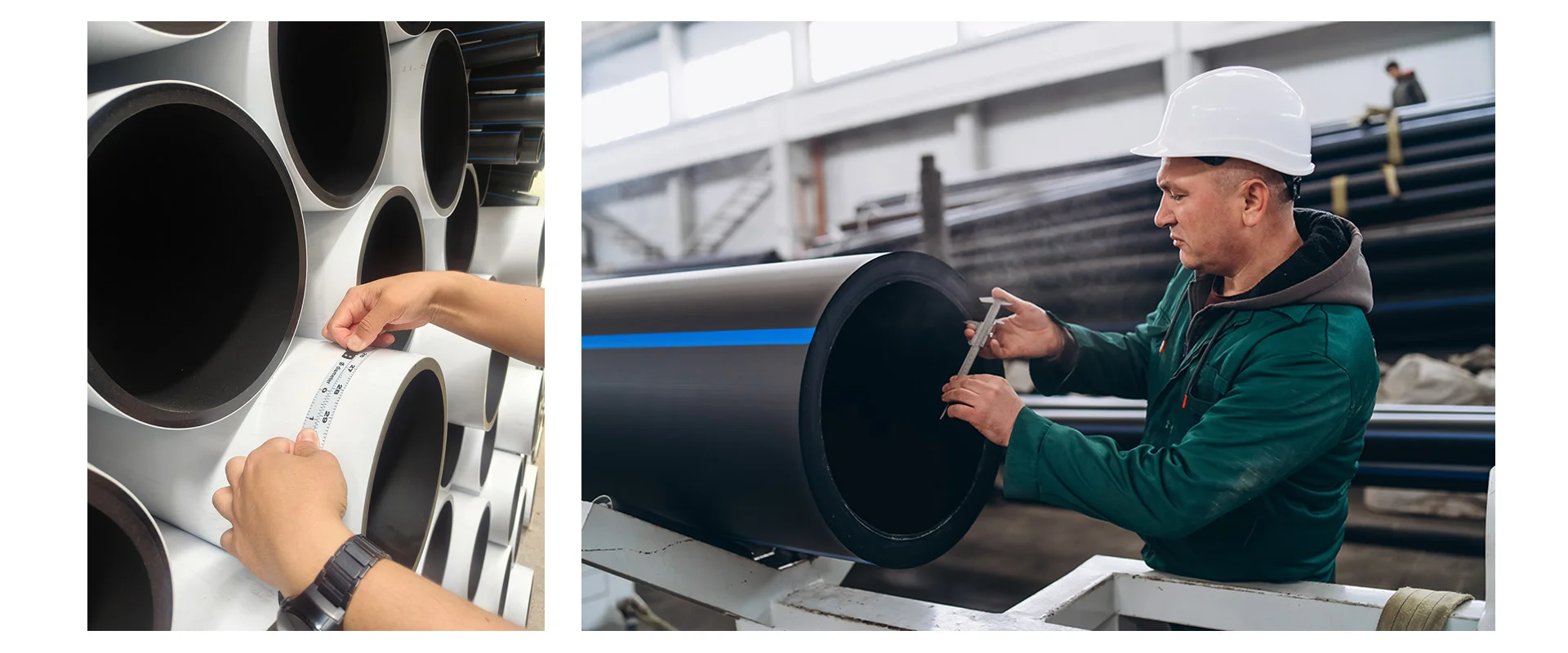
Global Applications: Where is it used?
The versatility of SDR11 PN16 HDPE pipes has led to their adoption across a wide range of global infrastructure projects:
Municipal Water Supply: Major cities are replacing aging cast-iron mains with HDPE to reduce non-revenue water (NRW) loss. The leak-free fusion joints are critical here.
Rural Clean Water Projects: In developing nations, NGOs and governments use these pipes to transport clean water from remote sources to villages. The lightweight nature allows for installation in areas without heavy machinery.
Global Market Trends & Applications
The global HDPE pipes market is experiencing unprecedented growth. According to recent industry analysis, the market is expected to reach USD 30.9 billion by 2034, driven by infrastructure modernization and sustainable development initiatives .
Regional Market Dynamics
Asia-Pacific dominates global consumption with 42% market share, installing approximately 2.65 million km of PE pipes in 2024. China alone contributed 1.36 million km, fueled by rural revitalization programs and the Belt and Road Initiative's cross-border infrastructure projects . India's $75 billion investment in water infrastructure has driven an 18% annual increase in HDPE installations .
North America focuses on infrastructure rehabilitation, with $8.3 billion in federal grants funding the replacement of 910 km of lead service lines with HDPE alternatives in 2024 . The region's adoption of HDD methods for 44% of new mains demonstrates the shift toward minimally invasive installation techniques.
Europe emphasizes regulatory compliance and smart water networks, with €420 million in EU Green Deal grants supporting the replacement of 3,500 km of aging water mains . The region leads in RFID-tagged fittings adoption (78%), enabling digital asset management and predictive maintenance.
Middle East & Africa represents a high-growth region where HDPE's corrosion resistance is essential for saline soil conditions. Saudi Arabia installed 85,000 km of potable HDPE mains in 2024, with 91% being HDPE to resist aggressive environments.
The SIFFO Advantage for International Buyers
Certified Quality: SIFFO understands that international projects require strict compliance. They hold ISO, WRAS (Water Regulations Advisory Scheme - UK) , and SGS certifications, ensuring their SDR11 PN16 pipes are safe for potable water in regulated markets like Europe and North America.
Supply Chain Efficiency: Located in a major industrial zone, SIFFO can mobilize raw materials and finished goods quickly. This results in fast delivery times—a critical factor when large-scale infrastructure projects face tight deadlines.
Full System Solution: Beyond just pipes, SIFFO supplies the fittings and technical support needed for electrofusion or butt-welding, making them a one-stop shop for contractors.
R&D Driven: The company focuses on new technology applications in the PE industry, ensuring that the SDR11 PN16 pipes they export meet the evolving needs of modern engineering.
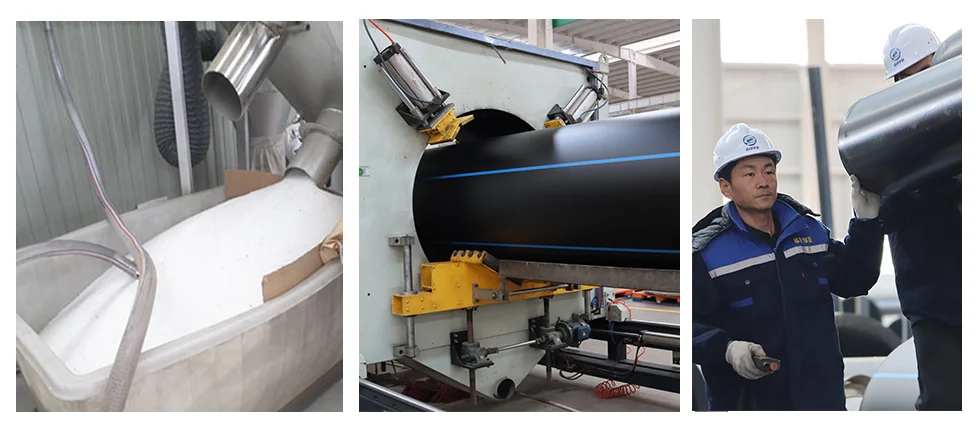
SDR11 PN16 HDPE pipes represent the convergence of performance, sustainability, and economic efficiency in modern water infrastructure. As global markets invest $3.1 billion annually in PE pipe production capacity , the technology's dominance in new installations is undeniable.
For international project developers, municipalities, and distributors seeking reliable HDPE supply chains, SIFFO Pipe offers a compelling value proposition: world-scale manufacturing, premium material quality, comprehensive certification, and proven export logistics spanning 100+ countries. In an industry where joint integrity and material consistency determine decades of service life, SIFFO's commitment to 100% virgin raw materials and rigorous quality control provides the assurance that critical infrastructure demands.
As we advance toward 2030, HDPE pipes—particularly SDR11 PN16 specifications—will remain the backbone of global water security, sustainable urbanization, and industrial development. The future flows through polyethylene.