


▎Schedule 40 PVC Pipe Uses
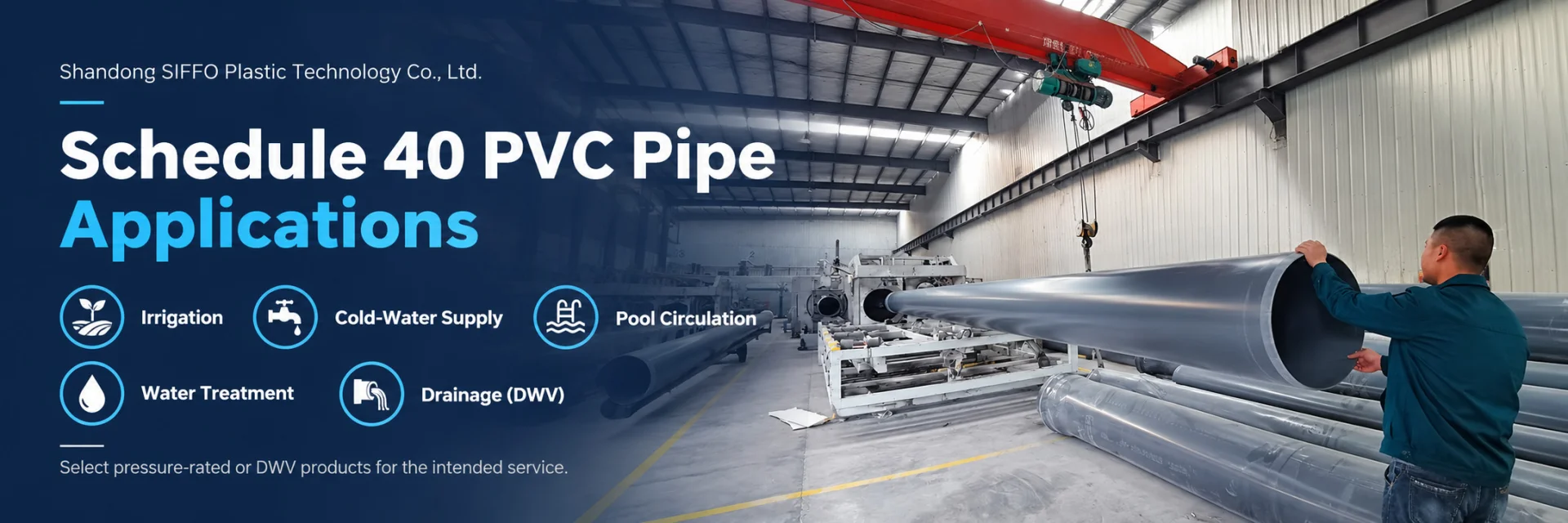
Schedule 40 PVC pipe is widely used for irrigation, cold-water distribution, swimming pool circulation and selected industrial liquid-handling systems. Products manufactured for drain, waste and vent service are also common in building drainage.
Its popularity comes from a practical combination: corrosion resistance, manageable weight, established joining methods and a broad range of fittings. For project buyers, these features can simplify procurement and installation when the product suits the operating conditions.
▎What Does Schedule 40 Mean?
A pipe schedule defines a series of wall thicknesses associated with nominal pipe sizes. Schedule 40 is neither a fixed wall thickness nor a fixed pressure rating. Wall thickness changes with nominal size, and different sizes can have different allowable working pressures.
For PVC pressure pipe, ASTM D1785 is a commonly specified standard covering Schedule 40, 80 and 120 products. Its scope concerns pressure-rated pipe for chemically compatible liquids. Compliance does not automatically establish approval for every installation or destination market.
At the same nominal size within the same IPS dimensional system, Schedule 80 PVC pipe has a thicker wall and a smaller internal bore than Schedule 40, while the specified outside diameter remains the same.
International buyers should also distinguish schedule pipe from metric SDR/PN products. Matching an inch size to a convenient millimetre label does not establish dimensional compatibility.
▎What Is Schedule 40 PVC Pipe Used For?
1. Agricultural and Landscape Irrigation
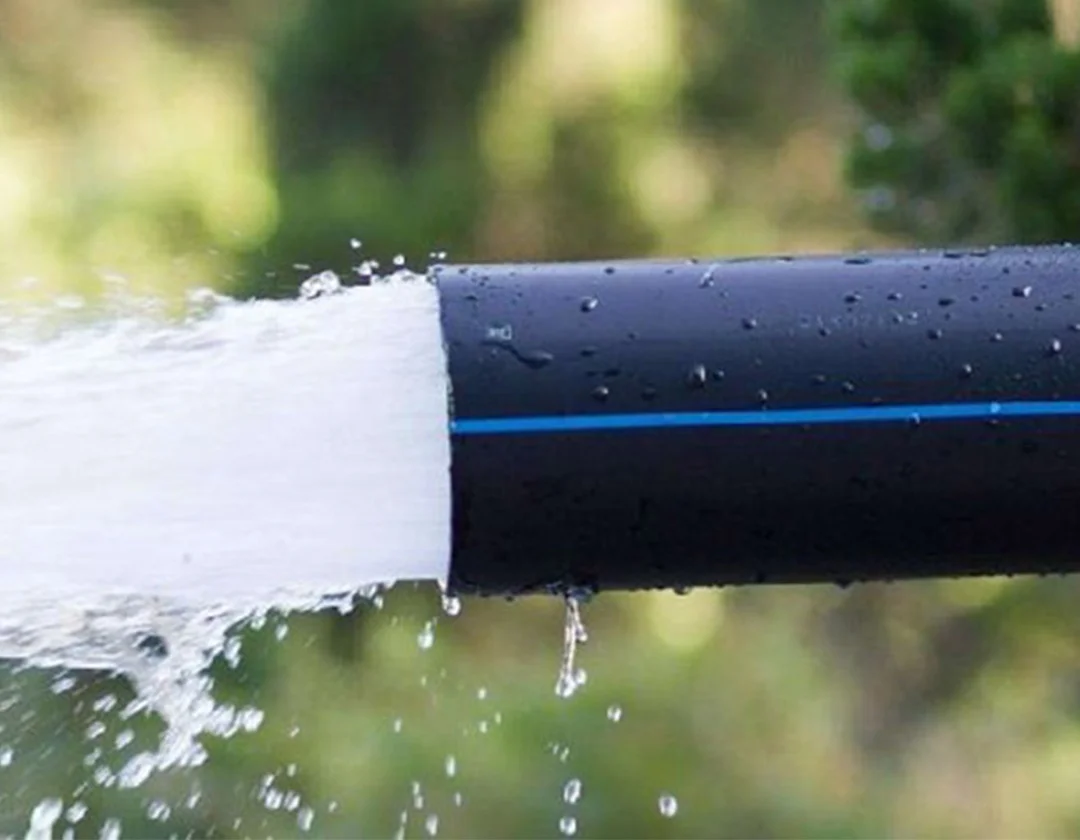
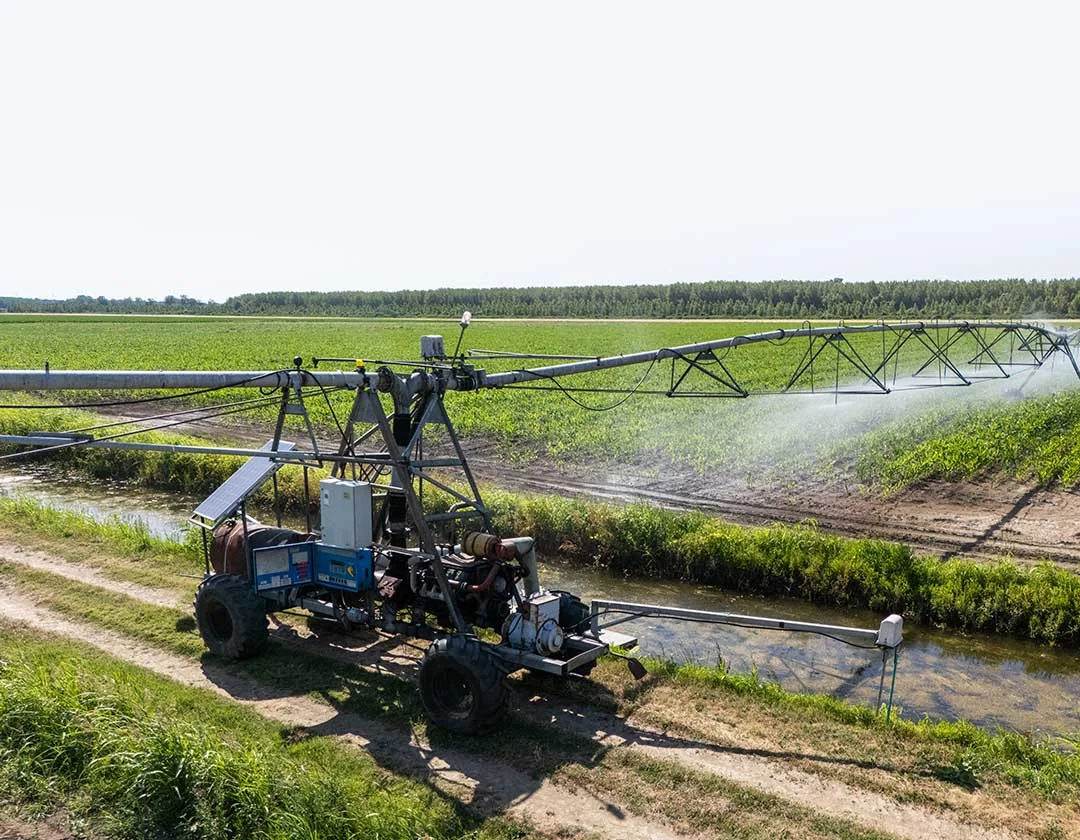
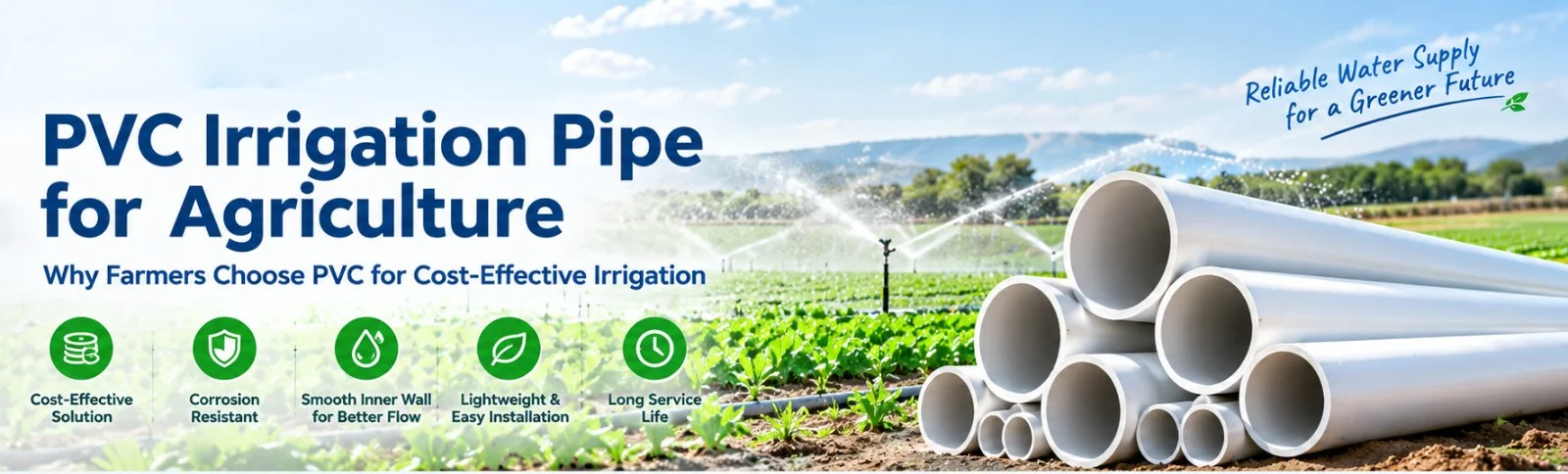
Pressure-rated Schedule 40 PVC is commonly used for fixed irrigation distribution lines serving farms, orchards, nurseries, landscaped developments and sports grounds. It can connect water sources, filters, control valves and irrigation zones.
Its rigid form suits permanent routes, particularly where pipework can be properly supported or buried. It can also form part of a system that transitions to flexible tubing near individual emitters.
Selection should account for flow demand, pressure loss, pump operation and valve-induced pressure surges. Fertigation systems additionally require compatibility checks for the actual fertilizer solution and injection arrangement.
2. Cold-Water Supply and Site Distribution
Suitable pressure pipe can serve site water networks and other cold-water applications where the project specification and local rules permit it. Examples include water distribution around agricultural facilities, commercial sites and industrial premises.
Potable-water service requires more than a pressure rating. Buyers should verify applicable drinking-water approvals for the exact pipe, fittings and joining materials. NSF/ANSI/CAN 61 addresses drinking-water health effects; it does not establish the mechanical pressure rating of the system.
Utility and building specifications may require another pipe standard, so Schedule 40 should be checked against the approved design before ordering.
3. Swimming Pool and Water Circulation Systems
Pressure-rated PVC is widely used in pool filtration and circulation pipework, including connections between pumps, filters and return lines. These systems benefit from readily available fittings and a material that does not rust. Manufacturers list irrigation, pressure systems and pool circulation among Schedule 40 PVC applications.
Check water temperature, pump discharge conditions and the requirements of connected equipment. Heater connections, chemical dosing points and suction-side pipework need their own suitability review. A pressure rating alone does not establish suitability for vacuum service.
Use pressure-rated components throughout pressurized circulation lines; drainage fittings are not substitutes.
4. Industrial Water Treatment and Compatible Process Liquids
Schedule 40 PVC pipe can be considered for treatment-plant pipework, tank connections, rinse-water distribution and compatible industrial liquid transfer. It is particularly useful where corrosion would complicate the use of metal piping.
Chemical suitability depends on the fluid, concentration, temperature and operating conditions. Compatibility must cover the whole assembly, including solvent cement, seals, valves and accessories.
Hot process streams, abrasive slurries and unusual chemical mixtures require a separate material assessment.
5. Drain, Waste and Vent Systems
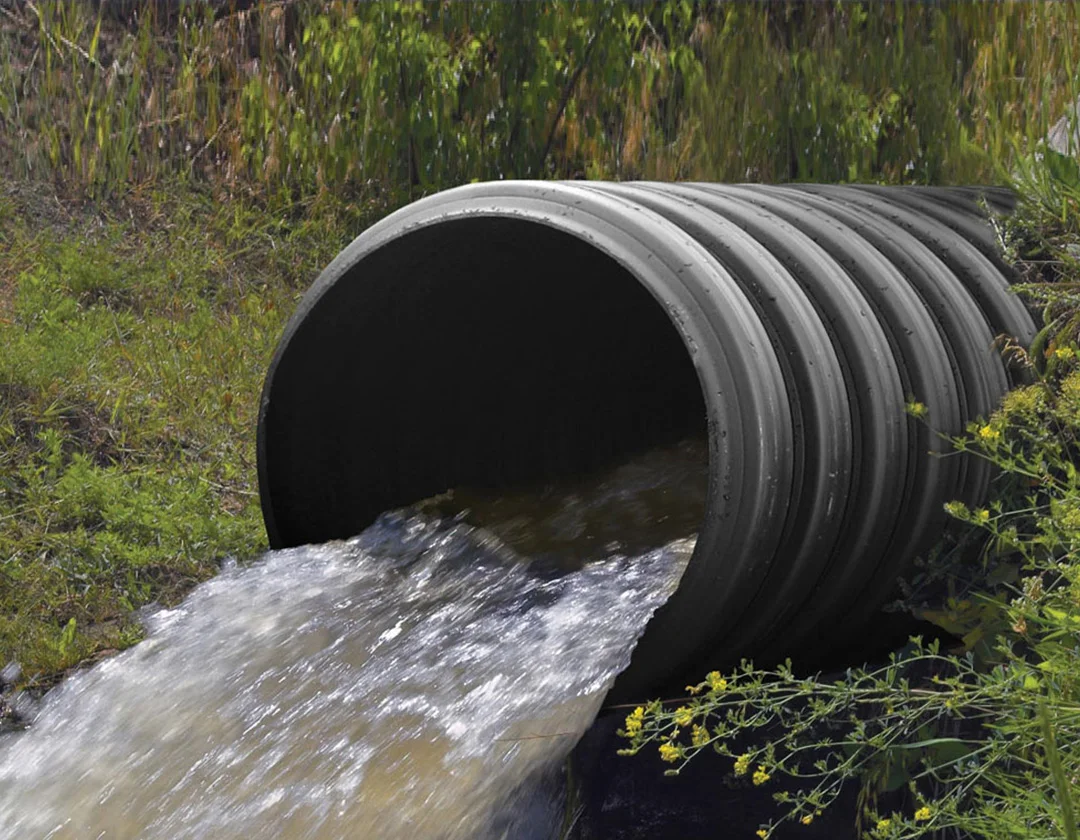
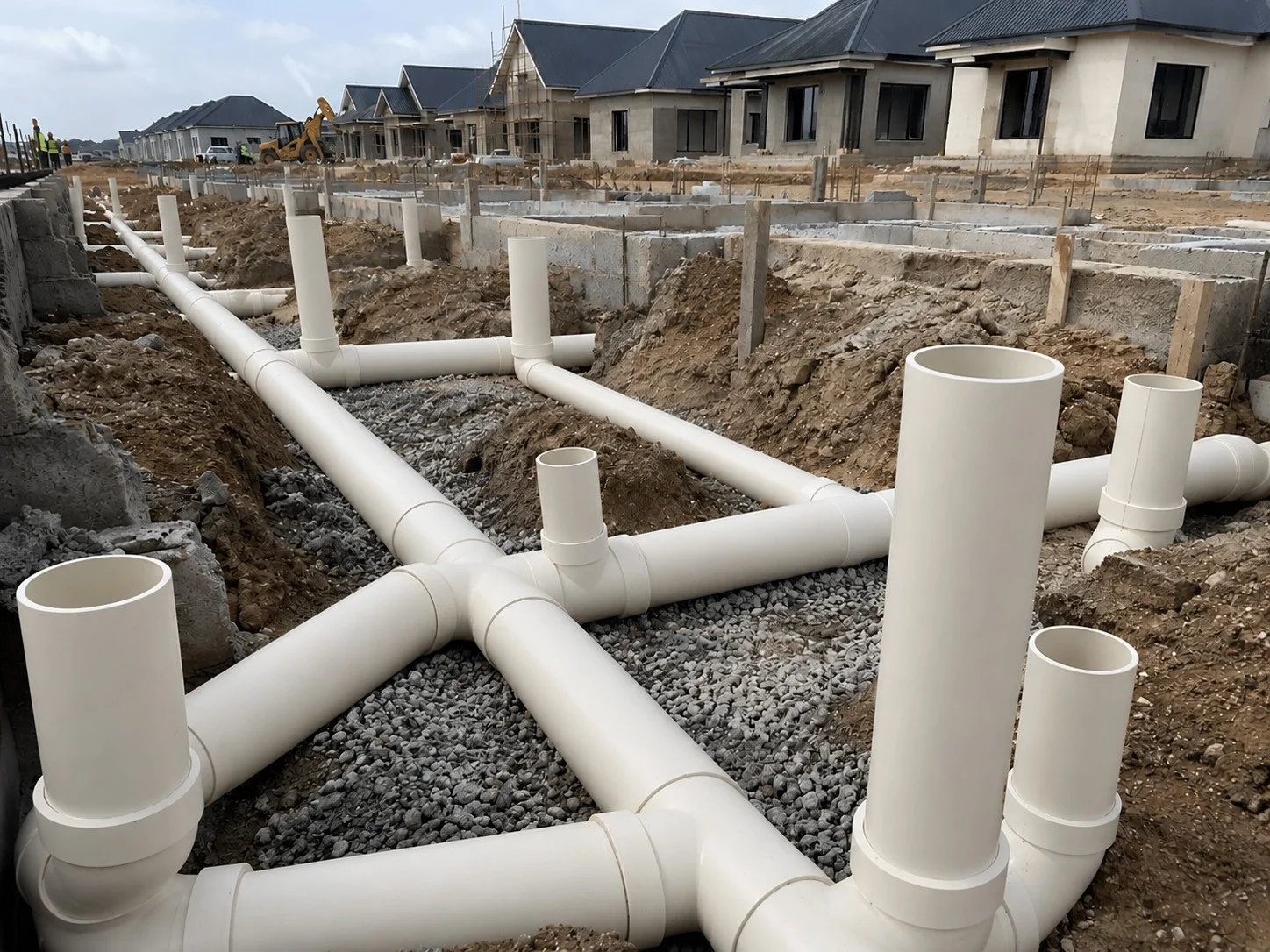
Schedule 40 PVC products are also used for gravity drainage and plumbing venting when manufactured and approved for those duties. ASTM D2665 is a relevant standard for PVC drain, waste and vent pipe and fittings.
Plumbing vent service should also be distinguished from combustion-gas venting, which has separate equipment and approval requirements.
Application Comparison for Project Buyers
| Application | Suitable product category | Main purchasing checks |
|---|---|---|
Irrigation distribution | Pressure-rated PVC pipe and fittings | Flow, pressure, surge and burial conditions |
Cold-water distribution | Pressure-rated products permitted by the specification | Local acceptance and potable-water approvals where required |
Pool circulation | Pressure-rated pipe and fittings | Temperature, equipment interfaces and chemical exposure |
Industrial water or process liquids | Pressure-rated system with confirmed compatibility | Fluid composition, temperature and component ratings |
Gravity drainage and plumbing vents | Approved DWV pipe and fittings | Drainage standard, layout, slope and code requirements |
▎Why Is Schedule 40 PVC Pipe So Widely Used?
Corrosion Resistance
PVC does not rust and is not subject to the electrochemical corrosion mechanisms associated with metals. This can reduce the need for corrosion protection in suitable water and soil environments. Chemical compatibility still needs confirmation for the actual service.
Practical Handling and Installation
Compared with many metal alternatives, PVC is lighter and easier to move around a project site. Established solvent-cement joining methods can also simplify assembly without metal welding equipment.
Installation quality remains essential. Cutting, deburring, surface preparation, cement selection and curing must follow the component manufacturers’ instructions. A joint that feels firm is not necessarily ready for pressure testing.
A Useful Balance of Material Cost and System Requirements
Where its ratings are sufficient, Schedule 40 can offer a practical material choice without the additional wall thickness and weight of Schedule 80. Established fitting ranges also help buyers assemble a complete bill of materials.
The economic comparison should include fittings, installation, supports, transport and maintenance access. The lowest pipe price does not necessarily produce the lowest installed cost.
▎Schedule 40 vs Schedule 80 PVC Pipe
The comparison below assumes the same nominal size, IPS dimensional system and comparable PVC material.
| Feature | Schedule 40 PVC | Schedule 80 PVC |
|---|---|---|
| Outside diameter | Same specified outside diameter | Same specified outside diameter |
| Wall thickness | Thinner | Thicker |
| Internal bore | Larger | Smaller |
| Pipe pressure rating | Generally lower under equivalent conditions | Generally higher under equivalent conditions |
| Pipe weight | Lower | Higher |
| Material cost | Often lower | Often higher |
| Hydraulic effect | Larger bore at the same nominal size | Smaller bore may increase pressure loss at the same flow |
| Temperature suitability | Requires PVC temperature assessment | Thicker wall does not establish hot-water suitability |
Matching outside diameters may allow compatible socket connections, but this does not establish equal component ratings. A mixed system must be designed around the applicable limits of its pipe, joints, fittings and valves.
▎FAQ
Can Schedule 40 PVC pipe carry drinking water?
Yes, when the exact product and associated components have the required drinking-water approvals and are accepted for that installation. Schedule and pressure markings alone do not establish potable-water suitability.
Can Schedule 40 PVC be used underground?
Suitable products can be installed underground with an appropriate design. Cover, bedding, backfill, external loads and local requirements must be assessed; the schedule alone does not establish suitability.
Is Schedule 40 PVC the same as UPVC?
UPVC describes unplasticized PVC material; Schedule 40 describes dimensions. An UPVC product is not automatically an ASTM Schedule 40 pressure pipe. Check both the material and the product specification.
▎Discuss Your PVC Pipe Requirements with SIFFO
Planning an irrigation network, water distribution line or industrial piping project? Share your application, sizes, operating conditions and delivery destination with Shandong SIFFO Plastic Technology Co., Ltd. to request product datasheets, compatible fitting options and a project quotation.
Include any required approvals and inspection documents in your enquiry so the proposed supply can be checked against your project specification.