
Wear-Resistant PE100 Pipe for Corrosive Mining Tailings
Tailings transport can be one of the most demanding duties in a mining operation. The pipeline must carry suspended mineral particles while handling process-water chemistry, changing flow conditions and continuous production requirements. When corrosion and abrasion occur together, repeated repairs can disrupt the entire tailings management process.
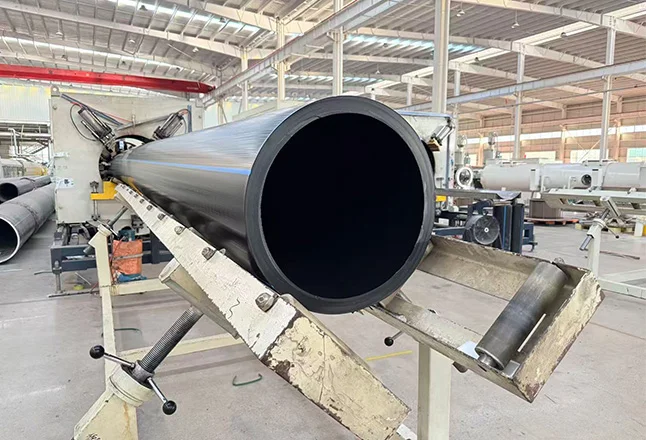
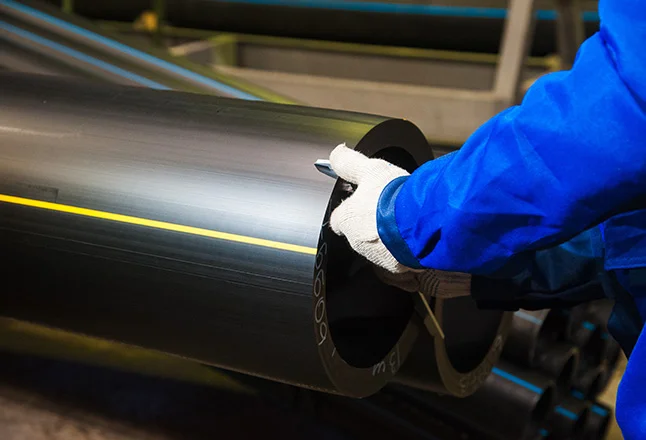
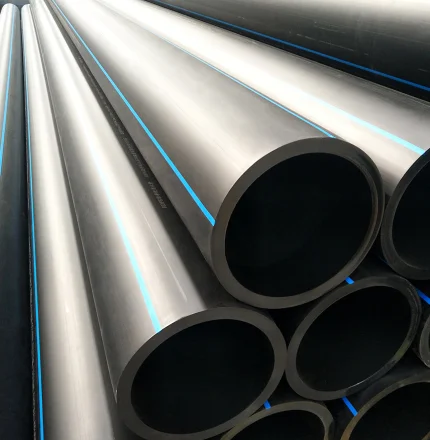
Shandong SIFFO Plastic Technology Co., Ltd. offers a modified PE100 pipe solution with a PE-RC inner lining for this application. The product concept combines a polyethylene pressure-pipe body with a selected inner material intended to address demanding slurry contact conditions.
For mine owners and engineering contractors, its value lies in addressing corrosion, wear and pipeline reliability together, with the final specification matched to the actual tailings.
Why Corrosive Tailings Are Difficult to Transport
Abrasive solids continually contact the pipe wall
Tailings may contain fine mineral particles, sand and harder fragments. As these solids travel through the line, they can abrade the internal surface. Particle size, angularity, solids concentration and flow velocity all influence wear.
The damage is rarely uniform. Bends, transitions and other flow disturbances can create local wear zones that require closer inspection than straight sections.
Corrosion can accelerate damage to metal pipelines
Tailings chemistry varies with the ore and processing method. Some streams contain acidic or alkaline liquids, dissolved salts or residual treatment chemicals.
In susceptible metal pipes, chemical attack and abrasion can reinforce each other: particles disturb protective surfaces, while corrosion leaves damaged areas exposed to further wear. A pipeline selected only for pressure capacity may therefore struggle with its actual slurry duty.
Repairs interrupt more than the pipeline
A failed tailings line can force operators to reduce processing throughput, isolate equipment and mobilize repair crews. Remote locations make replacement materials and lifting equipment harder to obtain.
The commercial impact includes production disruption, cleanup and emergency maintenance, rather than simply the price of a replacement pipe section.
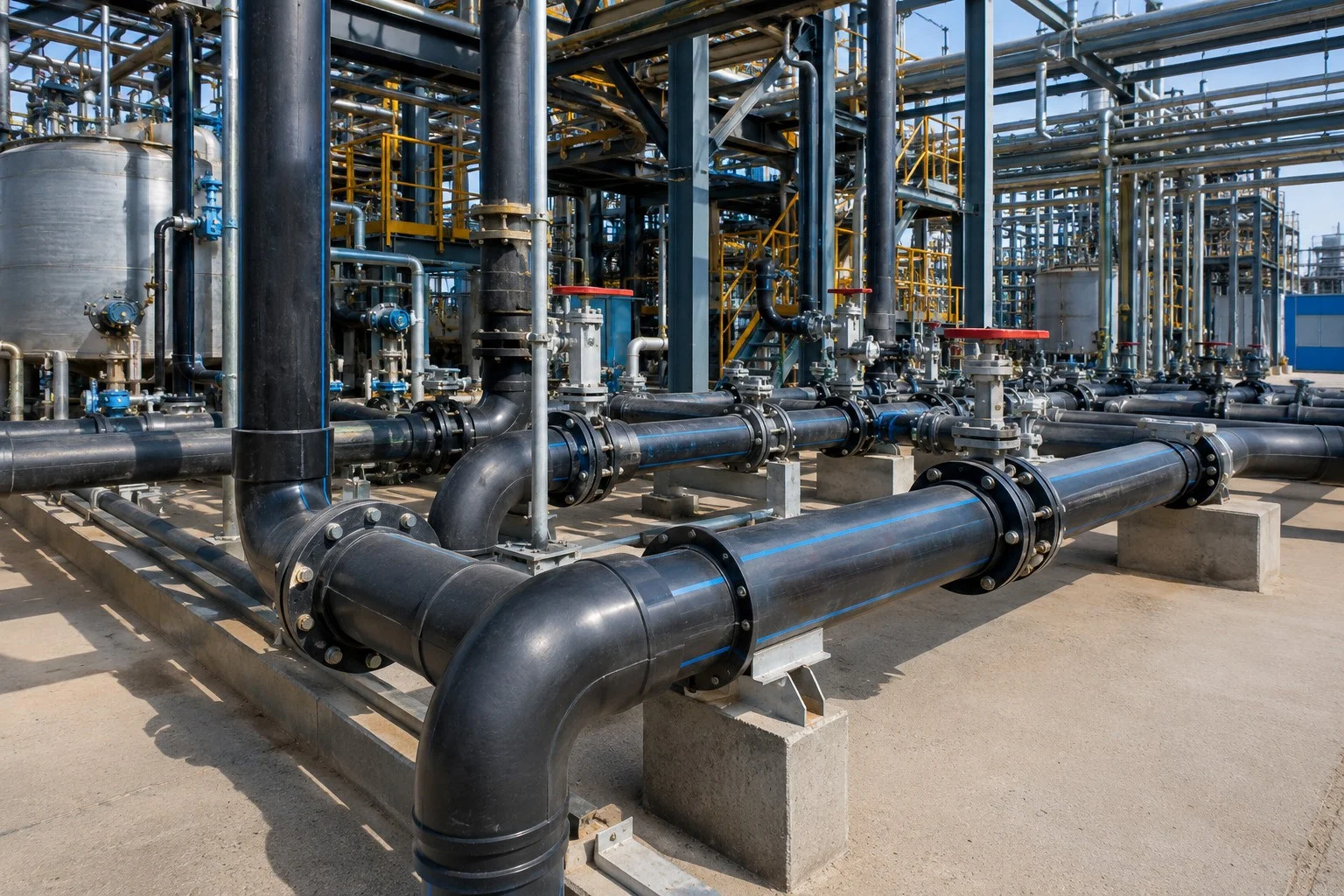
Why a Single Change May Not Solve the Problem
Increasing wall thickness provides additional material to wear away, but does not remove chemical attack on a susceptible pipe. Adding a lining can protect the bore, but its chemistry, thickness and integrity must suit the slurry.
Reducing velocity also requires care. Too little velocity may allow solids to settle and cause blockage; excessive velocity can increase wear. Successful selection therefore requires a balance between hydraulic performance, pressure capacity and material durability.
An engineered slurry system needs suitable pipe, fittings, joints and operating procedures throughout the route.
What Benefits Can Mine Operators Expect?
An opportunity to reduce recurring wear maintenance
Where application-specific testing confirms better wear performance, the modified inner layer can help reduce material loss and extend the interval between planned replacements.
The improvement should be evaluated against the existing pipe using comparable slurry, velocity and exposure conditions. The magnitude cannot be established from the resin designation alone.
Less dependence on corrosion protection for the pipe body
For chemically compatible tailings, a polyethylene body avoids the need to protect the pipe itself against rust. This can simplify maintenance compared with a susceptible unlined steel system.
Metal flanges, valves, bolts and other accessories still require appropriate selection and protection.
Potentially fewer disruptive interventions
Reduced corrosion damage and verified wear control can support more predictable maintenance. The operational objective is to replace emergency repairs with inspections and planned component replacement.
These are intended benefits, not reported SIFFO field results. Project-specific wear measurements are needed before assigning a service life or maintenance-saving percentage.
A practical option for changing mine routes
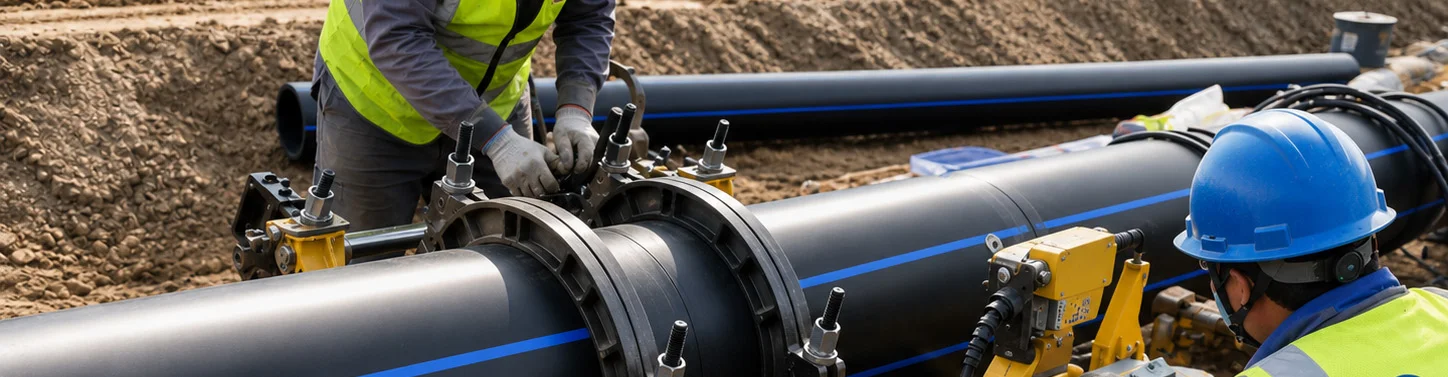
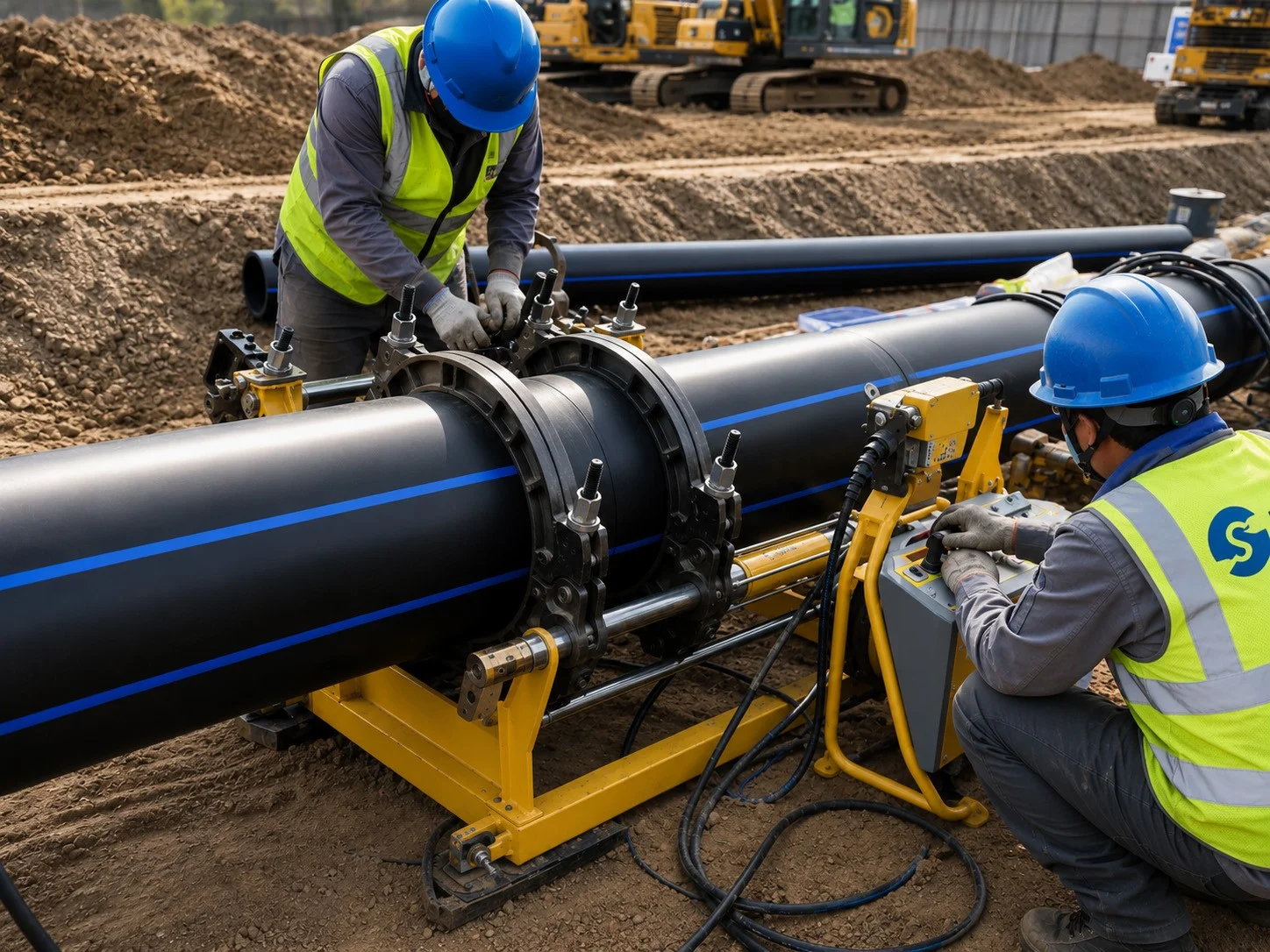
Polyethylene's comparatively low weight and flexibility can assist handling and route layout. Qualified fusion joints can create continuous pipeline sections.
Thermal movement, support spacing, bending limits and connections to rigid equipment must still be addressed during installation.
Modified PE100 Pipe Compared with Other Slurry Pipe Materials
The following comparison describes selection tradeoffs, rather than a universal performance ranking.
| Material | Main advantages | Selection considerations |
|---|---|---|
| Unlined carbon steel | Strong structural performance; options for demanding pressure and temperature duties | Corrosive slurry may cause metal loss; abrasion and corrosion can interact |
| Rubber-lined steel | Combines a steel pressure shell with a lining suited to wet abrasion | Rubber compound, chemical compatibility, lining integrity and joints need review |
| Ceramic-lined piping | A strong option for severe abrasive duty and selected high-wear sections | Liner attachment, impact conditions, transitions and installation require assessment |
| Standard PE100 HDPE | Corrosion resistance, useful slurry abrasion performance and fusion jointing | Actual wear depends on slurry conditions; pressure and temperature limits still apply |
| Modified PE100 with a PE-RC lining | Combines a polyethylene body with a selected inner layer for demanding slurry contact | Improved abrasion performance requires comparative evidence; RC designation alone is insufficient |
A hybrid system may be appropriate. For example, qualified polyethylene straight runs can be combined with separately selected wear-resistant bends or spools at demanding locations. Every transition must satisfy the hydraulic, chemical and pressure requirements.
Specify the Pipe Around the Tailings
Before selecting a wear-resistant PE100 pipe, provide:
Slurry chemistry, reagent concentrations and temperature range.
Solids content, particle-size distribution and particle characteristics.
Flow rate, operating pressure, elevation profile and surge conditions.
Route length, bends, installation method and environmental exposure.
Required inspection access, documentation and replacement strategy.
Agree how abrasion performance will be assessed. Comparative testing should use representative media and report the method, exposure conditions and measured loss.
Commissioning should establish baseline measurements and an inspection plan for critical locations. Remaining wall thickness and liner condition should guide maintenance decisions.
SIFFO Manufacturing and Project Supply
Shandong SIFFO Plastic Technology Co., Ltd. manufactures plastic piping systems for water, mining and industrial projects.
Based on SIFFO's company information, its production bases in Linyi, Shandong, and Nanjing, Jiangsu, cover more than 150,000 square metres. Total annual production capacity exceeds 450,000 tonnes across its product range, including more than 200,000 tonnes of HDPE products, supported by 20 HDPE extrusion lines.
For international projects, buyers can agree pipe lengths, compatible fittings, markings, packing, inspection requirements and technical documentation before production.
Discuss Your Tailings Pipeline with SIFFO
If your mine faces repeated repairs from corrosive tailings and internal wear, SIFFO's modified PE100 pipe with a PE-RC inner lining offers a solution to evaluate against your operating requirements.
Send SIFFO your slurry analysis, particle data, temperature, pressure and route information to discuss a suitable pipe specification, supporting evidence and project supply plan.
Technical References — Editorial Notes
These sources support general material and design guidance.
PE100+ Association: PE100 / PE100-RC properties and cracking resistance. https://www.pe100plus.com/PE-Pipes/Technical-guidance/model/Materials/mrs/HDPE-PE100-PE100-RC-Pipe-Properties-and-Types-i4007.html
Vinidex: slurry flow, wear mechanisms and pipeline design. https://www.vinidex.com.au/resources/technical-resources/pe-pressure-pipe/pe-slurry-flow/
Vinidex: chemical compatibility of polyethylene. https://www.vinidex.com.au/resources/technical-resources/chemical-resistance/chemical-resistance-of-pe-pipes/
Plastics Pipe Institute: HDPE mining applications. https://plasticpipe.org/PPI-Home/Municipal_Industrial/Applications/Mining-Applications---HDPE.aspx
Weir: rubber slurry hose applications. https://www.global.weir/product-catalogue/hoses-pipes-and-spools/linatex-heavy-duty-rubber-mining-slurry-hose/
Saint-Gobain: ceramic piping liners. https://www.ceramicsrefractories.saint-gobain.com/products/shapes/linings/elbows-pipes-and-fittings-linings