


▎HDPE Pipe for Water: SIFFO Manufacturing, Selection and WRAS Approval
A reliable water pipeline starts with a pipe specification that matches the project. Flow demand, pressure, operating temperature, installation conditions and drinking-water requirements all affect the choice of HDPE pipe for water.
Shandong SIFFO Plastic Technology Co., Ltd. manufactures HDPE piping for municipal distribution, rural water supply, irrigation and industrial water systems. Combining manufacturing capacity with project-specific supply coordination, SIFFO helps international buyers prepare pipe orders around their engineering requirements.
▎Why Choose HDPE Pipe for Water Supply?
Resistance to Rust and Corrosion
HDPE does not rust or suffer electrochemical corrosion in the way metallic pipe can. This makes it a useful option for buried water networks and installations exposed to moisture.
Chemical compatibility still needs review. Water treatment chemicals, disinfectant concentrations and contaminated ground can affect material selection. Where the route crosses potentially contaminated land, assess permeation risks and any need for a suitable barrier pipe system.
Fused Connections for Continuous Pipelines
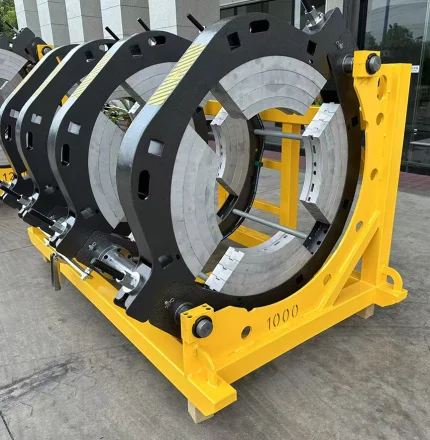
HDPE pipe can be joined by butt fusion or electrofusion using compatible materials and qualified procedures. Butt fusion joins prepared pipe ends directly, avoiding a separate coupling at each straight-pipe joint.
Correctly made fusion joints help control leakage risk. Cleanliness, alignment, temperature, pressure and cooling time remain essential, and completed pipelines require inspection and testing before commissioning.
Flexibility for Practical Installation
HDPE can accommodate controlled bending within specified limits, helping installers follow suitable changes in route. Smaller sizes may be supplied in coils, reducing intermediate joints along extended runs.
Allowable bending radius depends on pipe dimensions, temperature, fittings and the installation method. It should be confirmed before site work begins.
Smooth Internal Surface
A smooth bore supports efficient water conveyance. Hydraulic design must nevertheless account for actual internal diameter, flow velocity, pipe length, fittings, elevation and the required residual pressure.
▎SIFFO HDPE Water Pipe Manufacturing
Production Capacity for Project Supply
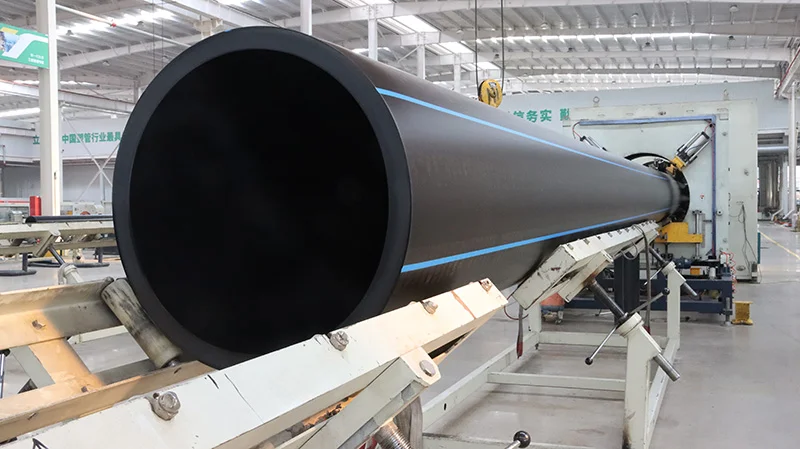
SIFFO operates two production bases in Linyi, Shandong, and Nanjing, Jiangsu, covering more than 150,000 square metres. Its supplied company profile reports total annual pipe-system production capacity exceeding 450,000 tonnes, including more than 200,000 tonnes of HDPE products.
With 20 HDPE extrusion lines, SIFFO supports orders involving different diameters, pressure classes and delivery schedules. These capacity figures describe the manufacturing operation; a project's confirmed delivery date depends on the ordered specification, quantity, inspection requirements and production schedule.
From Extrusion to Finished Pipe
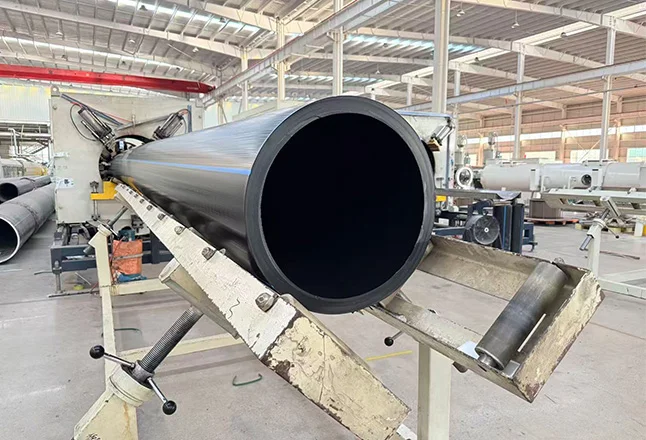
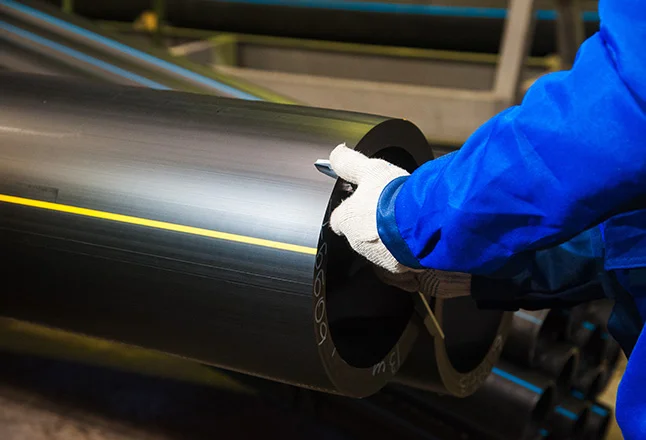
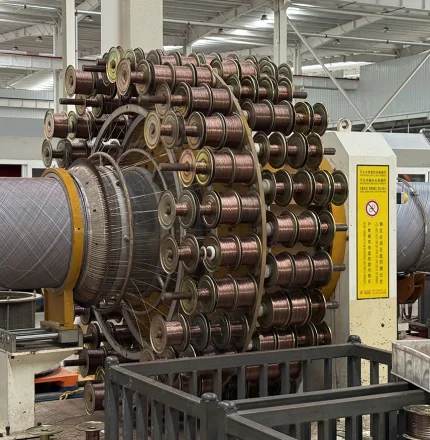
HDPE pressure-pipe manufacturing typically involves material preparation, extrusion, sizing, cooling, haul-off, cutting and marking. Control throughout these stages helps achieve consistent dimensions and a suitable finished surface.
▎How to Select HDPE Pipe for Water
1. Define the Application and Water Quality
Identify whether the pipeline carries potable water, irrigation water, raw water or industrial process water. Drinking-water systems require appropriate water-contact documentation, while industrial applications may require additional compatibility assessment.
Confirm the destination country's requirements and the project owner's acceptance criteria before choosing the material.
2. Specify the Correct Material and Standard
PE100 is widely used in ISO and EN water-pipe specifications, while PE4710 is used in many North American specifications.
| Selection item | ISO/EN-based project | ASTM/AWWA-based project |
|---|---|---|
Common material designation | PE100 | PE4710 |
Typical pipe specification | ISO 4427 / EN 12201 | ASTM F714 / AWWA C906, as applicable |
Dimension convention | Usually metric outside diameters | IPS or DIPS, as specified |
Pressure designation | Commonly PN/bar | Commonly pressure class/psi |
Buyer action | Confirm diameter, SDR and design conditions | Confirm dimension series, DR and pressure class |
These systems use different material classification and design conventions. PE100 and PE4710 should not be substituted solely on the basis of their names, and a matching SDR/DR number does not establish an identical pressure rating.
3. Calculate the Required Diameter
Choose diameter from flow demand and the hydraulic conditions along the route. Consider peak consumption, elevation changes, pipeline length and future expansion.
Use actual internal dimensions for the selected wall thickness. Include pressure losses through valves and fittings, and check whether the remaining pressure meets the needs of users at the most demanding point.
4. Match SDR and Pressure Rating
SDR is the ratio of nominal outside diameter to nominal wall thickness. For the same material and design conditions, a lower SDR means a relatively thicker wall and a higher pressure rating.
For PE100 water pipe, the following are common reference combinations at 20°C using a design coefficient of 1.25:
| SDR | Common nominal pressure designation |
|---|---|
| SDR 26 | PN 6.3 |
| SDR 21 | PN 8 |
| SDR 17 | PN 10 |
| SDR 13.6 | PN 12.5 |
| SDR 11 | PN 16 |
| SDR 9 | PN 20 |
These are reference values, not a complete project design. Apply the governing standard, required design coefficient, temperature factors and transient-pressure assessment. They do not describe every SIFFO product or its certified scope.
5. Account for Temperature and Pressure Surges
A reference pressure rating cannot automatically be used at elevated operating temperatures. Apply the temperature reduction factors appropriate to the selected material, standard and design life.
Assess pump starts and stops, rapid valve closure, trapped air and elevation changes. Pressure surges and vacuum conditions can require protection measures or changes to the pipeline design.
For exposed installations, consider solar heating of the pipe as well as the water temperature.
6. Review Installation and Jointing Conditions
A buried pipeline needs an assessment of soil support, bedding, cover depth, traffic loads and groundwater. Trenchless installation also requires checks for pulling loads, bending and possible surface damage.
Select butt fusion, electrofusion or an approved mechanical connection according to access, equipment and maintenance needs. Flanged connections may be appropriate at valves or transitions.
Specify fittings, seals and adaptors with compatible dimensions, pressure ratings and drinking-water suitability.
▎SIFFO HDPE Pipe WRAS Material Approval
Approval Details
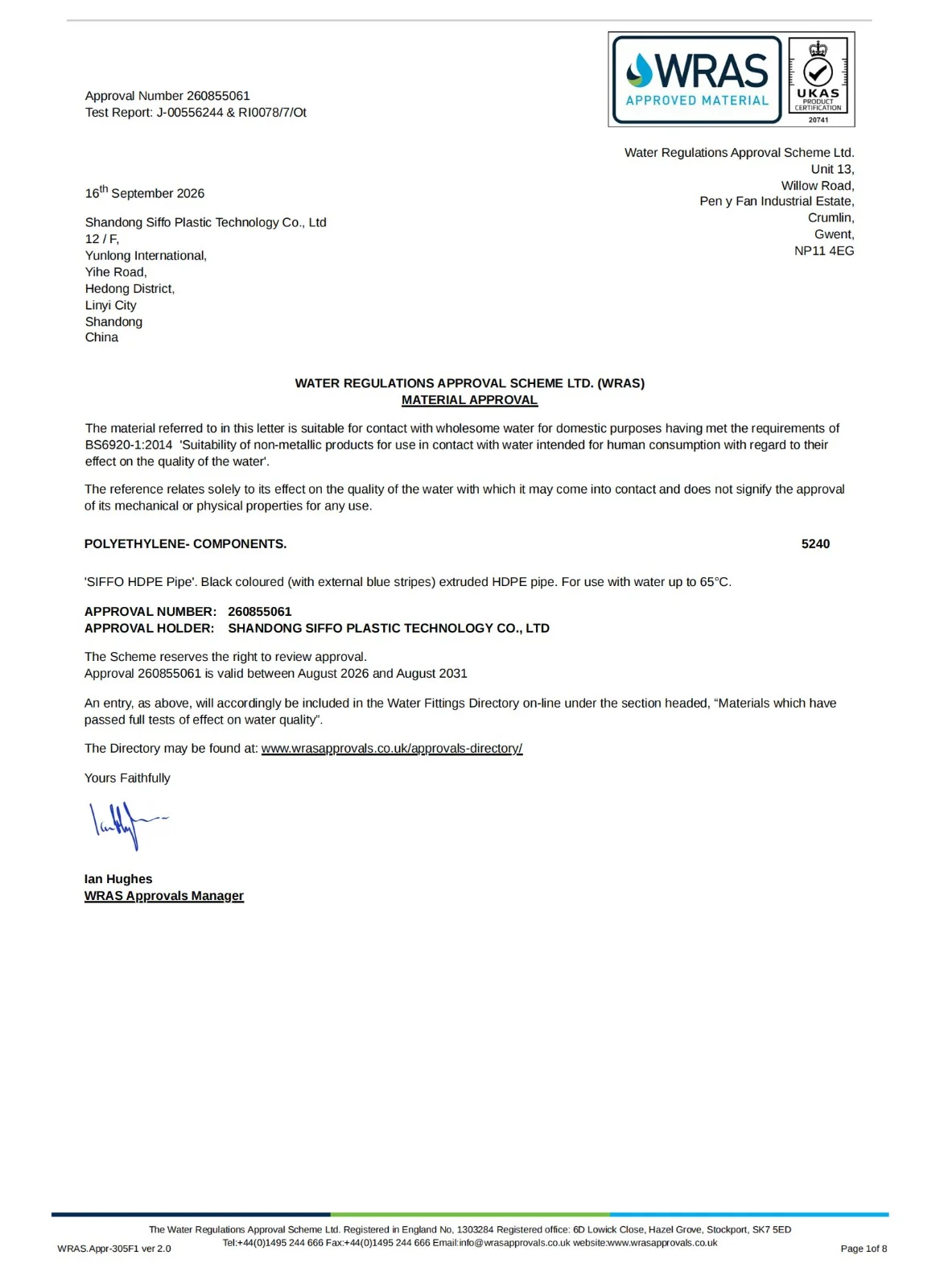
The supplied certificate and the official WRAS directory identify the following approval:
| Item | Approved information |
|---|---|
Approval holder | Shandong Siffo Plastic Technology Co., Ltd. |
Listed name | SIFFO HDPE Pipe |
Approval number | |
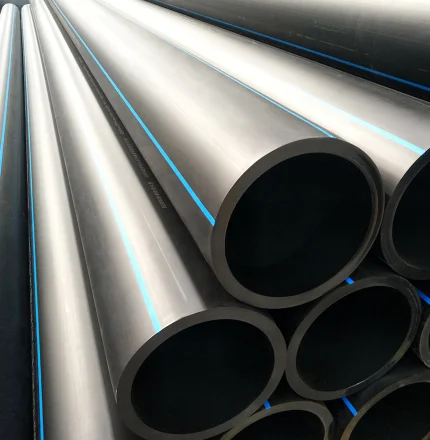
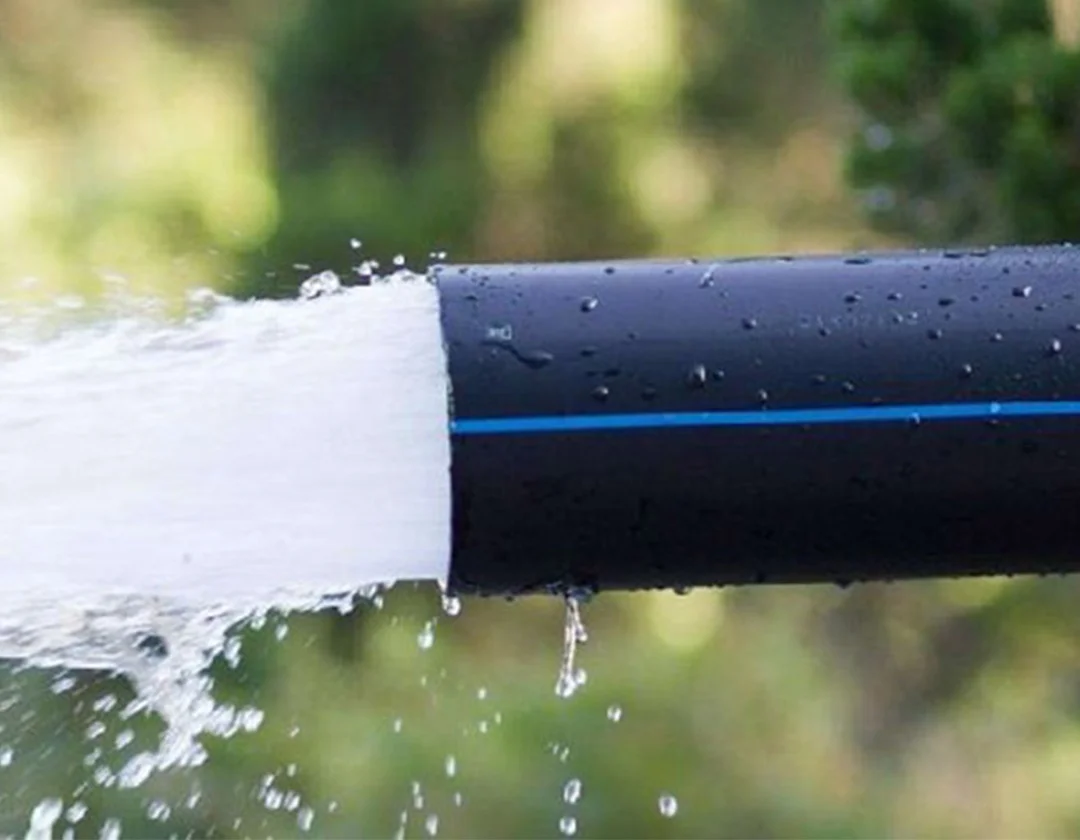
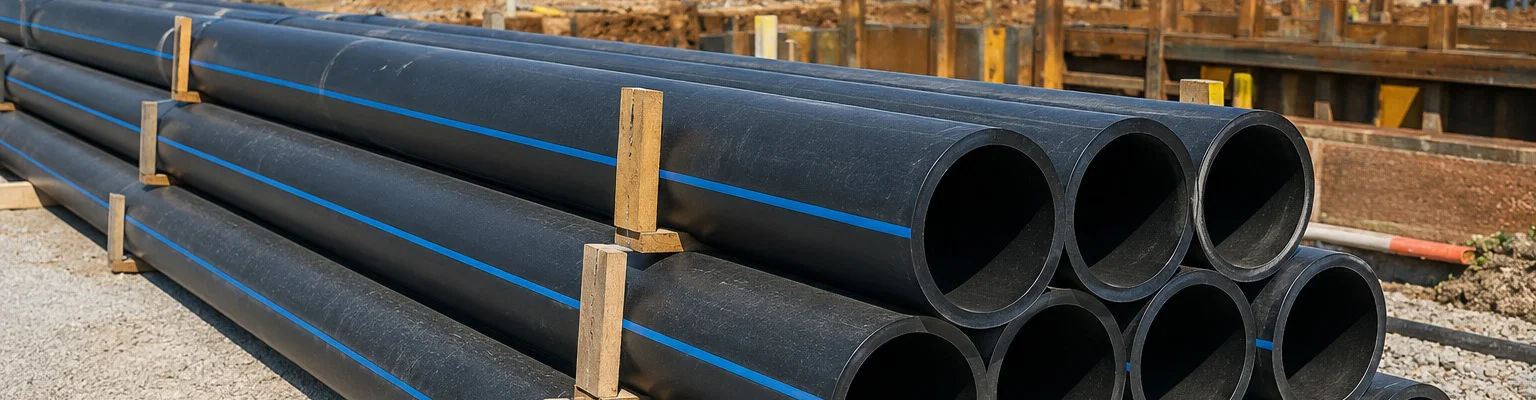
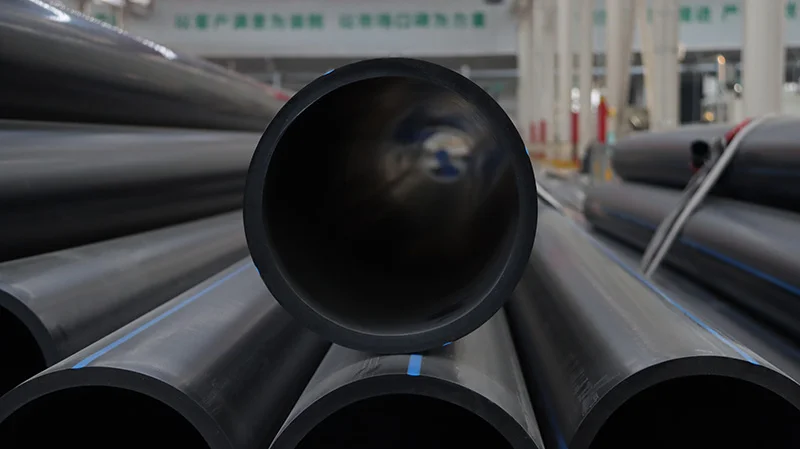
Description | Black extruded HDPE pipe with external blue stripes |
Approval type | WRAS material approval |
Listed water-contact temperature | Up to 65°C |
Certificate validity period | August 2026 to August 2031 |
Directory expiry date | 31 August 2031 |
The certificate references BS 6920-1:2014 and suitability for contact with wholesome water with respect to effects on water quality.
What This Means for Water Projects
This approval supports material water-contact suitability within its scope. It gives buyers a verifiable reference when reviewing drinking-water documentation.
It does not certify mechanical strength, pressure performance or every SIFFO pipe variant. The 65°C listing concerns water-contact suitability; allowable operating pressure at that temperature requires separate assessment.
WRAS approval also does not automatically establish acceptance in every country or by every utility. Check local requirements and the current listing when preparing the order.
▎Export Preparation and Delivery
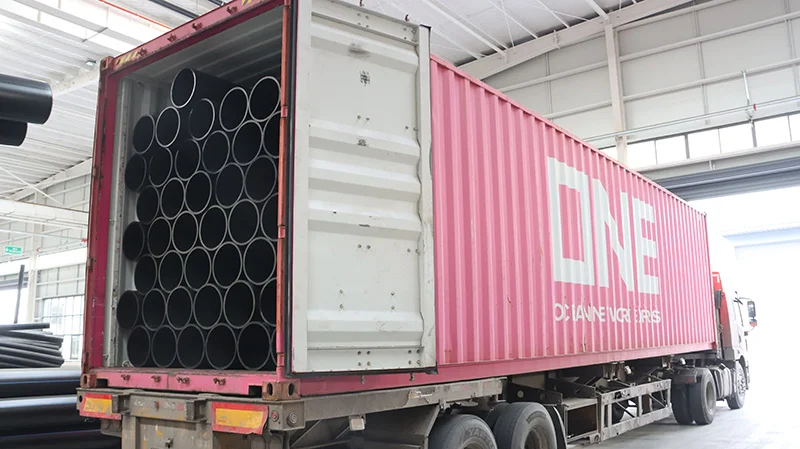
SIFFO's container-loading photograph shows finished pipe arranged for shipment. Export planning should start with the ordered lengths, pipe diameters, container dimensions and unloading conditions at the destination.
Buyers should agree the packing method, pipe-end protection, handling arrangements and shipment documents before dispatch. Where hygienic protection is required, specify end caps or another suitable closure method.
Technical datasheets, inspection records, packing lists and approval documents should correspond to the actual goods supplied. Phased deliveries can be discussed against the project's installation sequence and the confirmed production schedule.