

What is PVC-O pipes ?
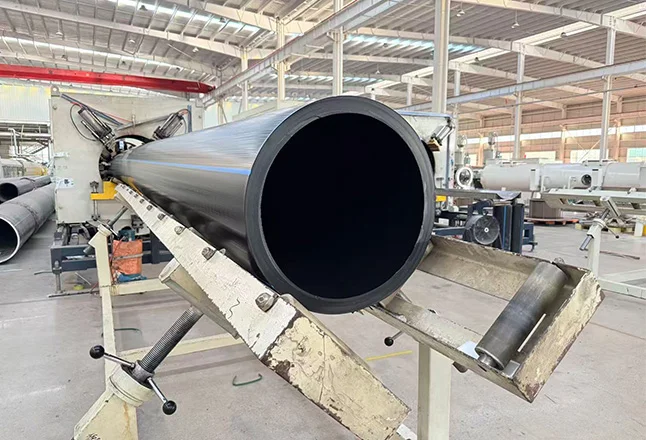
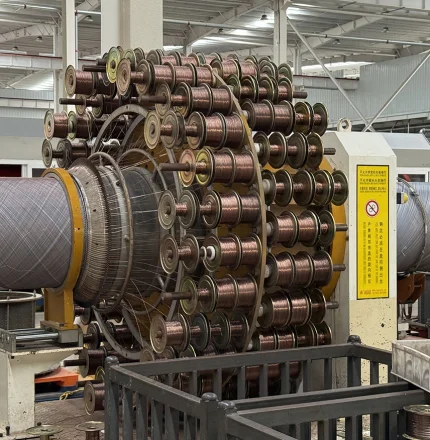
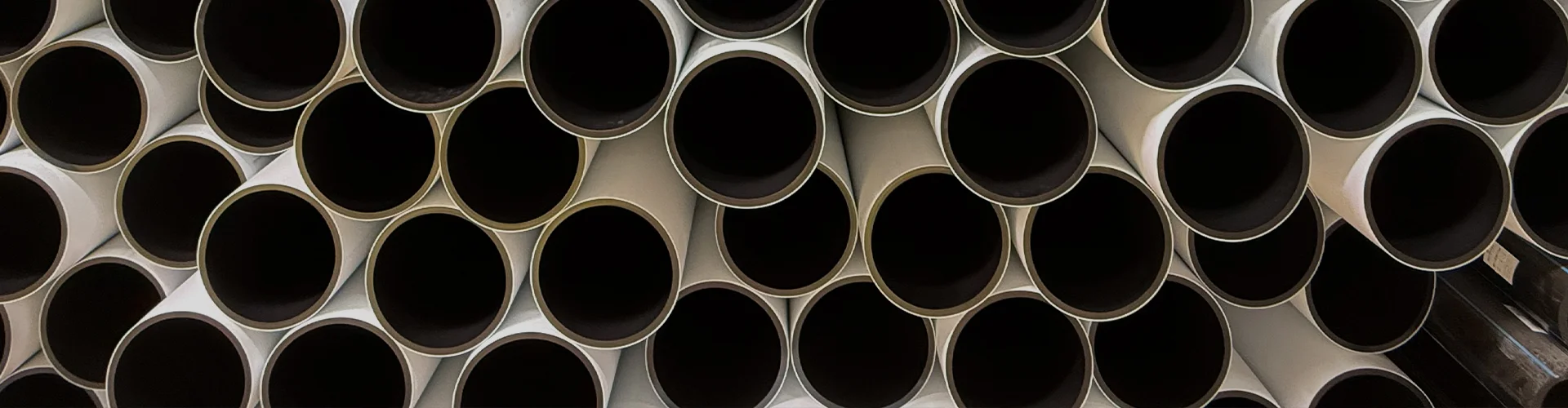
PVC-O pipes are high-performance plastic pipes produced by subjecting standard PVC-U pipes to a molecular restructuring process using biaxial orientation technology. This revolutionary manufacturing process causes the PVC molecular chains to align in an orderly fashion along both the circumferential and axial directions, forming a layered structure resembling a "mesh," thereby endowing the pipes with mechanical properties far superior to those of traditional PVC materials.
Key Features of PVC-O Pipes
1. Ultra-High Strength and Lightweight Design
The circumferential tensile strength of PVC-O pipes can reach 75 MPa (short-term), while their 50-year long-term strength (MRS) reaches 50 MPa—twice that of PVC-U (25 MPa). This characteristic results in:
Reduced Wall Thickness (40%–50%): Under equivalent pressure ratings, the wall thickness of PVC-O is only 50%–65% that of PVC-U.
Reduced Weight (50%): They are half as heavy as traditional PVC-U pipes and 6 to 12 times lighter than cast iron pipes.
Material Savings (33%–44%): The overall cost per meter of piping is significantly reduced.
2. Exceptional Impact Resistance
The impact strength of PVC-O pipes is 2 to 5 times greater than that of PVC-U. Even more remarkably, in severe cold environments—such as at -18°C (0°F)—the impact strength of PVC-O remains superior to that of PVC-U at room temperature. This implies:
No need for special protective measures during winter construction.
Significantly reduced risk of accidental damage during transportation and handling.
Suitability for outdoor engineering projects in extremely cold regions (e.g., Kazakhstan, Northern Europe, etc.).
3. Excellent Resistance to Crack Propagation
The molecular orientation structure of PVC-O effectively inhibits crack propagation. According to the ISO 13477:2022 Rapid Crack Propagation (RCP) test, the resistance of PVC-O pipes to rapid crack propagation is more than 10 times that of PVC-U. This characteristic is critical for ensuring the safety of high-pressure water transmission systems.
4. Outstanding Hydraulic Performance
Due to reduced wall thickness, PVC-O pipes feature a larger internal diameter, resulting in significantly enhanced hydraulic efficiency:
C-value (Hazen-Williams roughness coefficient) > 150, characterized by an extremely smooth inner wall.
Friction resistance is reduced by over 50% compared to PE100 pipes.
Taking a DN400mm pipe as an example, the flow rate for PVC-O can reach 1,276 L/s, whereas an equivalent cast iron pipe achieves only 1,090 L/s.
This results in significant annual electricity savings and reduced CO₂ emissions.
5. Excellent Seismic Resilience
PVC-O pipes possess a flexibility comparable to that of PE pipes, enabling them to withstand substantial ground displacement. Field investigations conducted following the Christchurch earthquake in New Zealand (2011, magnitude 6.2) demonstrated the exceptional seismic resilience of PVC-O pipes.
6. Resistance to Biofilm Formation
Compared to PE pipes, PVC-O pipes feature a highly smooth inner surface that is resistant to biofilm formation—a critical factor in maintaining water quality during the conveyance of drinking water.
Performance Comparison: PVC-O vs. PVC-U vs. PVC-M
| Performance Specifications | PVC-O | PVC-M | PVC-U | PE100 |
|---|---|---|---|---|
| Circumferential Tensile Strength(MPa) | 75 | 48 | 52 | 28 |
| 50-Year Long-Term StrengthMRS(MPa) | 50 | 25 | 25 | - |
| Design Stress(MPa) | 28 | 17.5 | 12.5 | - |
| Safety Factor | 1.4-1.6 | 1.4 | 2.0 | 1.25 |
| Impact Strength (Relative Value) | 5x | 2x | 1x | 2x |
| Weight (Relative Value) | 1.0 | 1.4 | 2.0 | 2.0 |
| Hydraulic Capacity (Relative Value) | 100% | 90% | 78% | 65% |
| Installation Cost (Relative Value) | 100% | 100% | 100% | 200% |
| Environmental Impact | 低 | 中低 | 中 | 中 |
Key Application Areas for PVC-O Pipes
1. Municipal Drinking Water Supply
PVC-O pipes are an ideal choice for municipal water supply systems, particularly suitable for:
High-pressure transmission mains and water distribution networks
Long-distance water conveyance projects
Large-diameter pipelines (DN75–DN1200) requiring high hydraulic efficiency
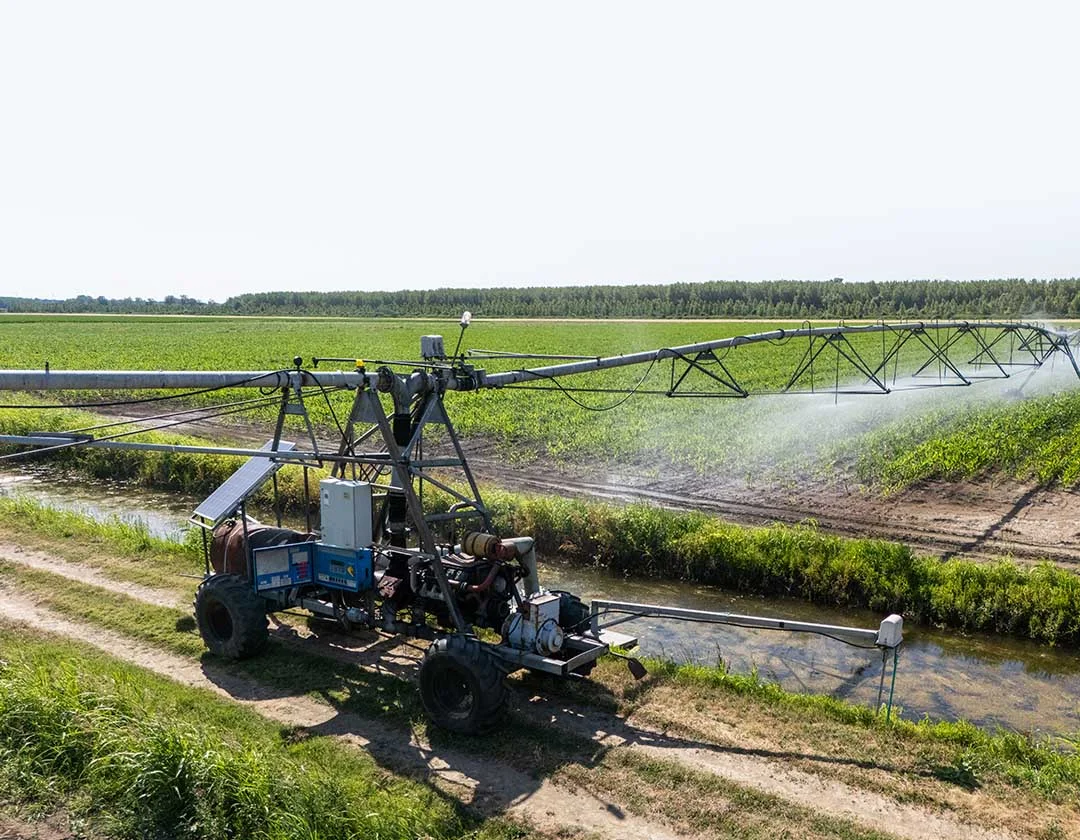
2. Agricultural Irrigation
High-Standard Farmland Irrigation: With pressure ratings ranging from 16 to 25 bar, they meet the specific requirements of sprinkler and drip irrigation systems
Lightweight Design: Facilitates easy transport across fields and manual installation
UV Resistance and Weatherability: Offers a service life exceeding 50 years in outdoor environments
3. Trenchless Installation and Pipe Rehabilitation
PVC-O pipes are suitable for:
Slip Lining: Rehabilitating existing pipelines
Pipe Bursting: Replacing aging pipe networks
Construction in densely populated urban areas, minimizing the need for road excavation
4. Reclaimed Water and Wastewater Treatment
The Coslada project in Madrid, Spain, has demonstrated that PVC-O pipes effectively reduce leakage rates and minimize hydraulic losses in reclaimed water transmission applications.
International Application Cases and Results
The Netherlands — The World's First 100% PVC-O Drinking Water Network
Project Background: The Wavin Group, based in the Netherlands, is a global pioneer in PVC-O technology and has spent years actively promoting the application of PVC-O within the drinking water sector.
Scale of Application: The Netherlands' national drinking water network has achieved 100% PVC-O coverage, making it the first country in the world to fully adopt PVC-O technology.
Economic Benefits (Based on Wavin Group Statistics):
Average raw material savings of 11.58%
Reduction in comprehensive input costs per meter of pipe ranging from 33% to 44%
Potential for a 10% to 15% increase in product selling prices
Increase in production volume and pipe length ranging from 20% to 40%
Technical Significance: The Netherlands' successful implementation serves as concrete proof of the safety and reliability of PVC-O for long-term drinking water applications, providing a proven model for its widespread adoption in other nations, such as France and Spain. According to a survey report by the Wavin Group, countries including France are also expected to fully transition to PVC-O piping within the next one to two years.
Christchurch, New Zealand — "Survivors" of the Earthquake
Project Background: Between 2010 and 2011, the Christchurch region of New Zealand was struck by a series of powerful earthquakes (reaching a magnitude of 7.1 on the Richter scale), resulting in severe soil liquefaction and ground displacement.
PVC-O Performance:
Kaiapoi Region: Iplex Apollo® PVC-O DN200 pressurized sewage pipes, installed in October 2010, remained completely intact throughout the major Christchurch earthquake of February 2011 and all subsequent aftershocks.
Wellington Region: Iplex Apollo® PVC-O DN450 water supply mains—specifically installed in 2011 to enhance seismic resilience—sustained no damage during the Kaikoura earthquake sequence of 2016.
Comparative Data:
PVC pipe damage rate: Only 1.8% (measured by length).
Asbestos cement (AC) pipe damage rate: 6.1%.
Steel pipe damage rate: **8.9%**.
Industry Impact: Following the Christchurch earthquakes, a revised edition of the New Zealand Standard NZS 4404:2010 explicitly recommended "rubber-ring jointed PVC or PE pipes" as the preferred piping material for seismically active zones. Thanks to its high ductility and the displacement-accommodating capability of its rubber-ring joints, PVC-O has emerged as a core material in post-earthquake reconstruction projects.
Coslada, Madrid, Spain — A Benchmark in Recycled Water Transport
Project Name: Madrid "Depura" Plan — Coslada City Recycled Water Irrigation Project
Project Scale:
Total Laid Length: 19,938 meters
Pipe Diameter Range: DN110mm to DN400mm
Pressure Rating: PN16 bar
Contractor: ALDESA Construcciones S.A.
Owner: Canal de Isabel II (Madrid Water Authority)
System Design:
Conveyance Section: From the Casaquemada Wastewater Treatment Plant pumping station to a 5,500 m³ recycled water reservoir; DN400mm; Length: 3,450 meters; Vertical Lift: 115 meters
Gravity Distribution Network: 21 extraction points; 7,665 meters; Maximum flow rate: 147.5 L/s
Pressurized Distribution Network: 25 extraction points; 7,612 meters; Maximum flow rate: 121.5 L/s
Implementation Results:
Increased Flow Capacity: In the DN400mm pipe section, the PVC-O pipe achieved a flow rate of 1,276 L/s—a 17% increase compared to the original cast iron pipe design (1,090 L/s).
Reduced Hydraulic Losses: Head loss across the entire system was significantly reduced, leading to lower pumping energy consumption.
Decreased Leakage Rate: Successfully resolved the leakage issues inherent in the original ductile iron pipe network.
Mitigated Water Hammer Effects: The wave velocity in PVC-O pipes is lower than that of metal pipes, thereby reducing the risk of damage caused by water hammer during pump start-up and shut-down operations.
Technical Standards and Certification Systems
ISO 16422: International Standard — PVC-O Pipes: Dimensions, Performance, and Test Methods
ISO 16422-2:2024: International Standard — Latest Edition: Specifications for In-line Production Processes
AWWA C909: The Americas (USA/Canada) — Standard for PVC-O Pipes for Drinking Water
ASTM F1483: USA — Specification for PVC-O Pressure Pipes
EN 17176: Europe — Standard for Oriented PVC Piping Systems
AS/NZS 4441: Australia/New Zealand — Standard for PVC-O Pressure Pipes
IS 16647: India — National Standard for PVC-O Pipes
GB/T 41422-2022: China — National Standard for PVC-O Pipes
Global Market Outlook and Trends
According to data from various market research firms:
2023 Global PVC-O Market Size: Approximately US$1.3 billion
Projected Market Size in 2030: US$2.2 billion – US$5.269 billion (forecast range varies by agency)
Compound Annual Growth Rate (CAGR): 7.2% – 12.1%
2025–2032 Forecast: Some reports project a CAGR as high as 12.10%, reaching US$6.17 billion by 2032.
Key Global Manufacturers of PVC-O Pipes Include:
Molecor (Spain; Technology Leader)
Wavin (Netherlands; part of the Orbia Group)
Vinidex (Australia)
Iplex (Australia/New Zealand)
China SIFFO (China)
JM Eagle (USA)
Aliaxis (Belgium)
Finolex Industries (India)
Conclusion
PVC-O piping represents a significant leap forward in plastic piping technology. Through molecular orientation technology, it comprehensively outperforms traditional PVC-U and PE pipes across key metrics—including strength, toughness, lightweight properties, and hydraulic efficiency—while simultaneously retaining the inherent advantages of PVC material: corrosion resistance, longevity, and low cost.