
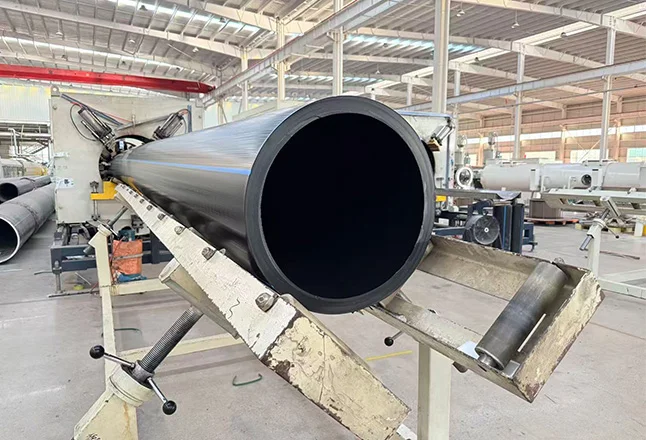


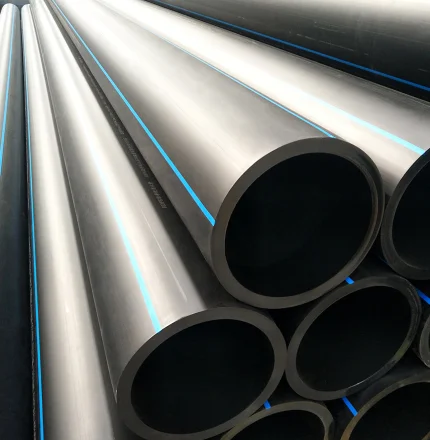
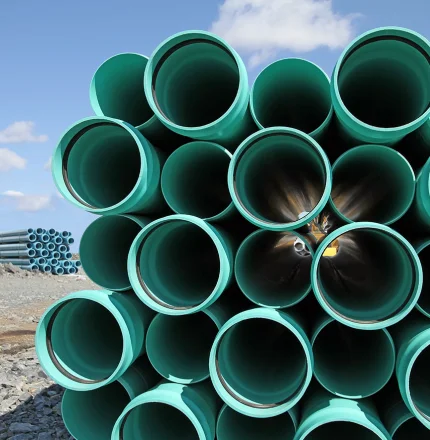

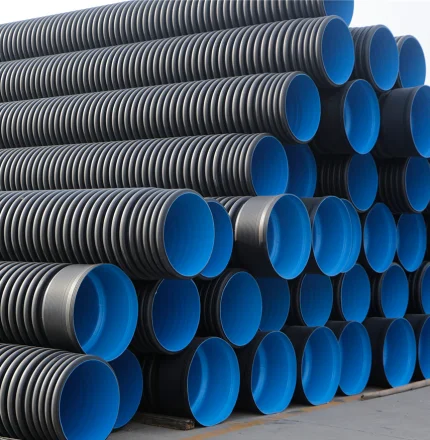

HDPE pipe is widely used in municipal water transmission, water distribution and service-line projects because it is corrosion-resistant, flexible and suitable for heat-fused, leak-resistant piping systems. However, pressure rating and mechanical strength are only part of the specification when a pipeline carries drinking water. Project owners must also evaluate whether the pipe and its related components are suitable for contact with potable water.
This is where NSF 61 certification for HDPE pipe becomes important.
NSF/ANSI/CAN 61 is one of the most widely recognized health-effects standards for drinking water system components. It evaluates whether substances that may migrate from a pipe, fitting or other component into drinking water remain below established health-based limits. The standard is especially important in the United States and Canada, but it is also specified by some water authorities and international projects in the Middle East, Latin America, Asia and other regions.
This guide explains what NSF 61 covers, when an HDPE pipe needs certification, where it is commonly required and what buyers should verify before placing an order.
▎What Is NSF/ANSI/CAN 61?
The full name of the standard is NSF/ANSI/CAN 61: Drinking Water System Components – Health Effects. It is an American National Standard and a Canadian National Standard for evaluating materials, components and products that come into contact with drinking water.
For an HDPE piping product, the assessment can include formulation review, extraction testing, toxicological evaluation, manufacturing-facility audits and ongoing certification surveillance. The purpose is to determine whether contaminants or impurities that migrate from the product into drinking water comply with the health-effects criteria established by the standard.
According to NSF's official description of NSF/ANSI/CAN 61, the standard covers several categories, including:
Pipes and related products;
Protective and barrier materials;
Joining and sealing materials;
Process media;
Mechanical devices used in water treatment and distribution;
Mechanical plumbing devices.
For HDPE systems, the relevant products can therefore include not only the pipe but also molded fittings, electrofusion fittings, valves, gaskets, transition fittings and other components exposed to drinking water.
▎What Does NSF 61 Certification Actually Prove?
NSF 61 certification primarily addresses drinking water health effects. It demonstrates that the certified product has been evaluated for substances that could be imparted to drinking water under the conditions covered by its listing.
However, NSF 61 should not be misunderstood as a complete HDPE pressure-pipe standard. By itself, it does not establish the pipe’s dimensional series, pressure class, hydrostatic design basis or installation procedure.
Those requirements normally come from product and engineering standards such as:
ASTM F714 for polyethylene plastic pipe based on outside diameter;
ASTM D3035 for polyethylene pipe based on controlled outside diameter;
AWWA C901 for smaller-diameter polyethylene pressure pipe and tubing;
AWWA C906 for polyethylene pressure pipe and fittings;
EN 12201 for polyethylene piping systems for water supply and pressure drainage.
A potable water project will often require both types of compliance: a product standard for dimensions and performance, and NSF 61 certification for drinking water contact safety.
▎Which HDPE Pipe Applications Need NSF 61 Certification?
Municipal Potable Water Transmission Mains
Large-diameter HDPE pipelines carrying treated drinking water from a treatment plant, reservoir or pumping station to a distribution network frequently require NSF 61 certification in North American projects.
The project specification may also require ASTM F714 or AWWA C906, PE4710 material, a specified DR and an NSF-certified potable water designation. NSF 61 does not replace these engineering requirements; it complements them.
Municipal Water Distribution Networks
HDPE pipes installed in urban or rural potable water distribution networks are one of the main applications for NSF-certified products. The requirement can cover mains, branches and associated fittings that remain in contact with finished drinking water.
Potable Water Service Lines
Service lines connect a public water main to a building or property. In the United States, drinking water service-line and lead service-line replacement projects commonly specify NSF 61-compliant products. Depending on diameter and pipe type, the project may also reference AWWA C901, ASTM D3035 or relevant plumbing-code provisions.
Drinking Water Treatment and Storage Facilities
Piping inside or around water treatment plants, potable water storage tanks, pumping stations and treatment equipment may fall within the scope of NSF 61 when the components contact water intended for human consumption.
Certification requirements can extend beyond the HDPE pipe to liners, coatings, valves, seals, gaskets and treatment-system components.
Building Potable Water Systems
Where polyethylene piping is permitted for building water service or distribution, the applicable plumbing code may require the pipe and related components to comply with NSF 61. Designers must also confirm that the particular HDPE product is approved for the installation method, temperature and pressure conditions involved.
Food, Beverage and Bottled-Water Facilities
Facilities producing beverages, processed foods or bottled water may specify NSF 61-certified piping for water that becomes an ingredient, contacts food or is consumed by people. Whether it is legally mandatory depends on the jurisdiction and facility requirements, but certification can provide useful third-party evidence of potable water contact suitability.
▎Which HDPE Applications Usually Do Not Require NSF 61?
NSF 61 is generally not necessary when the transported liquid is not intended for human consumption. Typical examples include:
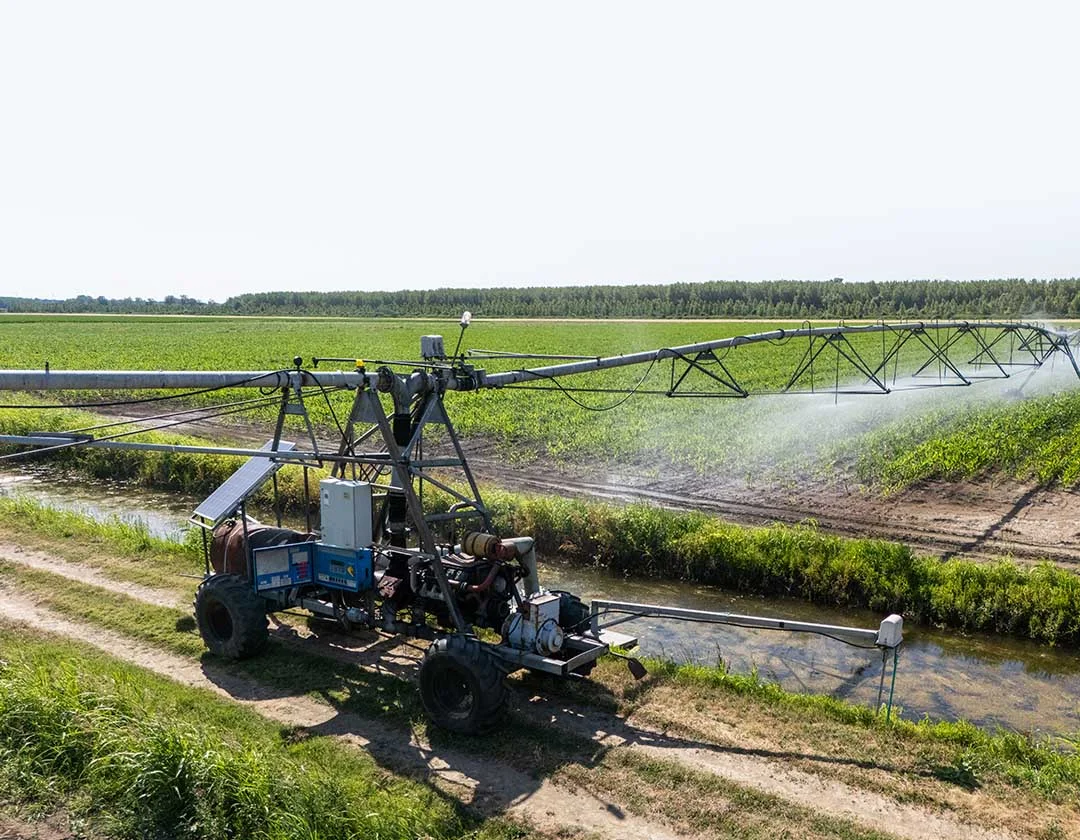
Agricultural irrigation using non-potable water;
Stormwater and rainwater drainage;
Gravity sewer and pressure sewer systems;
Reclaimed or recycled water networks;
Industrial wastewater;
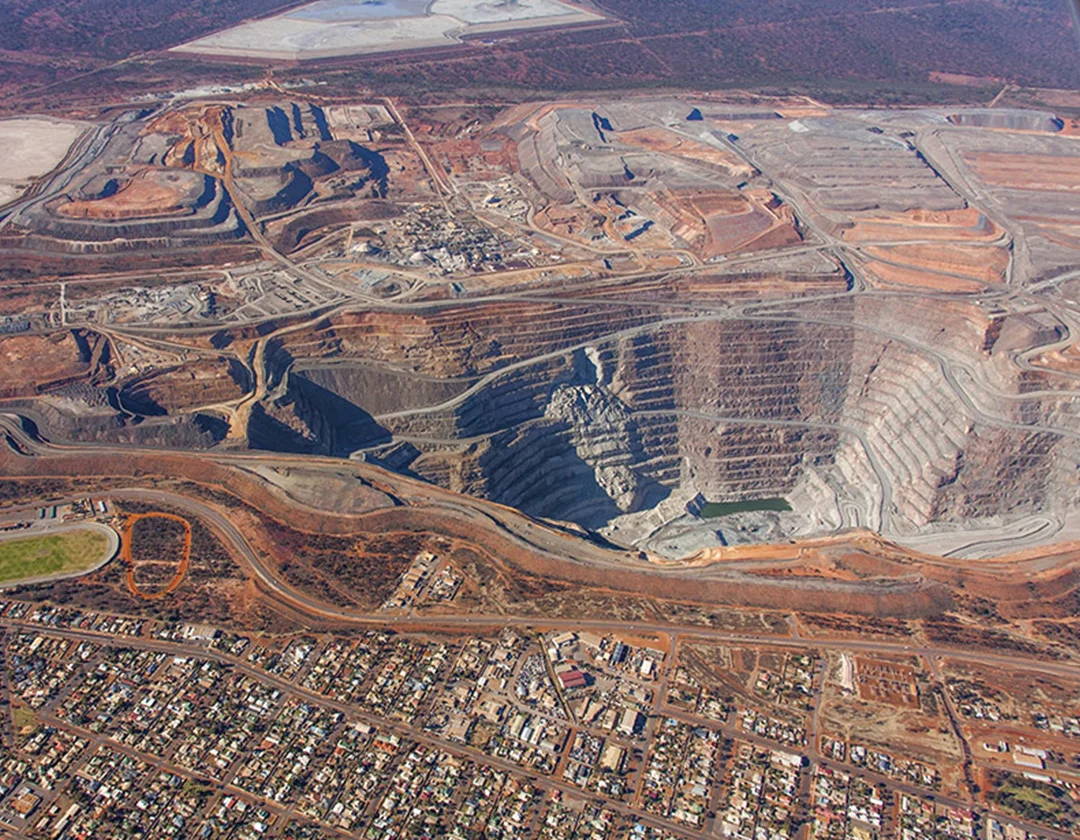
Mining slurry and tailings transportation;
Dredging and marine discharge pipelines;
Chemical process pipelines;
Landfill leachate systems;
Natural gas distribution;
Electrical and telecommunications conduits;
Closed-loop geothermal systems.
Nevertheless, the contract documents always take precedence. An owner, engineering consultant or financing institution may specify NSF 61 even where it is not a general legal requirement. Manufacturers and contractors should therefore review the technical specification rather than making a decision based only on the application name.
▎Where Is NSF 61 Certification Required or Commonly Specified?
United States
The United States is the most important market for NSF 61-certified HDPE pipe. Requirements are implemented through state drinking water regulations, plumbing codes, water utility specifications and project approval systems rather than through one identical rule for every project.
NSF reports that certification or compliance with NSF/ANSI/CAN 61 is required by nearly all U.S. states. Model plumbing codes also reference NSF 61 for potable water service and distribution products. In practice, an HDPE manufacturer targeting U.S. municipal drinking water projects should treat NSF 61 or an applicable NSF-pw listing as a key market-access requirement.
Buyers should still check the requirements of the individual state and water authority. A municipal utility may maintain its own approved-products or approved-manufacturers list in addition to requiring NSF certification.
Canada
NSF/ANSI/CAN 61 is also a Canadian National Standard. It is referenced directly or indirectly through Canadian plumbing codes and related CSA product standards. Most Canadian provinces and territories require certified drinking water components through their regulatory or code-adoption systems.
For Canadian projects, buyers should verify both the NSF listing and the relevant Canadian product, plumbing and utility requirements.
Dubai, United Arab Emirates
Dubai is an important example outside North America. NSF announced that the Dubai Electricity and Water Authority incorporated NSF 61 into its technical specifications for drinking water components. From November 2022, NSF-certified drinking water components became a requirement for relevant new DEWA tenders, service-authority work and developer projects.
This does not automatically mean that every water project in every emirate follows an identical rule. Requirements in Abu Dhabi, Sharjah and other emirates should be checked with the responsible authority and the current project specification.
Other Middle Eastern Markets
NSF 61 is widely recognized in the Gulf region and may appear in water authority specifications, developer requirements and consultant-designed projects in Saudi Arabia, Qatar, Kuwait, Oman, Bahrain and other markets.
However, it is more accurate to describe these as authority-specific or project-specific requirements unless the current national regulation explicitly mandates the standard. Suppliers should request the complete material specification and approved-vendor requirements before bidding.
Latin America, Asia and Africa
Some drinking water authorities, international contractors and infrastructure projects in these regions accept or specify NSF 61. This is particularly common where projects use American engineering standards, receive international financing or are designed by consultants familiar with AWWA and ASTM systems.
NSF 61 should not be presented as a universal legal requirement across these regions. Its status may range from mandatory in a particular tender to an accepted alternative or simply a preferred quality credential.
Europe and the United Kingdom
NSF 61 is respected internationally, but it normally does not replace European or national drinking water approvals.
Examples of market-specific requirements include France’s ACS system, Germany’s drinking water hygiene requirements, and the United Kingdom’s BS 6920 and Regulation 31 approval framework. The European Union is also implementing harmonized hygiene requirements for products and materials in contact with drinking water under Article 11 of Directive (EU) 2020/2184. The new system begins applying on 31 December 2026, with transitional provisions.
An NSF 61 certificate may support technical evaluation or provide additional assurance, but an exporter should not assume it automatically grants access to every European market.
Australia and New Zealand
Australia and New Zealand generally rely on AS/NZS 4020 for products used in contact with drinking water. Australian plumbing products may also require WaterMark certification, while water utilities can require additional product appraisals.
NSF 61 may be considered as supplementary or alternative evidence in limited circumstances, subject to the relevant authority’s approval, but it is not a universal replacement for AS/NZS 4020 or WaterMark.
▎NSF 61 vs. HDPE Product Standards
| Standard | Main purpose | Relevance to HDPE pipe |
|---|---|---|
NSF/ANSI/CAN 61 | Health effects of drinking water contact products | Evaluates substances that may migrate from the product into drinking water |
ASTM F714 / ASTM D3035 | Pipe dimensions and physical requirements | Defines product requirements for specific polyethylene pipe formats |
ISO 4427 / EN 12201 | PE water supply and pressure-system requirements | Common in international and European-standard projects |
An HDPE pipe can comply with ASTM F714 or ISO 4427 without being NSF 61 certified. Conversely, NSF 61 certification alone does not confirm that every pipe size, DR or pressure rating meets the required engineering standard.
▎What Does the NSF-pw Mark Mean on HDPE Pipe?
Certified HDPE products may carry an NSF-61 mark or an NSF-pw mark in the print line. NSF explains that the pw designation indicates compliance with the health-effects requirements of NSF/ANSI/CAN 61 together with the performance, long-term strength and quality-control requirements of NSF/ANSI 14.
For buyers, an NSF-pw listing can therefore provide broader assurance than a health-effects listing alone. The exact certification scope must still be checked in the official listing.
▎FAQ About NSF 61 HDPE Pipe
1. Is NSF 61 certification mandatory for all HDPE pipes?
No. It is mainly relevant to pipes and components that contact drinking water. Sewer, drainage, mining, dredging, gas and non-potable irrigation pipes normally do not need NSF 61 unless the project specification expressly requires it.
2. Does potable water HDPE pipe always need NSF 61?
It depends on the destination and approving authority. It is commonly required in the United States and Canada and by certain authorities such as DEWA in Dubai. Other markets may require different national approvals or specify NSF 61 only for particular projects.
3. Is an ASTM F714 HDPE pipe automatically NSF 61 certified?
No. ASTM F714 addresses polyethylene pipe product requirements and dimensions. NSF 61 addresses drinking water health effects. A project may require compliance with both.
4. Does NSF 61 certify the pressure rating of an HDPE pipe?
Not by itself. Pressure class, DR, material strength and hydrostatic performance must be demonstrated through the applicable ASTM, AWWA, ISO, EN or other product standards. NSF 14 certification has a broader performance and quality-control scope.
5. What is the difference between NSF-61 and NSF-pw?
The NSF-61 mark indicates compliance with the health-effects requirements of NSF/ANSI/CAN 61. The NSF-pw mark indicates that the product also meets applicable performance, long-term strength and quality-control requirements under NSF/ANSI 14.
6. Is NSF-certified PE resin enough for a potable water project?
Not necessarily. Buyers should verify that the finished pipe from the named production facility is certified for the required product, diameter, material, color and service condition.
7. Do HDPE fittings need separate NSF certification?
Yes, when the project requires certified potable water components. A certified pipe does not automatically certify molded fittings, electrofusion fittings, valves, gaskets or transition adapters.
8. Can NSF 61 replace ACS, WRAS or AS/NZS 4020?
Not automatically. France, the United Kingdom, Australia and other markets operate their own regulatory or approval systems. NSF 61 may be useful supplementary evidence, but acceptance must be confirmed with the local authority.
9. How can a buyer confirm whether an NSF certificate is genuine?
Search the manufacturer and trade designation in the official certification database. Then compare the facility, product type, material, sizes, temperature conditions and restrictions with the proposed product and pipe marking.
10. Choosing the Right HDPE Pipe for a Potable Water Project
NSF 61 certification is a critical health-effects requirement for many potable water projects, but it should be considered as one part of a complete technical specification. Buyers should also define the applicable product standard, PE material designation, diameter, DR or SDR, operating pressure, surge allowance, water temperature, jointing method and local authority approval.
For North American projects, certification scope should be reviewed alongside ASTM and AWWA requirements. For Europe, Australia and other regions, buyers must also identify the applicable local drinking water approval. Most importantly, certification should be verified for the actual finished pipe, manufacturing facility and ordered size—not assumed from a resin certificate or a generic marketing statement.
▎Request an HDPE Potable Water Pipe Proposal
Planning a municipal water transmission, distribution or service-line project? Send SIFFO your destination country, applicable standard, pipe diameter, DR or SDR, operating pressure, required fittings and drinking water certification requirements.
Our technical team can review the project specification, recommend an appropriate HDPE piping configuration and confirm the certification scope available for the requested products before quotation. Contact SIFFO to request technical data, product documentation and a project-specific quotation.