

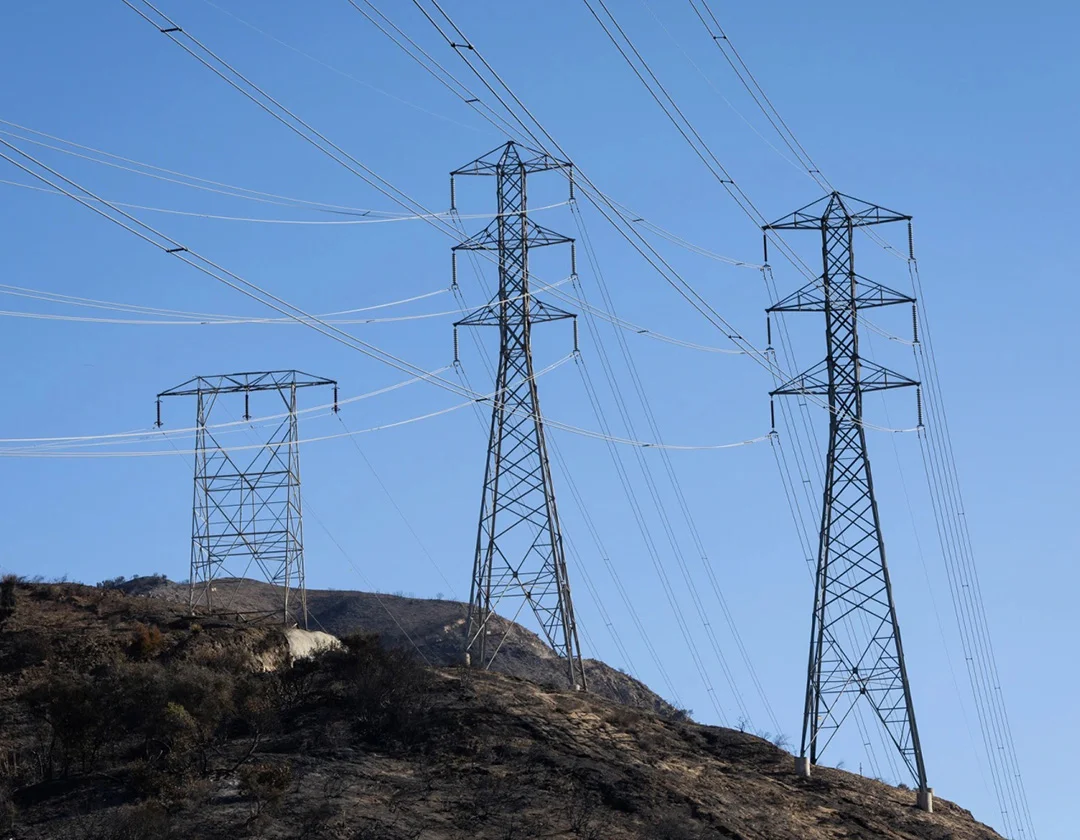
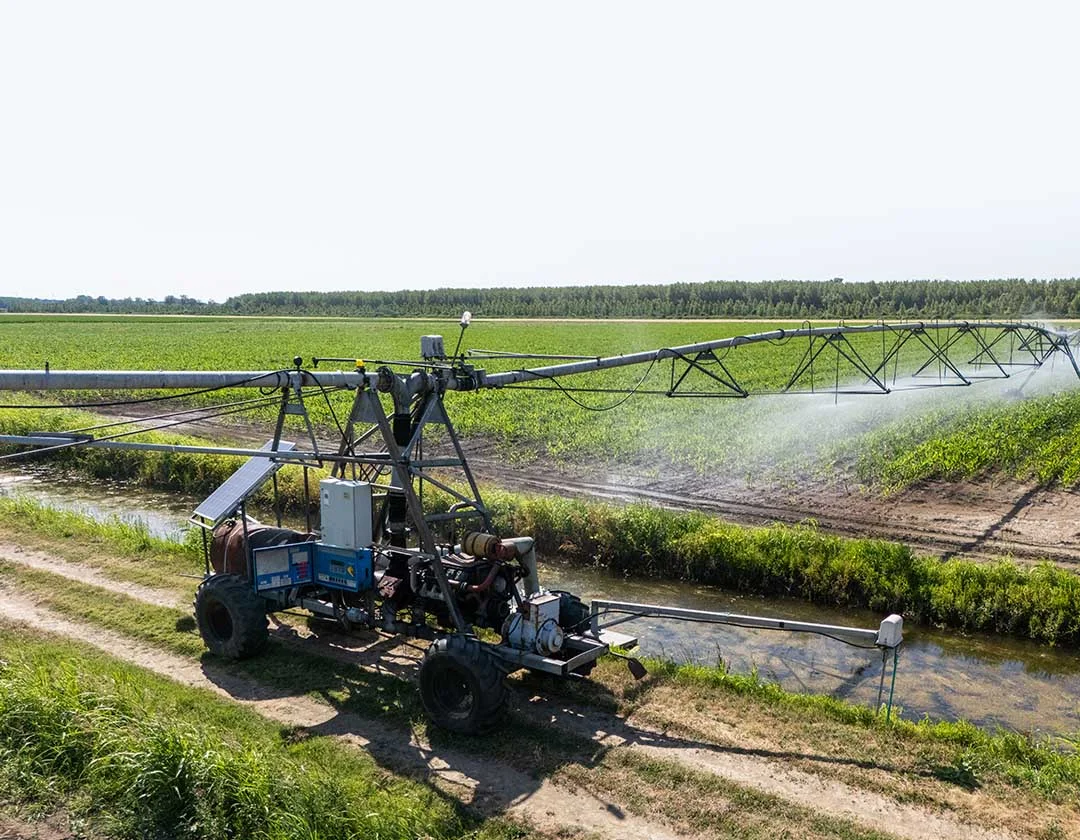
HDPE water pipes are widely used for agricultural irrigation, municipal water supply, mining, industrial water transportation and other projects. In many applications, however, HDPE pipes are not immediately buried after installation. Some pipelines remain exposed to direct sunlight for years, particularly in irrigation systems, temporary water supply systems, mining projects and above-ground industrial pipelines.
This raises an important engineering question:
Can HDPE water pipes be used outdoors under continuous sunlight? How does UV radiation affect HDPE pipes, and how should a suitable pipe be selected?
The short answer is yes, properly formulated black HDPE pipes can be used for long-term outdoor applications. The key is not simply choosing “HDPE,” but selecting a pipe with an appropriate polyethylene grade, UV stabilization systems, carbon black content and dispersion, pressure rating, wall thickness and operating-temperature design.
Sunlight contains ultraviolet radiation. When polyethylene is continuously exposed to UV radiation without adequate stabilization, photo-oxidation can gradually occur in the polymer.
UV exposure primarily affects the surface layer of the pipe. Over time, insufficiently stabilized polyethylene may experience molecular degradation, resulting in reduced toughness, lower elongation and increased susceptibility to cracking.
However, this does not mean that all HDPE pipes will deteriorate quickly when exposed to sunlight.
Modern pressure-grade HDPE pipes are normally manufactured with UV stabilization. For black PE pipes, finely dispersed carbon black is one of the most effective and widely used methods of protecting polyethylene from UV radiation.
Therefore, the important question is:
Does the HDPE pipe have a properly designed UV stabilization system?
▎How Does UV Radiation Affect HDPE Pipes?
The degradation process can be simplified as:
UV radiation → photo-oxidation → surface molecular degradation → gradual loss of mechanical properties
If the polyethylene compound is inadequately stabilized, prolonged exposure can eventually cause:
Surface oxidation
Loss of toughness
Reduced elongation
Increased brittleness
Greater susceptibility to slow crack growth
Potential reduction in long-term pressure performance
The effect is generally more significant at the exposed surface than deep inside the pipe wall because UV penetration into polyethylene is limited.
This is particularly important for above-ground HDPE water pipelines, where the pipe is continuously exposed to sunlight rather than protected by soil.
▎Why Is Black HDPE Pipe Better for Outdoor Applications?
For long-term outdoor HDPE applications, black polyethylene is generally the preferred choice.
The reason is carbon black.
Carbon black acts as a UV screen, absorbing and dissipating UV radiation before it can cause significant damage to the polyethylene molecular structure.
The PE100+ Association notes that black PE80 and PE100 compounds typically contain approximately 2–2.5% finely dispersed carbon black, providing effective protection against intensive UV exposure.
The Plastics Pipe Institute likewise identifies finely dispersed carbon black as the most effective UV-screening method for PE pipe and notes that materials containing approximately 2–3% carbon black have demonstrated long-term weatherability.
The key is not simply “black color”
A common misunderstanding is:
“If an HDPE pipe is black, it must automatically have excellent UV resistance.”
Not necessarily.
The performance of carbon black depends on several factors:
Carbon black concentration
Particle size
Carbon black quality
Uniform dispersion
Compatibility with the polyethylene compound
Overall antioxidant and stabilization system
Poor dispersion can create local weak points and may negatively affect long-term pipe performance.
Therefore, material formulation and manufacturing quality are just as important as pipe color.
▎How to Choose HDPE Pipes for Outdoor Water Projects?
When selecting an HDPE pipe for outdoor use, buyers should evaluate more than diameter and pressure rating.
A practical selection checklist includes:
| Selection factor | What to check |
|---|---|
| Material | PE100, PE4710 or specified project grade |
| Color | Black body recommended for long-term outdoor exposure |
| UV protection | Carbon black / UV stabilization systems |
| Carbon black dispersion | Uniform dispersion is important |
| Diameter | Based on required flow rate |
| SDR | Selected according to design pressure |
| PN / Pressure rating | Based on operating and surge pressure |
| Temperature | Consider actual pipe operating temperature |
| Water quality | Potable-water approval where required |
| Standards | ISO 4427, EN 12201, ASTM or project specification |
| Jointing | Butt fusion or electrofusion |
| Manufacturer | Material traceability and quality-control capability |
This approach is much more reliable than selecting a pipe based only on the words “UV resistant HDPE.”
▎Sunlight Is Not the Only Outdoor Factor
When an HDPE water pipe is installed above ground, sunlight is only one part of the environmental conditions.
The designer should also consider:
Ambient temperature
HDPE pressure ratings are normally based on reference conditions around 20°C. When the pipe operates at higher temperatures, the allowable pressure may need to be reduced according to the applicable design standard.
This is particularly important for:
Desert irrigation systems
Tropical agricultural projects
Mining sites
Industrial water pipelines
Above-ground pipelines in hot climates
A black pipe exposed to direct sunlight can become significantly hotter than the surrounding air.
Therefore, UV resistance and temperature derating should be considered together.
▎Does HDPE Pipe Need to Be Covered from the Sun?
For properly formulated black HDPE pressure pipe, permanent shading is generally not necessary simply because of UV exposure.
Black PE pipe with adequate carbon-black stabilization is specifically designed for outdoor weatherability. PPI guidance notes that black polyethylene products with appropriate carbon black can withstand extended outdoor exposure, while non-black products require more attention to UV stabilization and exposure duration.
However, this does not mean that every HDPE pipe can be installed outdoors without considering its material specification.
For long-term outdoor service, always verify:
Pipe material specification
UV stabilization requirements
Applicable standard
Manufacturer's outdoor-use recommendation
Actual operating temperature
Pressure conditions
▎How Does SIFFO HDPE Pipe Handle Sunlight and UV Radiation?
Shandong SIFFO Plastic Technology Co., Ltd. manufactures HDPE pipes for water supply, irrigation, drainage, mining, industrial and other applications.
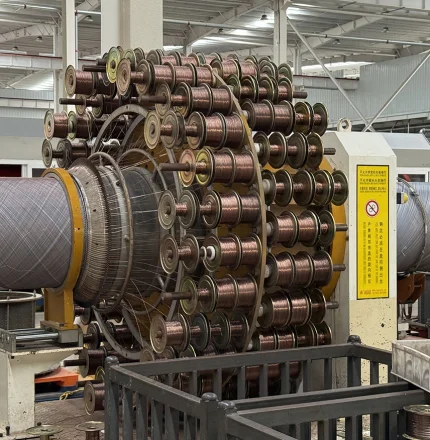
For outdoor HDPE water-pipe applications, SIFFO focuses on the combination of appropriate polyethylene materials, UV stabilization, controlled extrusion and finished-pipe quality inspection.
SIFFO's HDPE production capability includes:
20 dedicated HDPE pipe production lines
More than 200,000 tons of annual HDPE pipe capacity
Multiple HDPE pipe specifications and pressure classes
Metric and project-specific dimensions
Standard pipe lengths and customized lengths
Coiled HDPE pipe for suitable smaller-diameter applications
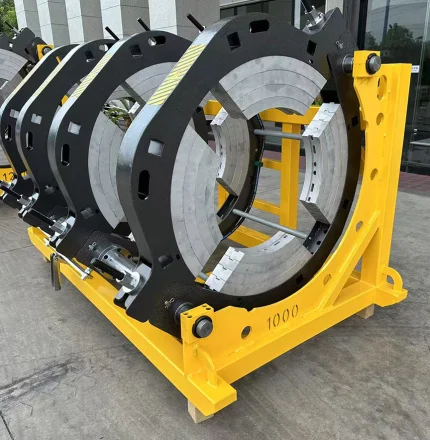
Butt-fusion and electrofusion-compatible products
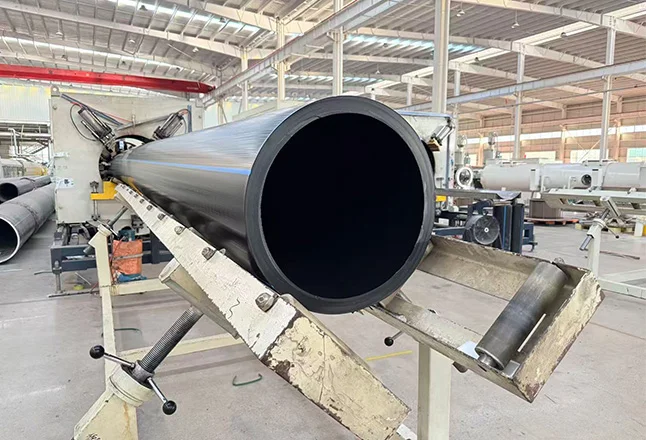
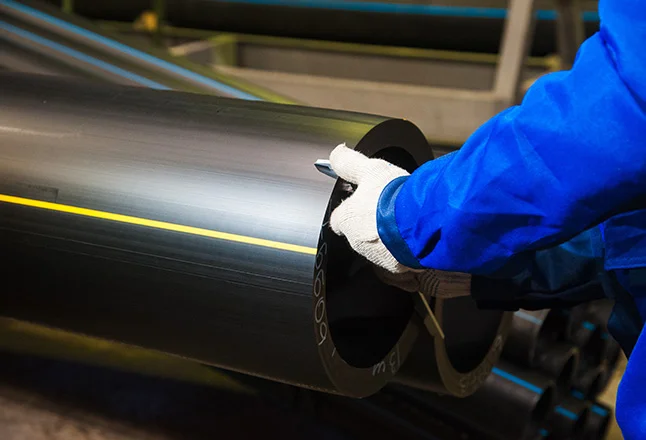
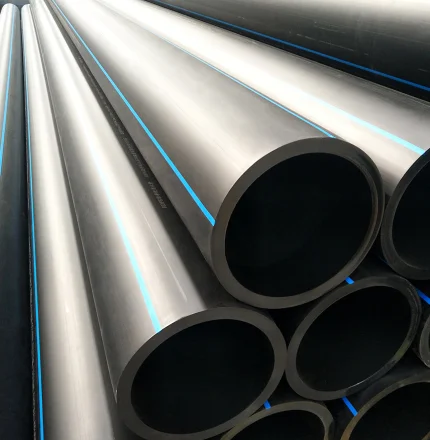
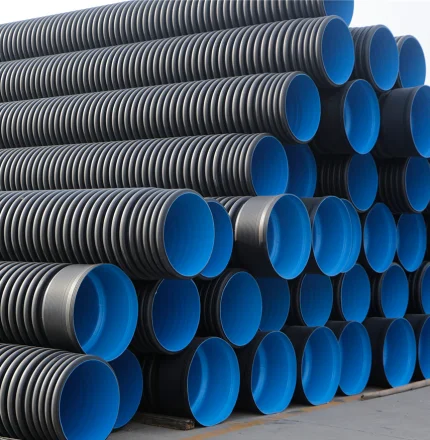
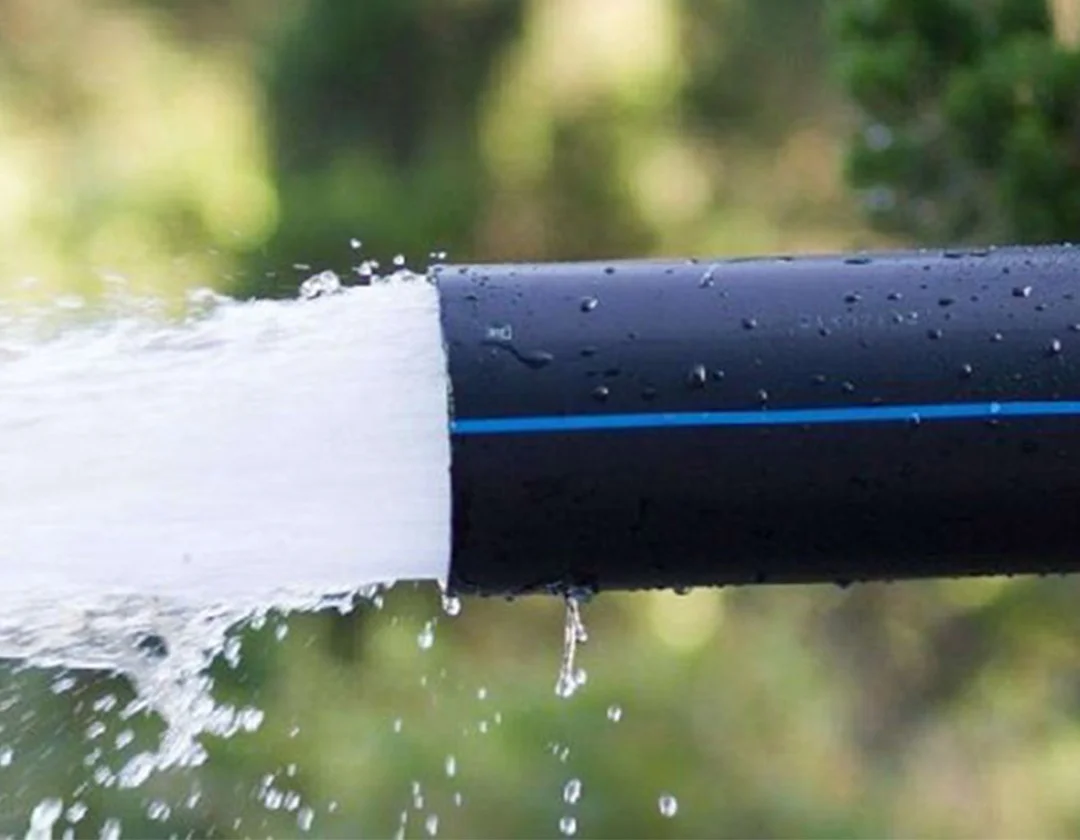
For outdoor water projects, SIFFO commonly supplies black HDPE pipes with blue stripes, combining water-service identification with the weatherability advantages of a black polyethylene compound.
The objective is not simply to make a pipe that looks black, but to maintain consistent material formulation and processing quality throughout the pipe wall.
▎What Outdoor HDPE Applications Are Suitable for SIFFO Pipes?
Properly selected HDPE pipes can be used in many applications where pipelines are exposed to sunlight.
Agricultural irrigation
Above-ground irrigation pipelines are common on:
Farms
Orchards
Greenhouses
Large-scale agricultural projects
Irrigation networks
HDPE is particularly attractive because of its flexibility, corrosion resistance and relatively lightweight installation.
Mining
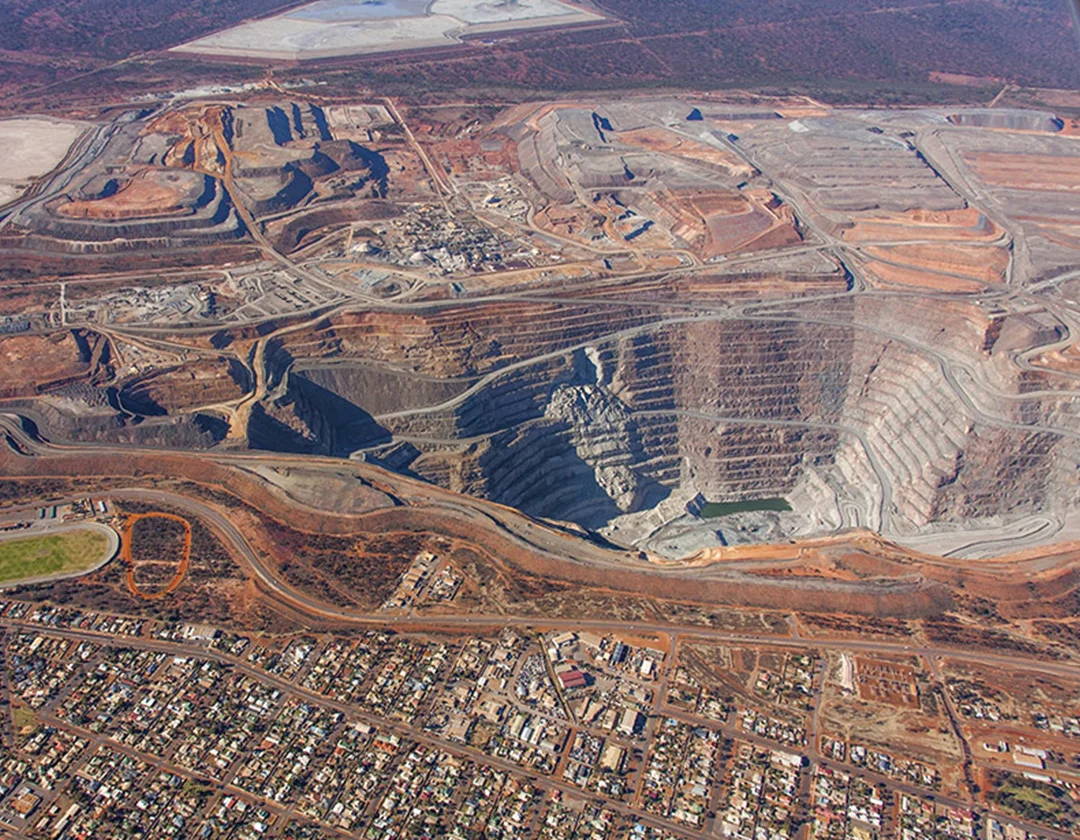
Mining water pipelines may remain above ground for long periods and can be exposed to intense sunlight.
HDPE is suitable for applications involving:
Process water
Mine water
Tailings-related water systems
Slurry and drainage systems
Industrial water
Factories and industrial facilities may use exposed HDPE pipelines for:
Cooling water
Process water
Utility water
Wastewater
Chemical-resistant water systems
Municipal and temporary water systems
HDPE can also be used for temporary or semi-permanent water pipelines where rapid installation and flexible routing are important.
▎How Long Can Black HDPE Pipe Last Outdoors?
This is one of the most frequently asked questions about HDPE pipe UV resistance.
There is no single universal service-life number that applies to every HDPE pipe and every climate.
The actual service life depends on:
Polyethylene grade
Stabilization system
Carbon black quality
Carbon black dispersion
Pipe wall thickness
Operating pressure
Operating temperature
UV exposure
Installation conditions
Water chemistry
Mechanical loading
However, industry research and long-term experience demonstrate that properly stabilized black polyethylene pipe can achieve very long outdoor service performance. PPI's PE Handbook cites experience showing that appropriately stabilized PE materials can retain performance for more than 50 years in outdoor applications.
This should be understood as evidence of material weatherability, not a blanket warranty that every outdoor HDPE pipeline will automatically last 50 years.
The complete pipeline system still needs to be correctly designed and installed.
▎Conclusion
Shandong SIFFO Plastic Technology Co., Ltd. provides HDPE pipe solutions for water supply, agricultural irrigation, mining, industrial and infrastructure projects. With 20 dedicated HDPE production lines and annual HDPE pipe capacity exceeding 200,000 tons, SIFFO can provide different diameters, pressure classes, lengths and configurations according to project requirements.
For outdoor water applications, choosing a UV-resistant HDPE pipe is not simply about choosing a black pipe. Material quality, UV stabilization, additive dispersion, pressure design and temperature conditions all work together to determine long-term pipeline performance.