

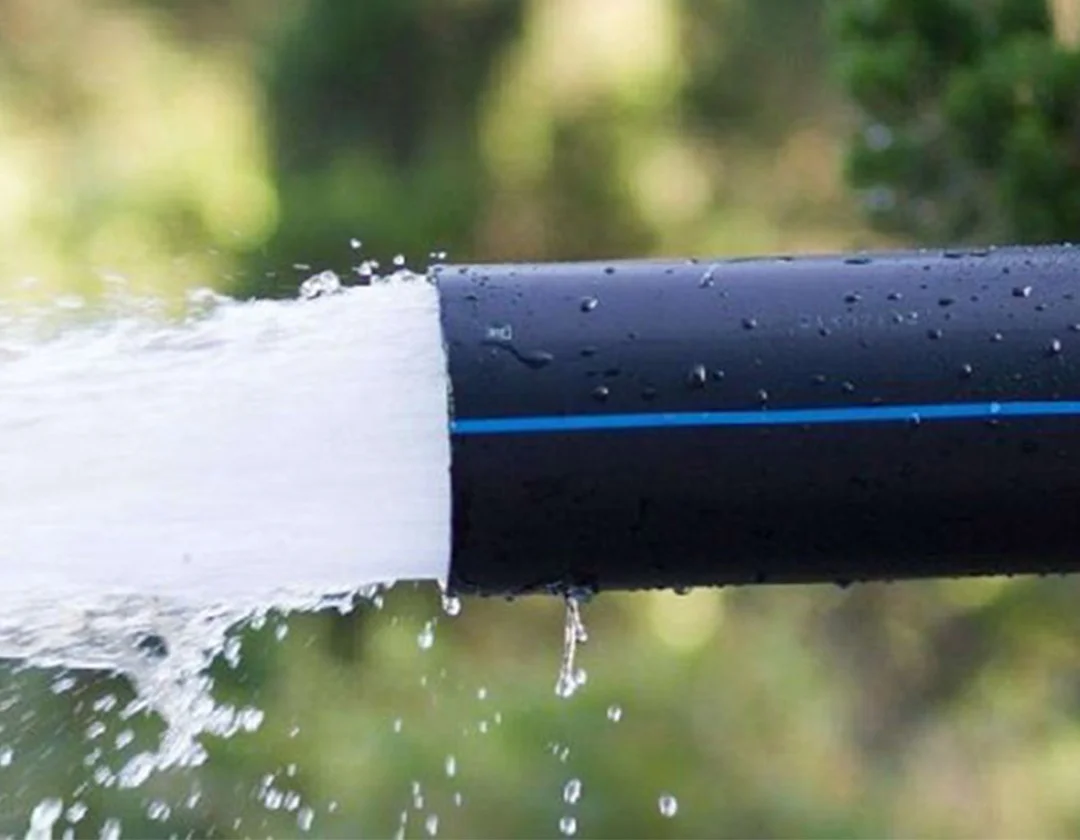
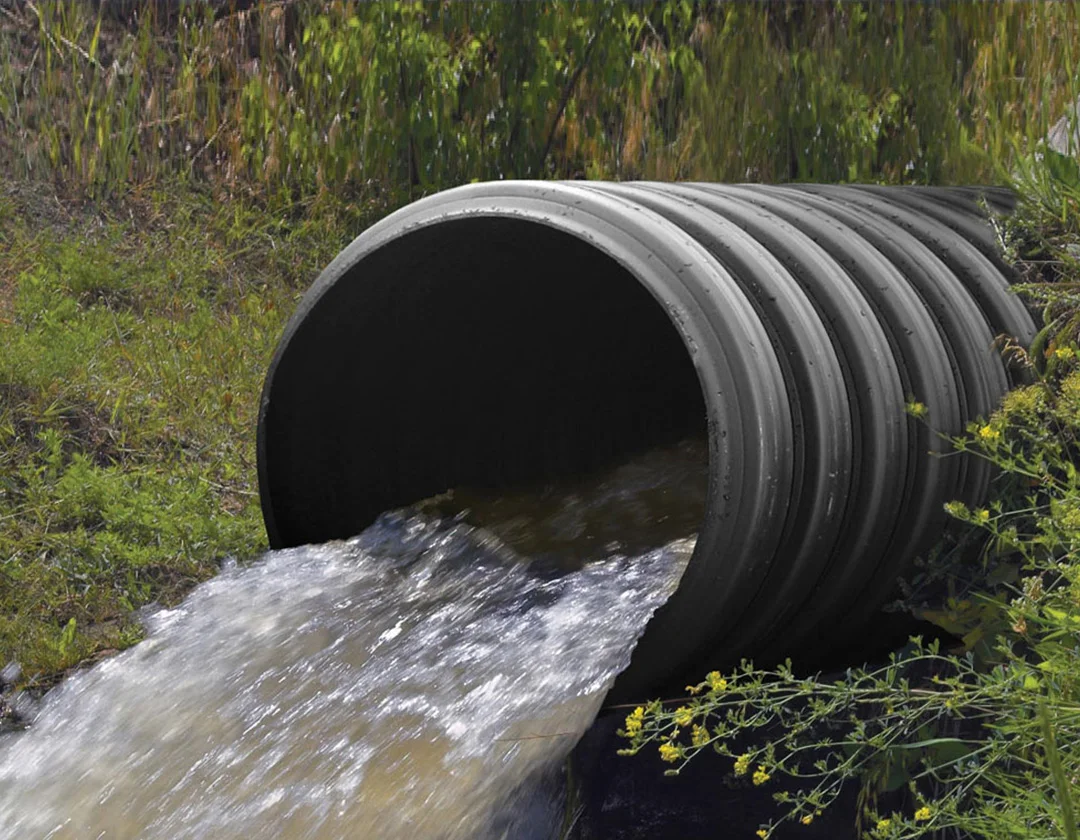
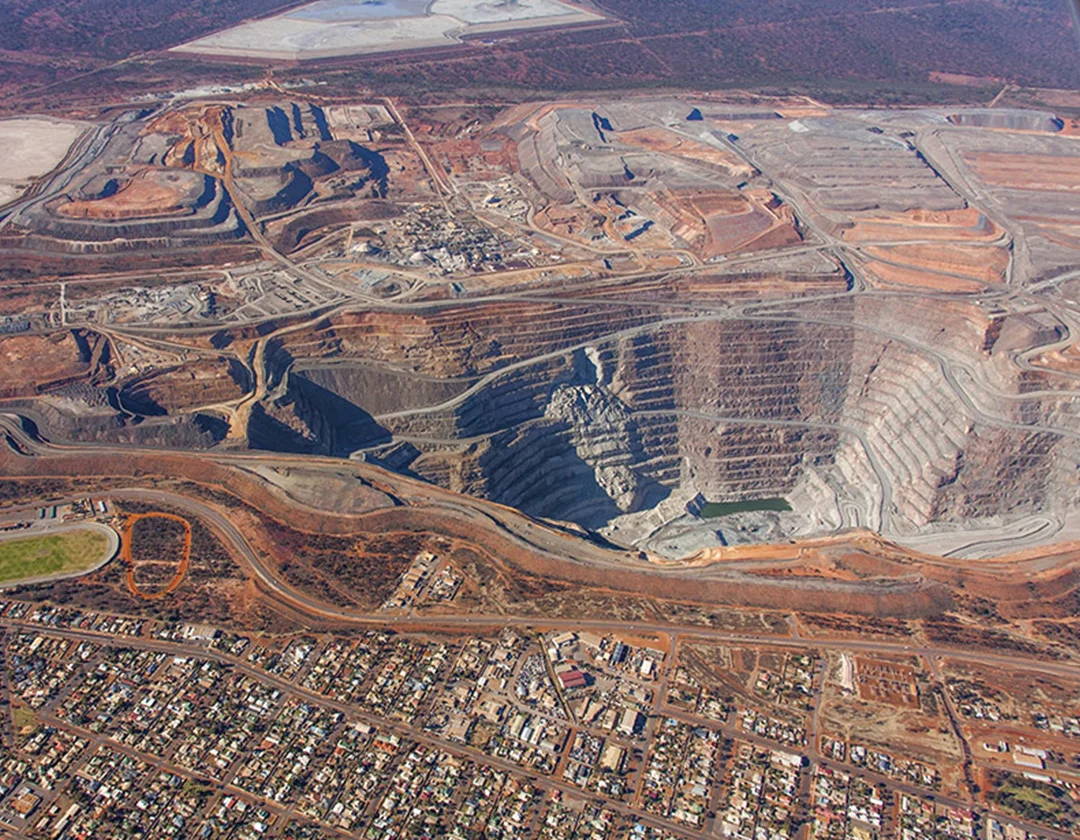
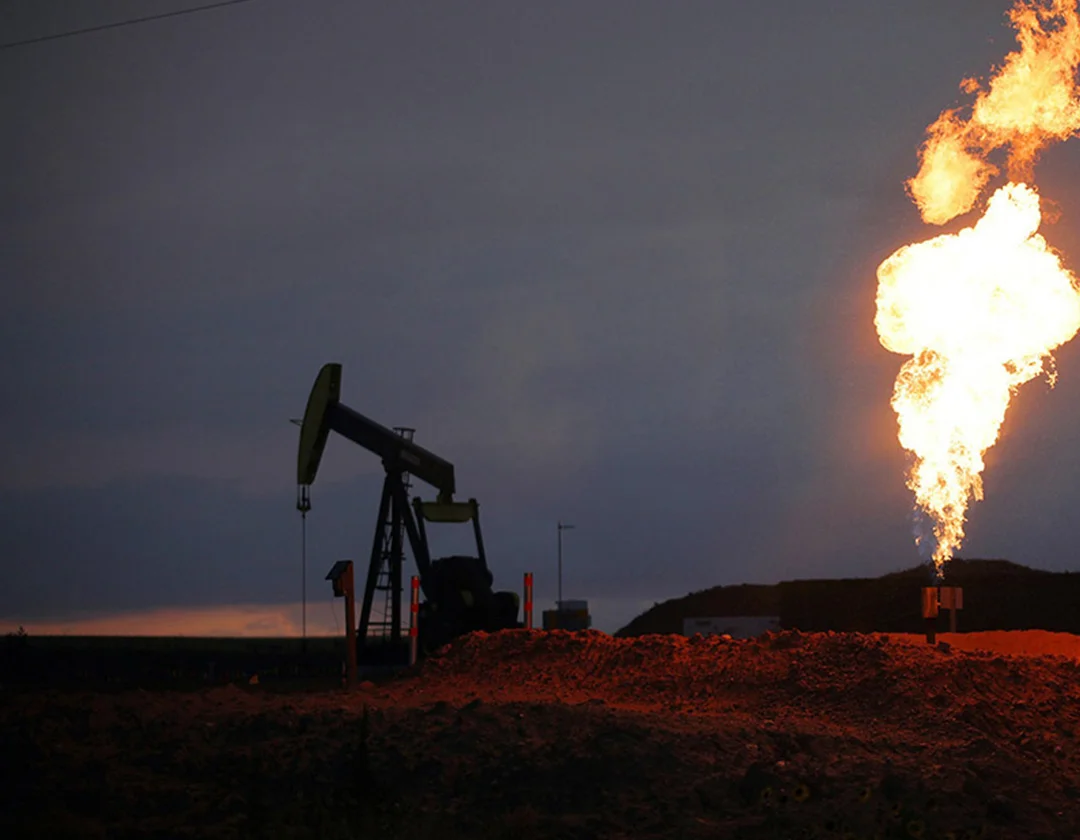
HDPE pipes are widely used for water supply, irrigation, drainage, mining, industrial pipelines, gas distribution and other applications because polyethylene has excellent corrosion resistance, flexibility and long-term hydrostatic strength. However, the pressure rating printed for an HDPE pipe is normally based on a specified reference temperature. When the operating temperature increases, the allowable pressure generally needs to be reduced.
This reduction is commonly called temperature derating, temperature correction, or a temperature compensation factor.
Understanding temperature derating is particularly important when an HDPE pipeline transports warm water, industrial fluids or operates in an environment with significant temperature changes.
▎Why Temperature Matters for HDPE Pipes
HDPE is a viscoelastic material, meaning its mechanical properties — including modulus of elasticity, Poisson's ratio, and tensile strength — vary with both temperature and time. As temperature rises, HDPE becomes softer and loses resistance to internal pressure. As temperature drops, the material stiffens and contracts. These changes affect everything from pipe dimensions to pressure capacity and long-term service life.
The recommended long-term service temperature range for HDPE is approximately −34 °C to 60 °C. Within this range, the material performs reliably, but designers must account for temperature-induced changes rather than assuming constant properties.
▎Thermal Expansion and Contraction
Like all materials, HDPE expands when heated and contracts when cooled. What makes HDPE distinctive is its relatively high coefficient of thermal expansion (CTE). For PE 4XXX grades, the axial CTE is approximately 144 × 10⁻⁶ per °C (80 × 10⁻⁶ per °F). In practical terms, a 1-meter section of PE pipe elongates or contracts by roughly 0.2 mm for every 1 °C change in temperature.
The linear expansion can be calculated using the standard formula:
ΔL = L × α × ΔT
Where ΔL is the change in length, L is the original pipe length, α is the coefficient of thermal expansion, and ΔT is the temperature change. For a 100-meter buried HDPE pipeline experiencing a 30 °C seasonal temperature swing, the theoretical length change would be approximately 43 mm — a significant movement that must be accommodated in design.
The good news is that buried pipelines are largely restrained by soil friction, so the actual displacement is much smaller than the theoretical free expansion. When the pipe is fully constrained, thermal expansion translates into compressive stress rather than physical movement. The resulting stress can be estimated as σ = E(T) × α × ΔT, where E(T) is the temperature-dependent modulus of elasticity. Under typical seasonal temperature variations, these thermal stresses in HDPE are relatively small — on the order of 3 to 5% of the material's yield stress.
Above-ground installations, however, require more careful attention. The combination of direct solar heating, larger temperature differentials, and the absence of soil restraint can produce expansion several times greater than in buried systems, making proper support spacing and expansion loop design critical.
▎Pressure Derating: How Temperature Reduces Capacity
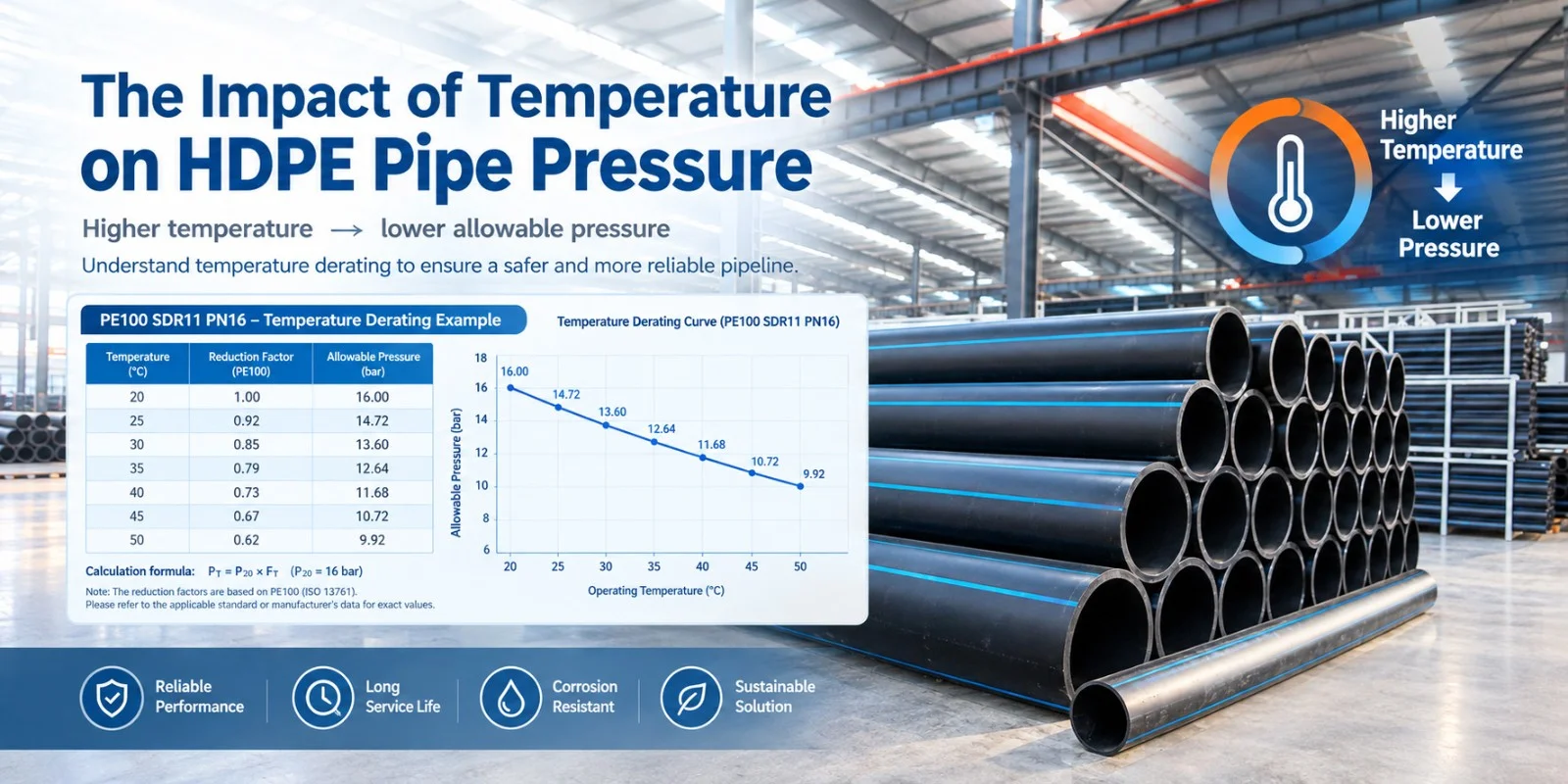
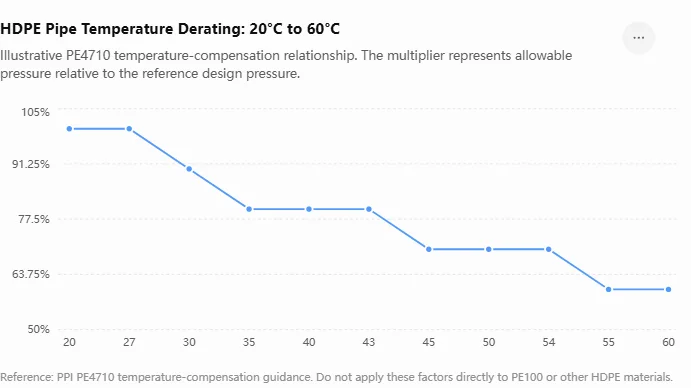
One of the most important design considerations for HDPE pipes operating at elevated temperatures is pressure derating. HDPE pipe pressure ratings are established at a reference temperature of 20 °C (or 23 °C, depending on the standard). As the operating temperature increases, the allowable working pressure must be reduced accordingly.
This is standardized internationally. ISO 13761:2017 specifies a method for deriving pressure reduction factors for polyethylene pipeline systems operating at temperatures between 20 °C and 40 °C or 50 °C, depending on the material classification.
The allowable operating pressure is calculated as:
PFA = f_T × f_A × PN
Where PFA is the allowable operating pressure, f_T is the temperature derating factor, f_A is an application-specific factor (equal to 1.0 for water), and PN is the nominal pressure rating.
The temperature derating factors for PE 80 and PE 100 pipes at common operating temperatures are as follows: at 20 °C, f_T = 1.00; at 30 °C, f_T = 0.87; at 40 °C, f_T = 0.74. For higher temperatures, the Chevron Phillips design factor table extends the range further: at 50 °C (120 °F), the factor is 0.63, and at 60 °C (140 °F), it drops to 0.50. The maximum temperature for pressure service is typically 60 °C (140 °F), while the maximum for non-pressure service extends to 82 °C (180 °F).
Consider a practical example: a DN 40 HDPE pipe with a nominal pressure rating of 10 bar (PN 10) operating at a constant 40 °C. Applying the derating factor of 0.74, the allowable operating pressure drops to 7.4 bar. This represents a 26% reduction in pressure capacity — a difference that could be critical in system design.
▎Practical Design Considerations
Temperature effects should be integrated into the design process rather than treated as an afterthought. A few key recommendations:
Always apply temperature derating. Never use the 20 °C pressure rating for systems operating at elevated temperatures. Apply the appropriate derating factor from ISO 13761 or the manufacturer's data.
Account for thermal expansion in above-ground installations. Use expansion loops, offsets, or flexible connections to accommodate length changes. For buried pipelines, the soil provides natural restraint, but transition points and connections to rigid structures still require attention.
Verify soil conditions. The thermal conductivity of soil varies widely — from about 0.5 W/m·K for dry sand to over 2.5 W/m·K for saturated clay. Wet soil conducts heat much more efficiently than dry soil, which means temperature decay rates can differ substantially between summer and winter, or between well-drained and waterlogged sites.
Respect the service temperature limits. HDPE performs best within its recommended range. For applications requiring sustained temperatures above 60 °C, alternative materials such as PEX or cross-linked polyethylene should be evaluated.
▎Temperature and Pressure Are Not the Only Factors
Temperature derating should not be considered independently from other design factors.
The allowable pressure of an HDPE pipeline can also be affected by:
1. SDR
A lower SDR means a thicker pipe wall relative to its diameter.
For example:
SDR11 → thicker wall
SDR17 → thinner wall
SDR26 → thinner wall
For the same material and design conditions, SDR11 generally has a higher pressure capacity than SDR17.
2. PE material grade
PE80, PE100 and PE4710 are different material designations and should not be treated as interchangeable.
3. Surge pressure
A pipeline may experience pressure surges caused by:
pump start/stop
valve closure
power failure
rapid flow changes
HDPE's flexibility provides significant advantages in surge conditions, but surge pressure must still be included in system design.
PPI specifically publishes guidance on occasional and recurring surge considerations for HDPE water pipe systems.
4. Installation conditions
An above-ground pipeline exposed to sunlight can experience much greater temperature variation than a buried pipeline.
5. Fluid characteristics
Water, chemicals, hydrocarbons and other fluids may have different temperature and chemical-compatibility requirements.
▎Does a Short-Term Temperature Increase Mean the Pipe Must Always Be Derated?
Not necessarily.
Engineering design distinguishes between:
continuous operating temperature
average operating temperature
maximum sustained temperature
short-term temperature excursions
The effect of a brief temperature increase can be different from the effect of continuous operation at the same temperature.
PPI's temperature guidance specifically distinguishes sustained operating temperature from temporary, relatively minor temperature increases.
Therefore, a pipeline that normally operates at 20°C but occasionally experiences a short-term increase should not automatically be treated in the same way as a pipeline continuously operating at 40°C.
The actual design requirements depend on the applicable code, standard and operating conditions.
▎How Should Buyers Specify HDPE Pipes for High-Temperature Applications?
When requesting an HDPE pipe quotation for a project involving elevated temperatures, buyers should provide more information than simply:
PE100 SDR11 PN16.
A better technical specification should include:
Pipe material: PE100 / PE4710 / other
Pipe standard: ISO / EN / ASTM / AWWA
Nominal diameter
SDR or wall thickness
Nominal pressure
Normal operating temperature
Maximum continuous temperature
Minimum operating temperature
Maximum operating pressure
Expected surge pressure
Fluid type
Installation method
Above-ground or buried installation
Required design life
Jointing method
Applicable certification
This information allows the manufacturer or engineer to verify whether the selected pipe is appropriate for the actual service conditions.
▎Engineering Note
The numerical examples in this article are intended to explain the calculation method. Actual pressure ratings and temperature derating factors should be verified against the applicable ISO, EN, ASTM, AWWA or project-specific requirements, together with the actual PE compound and manufacturer's certified technical data.
For HDPE water, gas, industrial and infrastructure applications, temperature should be evaluated together with SDR, material grade, pressure, surge, installation conditions and required design life rather than considered as an isolated parameter.
Prev: None