

What is HDPE Drainage Pipe?
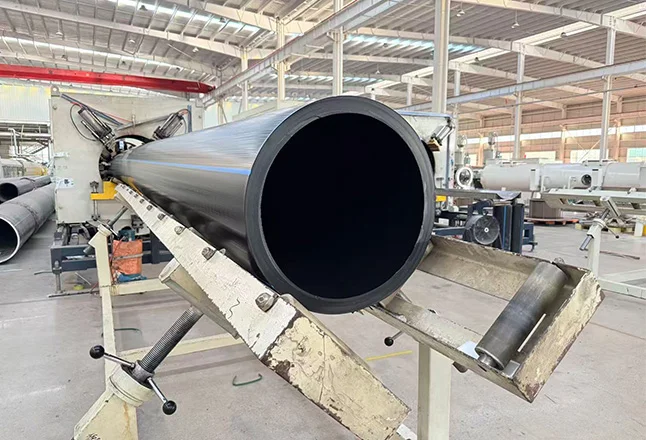
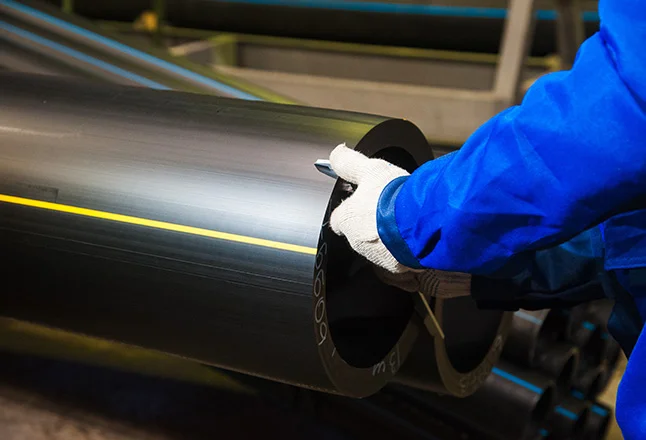
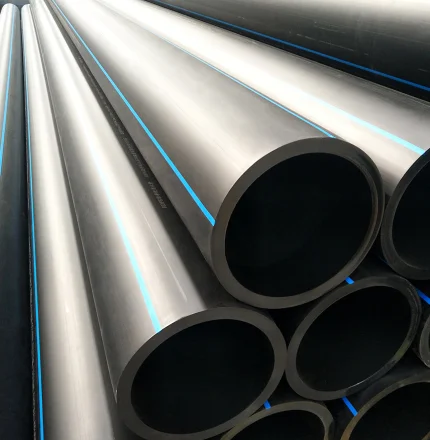
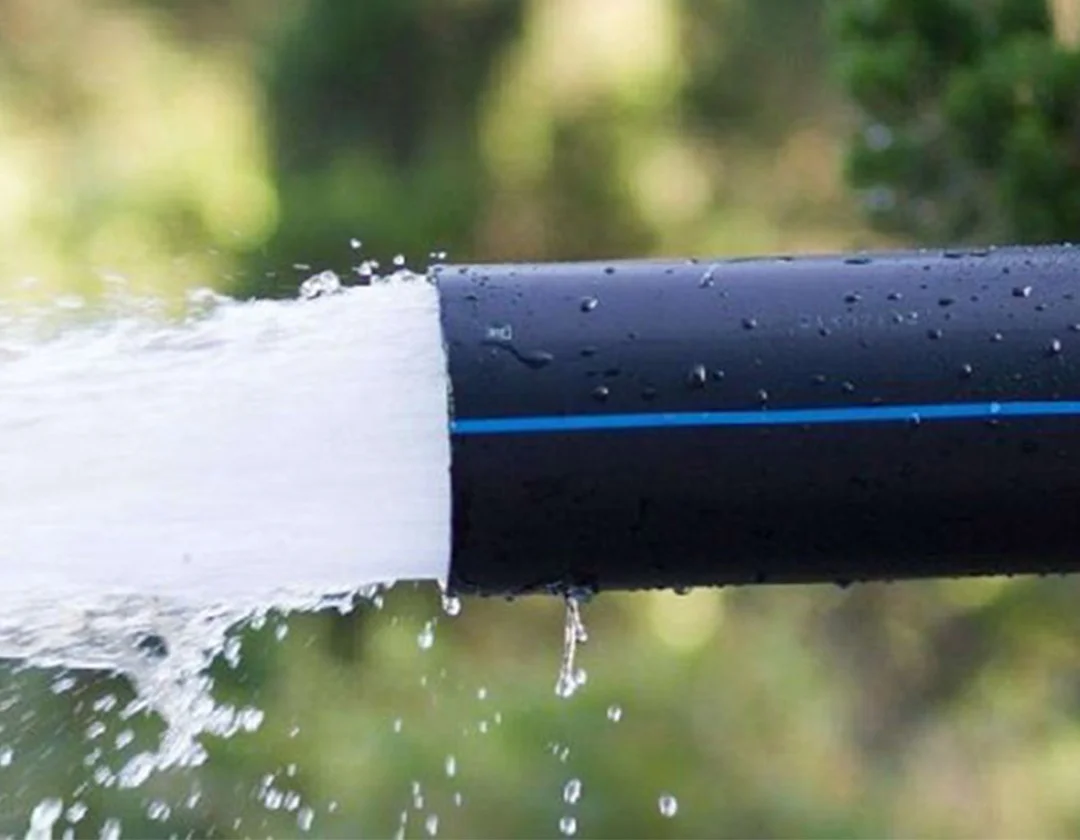
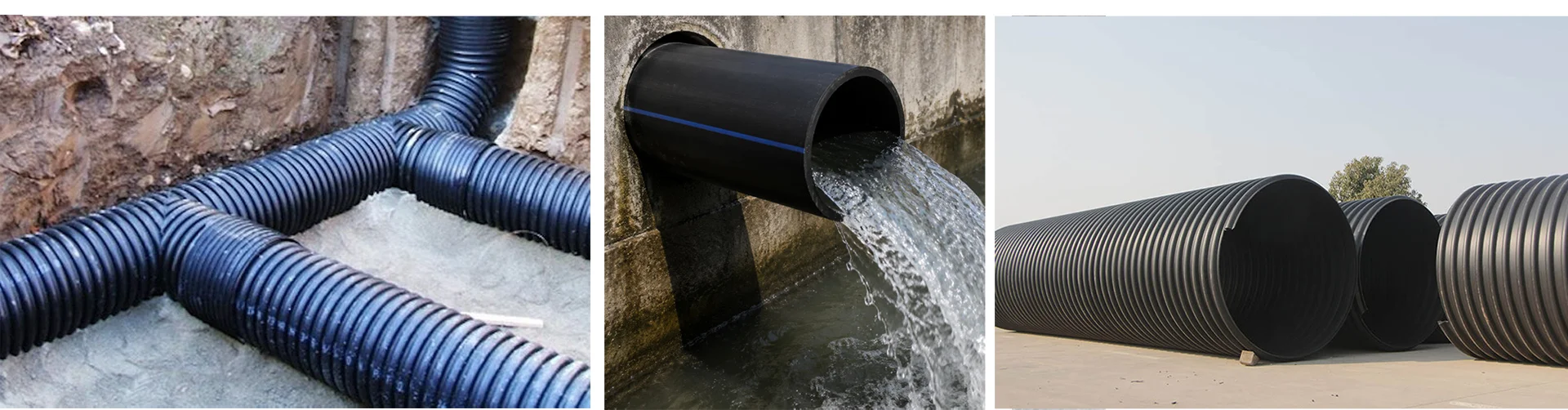
HDPE (High-Density Polyethylene) drainage pipe is a thermoplastic piping system manufactured from high-density polyethylene resin. It has become the material of choice for modern drainage infrastructure due to its exceptional combination of durability, chemical resistance, flexibility, and cost-effectiveness.
Unlike traditional materials such as concrete, clay, or metal, HDPE pipes offer a service life exceeding 50 years under normal conditions, with minimal maintenance requirements. Their lightweight nature—typically 1/8th the weight of concrete pipes—dramatically reduces transportation and installation costs while improving job site safety.
Classification of HDPE Drainage Pipes
HDPE drainage pipes are categorized based on wall structure, pressure rating, and application. Understanding these classifications is essential for proper system design.
1. By Wall Structure
| Type | Description | Best For |
|---|---|---|
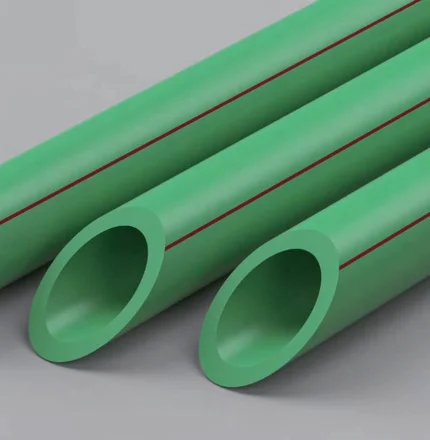
| Solid Wall (Smooth Bore) | Uniform wall thickness, smooth interior surface | Gravity drainage, sanitary sewers, industrial effluent |
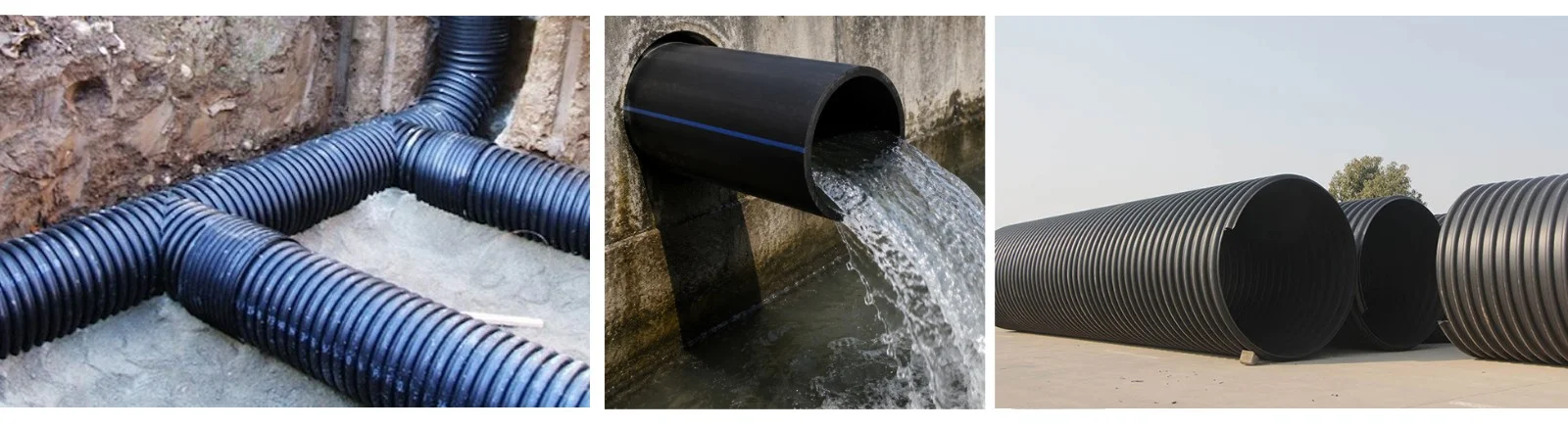
| Single-Wall Corrugated | Annular corrugations for flexibility | Agricultural drainage, landscape drainage |
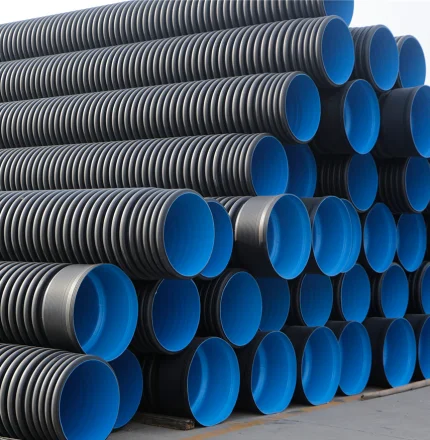
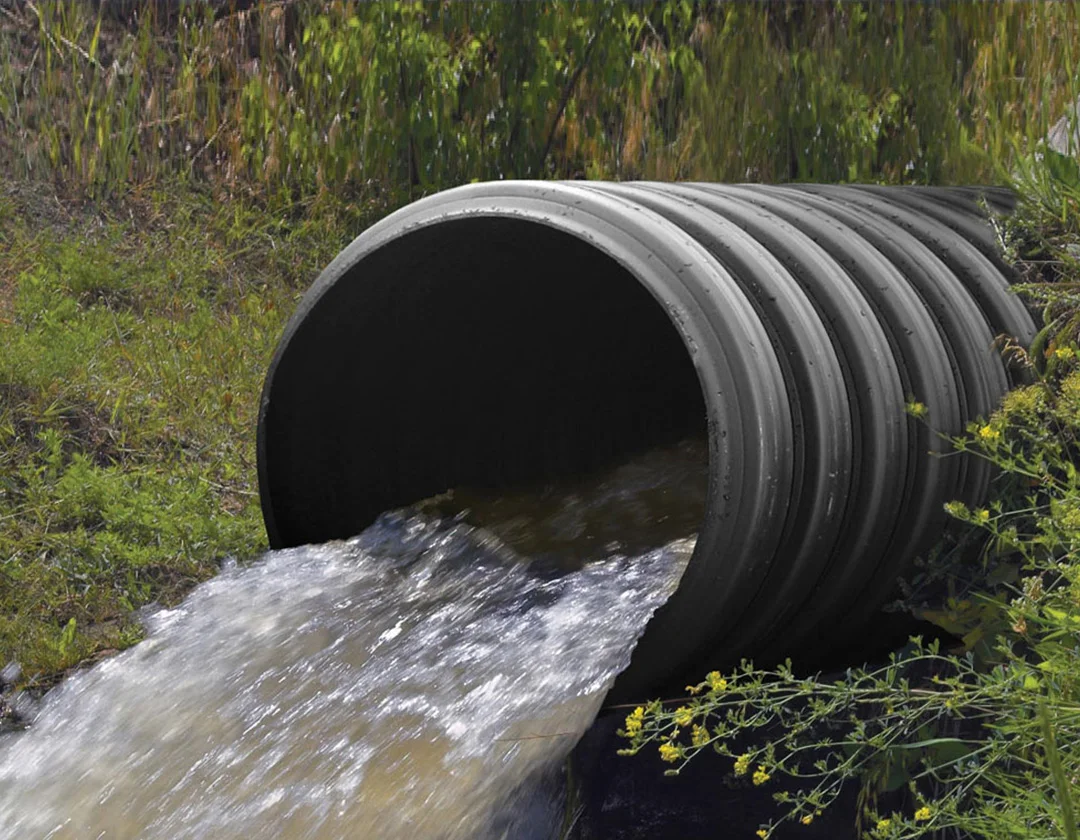
| Double-Wall Corrugated | Corrugated exterior + smooth interior | Stormwater management, large-diameter culverts |
| Steel-Reinforced Spiral Wound | HDPE profile with embedded steel strips | High-load applications, deep burial, heavy traffic areas |
2. By Pressure/SDR Rating
HDPE pipes use Standard Dimension Ratio (SDR) to define wall thickness relative to diameter:
SDR 9 (PN20) – Highest pressure rating (2.0 MPa)
SDR 11 (PN16) – 1.6 MPa
SDR 17 (PN10) – 1.0 MPa
SDR 26 (PN6) – Lower pressure, economical for gravity flow
3. By Material Grade
PE80: Medium density, excellent flexibility
PE100: Higher density, superior strength and pressure capacity, increasingly the global standard
Key Characteristics & Advantages
Core Material Properties
Chemical Resistance: Immune to corrosion from acids, alkalis, and salts found in aggressive soils and industrial wastewater
Abrasion Resistance: Superior wear characteristics for mining slurry and sediment-laden flows
Flexibility: Can withstand ground movement and seismic activity without fracturing—critical in earthquake-prone regions
Smooth Hydraulic Performance: Manning's roughness coefficient of ~0.009-0.010, significantly reducing friction losses compared to concrete (0.013-0.015)
Thermal Stability: Operating range from -60°C to +60°C
Leak-Free Joints: Heat fusion creates monolithic, fully restrained joints stronger than the pipe itself
Environmental & Economic Benefits
100% Recyclable: Supports circular economy initiatives
Low Carbon Footprint: Energy-efficient manufacturing and lightweight transport
Trenchless Installation: Compatible with HDD (Horizontal Directional Drilling), pipe bursting, and slip-lining technologies
Reduced Bedding Requirements: Flexible pipes distribute loads to surrounding soil, often eliminating need for concrete bedding
International Standards & Certifications
Compliance with recognized standards ensures product quality and interoperability. Key standards include:
American Standards
ASTM F2648: Annular corrugated profile wall PE pipe for land drainage (2–60 inch)
ASTM F2306 / AASHTO M-252 & M-294: Smooth interior Type S for storm drainage
AWWA C906: PE pressure pipe for water distribution
ASTM D2321: Standard practice for underground installation of thermoplastic pipe
European & International Standards
ISO 4427: PE pipes for water supply—materials, dimensions, and performance
EN 12201: Plastic piping systems for water supply
EN 1401: Plastic pipe systems for underground drainage and sewage
EN 1555: Gas supply piping systems
ISO 9969: Ring stiffness testing for PE pipes
Quality Certifications to Verify
ISO 9001: Quality management systems
CE Marking: European conformity
NSF/ANSI 61: Drinking water system components safety
WRAS: Water Regulations Advisory Scheme (UK)
SGS: Third-party inspection and verification
Engineer's Note: Always request manufacturer's test reports and third-party certifications. Reputable suppliers provide full traceability from raw material (virgin PE100/PE80) to finished product.
Application-Based Selection Guide
| Application | Recommended Type | Key Considerations |
| <>Municipal Stormwater | Double-wall corrugated, SDR 17-26 | High flow capacity, ring stiffness (SN4-SN8), joint integrity |
| Sanitary Sewer | Solid wall PE100, SDR 11-17 | Leak-proof fusion joints, chemical resistance, root intrusion prevention |
| Agricultural Drainage | Single or double-wall corrugated | Perforations for subsurface drainage, UV resistance, fertilizer compatibility |
| Mining/Industrial | Solid wall PE100, thick wall | Abrasion resistance, high pressure rating, custom fittings |
| Landfill Leachate | Solid wall, chemical-grade HDPE | Extreme chemical resistance, geomembrane compatibility |
| Highway Culverts | Steel-reinforced spiral wound | AASHTO H-25/HS-25 loading, deep burial, soil interaction |
| Trenchless Rehab | PE100 solid wall, close-fit liners | Flexibility, fusion capability, minimal excavation |
Critical Design Factors for Pipeline Engineers
When specifying HDPE drainage systems, engineers must evaluate:
1. Hydraulic Design
Flow capacity: Use Manning's equation with n = 0.009-0.010
Velocity constraints: Minimum 0.6 m/s (self-cleansing), maximum 5 m/s (erosion prevention)
Surge analysis: Water hammer potential in pressure applications
2. Structural Design
Ring stiffness (SN): SN4 for shallow burial, SN8 for traffic loads or deep installations
Soil-structure interaction: Pipe stiffness must match embedment soil modulus
Live loads: AASHTO HL-93 for highway, Cooper E80 for railways
Deflection limits: Maximum 5% vertical deflection for long-term performance
3. Installation Environment
Soil conditions: Corrosive soils (pH < 4.5 or > 9.0) favor HDPE over metal; high clay content requires consideration of soil movement
Groundwater table: Buoyancy calculations for high water table installations
Seismic zones: HDPE's ductility provides superior performance during ground deformation
4. Jointing & Fittings
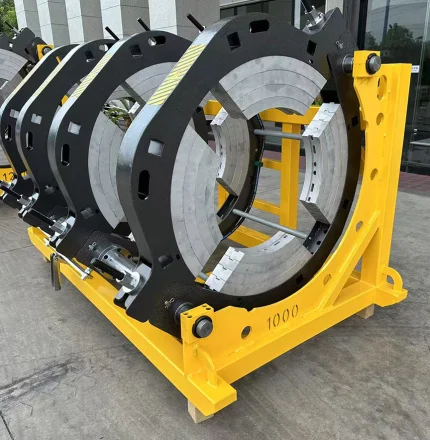
Butt fusion: Most reliable for diameters > 90mm, requires qualified welders
Electrofusion: Excellent for fittings and repairs, uses embedded heating coils
Mechanical couplings: Useful for connections to other materials (DI, PVC, concrete)
5. Long-Term Performance
Creep resistance: PE100 offers better long-term strength than PE80
UV stabilization: Black carbon masterbatch (2-3%) for exposed installations
Thermal expansion: 1.5 mm/m/°C—design expansion loops for above-ground runs
6. Regulatory & Lifecycle Cost
Local standards: Verify municipal preferences (e.g., Seattle Public Utilities evaluates soils data before approving HDPE)
Total cost of ownership: Factor in 50+ year lifespan, zero corrosion maintenance, and reduced pumping costs from smooth bore
Manufacturer Spotlight: Shandong Siffo Plastics Technology Co., Ltd.
Company Overview
Shandong Siffo Plastics Technology Co., Ltd. (hereinafter "Siffo") is a professional HDPE pipe manufacturer headquartered in Linyi City, Shandong Province, China—strategically positioned in what is known as China's "Logistics Capital".
Manufacturing Capabilities
Production Bases: Two modern facilities in Shandong and Jiangsu, totaling over 150,000 square meters
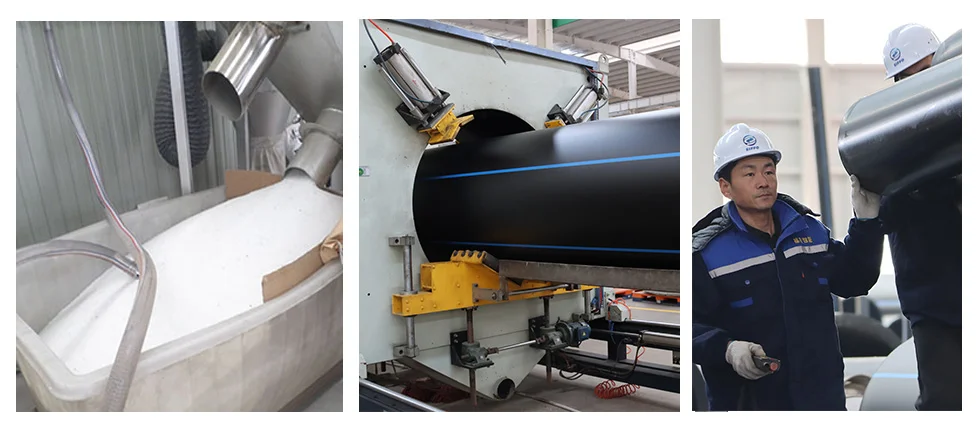
Annual Capacity: 200,000+ tons across HDPE, PVC, and composite reinforced pipe systems
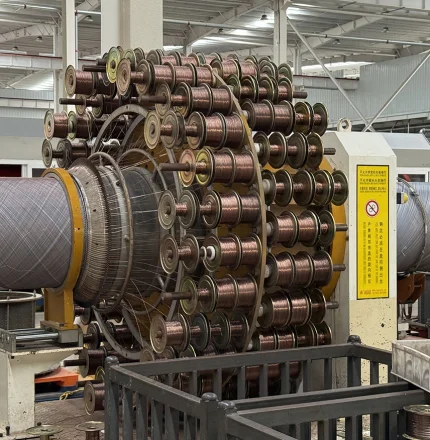
Equipment: 60+ extrusion lines and advanced injection molding machines sourced from Germany and top-tier Chinese suppliers
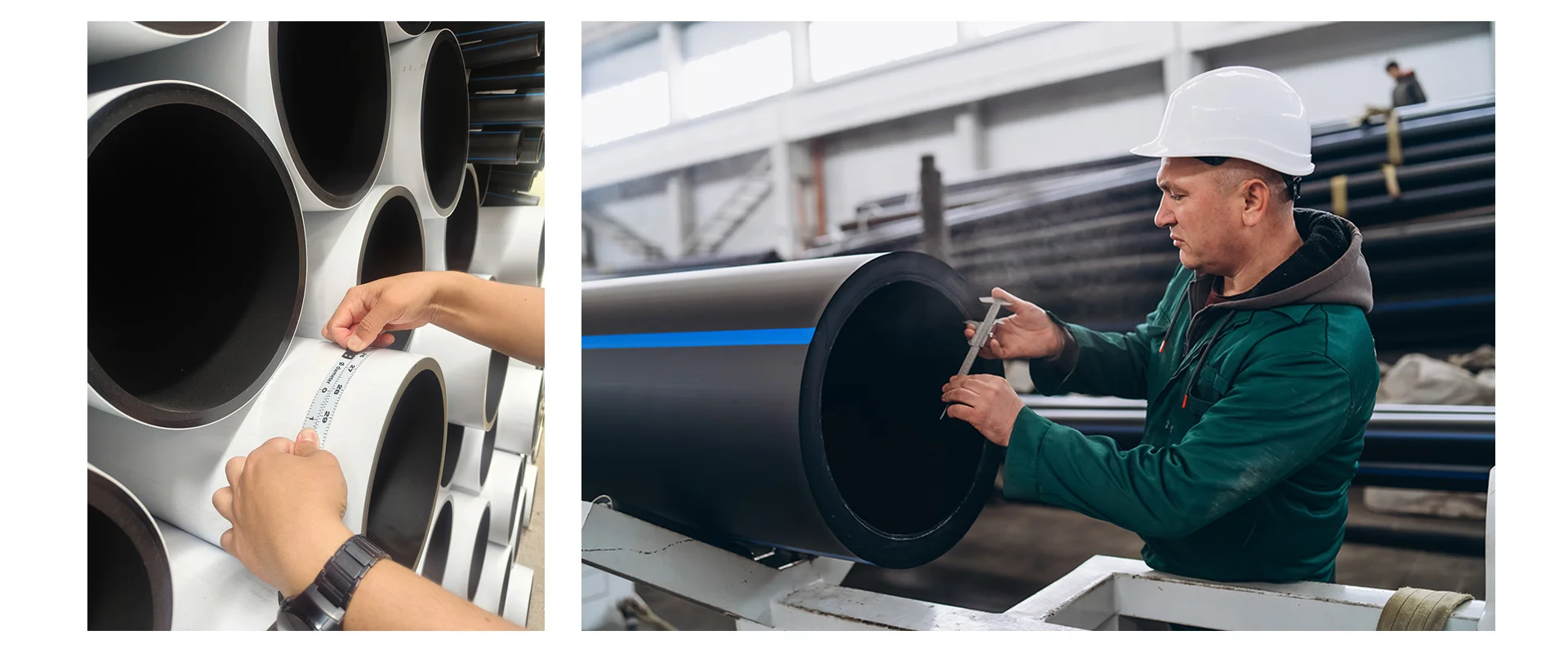
Quality Lab: National-standard laboratory for raw material and finished product testing
Product Portfolio
Siffo offers comprehensive HDPE solutions:
PE100/PE80 Pressure Pipes: DN20–DN1600mm, PN6–PN25
Double-Wall Corrugated Drainage Pipes: For storm and sanitary systems
Steel Wire Mesh Reinforced (SRPE) Pipes: High-pressure composite pipes
HDPE Dredging Pipes: Specialized for hydraulic engineering
Custom Fittings & Fabrications: Electrofusion/butt fusion fittings, flanges, fabricated tees
Certifications & Standards Compliance
Siffo products conform to major international standards:
ISO 9001, ISO 14001 Quality and environmental management
GB/T 13663-2018 (Chinese national standard for HDPE water supply)
EN 12201, EN 1555 European standards for water and gas
AS/NZS 4130 Australian/New Zealand standard
ASTM D3035, ASTM F714 American standards
The company utilizes 100% virgin raw materials from certified suppliers including Borealis, Borouge, Sabic, Sinopec, and PetroChina.
Global Market Presence
Siffo exports to 100+ countries across Southeast Asia, the Middle East, Africa, Europe, and South America, with established logistics support through Shanghai and Qingdao ports.
Professional Assessment
For international infrastructure projects, Siffo represents a viable sourcing option when the following due diligence is conducted:
Verify specific project certifications: Confirm EN/ASTM/ISO test reports match your jurisdiction's requirements
Inspect jointing compatibility: Ensure electrofusion fittings are available for your local welding equipment
Review project references: Request case studies in similar applications (municipal, mining, marine)
Audit quality consistency: Consider third-party SGS/BV inspection for large contracts
The company's national high-tech enterprise status, substantial production scale, and multi-standard compliance suggest manufacturing maturity suitable for demanding drainage applications.
HDPE drainage pipe technology has fundamentally transformed underground infrastructure design. For pipeline engineers, the material offers unmatched hydraulic efficiency, structural adaptability, and lifecycle value. Success depends on selecting the appropriate pipe classification, ensuring standards compliance, and partnering with manufacturers capable of consistent quality at scale.
Shandong Siffo Plastics Technology Co., Ltd. demonstrates the manufacturing capabilities, certification breadth, and global logistics experience to serve as a reliable supplier for international HDPE drainage projects—provided standard procurement verification protocols are followed.