

▎Project Overview
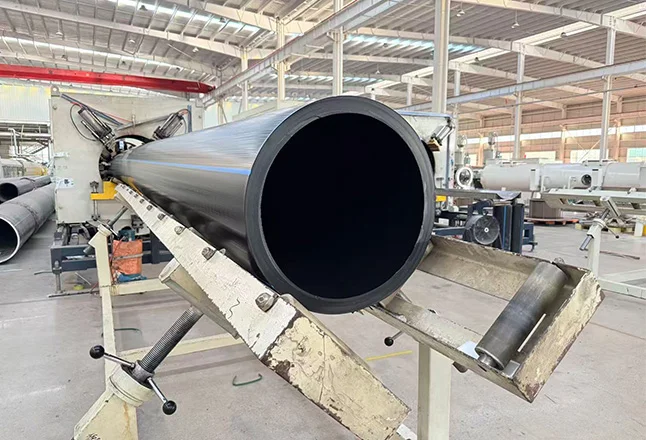
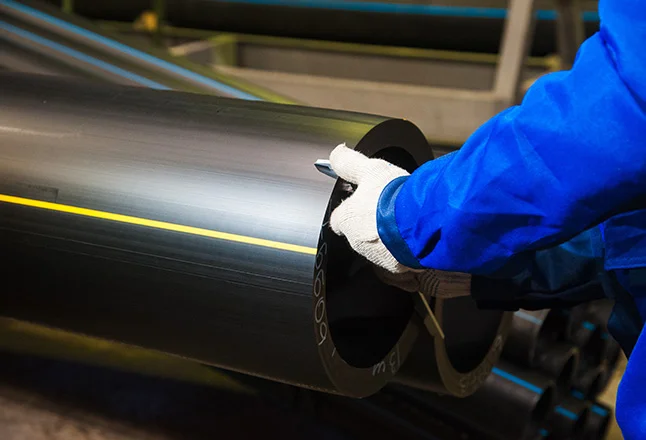
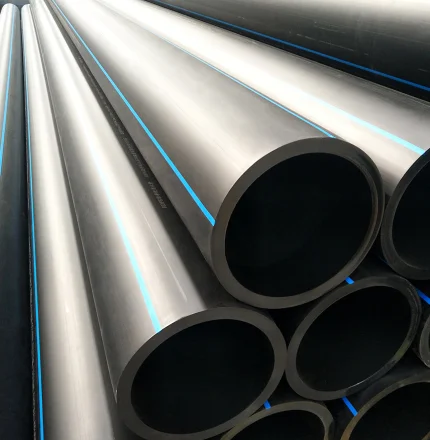
SIFFO Pipe successfully designed and supplied a complete high-density polyethylene (HDPE) piping solution for a large-scale orchard irrigation project in the challenging mountainous region of Northern Vietnam. The project aimed to establish a reliable, long-lasting, and efficient sprinkler irrigation system to enhance crop yield and support sustainable agricultural development.
▎Client Challenges
The remote mountainous location presented multiple complex obstacles:
Highly Corrosive Environment: High humidity, frequent rainfall, and agricultural inputs created a corrosive atmosphere demanding exceptional material resistance.
Exposure & Aging: Pipelines were to be exposed outdoors, requiring superior UV and weather resistance for a long service life.
Rugged Terrain: The uneven, sloping landscape necessitated pipes with excellent flexibility to conform to the ground with minimal trenching.
Minimized Joints & Leak Risks: To ensure system integrity and reduce maintenance in hard-to-access areas, the number of connections needed to be minimized.
Chemical Compatibility: The piping must resist corrosion from fertilizers and other chemicals used in fertigation systems.
Limited Machinery Access: The inability to use large installation equipment mandated a simple, manual joining process.
Ease of Installation: The solution required a straightforward installation process suitable for local crews.
▎SIFFO Solution
SIFFO Pipe provided a tailor-made HDPE piping system perfectly suited to the severe conditions:
Main Lines: OD 225mm HDPE pipes (PN10/PN12.5) for high-volume water transmission.
Branch Lines & Laterals: A range of OD 45mm to OD 110mm HDPE pipes for distribution across different orchard zones.
Complete Fitting Suite: A full complement of HDPE fittings (elbows, tees, reducers, etc.) and electrofusion couplers to ensure a fully integrated, leak-free network.
System Design Support: Technical guidance for a sprinkler system layout optimized for pressure consistency and water efficiency across the terrain.
▎Key Product Advantages Demonstrated
Superior Corrosion & Chemical Resistance: HDPE's inert nature perfectly resisted soil, atmospheric, and water-borne chemicals, ensuring longevity.
Outstanding Durability & Anti-Aging: Carbon black-enhanced HDPE pipes provided excellent resistance to UV radiation and oxidative degradation for a decades-long lifespan.
Excellent Flexibility: The inherent flexibility of HDPE allowed the pipes to be laid smoothly over uneven ground, reducing the need for additional fittings and earthworks.
Leak-Free, Integrated System: Long coil lengths (for smaller diameters) and the use of butt fusion/electrofusion joining created monolithic sections with drastically fewer joints, eliminating leak points.
Simple, Machine-Free Installation: The lightweight nature of HDPE and its fusion joining technique required only portable tools, enabling rapid, manual installation without heavy machinery—ideal for remote sites.
Smooth Interior & Low Maintenance: The excellent flow characteristics reduced pumping costs, and the system's durability ensures minimal operational disruption.
▎Project Outcome
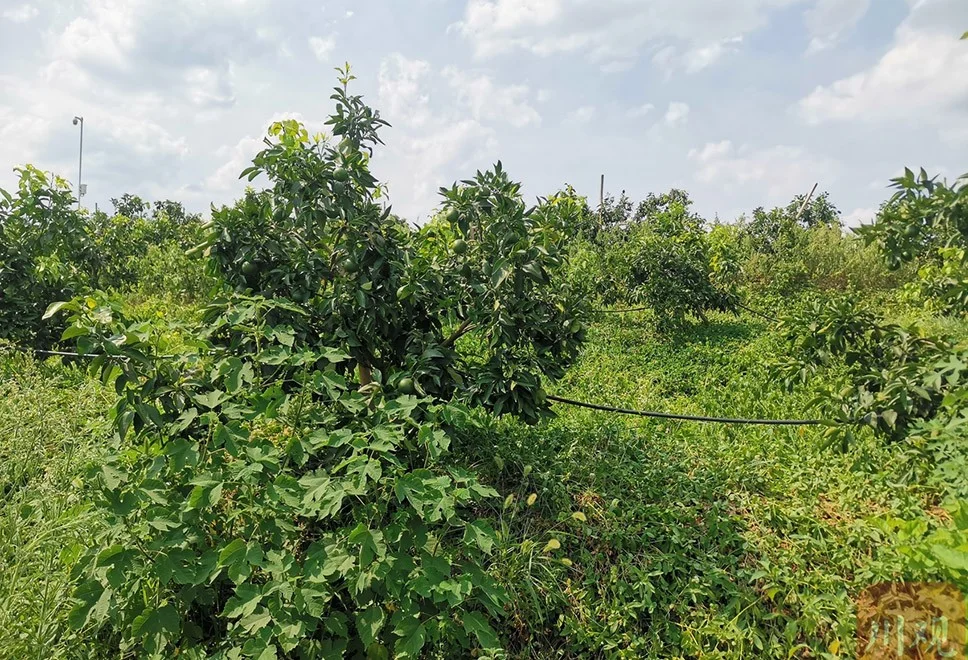
The customer established a robust, efficient, and low-maintenance irrigation infrastructure. The system ensures uniform water and nutrient delivery, promoting healthier orchard growth and potentially higher fruit quality. The significant reduction in potential leaks and the corrosion-proof nature of HDPE drastically lowered long-term maintenance costs and water loss. The ease of installation saved significant time and labor costs, proving that advanced irrigation solutions are viable even in the most logistically challenging environments.
▎Why Was HDPE Pipe Selected for the Northern Vietnam Orchard Irrigation Project?
The large-scale orchard irrigation project in northern Vietnam required a reliable piping system capable of delivering water across mountainous and uneven terrain. The project involved long-distance water transmission, multiple irrigation branches, elevation changes, and challenging installation conditions.
Under these conditions, HDPE pipe was selected as the primary irrigation piping solution because of its flexibility, impact resistance, corrosion resistance, hydraulic efficiency, and suitability for buried and above-ground installation.
1. Excellent Adaptability to Mountainous Terrain
Mountain orchards often have significant elevation changes, irregular terrain, slopes, and difficult construction access. A rigid piping system can require more joints, bends, and supporting structures when following uneven terrain.
HDPE pipe has excellent flexibility and can accommodate moderate changes in alignment without requiring a large number of fittings. This makes it particularly suitable for irrigation networks installed along mountain slopes and irregular orchard areas.
The reduced number of joints can also help simplify installation and reduce potential leakage points.
2. Reliable Performance Under Pressure Fluctuations
Water pressure can vary significantly in mountainous irrigation systems because of elevation differences and changes in operating conditions.
The HDPE piping system can be designed with an appropriate PE grade, SDR, pressure rating, and pipe diameter according to the project's hydraulic requirements. Proper engineering of the main transmission lines and branch networks helps maintain stable water delivery throughout the orchard.
For projects with substantial elevation differences, hydraulic calculations should be completed before selecting the final pressure class to account for static pressure, operating pressure, surge pressure, and water hammer.
3. High Resistance to Corrosion and Soil Conditions
Agricultural irrigation pipelines may remain buried for many years and can be exposed to moisture, fertilizers, naturally occurring chemicals, and different soil conditions.
Unlike conventional steel pipes, HDPE does not rust or suffer from conventional electrochemical corrosion. This makes HDPE a practical choice for long-term underground irrigation networks.
For a large orchard project, this can reduce the need for corrosion protection and periodic maintenance associated with metallic pipelines.
4. Lower Risk of Leakage from Joint Failure
Large irrigation networks may contain kilometers of main lines and branch pipelines. Every mechanical joint can potentially become a maintenance point.
HDPE pipes can be connected using butt fusion or electrofusion, creating continuous fused joints when the installation is properly performed.
For long-distance orchard irrigation systems, fusion technology can significantly reduce the number of conventional mechanical connections and help create a more reliable pipeline network.
5. Suitable for Difficult Construction Conditions
Northern Vietnam's mountainous agricultural areas may have limited road access and difficult working conditions.
HDPE pipe is relatively lightweight compared with many metallic alternatives. Its flexibility also makes transportation, positioning, and installation along irregular routes easier.
Depending on diameter and project design, HDPE pipes can also be supplied in longer lengths or coils, which can reduce the number of joints required during installation.
6. Long-Term Hydraulic Performance
The relatively smooth internal surface of HDPE pipe provides good hydraulic characteristics and helps reduce friction losses.
For orchard irrigation systems, proper pipe sizing is essential because water must be delivered efficiently from the water source through the main transmission pipeline to multiple irrigation zones.
A properly designed HDPE irrigation network can therefore provide an effective balance between water delivery performance, pressure management, installation efficiency, and long-term operating costs.
▎Why Choose HDPE Pipe Instead of Other Pipe Materials?
For this mountainous orchard irrigation project, several piping materials could theoretically be considered, including PVC, steel, and HDPE. However, the combination of terrain, installation conditions and long-term agricultural use makes HDPE particularly attractive.
HDPE vs. Steel Pipe
Steel pipe provides high mechanical strength, but it is heavier and generally requires additional corrosion protection when used in wet or buried environments.
HDPE is much lighter, naturally corrosion-resistant, and more flexible. This makes it easier to install along mountainous routes and reduces concerns about rust-related deterioration.
Steel can still be appropriate for specific high-pressure or exposed sections, but for a large agricultural distribution network, HDPE can offer a more practical overall solution.
HDPE vs. PVC Pipe
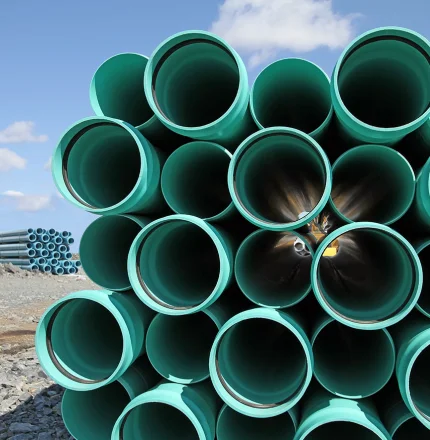
PVC is widely used for agricultural irrigation and can provide good hydraulic performance at a competitive cost. However, PVC is relatively rigid compared with HDPE.
In mountainous terrain where pipelines need to follow irregular routes or where the system may experience ground movement, HDPE's flexibility and toughness can provide an important advantage.
HDPE is also particularly suitable where the pipeline needs greater resistance to impact, deformation, and difficult installation conditions.
HDPE vs. Traditional Metal Irrigation Pipes
Metal pipelines can provide high strength but typically involve greater weight, corrosion considerations, and more demanding installation.
HDPE offers a different combination of properties: light weight, flexibility, corrosion resistance, fused joints, and long-term durability.
For a large orchard irrigation project, these characteristics can help reduce installation complexity and ongoing maintenance requirements.
The objective was not simply to select the lowest-cost pipe. The irrigation system needed to perform reliably over a long service period while adapting to the challenging terrain of a mountainous orchard.
▎FAQ About HDPE Irrigation Pipes
1. Why is HDPE pipe suitable for orchard irrigation in mountainous areas?
HDPE pipe is flexible, lightweight, impact-resistant, and corrosion-resistant. These characteristics make it suitable for irrigation pipelines that need to follow slopes, uneven terrain, and irregular orchard layouts.
2. Can HDPE pipe handle elevation differences in an irrigation system?
Yes. HDPE can be designed for systems with significant elevation differences. However, the pipeline pressure class must be selected based on hydraulic calculations that consider elevation head, operating pressure, surge pressure, and water hammer.
3. Is HDPE better than PVC for mountain irrigation?
Neither material is universally better. PVC can be economical for relatively stable and accessible installations. HDPE is generally more advantageous when the project requires greater flexibility, impact resistance, difficult-terrain installation, or fused joints.
4. Is HDPE suitable for buried orchard irrigation pipelines?
Yes. HDPE is widely used for buried water and irrigation pipelines. Its corrosion resistance and flexibility make it well suited to long-term underground applications.
5. How are HDPE irrigation pipes connected?
Large HDPE irrigation pipelines are commonly connected using butt fusion or electrofusion. The appropriate method depends on pipe diameter, project design, site conditions, and applicable standards.
6. Can HDPE pipe withstand movement of the ground?
HDPE has considerably greater flexibility than rigid piping materials. This allows it to accommodate certain levels of soil movement and ground deformation. However, pipeline design, trench preparation, bedding, anchoring, and installation quality remain critical.
7. Does HDPE pipe require corrosion protection?
No conventional anti-corrosion coating is required for HDPE because polyethylene does not rust like steel. This is particularly beneficial for buried irrigation systems exposed to moisture and agricultural soil conditions.
8. What HDPE pressure rating should be used for orchard irrigation?
The correct pressure rating should be determined from the project's hydraulic design rather than selected solely by pipe diameter. Factors include maximum operating pressure, elevation difference, surge pressure, water hammer, temperature, and required safety margin.
9. Can SIFFO supply a complete HDPE irrigation pipeline system?
Yes. A complete solution can include HDPE pipes, fittings, valves and other pipeline components, with pipe dimensions, pressure classes and connection methods selected according to the project's hydraulic and installation requirements.
10. Can HDPE pipe be customized for large agricultural projects?
Yes. For large orchard irrigation projects, pipe diameter, SDR, pressure class, length, fittings and network configuration can be engineered according to water demand, terrain, irrigation zones and project specifications.
▎Get a Complete HDPE Irrigation Pipeline Solution
Planning a large-scale orchard irrigation project in Vietnam or another mountainous region?
SIFFO can provide HDPE pipes, fittings and customized pipeline solutions based on your required flow rate, pipe diameter, pressure rating, terrain and irrigation network design.
Send us your project location, required water flow, pipeline length, pipe diameter, pressure requirements, and irrigation layout. Our technical team can help evaluate the appropriate HDPE pipe specifications and develop a suitable pipeline solution.
Contact SIFFO today for HDPE irrigation pipe and project-specific technical support.
Prev: SIFFO HDPE Steel Skeleton Reinforced (SRPE) Pipes for Geothermal Energy Project in the Philippines
Next: None