
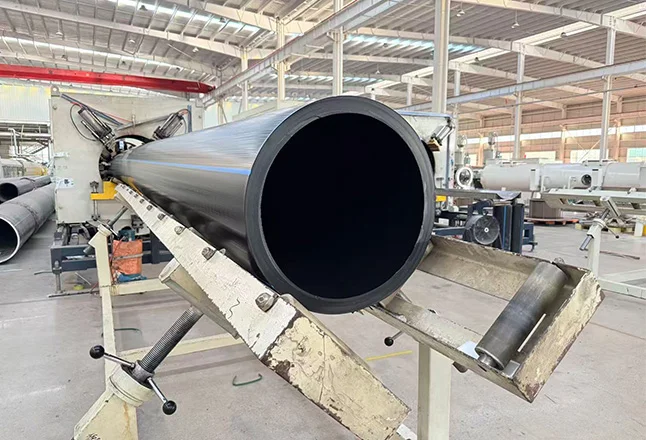

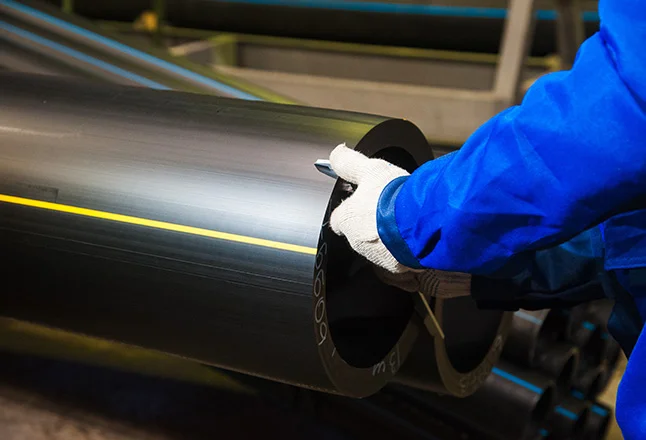
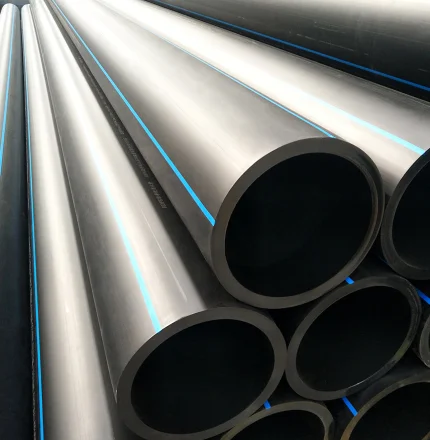
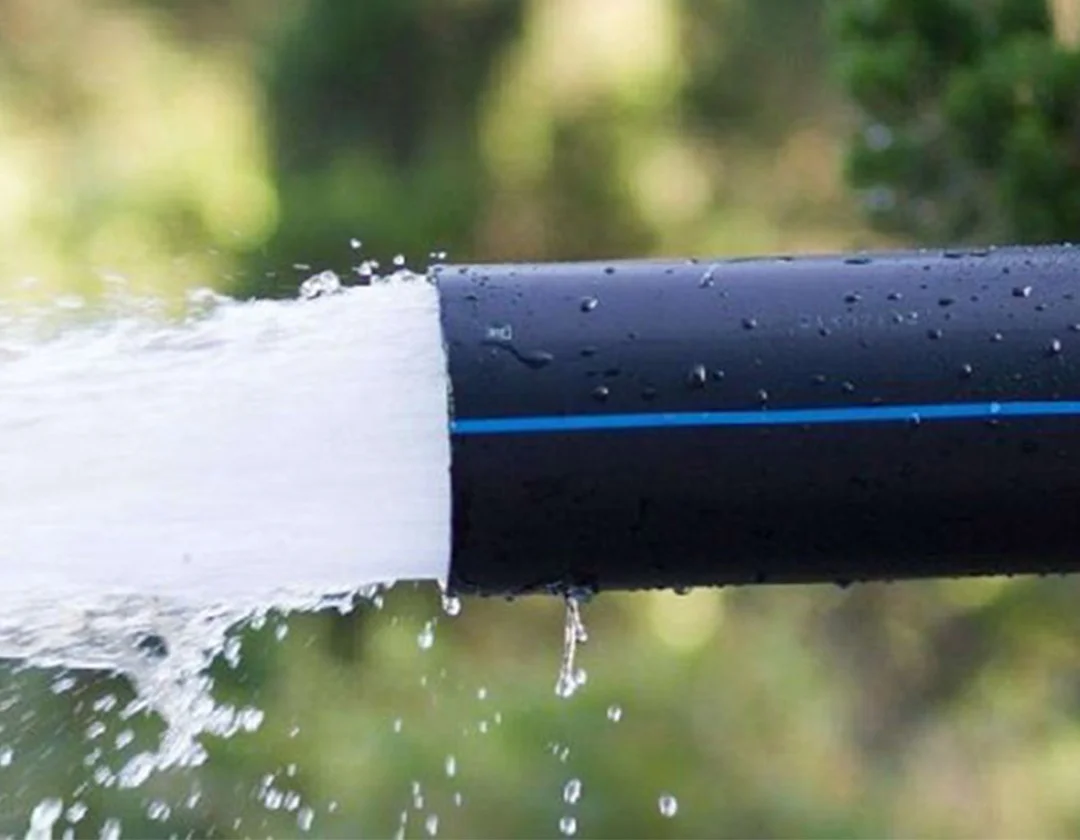

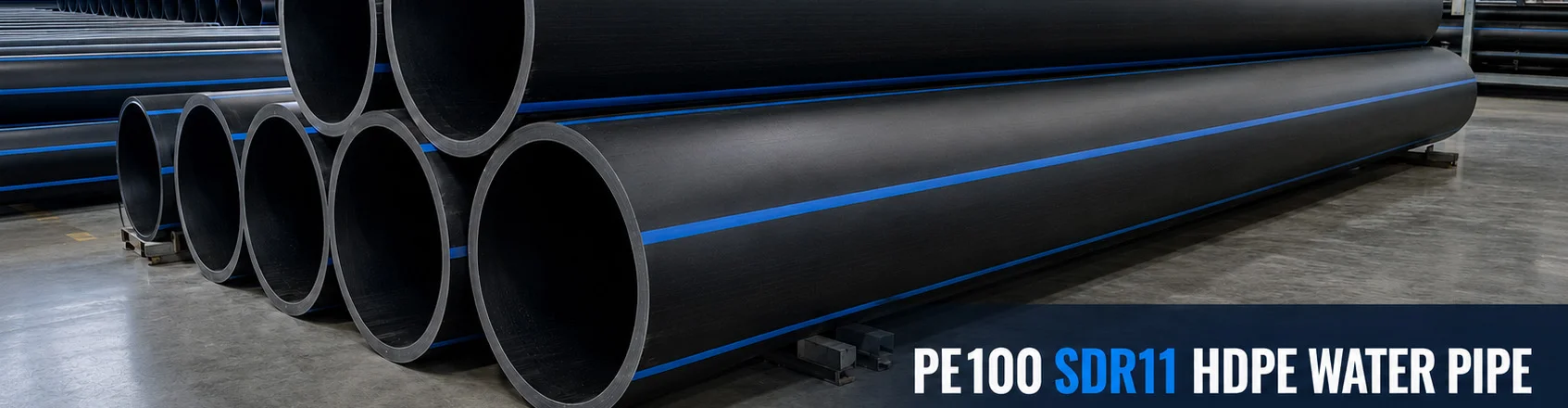
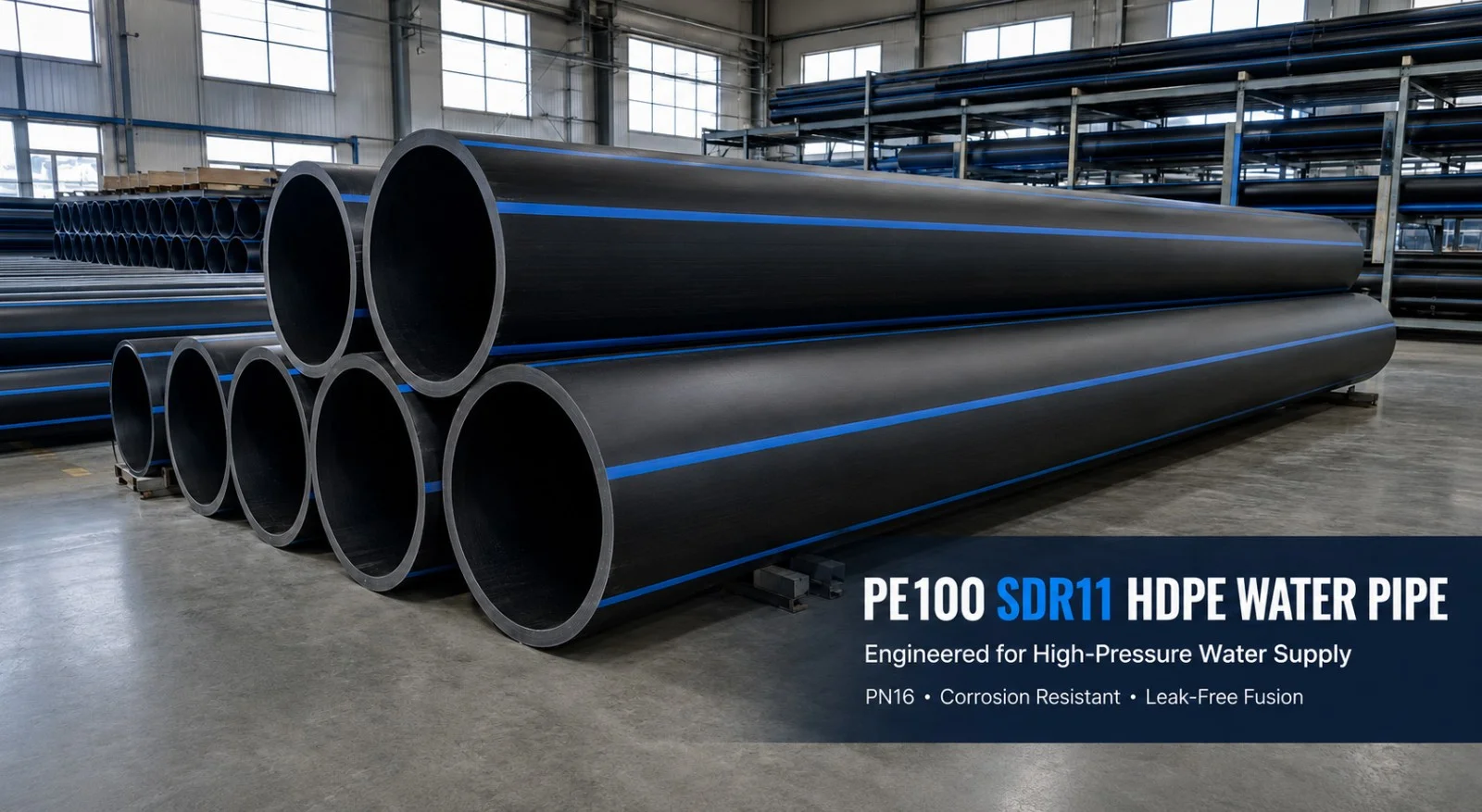
SDR11 HDPE pipe is one of the most widely specified polyethylene pressure pipes for municipal water supply, industrial pipelines, irrigation, mining and pressurized wastewater systems.
However, buyers frequently misunderstand terms such as SDR11, DR11, PN16 and PE100. Some assume that SDR11 automatically means PN16, while others believe that SDR and DR describe two completely different pipe dimensions.
In reality, SDR and DR are closely related, but pipe pressure capacity cannot be determined from the dimension ratio alone. Material grade, design standard, operating temperature, conveyed medium and safety factors must also be considered.
This guide explains what SDR11 means, the relationship between SDR and DR, how to calculate HDPE pipe wall thickness and what international buyers should specify when purchasing SDR11 HDPE pipe.
▎What Is SDR11 HDPE Pipe?
SDR stands for Standard Dimension Ratio. It describes the relationship between the outside diameter of a pipe and its minimum wall thickness.
The basic formula is:
Where:
OD = nominal or specified outside diameter
e = minimum pipe wall thickness
For an SDR11 HDPE pipe:
This means that the outside diameter is approximately eleven times the minimum wall thickness.
For example, a pipe with an outside diameter of 110 mm has a calculated SDR11 wall thickness of:
Therefore, a 110 mm SDR11 HDPE pipe has a minimum wall thickness of approximately 10 mm, subject to the dimensional tolerances and rounding rules of the applicable product standard.
The Plastics Pipe Institute defines DR as the pipe outside diameter divided by minimum wall thickness. It also explains that standardized ratios such as 32.5, 26, 21, 17, 13.5, 11, 9 and 7.3 are known as Standard Dimension Ratios.
▎What Is the Difference Between SDR and DR?
SDR and DR describe the same fundamental geometric relationship:
The difference is mainly related to terminology and standardization.
DR: Dimension Ratio
DR means Dimension Ratio. It is the general ratio between the pipe outside diameter and minimum wall thickness.
In theory, any outside-diameter-to-wall-thickness ratio can be described as a DR value.
SDR: Standard Dimension Ratio
SDR means Standard Dimension Ratio. It refers to a DR value selected from a standardized preferred-number series used by a particular pipe standard.
Therefore:
Every SDR is a DR, but not every possible DR value is necessarily a standardized SDR.
For example, SDR11 and DR11 both indicate an outside-diameter-to-wall-thickness ratio of approximately 11:1. In normal industry usage, SDR11 pipe and DR11 pipe have the same basic dimensional relationship.
However, the terms should not be treated as proof that two pipes comply with the same product standard. The applicable standard may specify different:
Outside-diameter series
Minimum wall thicknesses
Dimensional tolerances
Material classifications
Pressure-rating methods
Testing requirements
Pipe markings
For this reason, a purchase specification should not state only “SDR11 HDPE pipe.” It should also define the material grade, outside-diameter system, product standard and intended application.
▎Why Do Some Standards Use SDR11 While Others Use DR11?
The choice between SDR and DR often depends on the regional standard system.
ISO and EN Markets
Specifications based on ISO and European standards commonly use the term SDR, such as:
PE100 SDR11
PE100 SDR17
PE100 SDR9
ISO 4427 covers polyethylene piping systems for water supply and pressure drainage or sewerage applications. The standard addresses PE pipes and fittings for buried and above-ground installations and uses 20°C as the reference temperature for pressure classification.
North American Markets
ASTM and AWWA specifications increasingly use DR, especially in expressions such as:
PE4710 DR11
PE4710 DR17
DR11 pressure class 200
The current ASTM F714 title uses “DR-PR” and covers outside-diameter-controlled PE pipe in DIPS, IPS and metric sizing systems. It applies to applications including water, sewage, industrial liquids, effluent and slurry transportation.
▎What Is the Pressure Rating of SDR11 HDPE Pipe?
The pressure rating of SDR11 HDPE pipe depends on:
PE material grade
Design standard
Design coefficient or design factor
Operating temperature
Transported medium
Required service life
Surge and cyclic pressure
Local engineering regulations
PE100 SDR11 Pipe
Under commonly used ISO pressure classification methods, PE100 SDR11 pipe is generally classified as PN16 at 20°C for water service, when the applicable design coefficient is 1.25.
PN16 represents a nominal pressure of:
16 bar
1.6 MPa
Approximately 232 psi
The ISO pressure calculation can be expressed as:
Where:
P = allowable pressure in bar
MRS = minimum required strength in MPa
C = design coefficient
SDR = standard dimension ratio
For PE100, MRS = 10 MPa:
The PPI comparison of ASTM and ISO pressure-rating methods uses the same basic DR relationship while distinguishing between the ASTM HDB/design-factor method and the ISO MRS/design-coefficient method.
PE4710 DR11 Pipe
In North American water applications, PE4710 DR11 pipe is commonly associated with a 200 psi pressure class at 73°F or 23°C, depending on the governing ASTM or AWWA specification.
Consequently, PE100 SDR11 PN16 and PE4710 DR11 PC200 are geometrically similar but should not be described as having exactly the same pressure rating. They are classified using different material-design and standard systems.
SDR11 Does Not Always Mean PN16
SDR11 describes pipe geometry, not a complete performance specification.
For example:
PE100 SDR11 is commonly PN16 for water at 20°C.
PE80 SDR11 normally has a lower pressure classification.
PE4710 DR11 is commonly rated using psi-based ASTM or AWWA methods.
Gas pipe pressure must follow gas-specific standards and design factors.
Elevated operating temperatures can require pressure derating.
Aggressive chemicals may require additional compatibility evaluation.
Buyers should therefore avoid specifying “SDR11 = PN16” without also identifying the material grade, standard and operating conditions.
▎SDR11 HDPE Pipe Advantages
The main benefits include:
Higher pressure capacity than SDR13.6, SDR17 or SDR21 pipe made from the same material
Corrosion resistance in buried and exposed environments
Leak-resistant butt-fusion and electrofusion joints
Flexibility for ground movement and trenchless installation
Lower weight than many equivalent metal pipelines
Smooth internal surface for efficient fluid transport
Availability in PE100, PE100-RC and PE4710 material systems
Suitability for large-diameter pressure pipelines
The thicker SDR11 wall can also provide additional handling and installation resistance compared with higher-SDR pipes, although this does not eliminate the need for correct transport, trench preparation and backfilling.
▎Why Choose SIFFO SDR11 HDPE Pipe?
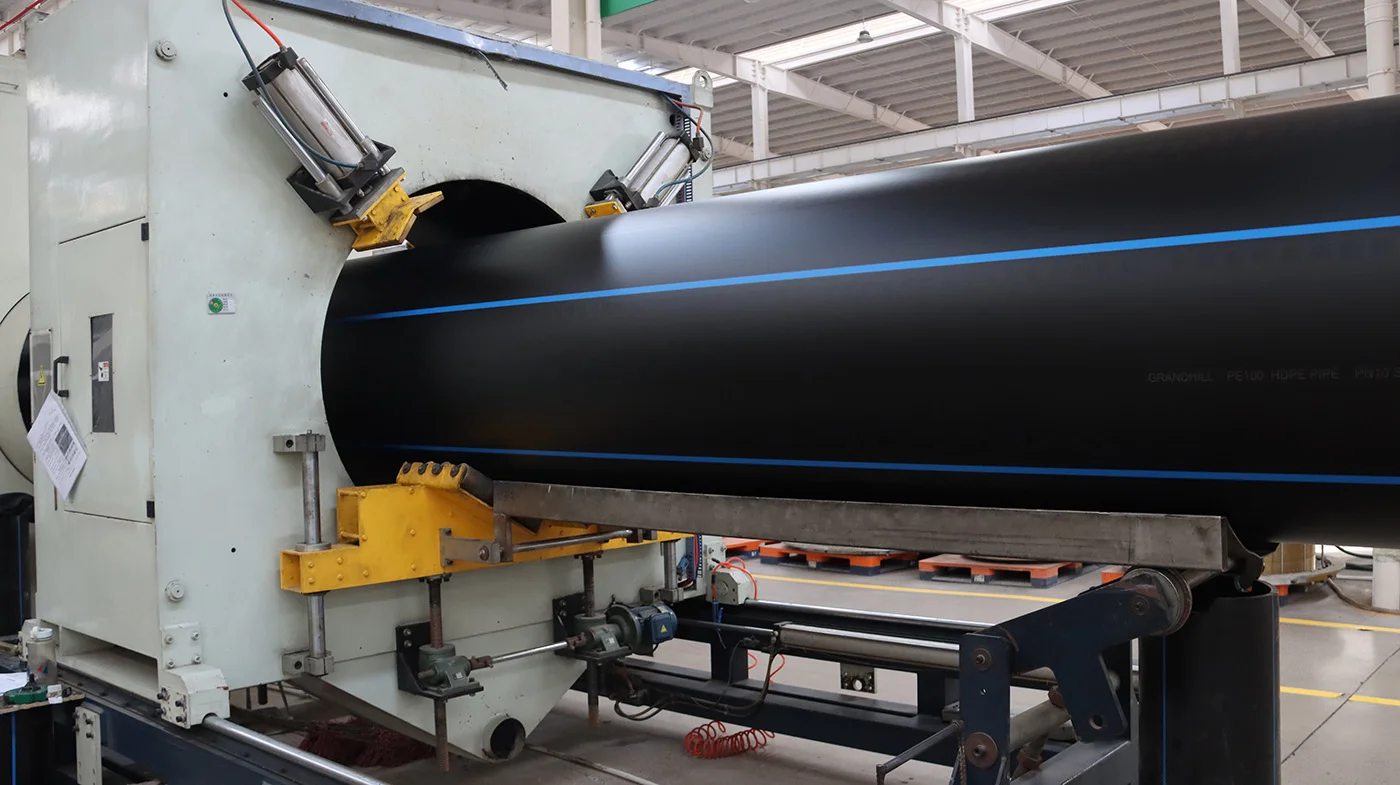
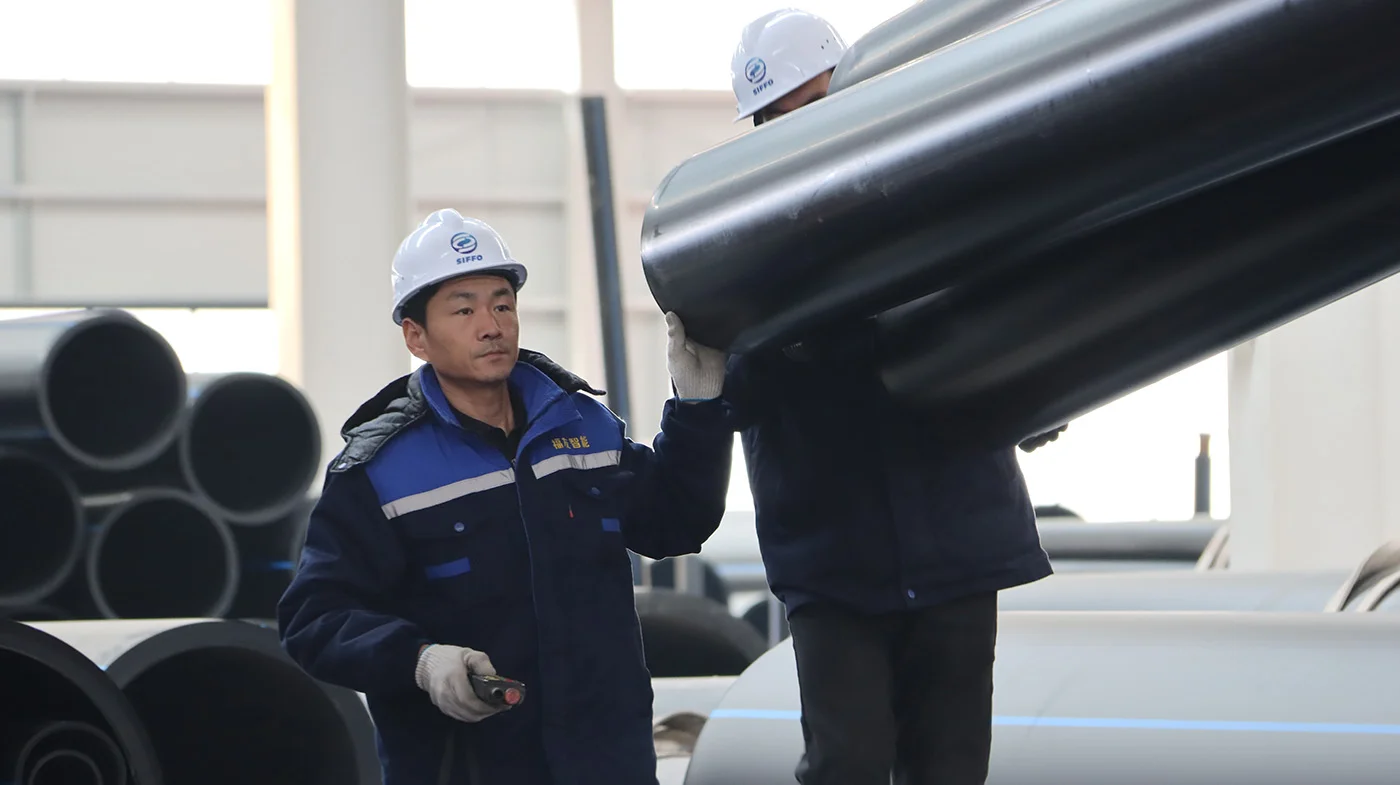
Shandong SIFFO Plastic Technology Co., Ltd. supplies HDPE pressure pipe systems for municipal, industrial, irrigation, mining and infrastructure projects.
SIFFO can provide project-specific SDR11 HDPE pipe solutions with:
PE100, PE100-RC and project-specified materials
Metric and international diameter systems
ISO, EN and ASTM-oriented production options
Multiple diameter and pressure ranges
Butt-fusion and electrofusion fittings
Customized pipe lengths, stripes and markings
Technical data sheets and quality documentation
Export packing and project-based quantity planning
Instead of selecting pipe solely from an SDR value, SIFFO works with buyers to confirm the required standard, material grade, pressure class, outside diameter and connection system.
▎FAQ About SDR11 HDPE Pipe
1. Is SDR11 the same as DR11?
Both indicate an outside-diameter-to-wall-thickness ratio of approximately 11. SDR is a standardized DR value, while DR is the broader technical term. Product compliance still depends on the applicable ISO, EN, ASTM or AWWA standard.
2. Is SDR11 HDPE pipe always PN16?
No. PE100 SDR11 water pipe is commonly classified as PN16 at 20°C under ISO-based methods. Different materials, applications, temperatures and standards may produce different allowable pressures.
3. Can SDR11 HDPE pipe be used for potable water?
Yes, provided the pipe material, production standard and certification comply with the potable-water regulations of the destination market.
4. Can SDR11 pipe be joined to SDR17 pipe?
HDPE pipes with the same compatible outside diameter and material may sometimes be connected using properly designed butt-fusion, electrofusion or transition fittings. The different bore sizes and pressure ratings must be considered by the pipeline designer.
5. Is SDR11 suitable for horizontal directional drilling?
It is frequently selected for HDD projects, but suitability depends on pulling load, bore length, bend radius, soil conditions, external pressure and installation safety factors.