

PVC Pipes in Irrigation: Benefits, Applications & Sizing Guide
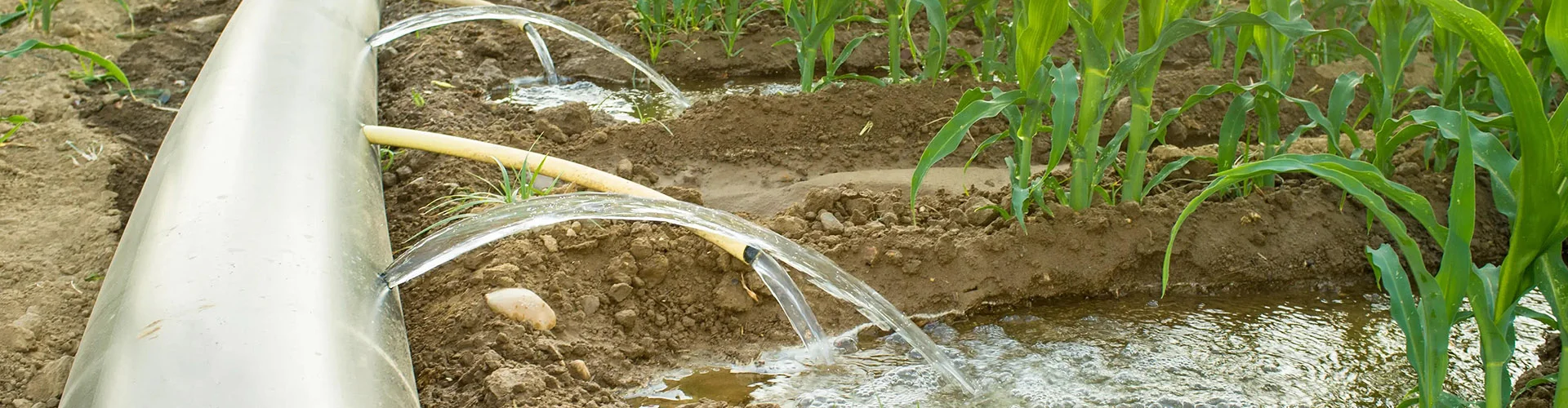
Water efficiency is the single biggest factor determining farm profitability today. Among all irrigation materials, PVC pipes in irrigation systems have proven to be the most reliable, durable, and cost-effective solution worldwide.
But not all PVC pipes perform equally. Understanding PVC pipe characteristics, choosing the right irrigation PVC pipe sizes, and planning a proper PVC pipe layout for farming can dramatically reduce water loss and energy costs.
In this guide, we’ll cover real-world application cases, technical specifications, and why Shandong SIFFO Plastic Technology Co., Ltd. delivers superior PVC solutions for modern agriculture.
What Are PVC Pipes?
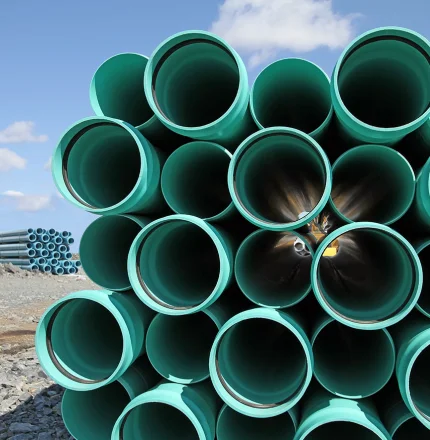
PVC (Polyvinyl Chloride) pipes are rigid thermoplastic tubes manufactured through extrusion. In agricultural irrigation, they serve as the primary conduit for transporting water from sources (wells, reservoirs, rivers) to crops.
Unlike traditional materials such as galvanized steel or concrete, PVC does not corrode, scale, or react with fertilizers. This makes PVC pipes in irrigation the industry standard for both surface and buried systems.
Key PVC Pipe Characteristics for Agriculture
Understanding PVC pipe characteristics helps farmers select the right product for their specific climate and soil conditions. Here are the six most important traits:
1. Corrosion and Chemical Resistance
PVC is inert to salts, acidic fertilizers, and soil microbes. Steel pipes rust within 5–7 years; PVC pipes last 50+ years underground.
2. Smooth Inner Bore
The Hazen-Williams roughness coefficient for PVC is 150 (compared to 120 for steel and 100 for concrete). This means:
Less friction loss
Higher flow rates with the same pump energy
15–20% lower electricity bills
3. Lightweight Construction
A 6-inch diameter PVC pipe weighs approximately 1/8th of an equivalent steel pipe. This reduces:
Transportation costs
Labor requirements for installation
Heavy machinery needs
4. High Pressure Rating Options
PVC pipes are available in pressure classes from Class 4 (0.4 MPa / 58 PSI) for gravity systems to Class 16 (1.6 MPa / 232 PSI) for high-pressure sprinklers.
5. Leak-Free Jointing
Solvent cement welding creates a monolithic joint stronger than the pipe itself. Unlike threaded metal joints, PVC joints do not loosen over time.
6. UV Resistance (When Properly Formulated)
Standard PVC degrades under direct sunlight. Quality irrigation-grade PVC includes UV stabilizers for above-ground applications.
Real-World Application Cases: PVC Pipes in Irrigation
Theory is useful, but real examples demonstrate true value. Below are three documented cases where PVC pipes in irrigation transformed farming operations.
Case 1: Subsurface Drip Irrigation (SDI) for Corn – Nebraska, USA
Challenge: A 500-acre corn farm faced declining aquifer levels and wanted to reduce water usage without lowering yields.
Solution: Engineers installed a buried PVC mainline (8-inch diameter, Class 10) fed by a variable-frequency pump. This mainline supplied 2-inch PVC laterals connected to drip tape buried 12 inches deep.
Results:
Water usage reduced by 45%
Corn yield increased by 12% due to precise root-zone moisture
No water loss from evaporation or wind drift
Key takeaway: Rigid PVC pipes in irrigation systems act as reliable "water highways" for high-efficiency drip networks.
Case 2: Center Pivot Sprinkler Supply – Saudi Arabia
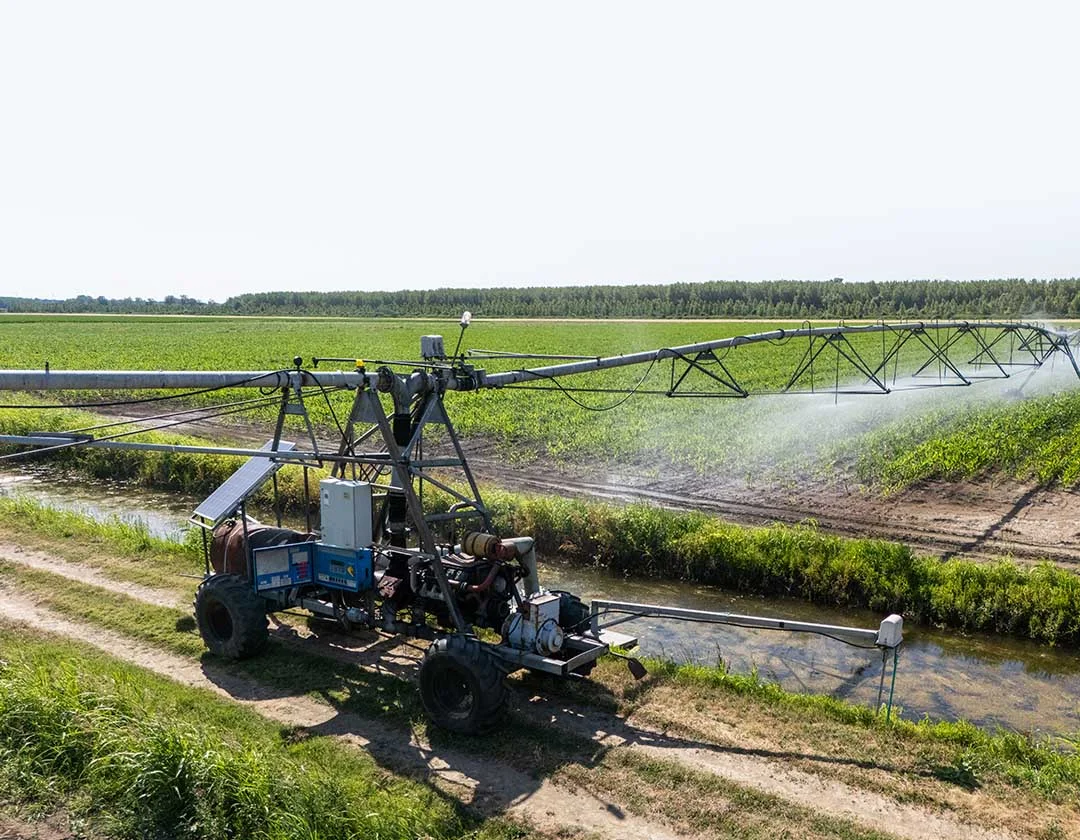
Challenge: A large-scale farm in the Rub' al Khali desert needed a corrosion-resistant mainline for multiple center pivot sprinklers. Extreme heat (50°C+) and sandy soil had destroyed previous steel pipes within three years.
Solution: Class 12 (1.2 MPa) PVC pipes with UV inhibitors were installed above ground for 12 center pivots.
Results:
Pipes still functional after 8 years with no corrosion
Zero sand-related abrasion damage (PVC’s smooth surface resists abrasion better than steel)
30% lower initial material cost compared to stainless steel alternatives
Case 3: Gravity-Flow Hillside Orchard – Northern Thailand
Challenge: A mango orchard on a 30-degree slope had no electricity for pumping. Concrete canals lost 40% of water to seepage and evaporation.
Solution: Class 4 PVC pipes (4-inch diameter) were laid along contour lines, fed by a high-elevation reservoir. Manual valves controlled water release to individual tree rows.
Results:
Water delivery efficiency increased from 60% to 98%
No pumping costs (zero energy)
Pipes installed by farm workers without heavy equipment
Key takeaway: Even without pumps, PVC pipes in irrigation outperform traditional open channels.
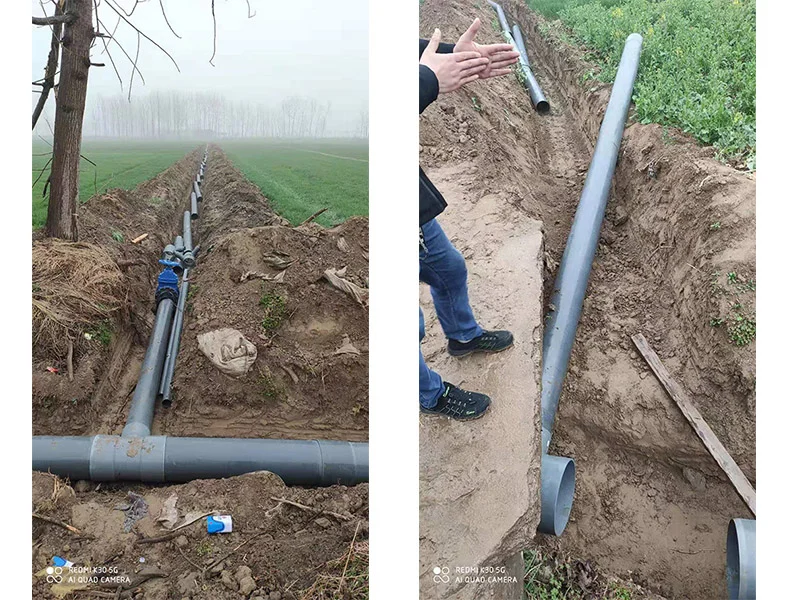
PVC Pipe Sizes & Layout Strategies for Irrigation
Selecting correct irrigation PVC pipe sizes and planning the PVC pipe layout for farming determines system efficiency. Incorrect sizing leads to pressure loss or wasted material costs.
Standard PVC Pipe Sizes for Irrigation
| Diameter (inches) | Diameter (mm) | Typical Use Case | Flow Range (GPM) |
|---|---|---|---|
| ½" to 1" | 16–32 | Drip laterals, garden risers | 5–30 |
| 1½" to 2" | 40–50 | Small sprinkler zones, branch lines | 30–80 |
| 3" to 4" | 75–110 | Field sub-mains (10–50 acres) | 80–300 |
| 6" | 160 | Mainlines for 50–200 acres | 300–800 |
| 8" to 12" | 200–315 | Large farm trunk lines, community systems | 800–2,500+ |
Pressure Ratings (Class) Explained
Class 4 (0.4 MPa / 58 PSI): Gravity flow, low-pressure drip
Class 6 (0.6 MPa / 87 PSI): Small pump systems, level fields
Class 10 (1.0 MPa / 145 PSI): Standard sprinklers, rolling terrain
Class 12–16 (1.2–1.6 MPa): Long-distance transport, high-rise sprinklers
Proven PVC Pipe Layout for Farming
Three layout patterns dominate professional irrigation design:
1. Grid Systems (Best for row crops)
Mainline runs along field edge
Laterals spaced every 100–200 feet
Provides uniform pressure across rectangular fields
2. Loop Systems (Best for irregular shapes)
Mainline forms a complete loop around the field
Water flows from both directions to each lateral
Maintains pressure even with partial blockage
3. Branch (Tree) Systems (Best for orchards)
Single mainline feeds progressively smaller laterals
Suitable for sloping terrain
Requires careful pressure regulation
Installation Depth Guidelines
Buried mainlines: Minimum 24 inches below plow depth (36 inches in cold climates to prevent freezing)
Above-ground laterals: Support every 10 feet to prevent sagging
Under roads: Use schedule 80 PVC or steel casing pipe
Why Shandong SIFFO Plastic Technology Co., Ltd. Leads the Market
When sourcing PVC pipes in irrigation, manufacturer quality varies enormously. Shandong SIFFO Plastic Technology Co., Ltd. has established itself as a trusted supplier for agricultural projects across Asia, Africa, South America, and the Middle East.
Here is what differentiates SIFFO’s PVC pipes:
1. 100% Virgin Material Guarantee
Many manufacturers mix recycled PVC or calcium carbonate fillers to reduce costs. These pipes become brittle, crack under pressure, and fail within 2–3 years.
SIFFO uses only virgin PVC compounds with precise molecular weight control. The result: consistent burst strength and 50+ year service life.
2. Advanced Extrusion Technology
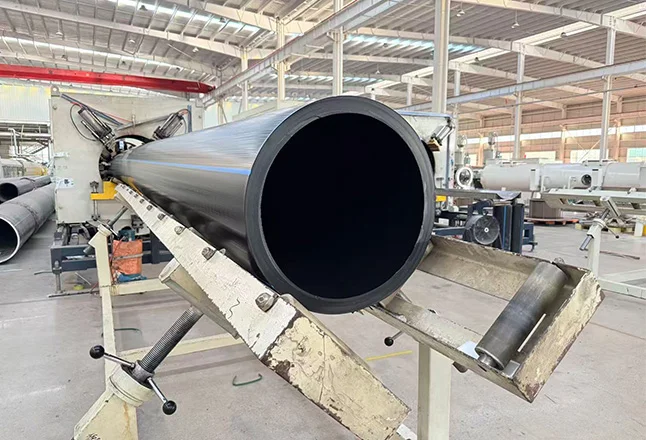
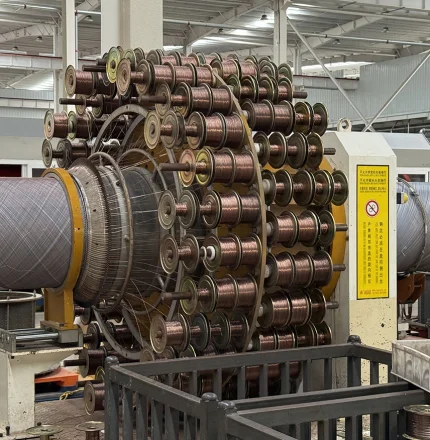
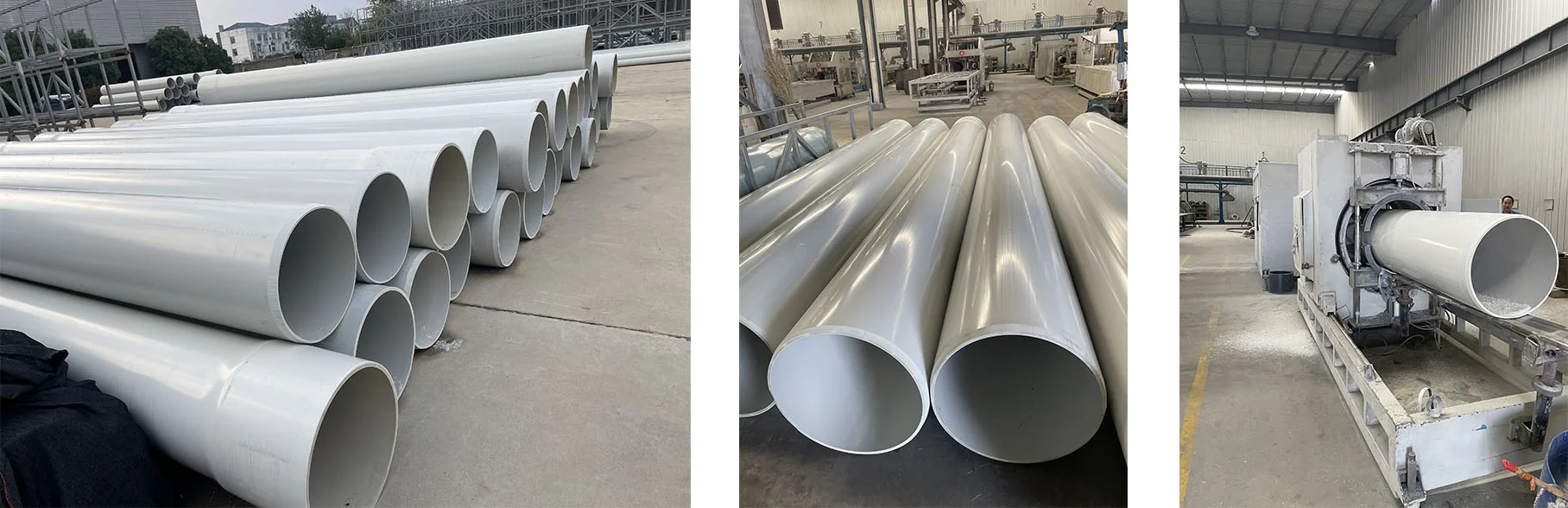
SIFFO’s German-engineered extrusion lines produce pipes with:
Perfect circularity (no oval deformation under soil load)
Ultra-smooth inner surface (C=150 Hazen-Williams coefficient)
Uniform wall thickness (no thin spots that burst)
Independent laboratory tests show SIFFO pipes have 20% lower friction loss than regional competitors.
3. Agricultural-Grade Additives
Irrigation exposes pipes to sunlight, fertilizers, and temperature swings. SIFFO incorporates:
UV-8 stabilizers for above-ground installations (no degradation after 5+ years of direct sun)
Chemical resistance modifiers against urea, ammonium sulfate, and phosphoric acid
Low-temperature impact modifiers (-10°C performance without cracking)
4. Comprehensive Size & Fitting Range
SIFFO manufactures PVC pipes from 20mm to 630mm diameter (½" to 24") in pressure classes Class 4 through Class 25 (0.4 to 2.5 MPa).
More importantly, SIFFO produces a full suite of matching fittings:
Solvent weld elbows (22.5°, 45°, 90°)
Tees, reducers, and couplings
Male/female adapters for pump connections
Valve boxes and risers
One-stop sourcing eliminates compatibility issues.
5. Stringent Quality Control
Every production batch undergoes:
Hydrostatic pressure testing (1.5x rated pressure for 60+ seconds)
Dimensional inspection (wall thickness, outer diameter, ovality)
Impact resistance testing (falling weight at 0°C)
SIFFO holds ISO 9001:2015 certification and exports to over 40 countries.
6. Technical Support & Customization
Unlike commodity sellers, SIFFO provides:
Free hydraulic design assistance (pipe sizing, friction loss calculations)
Custom lengths (6m, 9m, or 12m as standard; custom upon request)
Color options (white, blue, black, or custom)
Practical Tips for Buying PVC Pipes for Irrigation
Before placing an order, verify these three specifications with your supplier:
Pressure rating matching your pump – Oversizing wastes money; undersizing causes burst failures.
UV stabilization for exposed sections – Above-ground pipes must have UV inhibitors.
Certification standards – Look for ISO, ASTM D1785, or BS 3505 compliance.
Shandong SIFFO Plastic Technology Co., Ltd. meets all three criteria with transparent documentation.
Conclusion: PVC Pipes in Irrigation Are Here to Stay
From small drip systems to massive center pivot networks, PVC pipes in irrigation offer the best combination of durability, flow efficiency, and cost. Understanding PVC pipe characteristics helps you select the right pressure class. Matching irrigation PVC pipe sizes to your flow requirements prevents energy waste. And a proper PVC pipe layout for farming ensures every plant receives adequate water.
When you choose a manufacturer, quality consistency is non-negotiable. Shandong SIFFO Plastic Technology Co., Ltd. delivers virgin-material pipes, precision manufacturing, and agricultural-grade additives that outlast generic alternatives by decades.
Frequently Asked Questions (FAQ)
Q: How long do PVC pipes last underground in irrigation use?
A: With proper installation and virgin-grade material like SIFFO’s, 50+ years is standard. Failure usually occurs only from mechanical damage (digging or heavy equipment).
Q: Can PVC pipes handle hot water from solar pumps?
A: Standard PVC is rated for continuous use up to 140°F (60°C). For higher temperatures, CPVC is recommended. Consult SIFFO’s engineering team for specific conditions.
Q: Are PVC pipes safe for drinking water irrigation (e.g., vegetable washing)?
A: Yes. Virgin PVC is inert and non-toxic. SIFFO pipes comply with NSF/ANSI 61 standards for potable water contact.
Q: What is the minimum order quantity from Shandong SIFFO?
A: MOQ varies by size and pressure class. Contact sales for project-specific quantities.