
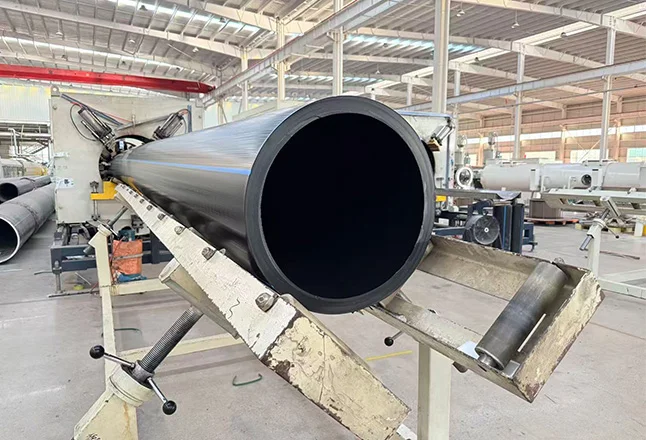

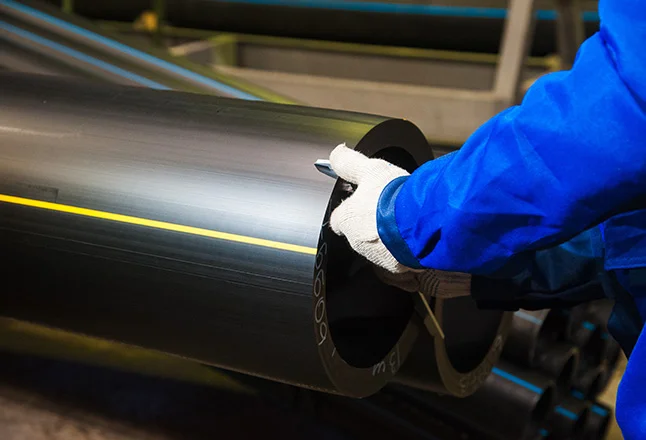
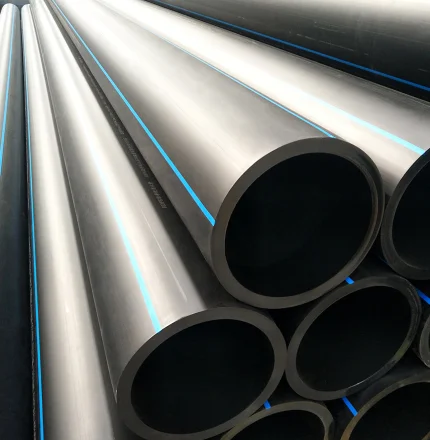
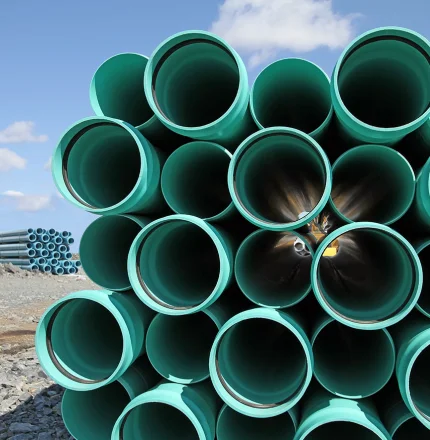
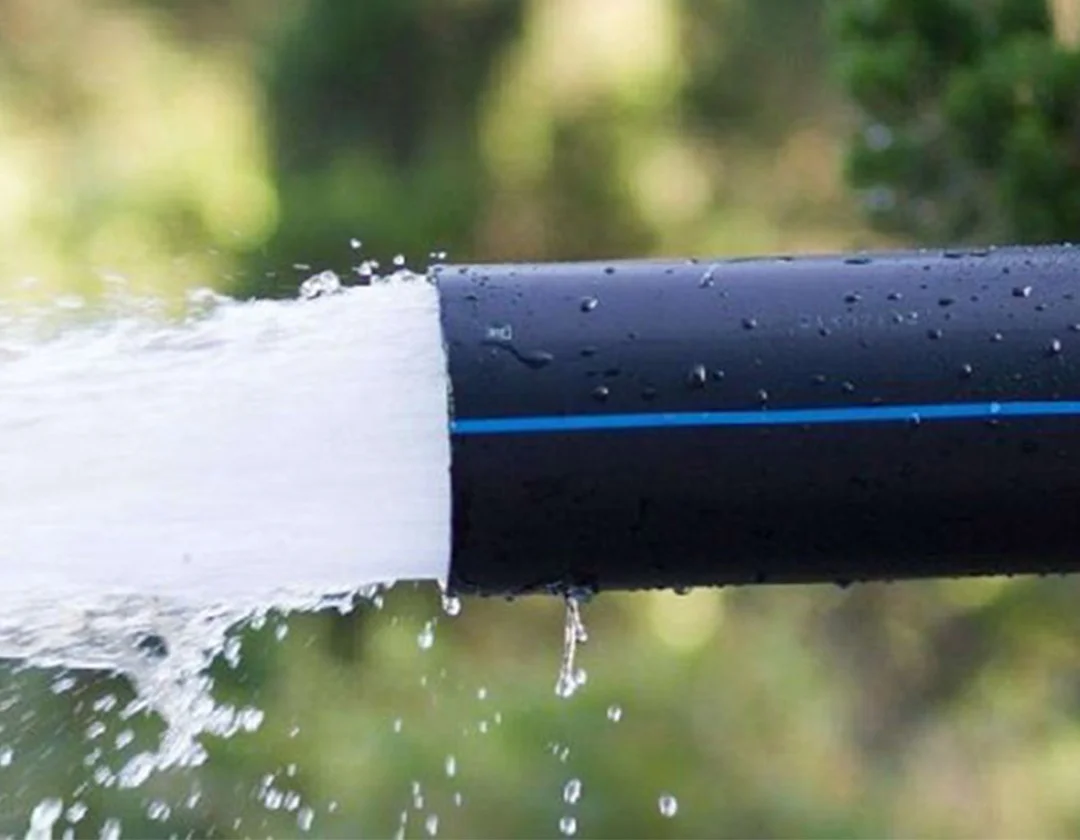
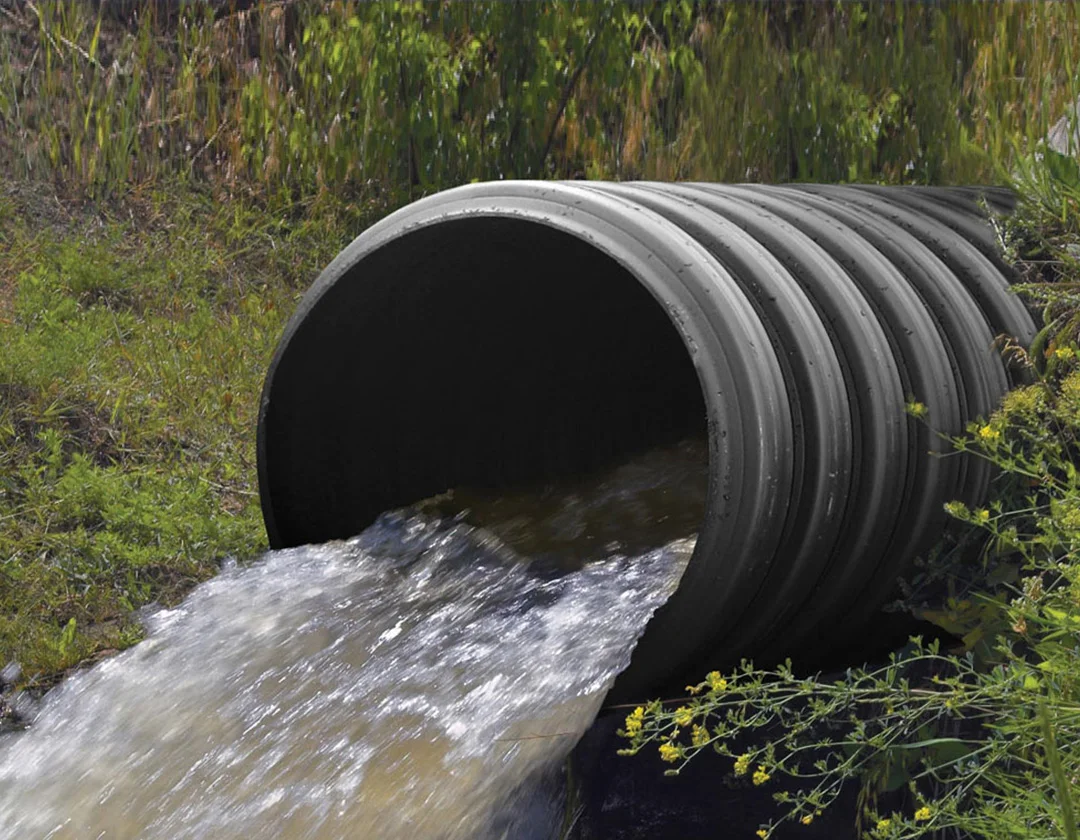
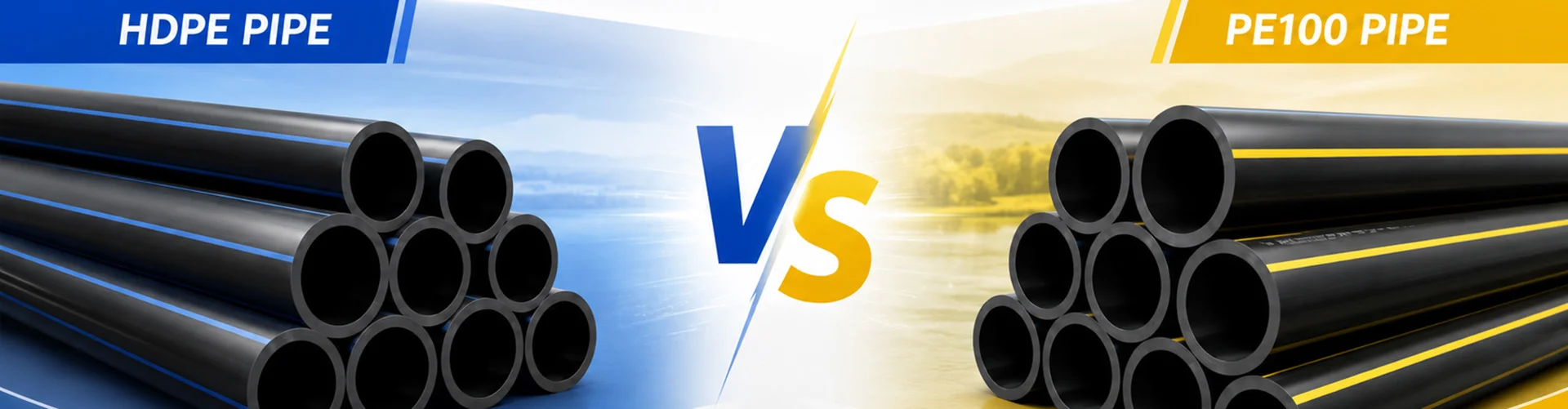
In the plastic piping industry, the terms "PE100 pipe" and "HDPE pipe" are frequently used interchangeably or cited side-by-side; however, in reality, they do not represent concepts of the same hierarchical level. A PE100 pipe is, in essence, a high-performance grade of HDPE pipe, constituting the third generation of piping-grade materials within the High-Density Polyethylene (HDPE) material system. To accurately distinguish between the two, an analysis must be conducted across three dimensions: the classification system of polyethylene materials, their performance grades, and their engineering applications.
Raw Materials and Classification Systems
The Broad Definition of HDPE
HDPE (High-Density Polyethylene) is a thermoplastic polymeric material produced through a polymerization reaction using ethylene monomers derived from petroleum refining as the raw material. Its density typically falls within the range of 0.941–0.965 g/cm³, and it is characterized by high crystallinity and excellent mechanical strength. In the field of piping, HDPE constitutes a broad category of materials, encompassing various grades with distinct performance characteristics.
The Precise Definition of PE100
PE100 is not a distinct type of material in its own right, but rather a specific performance grade within the broader category of HDPE materials. Its designation is derived from the Minimum Required Strength (MRS) classification system established by the International Organization for Standardization (ISO):
PE100 possesses an MRS of 10 MPa, signifying that the material is capable of continuously withstanding a hoop stress of 10 MPa under conditions of 20°C over a design service life of 50 years. This specific metric serves as the pivotal parameter distinguishing PE100 from other grades of HDPE.
The Specific Differences Between PE100 Pipes and General HDPE Pipes
Raw Materials and Molecular Structure
PE100 Pipes: Typically, these utilize ethylene copolymers—such as ethylene-hexene copolymers—characterized by a bimodal molecular weight distribution as their primary raw material. Advanced bimodal polymerization processes enable the formation of a composite structure wherein high-molecular-weight components provide high strength, while low-molecular-weight components ensure excellent processability. Additionally, approximately 2.25% carbon black is incorporated to enhance weather resistance.
General HDPE Pipes: Due to their broad scope of application, these exhibit greater structural diversity. They may be produced using resins with a narrower molecular weight distribution—generated via unimodal or traditional polymerization processes—and allow for a wider selection of comonomers (e.g., Butene-1). Such materials are not necessarily optimized specifically for pipe manufacturing; furthermore, the carbon black content may be less than 2%, or the material may not have undergone specific UV-protection treatment.
Engineering Applications
PE100 Piping: Focused on high-pressure applications, such as municipal water supply main networks, medium-to-high pressure natural gas transmission networks, industrial fluid transport (e.g., acids and alkalis in chemical plants), and ground-source heat pump systems.
Clarifying a Common Misconception
In engineering practice, it is essential to clarify and correct the erroneous claim that "PE100 is not a form of HDPE." Fundamentally, PE100 represents a performance-based classification concept, whereas HDPE denotes a physical concept regarding material composition; the relationship between the two is that of a "scope" to a "subset." Any pipe manufactured from HDPE material that achieves a Minimum Required Strength (MRS) of 10.0 MPa may be designated as a PE100 pipe. Conversely, even if a pipe is composed of HDPE material, it cannot be classified as a PE100 pipe if its MRS is merely 8.0 MPa (i.e., PE80 grade).