


Industrial piping may need to transport a hot liquid while resisting acids, alkalis, salts, oxidizing chemicals or cleaning agents. Ordinary plastic pipe can lose pressure capacity as temperature rises, while metal pipe may suffer corrosion or scaling. CPVC combines elevated-temperature performance with broad chemical resistance.
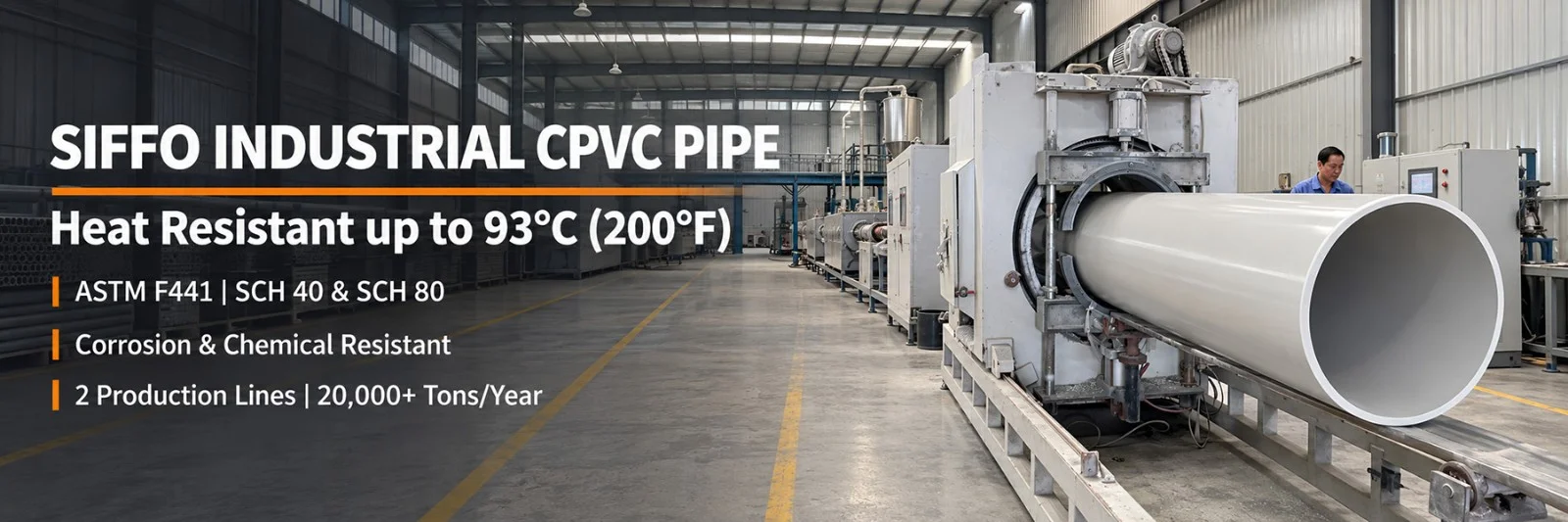
Shandong SIFFO Plastic Technology Co., Ltd. manufactures CPVC pipe for industrial and hot-fluid projects. With two dedicated production lines and annual capacity above 20,000 metric tons, SIFFO supports scheduled deliveries and long-term procurement programs.
This guide compares CPVC with common plastic and metal piping and examines its use in paper mills, pharmaceutical facilities, power plants and photovoltaic wastewater systems.
▎What Is CPVC Pipe?
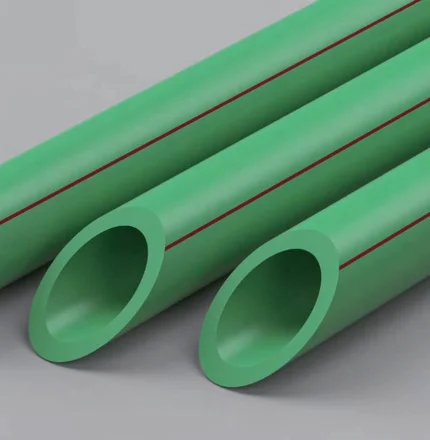
CPVC, or chlorinated polyvinyl chloride, is produced by further chlorinating PVC resin. This modification improves performance at elevated temperatures. The result is a rigid thermoplastic with greater heat resistance than PVC-U and many corrosion-resistant benefits of plastic pipe.
▎Why CPVC Is an Effective Heat-Resistant Plastic Pipe
Higher Service Temperature Than Standard PVC-U
The most important difference between CPVC and standard PVC-U is temperature capability. Many PVC-U pressure systems are commonly limited to approximately 60°C (140°F), depending on the product and application. Certain CPVC systems can be designed for pressure service at temperatures up to approximately 93°C (200°F), subject to the pipe manufacturer’s published ratings and the complete system design.
This wider temperature window makes CPVC attractive for hot chemical solutions, heated process water, warm wastewater, chemical dosing lines and industrial liquids that may experience temperature fluctuations.
Maximum temperature and maximum pressure cannot be treated independently. As temperature increases, allowable working pressure decreases. Engineers must apply the appropriate derating factor and consider pipe size, schedule, compound, fittings and joint design. Therefore, “CPVC handles 93°C” is not a complete project specification.
Stable Performance in Hot, Corrosive Service
Heat can accelerate corrosion reactions and shorten the life of unsuitable pipe materials. CPVC addresses this combined challenge because it does not rely on a protective metal surface or sacrificial corrosion allowance. For many compatible aqueous acids, alkalis and salts, the material can maintain a clean internal flow path without rusting, pitting or forming metallic corrosion scale.
This is particularly valuable where a process is too hot for PVC-U but does not justify high-alloy steel or specialty fluoropolymer piping. Benefits may include fewer corrosion-related repairs, less downtime and reduced coating requirements.
▎CPVC Pipe Compared with Other Plastic and Metal Pipes
No piping material is best for every chemical. CPVC should be selected through a system-level review, but it occupies a useful position between conventional thermoplastics and expensive corrosion-resistant metals.
Piping Material | Heat Performance | Corrosion Behavior | Key Advantage | Important Limitation |
CPVC | Higher temperature capability than standard PVC-U; some systems are rated up to about 93°C under defined conditions | Resistant to many compatible acids, bases and salts | Combines heat resistance, corrosion resistance and moderate installed cost | Chemical compatibility and pressure derating must be verified |
PVC-U | Commonly used at lower temperatures | Good resistance to many water-treatment and chemical media | Economical and widely available | Lower temperature capability than CPVC |
HDPE | Excellent toughness and flexibility | Very good resistance to many chemicals | Well suited to buried systems and fusion joining | Pressure capacity reduces as temperature rises; not a direct substitute for hot CPVC service |
PP | Useful for many chemical applications | Broad resistance for selected media | Lightweight and chemically resistant | Stiffness, joining and temperature-pressure performance must be checked by grade |
PVDF | Strong performance in many severe chemical and high-purity duties | Very broad chemical resistance | Suitable for highly demanding or high-purity applications | Significantly higher material and installation cost in many projects |
Carbon steel | Strong and familiar to installers | Can rust or corrode without protection | High mechanical strength | May require coatings, lining, corrosion allowance and ongoing maintenance |
Stainless steel | Good temperature and mechanical performance | Better corrosion resistance than carbon steel | Suitable for sanitary and high-temperature systems when the grade is correct | Chloride attack, pitting or stress corrosion may occur; material and welding costs are higher |
Advantages over Plastic and Metal Pipe
Compared with PVC-U, CPVC extends the useful temperature range. Compared with many PE and PP systems, rigid CPVC can offer a favorable balance of heat resistance, pressure performance and dimensional stability for above-ground process lines. PVDF may outperform CPVC in certain severe chemicals or high-purity duties, but often at a considerably higher installed cost.
CPVC does not undergo electrochemical corrosion like carbon steel and does not produce rust scale. It is lighter than steel, simplifying lifting and installation, while solvent-cemented or mechanical connections can reduce jobsite hot work. Its smooth bore can preserve flow better than aging, scaled metal pipe.
Metal remains preferable for some very high-temperature, high-pressure or mechanically severe duties. CPVC also requires correctly designed supports, thermal-expansion allowances and impact protection.
▎CPVC Pipe in the Paper and Pulp Industry
Paper mills use large volumes of acids, caustic solutions, bleaching chemicals, salts, pigments, dyes and wastewater. Heat-resistant CPVC pipe can be evaluated for chemical preparation and dosing, compatible bleaching-liquid transfer, pigment solution lines, acidic or alkaline wastewater collection, and water-treatment systems. Its smooth bore helps maintain flow, while resistance to compatible chemicals can reduce corrosion and rust contamination.
Bleaching systems deserve careful review because oxidizer type, concentration and temperature can differ greatly. Sodium hypochlorite, chlorine dioxide solutions and other bleaching media should each be checked against the specific CPVC compound’s chemical-resistance data. Trace process contaminants may also change compatibility. SIFFO recommends confirming the complete fluid composition before pipe selection rather than specifying CPVC from the chemical family name alone.
▎CPVC Pipe for Pharmaceutical Chemical and Disinfection Lines
Pharmaceutical plants handle cleaning chemicals, concentrated disinfectants, acids, alkalis and other process solutions. CPVC can be considered for compatible chemical transfer, disinfectant distribution, water-treatment auxiliaries, cleaning-solution lines and industrial effluent systems. It avoids metallic corrosion products and is lightweight for routing inside complex facilities.
Selection must still be application-specific. Alcohols, solvents, amines and formulated disinfectants may not behave like simple aqueous acids or alkalis. Concentrated mixtures can also contain surfactants or additives that affect CPVC. For high-purity water, product-contact service or regulated sanitary systems, the designer must separately verify purity, extraction, hygienic-design and regulatory requirements. Chemical resistance alone does not establish suitability for direct pharmaceutical product contact.
▎CPVC Pipe for Corrosive Liquids in Power Plants
Power plants use chemical piping in water preparation, cooling-water treatment, boiler-water treatment, flue-gas treatment and wastewater management. Services may include acid and caustic dosing, ion-exchange regeneration, chlorination, scrubber liquids and neutralized effluent.
Metal piping may require linings, coatings or expensive alloys. For compatible media, industrial CPVC provides corrosion resistance throughout the pipe wall, making it a candidate for selected chemical-feed headers, water-treatment lines, corrosive drainage and wastewater transfer. Engineers should still check upset temperatures, surges, outdoor exposure, support spacing and all wetted components.
▎CPVC Pipe in Photovoltaic Industrial Wastewater Systems
Photovoltaic cell manufacturing can generate wastewater containing acids, alkalis, fluorides, cleaning agents and dissolved contaminants. Streams may pass through collection, neutralization, precipitation and treatment before discharge or reuse.
CPVC may be considered for compatible acidic or alkaline wastewater, dosing lines and treatment-system interconnections, especially above the comfortable temperature range of PVC-U. Its corrosion resistance helps avoid rust and reduces dependence on coatings.
Fluoride-bearing and mixed-chemical wastewater requires special caution. Hydrofluoric acid concentration, temperature and contaminants can materially affect compatibility, and not every CPVC formulation is suitable for every stream. Wastewater identified only by pH is not sufficiently defined for pipe selection. The project team should provide a full chemical analysis, including maximum concentrations, normal and upset temperatures, pressure, flow velocity and cleaning chemicals, so the pipe manufacturer can evaluate the application.
▎SIFFO CPVC Pipe Manufacturing Capacity
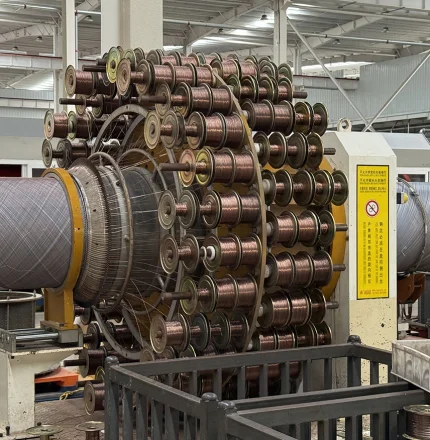
Shandong SIFFO Plastic Technology Co., Ltd. operates two dedicated CPVC pipe production lines with an annual capacity of more than 20,000 metric tons. This production scale supports bulk industrial orders, phased project schedules and repeat procurement for distributors, contractors and plant owners.
For an industrial CPVC pipe order, buyers should define or request:
Applicable pipe standard, such as ASTM F441/F441M where required
Schedule 40 or Schedule 80 dimensions and pressure data
Compound designation and product identification
Dimensional inspection and wall-thickness records
Hydrostatic or pressure-test requirements
Recommended temperature derating factors
Chemical-resistance review for the specified fluid
Compatible fittings, valves, flanges and solvent cement
Batch traceability, marking, packaging and shipment plan
SIFFO can use the project’s medium list and operating data to help purchasers identify an appropriate CPVC pipe configuration. Aligning the inquiry, quotation, datasheet and purchase order around the same conditions helps prevent supply-chain errors.
▎How to Select CPVC Pipe for a High-Temperature Chemical System
Confirm the following before final sizing:
Chemical identity: List every component, not only the main acid or alkali.
Concentration: State normal and maximum concentration by weight or volume.
Temperature: Include normal, maximum, cleaning and upset temperatures.
Pressure: Define operating pressure, design pressure, surge and vacuum conditions.
Pipe size and flow: Check velocity, solids content and abrasion potential.
Installation environment: Identify outdoor UV exposure, supports, vibration and impact risks.
Joining system: Confirm fitting standard, solvent cement, installer procedure and cure time.
Compliance documents: Specify testing, marking and third-party certification required by the destination market.
This data allows the manufacturer and engineer to check compatibility, apply pressure derating and select the correct schedule.
▎FAQ About Heat-Resistant CPVC Pipe
What is the maximum operating temperature of CPVC pipe?
Some systems can serve up to approximately 93°C (200°F), but the limit depends on compound, size, schedule, pressure and joints. Use manufacturer pressure-temperature data.
Is CPVC more heat resistant than PVC-U?
Yes. CPVC is generally selected above the typical PVC-U temperature range, subject to product-specific design limits.
Can CPVC pipe carry acids and alkalis?
CPVC resists many aqueous acids, alkalis and salts, but compatibility must be checked by chemical, concentration, temperature and pressure.
Is CPVC better than stainless steel for corrosive liquids?
CPVC can avoid rust at a lower installed cost in many compatible applications. Stainless steel may be better for higher pressure, temperature or sanitary service.
Can CPVC be used for bleaching chemicals in paper mills?
Yes, for selected services after the exact bleaching agent, concentration and operating temperature are reviewed.
Is CPVC suitable for photovoltaic wastewater containing fluoride?
Possibly. Hydrofluoric acid concentration, temperature and the complete wastewater composition require product-specific review.
What CPVC pipe production capacity does SIFFO have?
SIFFO operates two CPVC lines with a combined annual capacity of more than 20,000 metric tons.
Request a CPVC Pipe Proposal from SIFFO
Heat-resistant CPVC pipe offers a compelling combination of temperature capability, corrosion resistance, smooth flow and manageable lifecycle cost. It can be an effective alternative to standard plastic pipe or metal pipe in properly evaluated paper, pharmaceutical, power-generation and photovoltaic wastewater applications.
To receive a project-specific recommendation from Shandong SIFFO Plastic Technology Co., Ltd., send your required pipe size, standard, schedule, operating pressure, normal and maximum temperature, chemical composition and annual demand. The SIFFO team can review these conditions and prepare a CPVC pipe quotation, technical datasheet and delivery proposal for your project.