
▎Project Overview:
Project Name: Drainage System Project for Elevated Expressway in Metro Manila, Philippines
Project Location: Metro Manila, Philippines
Project Owner: Major Infrastructure Contractor in the Philippines
Solution Provider:Shandong SIFFO Plastic Technology Co., Ltd.
Application Sector: Municipal Transportation Infrastructure / Elevated Structure Drainage
Scope of Supply: Full Range of DN75–DN140 UPVC Drainage Pipes and Fittings
Project Duration: 2024.5–2025.5
▎Project Background:
Amidst the continuous growth of traffic volume in Metro Manila, the Philippine government has launched a new elevated expressway project aimed at alleviating congestion within the core urban areas. As a critical subsystem of this project, the design and installation of the elevated bridge drainage system are directly linked to the structural safety of the bridge, the service life of the roadway, and driving safety during the rainy season.
The Philippines features a tropical monsoon climate with an annual precipitation exceeding 2,000 millimeters; furthermore, the typhoon season—spanning from June to November each year—is frequently accompanied by extreme heavy rainfall. Additionally, the high-humidity, high-salinity marine atmospheric environment poses a severely corrosive threat to metal materials. The project owner—a leading local large-scale infrastructure contractor—therefore required a drainage solution capable of withstanding these harsh environmental conditions, minimizing total lifecycle costs, and facilitating installation within a tight project schedule.
▎Challenges:
1. Extreme Rainfall Loads
During the monsoon season, frequent short-duration heavy rainfall places immense pressure on traditional drainage systems; issues such as insufficient pipe diameters and poor flow efficiency often arise, leading to water accumulation on the bridge deck and posing a threat to traffic safety.
2. Severe Environmental Corrosion
In the coastal regions of the Philippines, atmospheric humidity consistently exceeds 80% year-round and is laden with salinity. This environment is highly corrosive to metal drainage materials—such as carbon steel and cast iron—causing traditional systems to rust and leak, thereby resulting in prohibitively high maintenance costs.
3. Pressing Schedule Constraints
As a critical node within the transportation infrastructure network, the project’s primary construction phase must be completed within the limited window of the dry season. This imposes extremely rigorous demands on both the speed of material delivery and the efficiency of installation.
4. Long-Term Low-Maintenance Requirements
Given the unique structural characteristics of the viaduct, subsequent inspection and repair operations are inherently difficult and costly. Consequently, the project owner has explicitly mandated that the drainage system possess exceptional durability, aiming to minimize the frequency of maintenance interventions throughout the facility's operational lifespan.
▎SIFFO UPVC Drainage Solution:
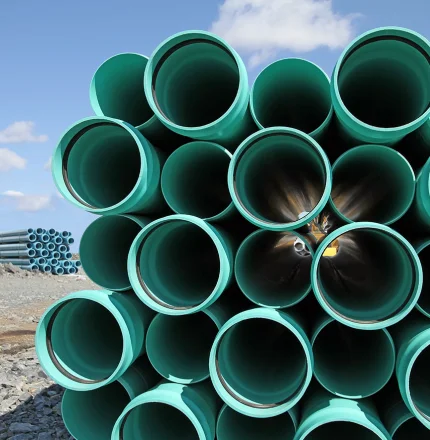
SIFFO supplied its complete UPVC (unplasticized polyvinyl chloride) drainage system, including pipes and fittings in diameters from DN75 to DN140. The UPVC material was selected for its superior performance in aggressive environments and its full alignment with the project’s technical requirements.
▎Why UPVC Was Selected for Elevated Bridge Drainage
UPVC drainage pipe is well suited to elevated bridge and infrastructure drainage applications where reliable water discharge, corrosion resistance and installation efficiency are important. Compared with traditional metallic drainage materials, UPVC is lightweight, resistant to many forms of chemical corrosion and has a smooth internal surface that supports efficient water flow.
For elevated bridge projects, reducing installation complexity and structural load can also be important. The relatively low weight of UPVC pipes makes transportation, handling and installation easier, particularly where drainage pipes need to be installed along bridge structures or other elevated infrastructure.
UPVC also does not rust like conventional steel drainage components. This can help reduce maintenance requirements in humid, rainy and coastal environments, making UPVC a practical option for long-term bridge drainage systems in the Philippines.
▎UPVC vs HDPE vs Steel for Bridge Drainage
Feature | UPVC | HDPE | Steel |
Corrosion Resistance | Excellent | Excellent | Requires protection |
Weight | Lightweight | Lightweight | Heavy |
Internal Surface | Smooth | Very smooth | Depends on coating |
Installation | Easy | Requires fusion equipment | More complex |
Rust Resistance | Excellent | Excellent | Lower |
Chemical Resistance | Good | Excellent | Depends on coating |
Maintenance | Low | Low | Higher |
Typical Application | Drainage, sewer, infrastructure | Drainage, water, industrial | Structural / heavy-duty applications |
For elevated bridge drainage, material selection should consider installation conditions, drainage requirements, corrosion exposure, expected service life and project cost. UPVC is particularly attractive when the project requires a lightweight, corrosion-resistant and easy-to-install drainage system. HDPE may be preferred where flexibility and fusion-jointed pipelines are required, while steel can be considered for applications requiring high mechanical strength or specific structural characteristics.
▎Installation of the UPVC Bridge Drainage System
Phase I: Technical Coordination and Customization (Weeks 1–6)
The SIFFO technical team worked closely with the project's design institute to perform flow calculations and optimize pipe sizing for the drainage system, basing their analysis on the viaduct's longitudinal slope, span lengths, and catchment areas. This process resulted in the determination of a tiered drainage scheme utilizing pipe diameters ranging from DN75 to DN140.
Phase II: Supply and Quality Inspection (Weeks 7–12)
The entire consignment of UPVC pipes and fittings was delivered to the construction site in batches, synchronized with the project's construction schedule. All products underwent rigorous factory pressure testing and dimensional accuracy checks to ensure full compliance with Philippine National Standards (PNS) and the project's specific technical specifications.
Phase III: On-site Installation (Weeks 13–39)
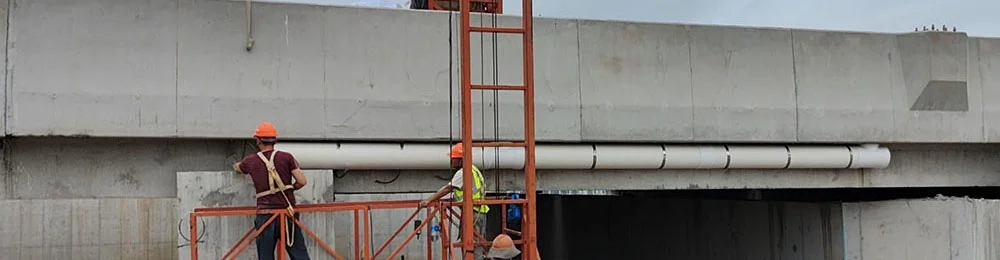
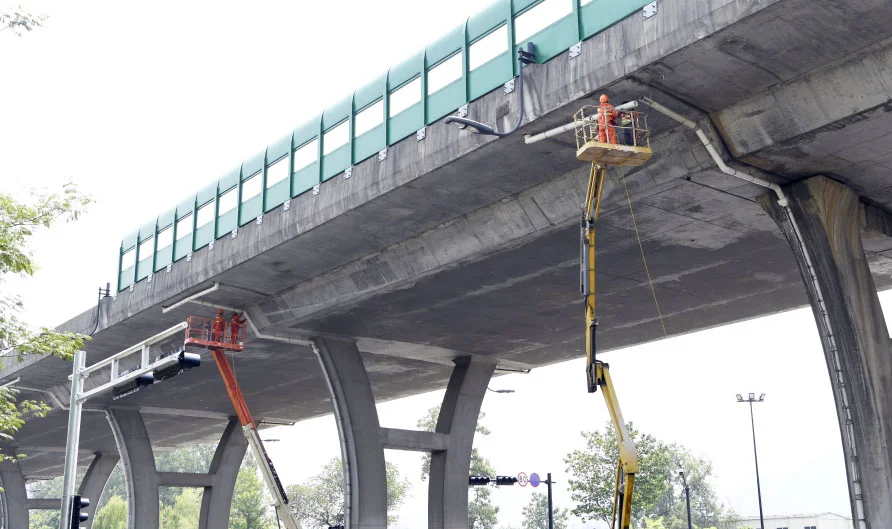
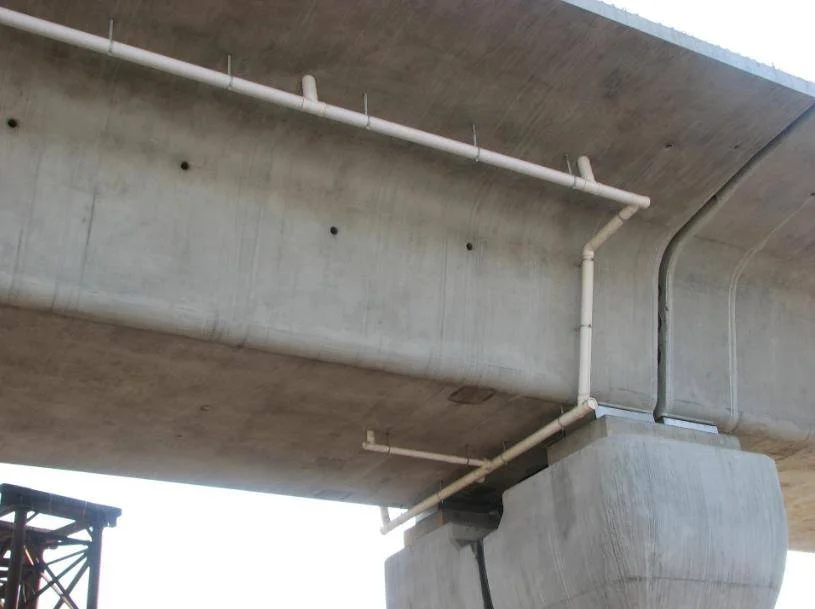
Leveraging the lightweight nature of UPVC piping, the construction team employed a combination of manual handling and simple hoisting techniques to rapidly install the pipelines at the designated locations on the bridge piers and box girders. The use of socket-and-spigot connection technology eliminated the need for on-site welding, thereby significantly reducing the risks associated with high-altitude work and ensuring the complete sealing of the drainage system prior to the onset of the rainy season.
Phase IV: System Commissioning and Acceptance (Weeks 40–46)
Upon the successful completion of water tightness tests and flow capacity assessments—in which all system performance metrics met or exceeded design expectations—the drainage system successfully passed the joint final acceptance inspection conducted by the project owner and the supervising authority.
▎Project Results:
The drainage system was installed ahead of schedule, thanks to the user-friendly design of SIFFO UPVC pipes and fittings.
Since commissioning, the system has performed flawlessly through multiple rainy seasons, with no signs of corrosion or wear.
The client reported significantly reduced installation costs and time compared to traditional materials, along with confidence in the system’s long-term reliability.
▎Client Feedback:
“SIFFO’s UPVC drainage solution met all our technical and logistical demands. Its corrosion resistance and ease of installation made it the perfect choice for our elevated bridge project in a challenging environment. We are pleased with the performance and would recommend SIFFO for similar infrastructure applications.”
▎Conclusion
SIFFO’s UPVC pipes and fittings provided a cost-effective, durable, and efficient drainage solution for the Philippine elevated bridge project, demonstrating how advanced polymer materials can meet the rigorous demands of modern infrastructure while ensuring sustainability, safety, and value.
▎UPVC Bridge Drainage System FAQ
1. Why is UPVC suitable for bridge drainage?
UPVC is lightweight, corrosion-resistant and relatively easy to install, making it suitable for drainage systems used on bridges, elevated roads and other infrastructure projects.
2. Can UPVC pipes be used for elevated bridge drainage?
Yes. UPVC drainage pipes can be used for collecting and discharging rainwater from bridge decks and other elevated infrastructure when the pipe system is properly designed and supported.
3. What are the advantages of UPVC drainage pipe over steel pipe?
UPVC is significantly lighter and does not rust, while its smooth internal surface supports efficient water flow. It can also reduce handling and maintenance requirements.
4. Is UPVC suitable for tropical climates?
UPVC can be suitable for tropical infrastructure applications because of its corrosion resistance and low maintenance requirements. Project-specific temperature, UV exposure and installation conditions should be considered during material selection.
5. How long does a UPVC drainage system last?
The service life depends on material quality, design, installation and operating conditions. Properly designed and installed UPVC drainage systems can provide long-term service with relatively low maintenance.
6. Can SIFFO provide UPVC drainage fittings?
Yes. SIFFO can supply UPVC pipe systems together with compatible fittings and connection solutions for drainage and infrastructure projects.
7. What information is required for a UPVC drainage pipe quotation?
Project location, pipe diameter, required pipe length, drainage application, connection method, applicable standards and estimated quantity are useful for preparing a project quotation.
▎Need a UPVC Drainage Solution for Your Infrastructure Project?
Planning a bridge, elevated road, municipal drainage or infrastructure project?
SIFFO provides UPVC drainage pipes, fittings and complete drainage system solutions for international projects. Share your pipe diameter, required quantity, application and project location with our engineering team to receive a suitable product recommendation and quotation.
Contact SIFFO today for your UPVC drainage project.