

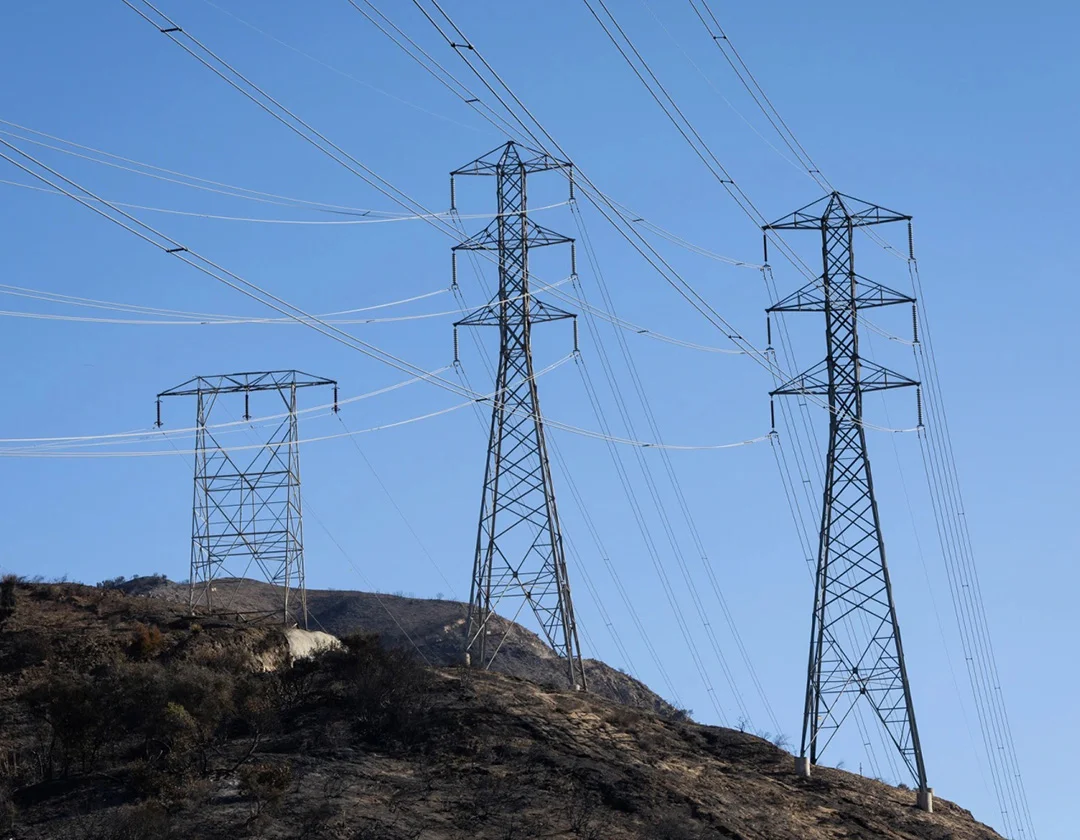
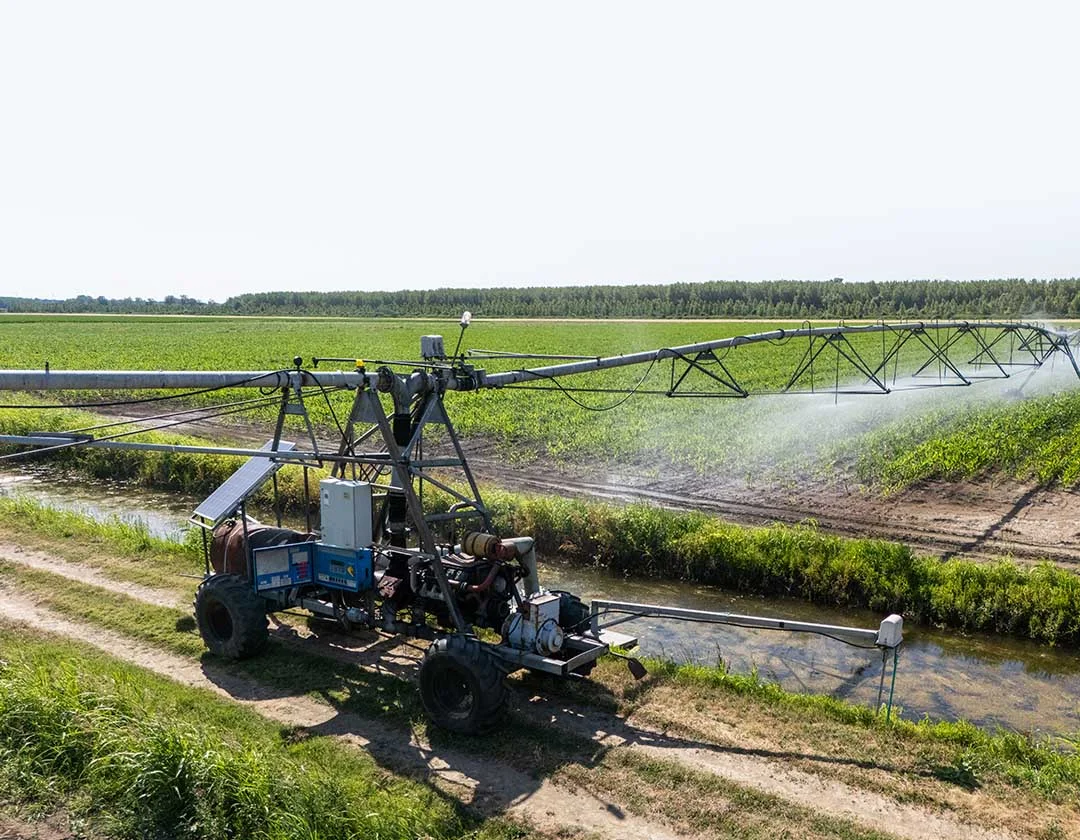
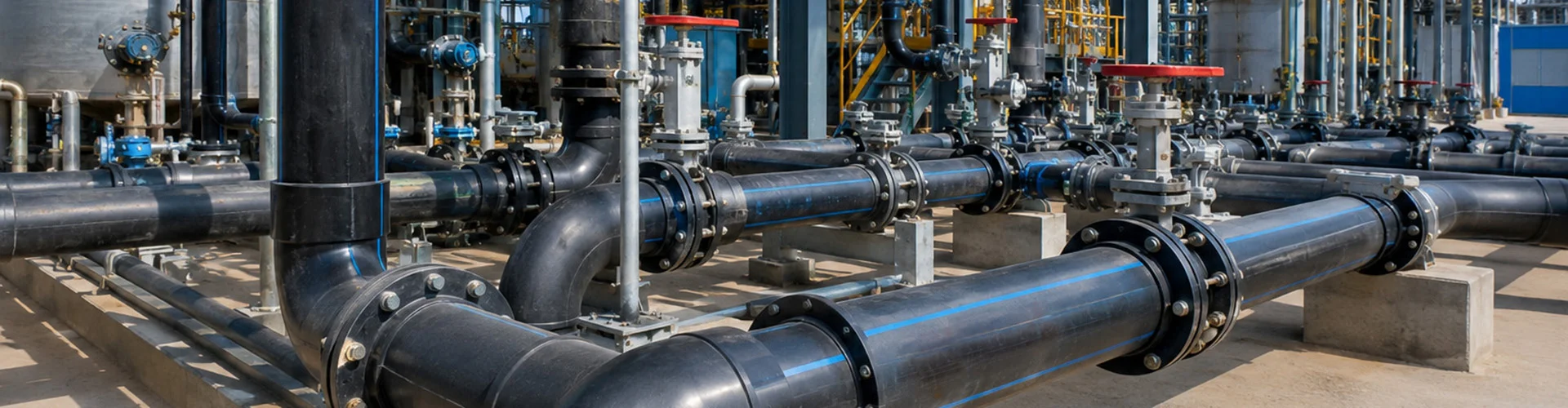
▎ Client & Project Profile
Client Profile: The client is a leading manufacturer of fine chemical products in the Asia-Pacific region, boasting over 40 years of industry experience and specializing in the production of high-value-added intermediates, specialty chemicals, and pharmaceutical raw materials. Their newly constructed integrated manufacturing plant is situated within a coastal industrial zone in Southeast Asia; the facility consists of 12 independent process units, generating approximately 850 cubic meters of mixed corrosive wastewater daily—containing organic solvents, strong acids, strong bases, and halides. This wastewater must be safely conveyed via an underground pipeline network to a central wastewater treatment facility for neutralization and purification.
Project Requirements: During factory operations, the wastewater generated by various process units possesses a complex chemical composition, containing corrosive media such as strong acids, strong bases, organic solvents, and chlorinated compounds. The client requires the design and installation of an underground piping network that meets the following core requirements:
Absolute Leak-Proof Integrity: Eliminate any risk of groundwater or soil contamination;
Corrosion Resistance: Withstand the corrosive effects of mixed chemical wastewater over the long term;
Maintenance-Free Operation: Require no replacement or major repairs throughout its designed service life;
High Reliability: Adapt to environments characterized by high groundwater levels and geological subsidence typical of coastal regions.
▎The Problem: Limitations of Traditional Materials
The initial design considered coated carbon steel and FRP (Fiberglass Reinforced Plastic) pipes. A feasibility study identified key risks:
Severe Corrosion: The effluent contained traces of acids (sulfuric, hydrochloric), alkalis, and organic solvents, causing rapid internal corrosion and external soil-side corrosion of steel pipes.
Leakage at Joints: The extensive network required thousands of flanged and gasketed joints, each a potential leak point. Leakage of hazardous chemicals into the soil posed severe environmental and safety risks.
High Lifetime Cost: Frequent inspections, maintenance, coating repairs, and premature replacement of steel pipes resulted in unpredictable operational downtime and high lifecycle costs.
Complex Installation: Heavy steel pipes required extensive welding, sandblasting, and coating in the field, leading to a prolonged installation schedule.
▎Our Solution: High-Performance HDPE Piping System
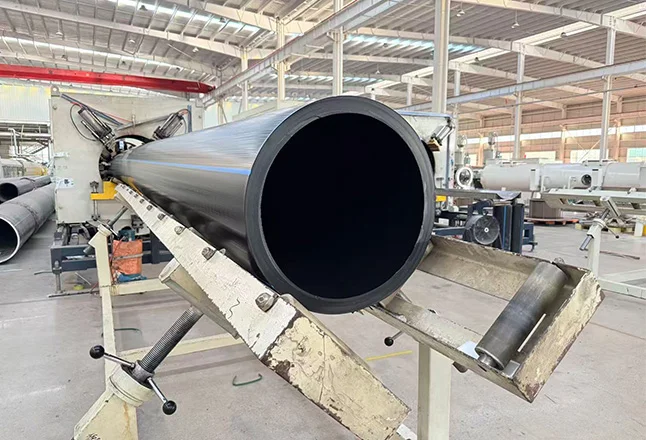
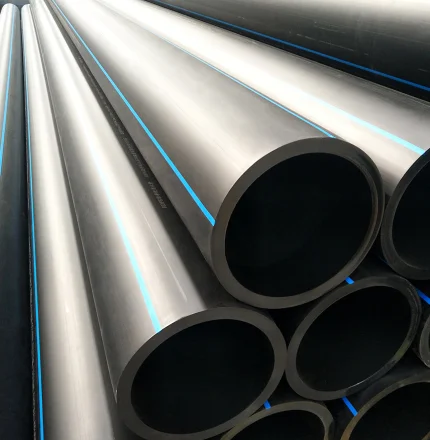
After a thorough technical review, we proposed a complete switch to a PE100-grade, HDPE pressure piping system as the optimal solution.
Material: PE100 RC (Resistance to Crack) grade HDPE, offering exceptional long-term hydrostatic strength (MRS 10 MPa) and enhanced resistance to environmental stress cracking.
Key Features Justified for This Application
1. Exceptional Chemical Resistance
PE100 High-Density Polyethylene (HDPE) demonstrates superior chemical inertness against the vast majority of inorganic acids, bases, salt solutions, and various organic solvents. Specifically for this project—which involves mixed corrosive wastewater (pH range 1–13, containing chloride ions and aromatic compounds)—the HDPE material exhibited outstanding performance during accelerated aging tests, showing zero mass loss and no surface cracking; this performance is far superior to that of metals and composite materials.
2. Integrated Leak-Proof Structure
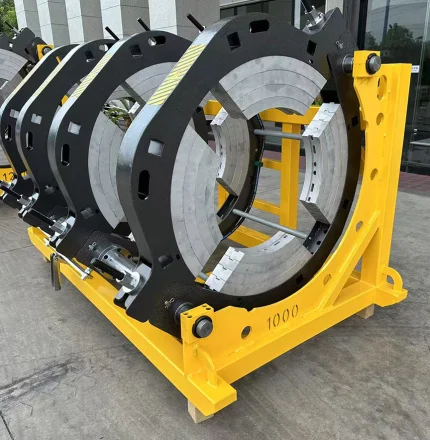
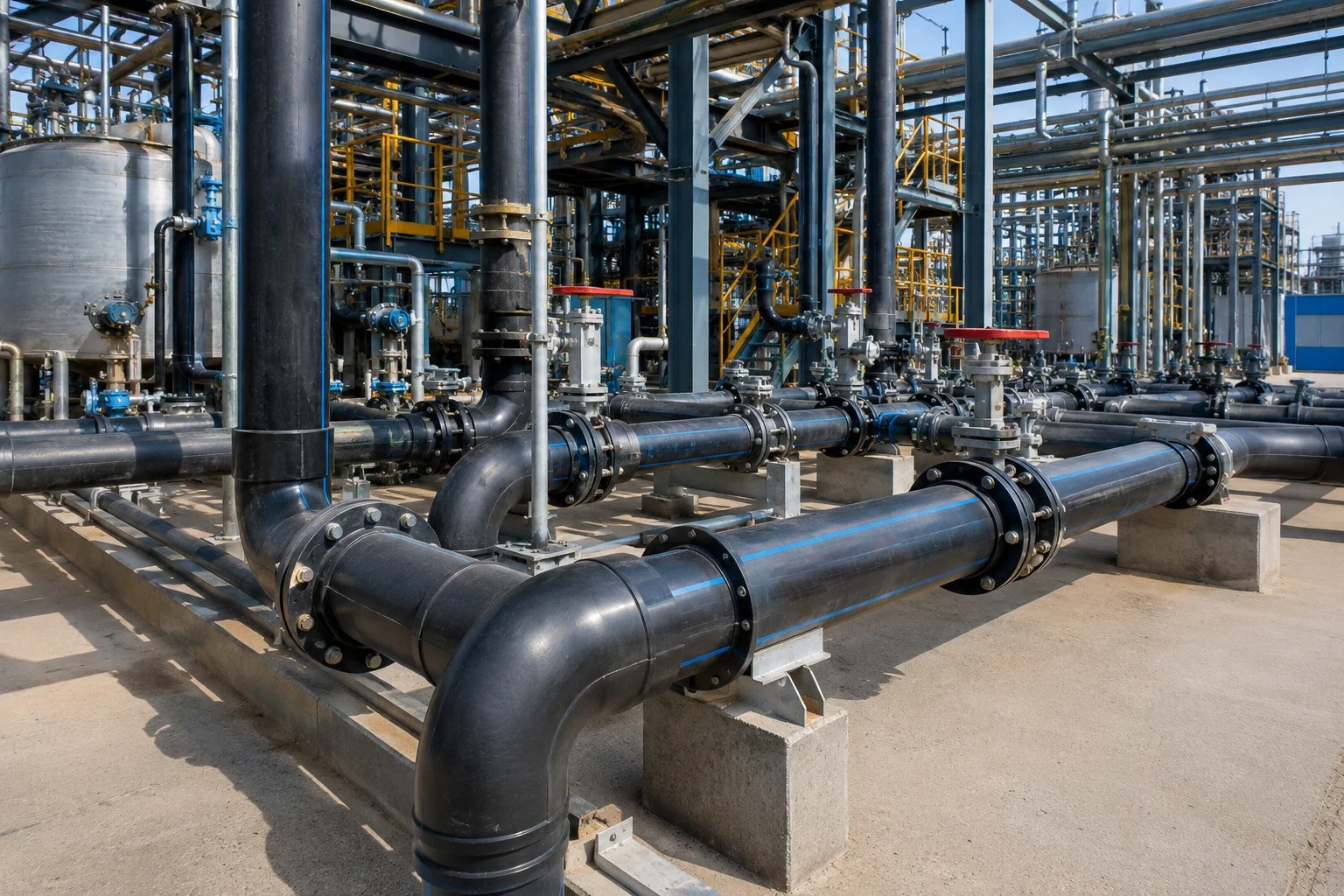
The SIFFO PE100 system utilizes Butt Fusion and Electrofusion technologies to fuse pipes and fittings into a seamless, continuous pipeline of uniform material composition. This molecular-level bonding completely eliminates the leakage risks associated with traditional mechanical joints, achieving a truly "zero-leakage" system that meets the most stringent environmental compliance requirements.
3. Toughness and Durability
PE100 material possesses exceptionally high resistance to Slow Crack Growth (SCG) and Rapid Crack Propagation (RCP). Its inherent flexibility allows the pipeline to deflect moderately within soft soil foundations, effectively absorbing geological settlement and seismic loads while preventing joint fractures. With a designed service life exceeding 50 years, the system ensures maintenance-free operation under rated pressure conditions.
4. Hydraulic Efficiency and Scale Resistance
The inner walls of HDPE pipes are smooth (with a Manning coefficient of approximately 0.009–0.011), resulting in extremely low frictional resistance and a strong resistance to scaling or biofilm formation. This not only reduces pumping energy consumption but also minimizes the risk of pipeline blockages caused by sediment accumulation.
▎Project Implementation
Scope of Supply: We provided a complete piping package:
HDPE pipes in diameters from 110mm to 500mm (SDR 17, PN10).
A full range of fittings (elbows, tees, reducers) and electrofusion couplings.
On-site Technical Support: Our certified fusion specialists conducted training for the contractor's team and supervised the initial installation phase to ensure joint quality.
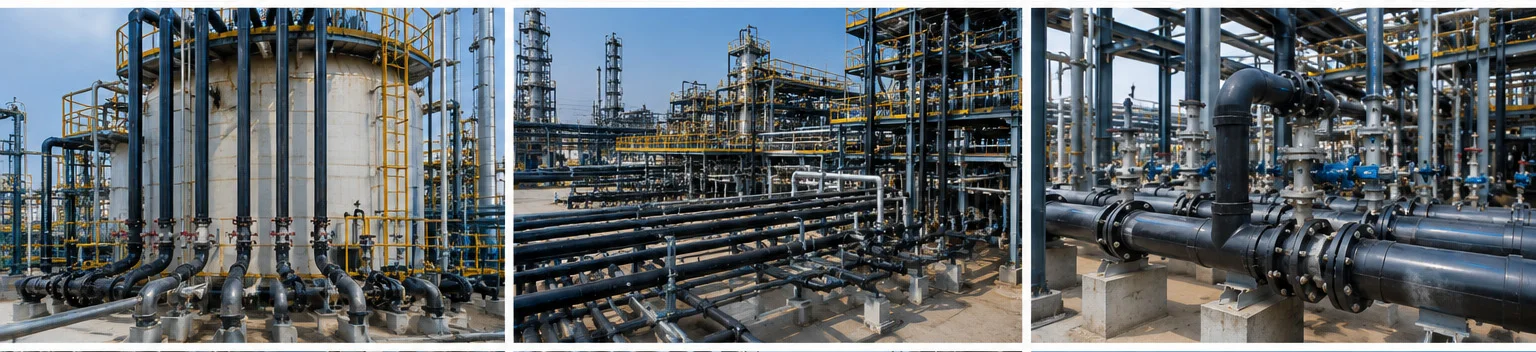
Installation Highlights: The pipe network was installed using a combination of open-trench and direct-burial methods. The fused sections were pressure-tested in segments, guaranteeing integrity before burial.
▎ Results & Benefits Delivered
100% Leak-Free System: All pressure tests passed successfully. After 3 years of operation, no leaks have been reported, ensuring full environmental compliance.
Drastic Reduction in Maintenance: Operational expenditure (OPEX) for pipeline maintenance has been reduced to near-zero, eliminating costs associated with corrosion monitoring, repairs, and replacements.
Faster Project Completion: Installation was completed 30% faster than the estimated schedule for a traditional system, allowing earlier plant commissioning.
Long-Term Reliability Guaranteed: The HDPE system has a projected service life exceeding 50 years for this application, providing outstanding lifecycle cost savings (lower CAPEX and OPEX).
Enhanced Safety: The elimination of potential leaks and the non-toxic, inert nature of HDPE created a safer working environment for plant personnel.
▎ Conclusion & Why Choose Our HDPE Solutions
This project exemplifies how our HDPE piping systems solve critical challenges in corrosive chemical environments. We deliver not just products, but a total value package:
Technical Expertise: Material selection guidance for specific chemical media.
Complete System Supply: Pipes, fittings, valves, and fusion equipment.
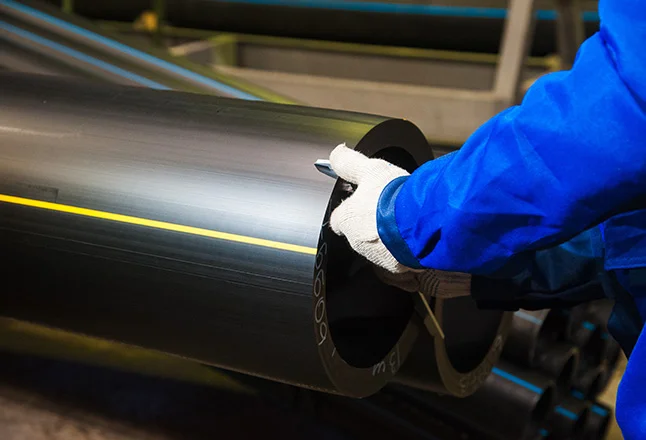
Quality Assurance: Pipes manufactured to ISO 4427, PE100 standards.
Professional Support: Project design review, on-site training, and technical supervision.
For a safe, reliable, and economical piping solution for your next chemica.
▎FAQ About HDPE Piping System
1. Is HDPE pipe suitable for corrosive wastewater in chemical plants?
Yes. HDPE is widely used for industrial wastewater, chemical effluent, acid and alkali drainage, and other corrosive fluid applications because it has excellent resistance to corrosion and many aggressive chemicals. Unlike steel and ductile iron, HDPE does not rust or suffer from electrochemical corrosion. However, the suitability of HDPE should always be verified against the specific wastewater composition, concentration, temperature, and operating conditions.
2. Is HDPE resistant to acids and alkalis?
HDPE generally provides good resistance to many acids, alkalis, salts, and aqueous chemical solutions. It is commonly considered for wastewater containing acidic or alkaline components. However, highly concentrated oxidizing chemicals and certain solvents may affect polyethylene, so chemical compatibility should be evaluated before final material selection.
3. Can HDPE pipe be used for chemical plant wastewater collection?
Yes. HDPE piping can be used for collecting and transporting many types of chemical plant wastewater, including acidic wastewater, alkaline wastewater, process effluent, industrial drainage, and contaminated water. Its corrosion resistance, flexible structure, and fusion-welded joints make it suitable for demanding industrial drainage systems.
4. What types of corrosive wastewater can HDPE pipe handle?
Depending on concentration and temperature, HDPE can be suitable for wastewater containing many acids, alkalis, salts, brines, and other aqueous chemicals. Typical applications include chemical processing wastewater, electroplating wastewater, mining effluent, industrial drainage, and wastewater treatment systems. The exact chemical composition should be reviewed before selecting the pipe material.
5. Can HDPE pipe replace steel pipe in corrosive wastewater applications?
In many corrosive wastewater applications, HDPE can be an alternative to conventional steel piping. HDPE does not experience the same rusting and electrochemical corrosion mechanisms as steel, which can reduce corrosion-related maintenance. However, material selection should also consider operating temperature, pressure, chemical compatibility, mechanical loading, and installation conditions.
6. How does HDPE prevent leakage in industrial wastewater systems?
HDPE pipes can be joined using butt fusion or electrofusion. Properly executed fusion joints create a continuous polyethylene connection, reducing the number of potential leakage points compared with systems that rely extensively on mechanical joints. Fusion quality, joint preparation, welding parameters, and inspection are important to system reliability.
7. Is HDPE suitable for buried chemical wastewater pipelines?
Yes. HDPE is particularly suitable for buried industrial wastewater pipelines because of its flexibility, corrosion resistance, and resistance to many aggressive soil environments. Proper trench preparation, bedding, backfilling, and pipe installation are still essential to prevent external mechanical damage and excessive deformation.
8. What temperature can HDPE wastewater pipe withstand?
The allowable operating temperature depends on the HDPE grade, pressure, chemical medium, and design conditions. Chemical resistance can decrease as temperature and chemical concentration increase. Therefore, the operating temperature should be considered together with the chemical composition rather than using a single maximum-temperature value for every application.
9. Is HDPE resistant to hydrogen sulfide (H₂S) in wastewater?
HDPE is highly resistant to many corrosive wastewater environments, including conditions where hydrogen sulfide is present. This makes polyethylene attractive for sewer and industrial wastewater applications where conventional metallic or cementitious materials may be vulnerable to corrosion. The complete system should still be designed according to the actual wastewater chemistry and operating conditions.
10. Can HDPE pipe handle mixed chemical wastewater?
Potentially, but mixed chemical wastewater requires a more detailed compatibility assessment. A mixture may behave differently from an individual chemical, especially when temperature, concentration, oxidizing conditions, or organic solvents are involved. For chemical plant projects, SIFFO can evaluate the wastewater composition, operating temperature, pressure, and pipe specifications before recommending a suitable HDPE system.
11. Are HDPE fittings also suitable for corrosive wastewater?
Yes. HDPE fittings can be manufactured from compatible polyethylene material and integrated into the piping system using butt fusion, electrofusion, or other suitable connection methods. Fittings, valves, gaskets, seals, and other components should be checked for chemical compatibility separately because the weakest component may determine the overall system performance.
12. Does HDPE pipe require internal corrosion protection?
Normally, HDPE does not require an internal anti-corrosion coating because the pipe itself is inherently resistant to corrosion. This is a major advantage over metallic piping systems that may require coatings or corrosion-control measures. Nevertheless, chemical compatibility and operating conditions should be evaluated for each project.
13. What are the advantages of HDPE for chemical plant wastewater collection?
Key advantages include:
Excellent resistance to many corrosive chemicals
No rust or electrochemical corrosion
Fusion-welded joints with low leakage risk
Good resistance to many acids, alkalis, and salts
Lightweight compared with steel piping
Flexible structure that can accommodate ground movement
Low internal roughness
Low maintenance requirements
Suitable for above-ground and buried installations
14. How long can an HDPE wastewater pipeline last?
The service life depends on material grade, operating temperature, pressure, chemical exposure, installation quality, and mechanical loading. HDPE is known for long-term durability in properly designed water and wastewater applications. For chemical wastewater, the expected service life should be assessed based on the actual chemical medium and operating conditions rather than relying on a generic lifespan figure.
15. How do I select the right HDPE pipe for corrosive wastewater?
The selection should consider:
Chemical composition – Identify all major chemicals and contaminants.
Chemical concentration – Concentration can significantly affect compatibility.
Operating temperature – Higher temperatures can reduce chemical resistance.
Flow rate and pipe diameter – Determine the required hydraulic capacity.
Operating pressure – Select the appropriate pressure class and SDR.
Installation method – Consider buried, above-ground, trenchless, or exposed installation.
Connection method – Select butt fusion, electrofusion, or other suitable connections.
Fittings and seals – Verify chemical compatibility for every component.
16. What information should be provided when requesting an HDPE chemical wastewater piping quotation?
For accurate engineering and quotation, provide the wastewater composition, chemical names, concentration ranges, operating temperature, flow rate, operating pressure, pipe diameter, pipeline length, installation method, connection requirements, and applicable project standards. This information allows the manufacturer to recommend the appropriate HDPE material, SDR/pressure rating, fittings, and connection system.
17. Can SIFFO provide a complete HDPE chemical wastewater piping system?
Yes. SIFFO can provide HDPE pipes and compatible fittings for industrial wastewater and corrosive fluid transportation projects. For chemical plant applications, the project requirements should be reviewed before production so that pipe specifications, fittings, connection methods, and chemical compatibility can be properly matched to the operating conditions.