

Introduction
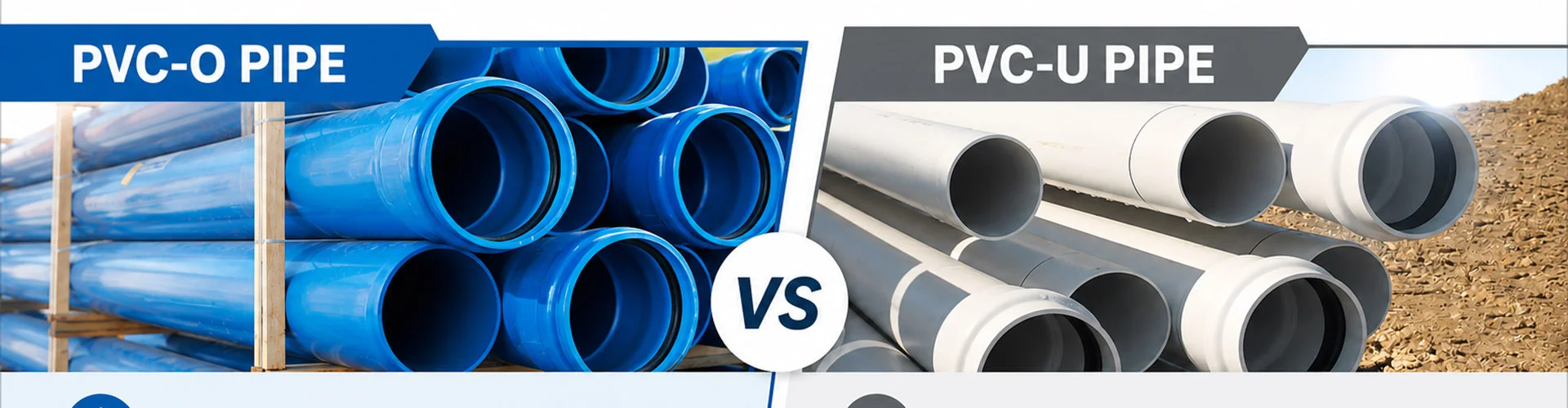
In modern water supply, irrigation, and drainage systems, PVC-based piping materials are widely used due to their durability, corrosion resistance, and cost efficiency. Among them, PVC-O (Oriented Polyvinyl Chloride) and PVC-U (Unplasticized Polyvinyl Chloride) are two of the most common choices.
This article provides a comprehensive comparison of PVC-O and PVC-U pipes in terms of mechanical performance, applications, service life, and economic benefits, along with guidance on selecting the right material and an overview of relevant international standards and leading Chinese suppliers.
What are PVC-O and PVC-U pipes?
PVC-U Pipes (Unplasticized Polyvinyl Chloride)
PVC-U pipes are traditional rigid PVC pipes that contain no plasticizers; they are characterized by high rigidity, corrosion resistance, and low cost. They are among the most widely used plastic piping materials globally, serving applications such as building drainage, municipal water supply, and electrical conduit. The production process for PVC-U is relatively mature—involving standard extrusion molding—with low technical barriers and a large number of suppliers.
PVC-O Pipes (Biaxially Oriented Polyvinyl Chloride)
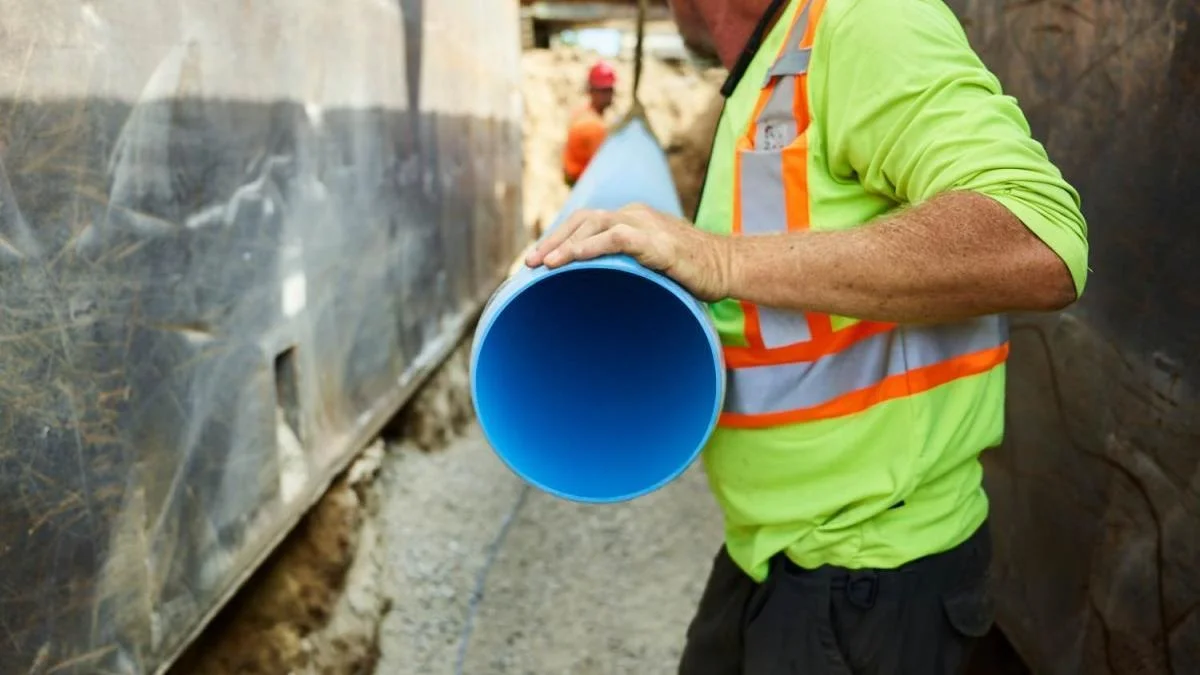
PVC-O pipes are an "upgraded version" of PVC-U pipes. Following the initial extrusion of the PVC-U pipe, a specialized biaxial orientation process is applied to stretch the material simultaneously in both axial and radial directions. This transforms the long-chain PVC molecules from a linear structure into a layered, network-like structure. This molecular-level restructuring fundamentally alters the material's mechanical properties.
Key Performance Analysis
(1) Revolutionary Changes in Strength and Wall Thickness
The MRS (Minimum Required Strength) of PVC-O can reach 40–50 MPa, whereas that of PVC-U is only 25 MPa. This means that for the same pressure rating, the wall thickness of PVC-O can be reduced by approximately 50%. For instance, a PN16-rated PVC-O pipe may have only half the wall thickness of a PVC-U pipe yet offer equal or even superior pressure-bearing capacity.
(2) A Qualitative Leap in Impact Resistance
The impact strength of PVC-O is 2 to 10 times that of PVC-U. This is attributed to its layered molecular structure; upon impact, crack propagation between layers is effectively inhibited, preventing the brittle fracture characteristic of PVC-U. Tests demonstrate that PVC-O retains excellent toughness even at low temperatures (e.g., -20°C), whereas PVC-U is prone to brittle cracking under such conditions.
(3) Resistance to Crack Propagation
The layered structure of PVC-O confers exceptional resistance to Rapid Crack Propagation (RCP). Testing in accordance with the ISO 13477 standard reveals that the crack propagation speed in PVC-O is more than 60% slower than in PVC-U. This attribute is particularly critical for buried pipelines, where factors such as soil movement and traffic loads can potentially trigger crack formation.
(4) Fatigue and Water Hammer Resistance
PVC-O exhibits outstanding fatigue resistance under cyclic loading conditions. In operational scenarios involving intermittent pumping or water hammer surges, the service life of PVC-O significantly exceeds that of PVC-U. Research indicates that PVC-O can withstand over one million pressure cycles without failure.