
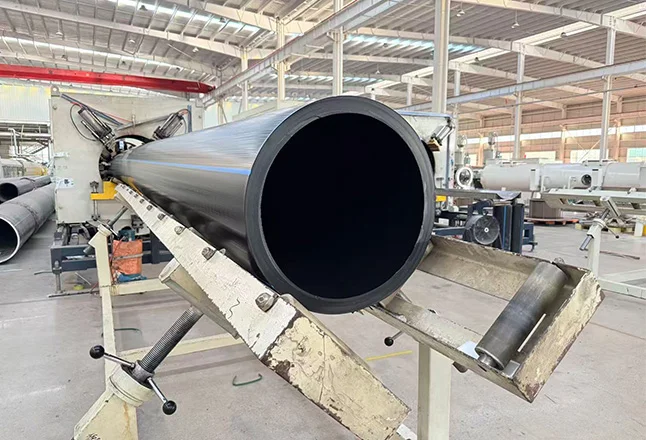

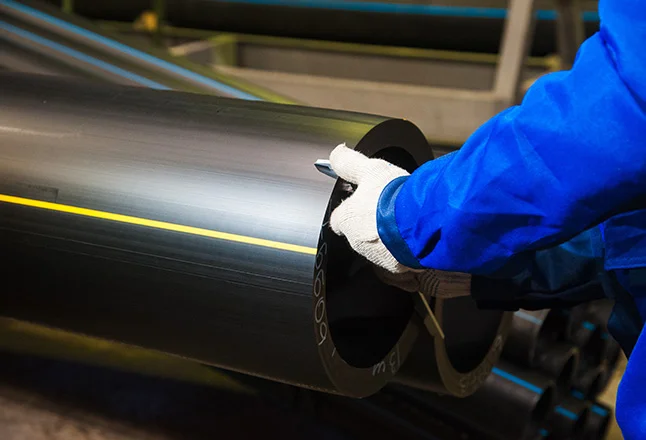
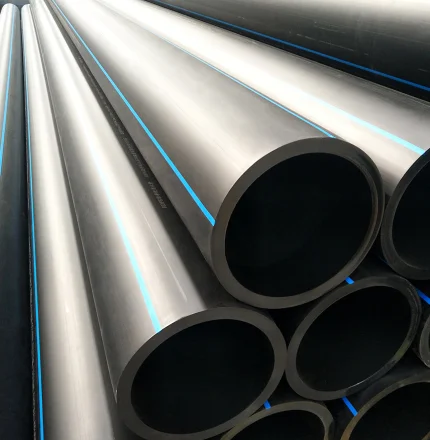
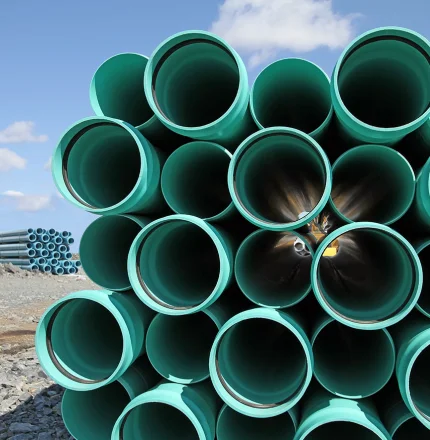
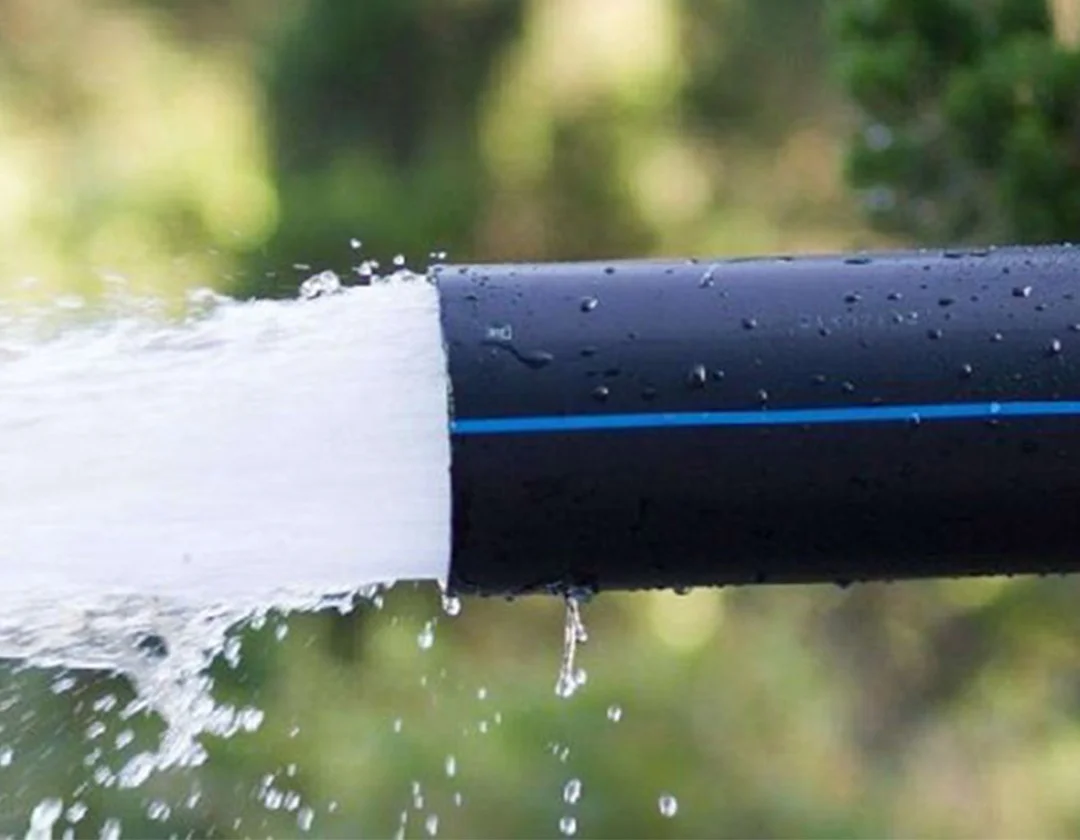
HDPE pipe is widely used for water supply, sewage, drainage, gas distribution, mining, irrigation, industrial pipelines, and other fluid transportation systems. However, when sourcing HDPE pipes internationally, one of the most confusing issues for buyers and engineers is pipe sizing.
Unlike steel pipe, where nominal pipe size is often closely associated with a standard outside diameter, HDPE pipe can be manufactured according to several different dimensional systems, including Metric, IPS (Iron Pipe Size), and DIPS (Ductile Iron Pipe Size).
For projects using American standards, understanding ASTM HDPE pipe dimensions and the IPS sizing system is particularly important. A pipe described as “8-inch HDPE pipe,” for example, does not necessarily have an 8-inch outside diameter.
This guide explains the major HDPE pipe sizing systems, ASTM standards, IPS HDPE pipe dimensions, common size ranges, applications, and what international buyers should consider when specifying HDPE pipes.
▎What Are HDPE Pipe Dimensions?
HDPE pipe dimensions are normally defined by several key parameters:
Nominal pipe size
Outside diameter (OD)
Wall thickness
Standard Dimension Ratio (SDR) or Dimension Ratio (DR)
Pressure rating
Pipe length
Dimensional standard
For pressure applications, outside diameter and wall thickness are especially important because the pressure capacity of an HDPE pipe depends on the relationship between its outside diameter and wall thickness.
The Standard Dimension Ratio is generally expressed as:
SDR = Outside Diameter ÷ Minimum Wall Thickness
For example, a pipe with a 110 mm outside diameter and an SDR 11 has a nominal wall thickness of approximately 10 mm.
Therefore, two HDPE pipes can have the same outside diameter but different SDR values, resulting in different wall thicknesses and pressure ratings.
▎What Is the ASTM Standard for HDPE Pipe?
There is no single ASTM standard covering every type and application of HDPE pipe. Different ASTM specifications apply to different pipe products and applications.
Some commonly referenced ASTM standards include:
ASTM D3035 — Small-Diameter HDPE Pipe
ASTM D3035 covers polyethylene pipe based on controlled outside diameters. The standard includes IPS sizes from 1/2 inch through 3 inches and addresses both pressure-rated and non-pressure applications.
ASTM D3035 also specifies requirements related to polyethylene compounds, pipe dimensions, workmanship, sustained pressure, burst pressure, testing, and marking. For larger DIPS sizes and larger applications, the standard points users toward specifications such as ASTM F714 or AWWA C906.
This makes ASTM D3035 particularly relevant for smaller HDPE pipe systems.
ASTM F714 — Large-Diameter HDPE Pipe
ASTM F714 is one of the most important ASTM specifications for larger polyethylene pressure pipe.
The current ASTM F714 specification covers polyethylene pipe with outside-diameter-based sizing systems including:
IPS — Iron Pipe Size
DIPS — Ductile Iron Pipe Size
Metric sizing
The standard covers metric sizes of 90 mm and larger, while smaller sizes are addressed by ASTM D3035.
ASTM F714 is designed for polyethylene pipe used in applications such as:
Potable and raw water transportation
Municipal water systems
Municipal sewage
Industrial process liquids
Effluent transportation
Slurry pipelines
Pipeline rehabilitation
Pressure and non-pressure applications
The standard also establishes requirements for dimensional properties such as outside diameter, wall thickness, eccentricity and other manufacturing characteristics.
▎What Is IPS HDPE Pipe?
IPS stands for Iron Pipe Size.
When an HDPE pipe is manufactured according to the IPS sizing system, its nominal size is related to the traditional iron/steel pipe dimensional system.
This is important because an “8-inch IPS HDPE pipe” does not have an 8.000-inch outside diameter.
For example, under the ASTM F714 IPS sizing system, a nominal 8-inch IPS HDPE pipe has an actual average outside diameter of approximately 8.625 inches (219.1 mm). A nominal 12-inch IPS pipe has an outside diameter of approximately 12.750 inches (323.9 mm).
This difference is critical when designing connections, selecting fittings, calculating flow capacity, and integrating HDPE pipelines with existing infrastructure.
▎Common ASTM IPS HDPE Pipe Sizes
The following table provides representative IPS dimensions referenced by ASTM F714.
| Nominal IPS Size | Approx. Outside Diameter | Approx. OD in mm |
|---|---|---|
4 inch | 4.500 in | 114.3 mm |
5 inch | 5.563 in | 141.3 mm |
6 inch | 6.625 in | 168.3 mm |
8 inch | 8.625 in | 219.1 mm |
10 inch | 10.750 in | 273.1 mm |
12 inch | 12.750 in | 323.9 mm |
14 inch | 14.000 in | 355.6 mm |
16 inch | 16.000 in | 406.4 mm |
18 inch | 18.000 in | 457.2 mm |
20 inch | 20.000 in | 508.0 mm |
24 inch | 24.000 in | 609.6 mm |
30 inch | 30.000 in | 762.0 mm |
36 inch | 36.000 in | 914.4 mm |
42 inch | 42.000 in | 1066.8 mm |
48 inch | 48.000 in | 1219.2 mm |
54 inch | 54.000 in | 1371.6 mm |
60 inch | 60 inch | 1524.0 mm |
ASTM F714 tables include IPS outside diameters and allowable dimensional tolerances. The exact available combination of nominal size and DR/SDR depends on the applicable specification and product design.
For engineering and procurement, the outside diameter should always be confirmed rather than relying only on the nominal inch size.
▎IPS vs DIPS vs Metric HDPE Pipe Dimensions
HDPE pipes are commonly supplied according to three major outside-diameter sizing systems.
1. IPS — Iron Pipe Size
IPS HDPE pipe is dimensionally associated with conventional iron and steel pipe sizes.
It is widely encountered in projects using North American engineering standards and infrastructure specifications.
Typical applications include:
Municipal water transmission
Industrial water systems
Mining pipelines
Slurry transportation
Process piping
Large-diameter pressure pipelines
2. DIPS — Ductile Iron Pipe Size
DIPS HDPE pipe uses outside diameters associated with ductile iron pipe dimensions.
It is particularly useful when HDPE is being used as an alternative to, or connected with, ductile iron pipeline infrastructure.
For example, ASTM F714 includes DIPS sizes beginning at 3 inches and extending into very large diameters.
3. Metric HDPE Pipe
Metric HDPE pipe is based on nominal outside diameters expressed in millimeters.
Common sizes include:
90, 110, 160, 200, 250, 280, 315, 355, 400, 450, 500, 560, 630, 710, 800, 900, 1000, 1200 mm and larger.
ASTM F714 includes metric sizing for 90 mm and larger pipe.
Metric sizing is particularly common in international projects and markets using ISO- or EN-based pipeline standards.
▎Where Are ASTM IPS HDPE Pipes Used?
ASTM standards originated in the United States, so ASTM-compliant HDPE pipe is particularly common in North American projects, especially those designed around U.S. engineering specifications.
However, ASTM standards are also frequently referenced internationally by:
Engineering companies
EPC contractors
Mining companies
International procurement teams
Industrial project owners
Water infrastructure contractors
Therefore, ASTM HDPE pipe is not limited to the United States.
For international projects, the more important question is not simply “Which country uses ASTM?”, but rather:
“Which dimensional and material standard is specified in the project documents?”
A project in another country may use ASTM F714, ASTM D3035, PE4710 material requirements, AWWA specifications, ISO standards, or a combination of these depending on the project owner and engineering consultant.
This is particularly common in international EPC and mining projects.
▎ASTM IPS HDPE Pipe vs Metric HDPE Pipe
The biggest difference is the dimensional reference system.
Feature | ASTM IPS HDPE Pipe | Metric HDPE Pipe |
Sizing system | IPS | Metric |
Nominal size | Inch-based | Millimeter-based |
Outside diameter | Controlled according to IPS dimensions | Controlled according to metric dimensions |
Common standards | ASTM F714 / D3035 | ASTM F714, ISO/EN systems depending on project |
Typical markets | North America and ASTM-based projects | Europe, Asia, Africa and international projects |
Example | 8" IPS = 8.625" OD | 200 mm = approx. 200 mm OD |
Common applications | Water, mining, industrial, municipal | Water, irrigation, drainage, industrial |
One of the most important procurement mistakes is to assume that an 8-inch IPS HDPE pipe is interchangeable with a 200 mm metric HDPE pipe.
They are dimensionally different and should not be treated as direct equivalents without checking the actual outside diameter and connection requirements.
▎How Does SDR Affect HDPE Pipe Dimensions?
Pipe size alone does not determine pressure capacity.
The SDR or DR value must also be considered.
For example, an HDPE pipe may be specified as:
8-inch IPS HDPE Pipe, SDR 11
or:
8-inch IPS HDPE Pipe, SDR 17
Both pipes have essentially the same nominal outside diameter, but the SDR 11 pipe has a thicker wall.
The general relationship is:
Lower SDR = thicker wall = higher pressure capability
Higher SDR = thinner wall = lower pressure capability
However, the actual allowable pressure should always be determined according to the material grade, design temperature, applicable standard, service conditions, and project requirements.
Modern ASTM polyethylene specifications can include materials such as PE4710, which offers higher long-term hydrostatic design stress than some older polyethylene material designations. ASTM F714 references current polyethylene material classifications and associated performance requirements.
▎Common HDPE Pipe Size Ranges
For international procurement, HDPE pipe sizes can generally be divided into several practical categories.
Small Diameter HDPE Pipe
Approximately:
16–90 mm
Typical applications include:
Irrigation laterals
Water service lines
Drip irrigation
Small drainage systems
Industrial utility lines
ASTM D3035 is particularly relevant to smaller IPS pressure pipe.
Medium Diameter HDPE Pipe
Approximately:
90–315 mm
Typical applications include:
Municipal water distribution
Irrigation
Building water systems
Industrial water
Sewer and drainage
Large Diameter HDPE Pipe
Approximately:
355–1000 mm
Typical applications include:
Water transmission
Sewer systems
Mining
Industrial pipelines
Slurry transportation
Large-scale irrigation
Extra-Large Diameter HDPE Pipe
Approximately:
1000 mm and above
These pipes are commonly used for:
Large water transmission projects
Mining infrastructure
Dredging
Large drainage systems
Industrial process pipelines
The actual maximum diameter available depends on the manufacturer, extrusion equipment, applicable standard, wall thickness and project requirements.
▎How to Specify an ASTM HDPE Pipe Correctly
When requesting a quotation from an HDPE pipe manufacturer, specifying only “HDPE pipe, 8 inch” is not sufficient.
A complete technical specification should normally include:
1. Material
For example:
PE4710 or another project-approved polyethylene grade.
2. Standard
For example:
ASTM F714.
3. Sizing system
Specify:
IPS, DIPS or Metric.
4. Nominal size
For example:
8 inch IPS.
5. SDR/DR
For example:
SDR 11, SDR 13.5 or SDR 17.
6. Pressure rating
Specify the required working pressure based on the applicable design standard.
7. Application
For example:
Potable water, wastewater, mining slurry, irrigation or industrial process water.
8. Connection method
Common HDPE connection methods include:
Butt fusion
Electrofusion
Mechanical connections
Flanged connections
This information allows the manufacturer to select the correct pipe dimensions, fittings and connection system.
▎Why HDPE Pipe Dimensions Matter in International Projects
Choosing the correct dimensional system is not simply a purchasing issue. It affects the entire pipeline system.
Incorrect dimensional selection can cause problems with:
Pipe-to-fitting compatibility
Butt fusion equipment
Electrofusion fittings
Flange adapters
Valves
Mechanical couplings
Existing pipeline connections
Flow calculations
Installation procedures
For example, an engineer specifying an 8-inch IPS HDPE pipe should not automatically order a 200 mm metric pipe.
Although the nominal sizes appear similar, their actual outside diameters are different.
ASTM F714 specifically distinguishes between IPS, DIPS and Metric sizing systems, which is why the dimensional system should always be included in the project specification.
▎Final Thoughts: Choosing the Right ASTM HDPE Pipe Size
HDPE pipe is available in a wide range of dimensions, and the correct size is determined by more than nominal diameter.
For ASTM-based projects, buyers should understand the difference between:
IPS HDPE pipe
DIPS HDPE pipe
Metric HDPE pipe
ASTM D3035
ASTM F714
SDR/DR
PE material grades such as PE4710
ASTM F714 is particularly important for larger HDPE pressure pipes because it defines outside-diameter-based pipe dimensions in IPS, DIPS and Metric systems. ASTM D3035 covers smaller controlled-outside-diameter polyethylene pipe.
For an international HDPE pipe project, the safest approach is to provide the standard + material grade + sizing system + nominal diameter + SDR/DR + pressure requirement + application.
This prevents dimensional misunderstandings and ensures that the HDPE pipe, fittings and connection system are designed as one compatible pipeline system.
▎FAQ About ASTM HDPE Pipe Dimensions
1. What is an IPS HDPE pipe?
IPS HDPE pipe is polyethylene pipe manufactured according to the Iron Pipe Size dimensional system. The nominal size is expressed in inches, while the actual outside diameter follows the applicable IPS dimensional standard.
2. What is the difference between IPS and metric HDPE pipe?
IPS pipe uses inch-based outside-diameter dimensions, while metric HDPE pipe uses millimeter-based outside diameters. An 8-inch IPS HDPE pipe, for example, has an outside diameter of approximately 8.625 inches rather than 8 inches.
3. What ASTM standard covers IPS HDPE pipe?
ASTM F714 is a major specification for larger outside-diameter polyethylene pressure pipe and includes IPS, DIPS and Metric sizing systems. Smaller IPS polyethylene pipe is covered by ASTM D3035.
4. What are the common ASTM IPS HDPE pipe sizes?
Common IPS sizes include 4, 6, 8, 10, 12, 14, 16, 18, 20, 24, 30, 36, 42 and 48 inches, with larger sizes also available depending on the applicable specification and manufacturer.
5. Can you manufacture HDPE pipe according to ASTM F714?
Yes. HDPE pipe manufacturers can produce large-diameter polyethylene pressure pipe according to ASTM F714 when the required material, dimensions, testing and marking requirements are specified.
For procurement, buyers should confirm not only the ASTM standard but also the polyethylene material designation, dimensional system, SDR/DR and pressure requirements.
6. Is ASTM HDPE pipe only used in the United States?
No. ASTM HDPE pipe is widely used in U.S. projects but ASTM specifications are also referenced by international EPC contractors, mining companies, engineering consultants and industrial projects.
7. How do I choose the correct HDPE pipe size?
Start with the project-required flow rate, pressure, application and connection requirements. Then select the material grade, dimensional system, outside diameter and SDR/DR according to the applicable project standard.
8. Can SIFFO supply ASTM IPS HDPE pipe?
SIFFO can provide HDPE pipe solutions for ASTM-based international projects, including different sizes, SDR options, polyethylene grades and fittings. Project-specific requirements should be confirmed before quotation to ensure dimensional and fitting compatibility.
9. Should I specify IPS or Metric HDPE pipe in my RFQ?
Yes. The dimensional system should always be clearly stated.
Instead of writing only:
“8-inch HDPE pipe”
specify:
“8-inch IPS HDPE pipe.”
For metric projects, specify the actual outside diameter, such as:
“200 mm OD HDPE pipe.”
This helps prevent dimensional mismatches between the pipe, fittings, valves, flanges and existing pipeline.
10. What HDPE material grade is commonly used for ASTM projects?
The appropriate material grade depends on the project specification and application.
For North American pressure pipe applications, PE4710 is an important polyethylene material designation. Other polyethylene grades may also be specified depending on the project, applicable standard and local requirements.
The material grade should be confirmed before production because it affects the pipe's pressure design and compliance requirements.
11. Can ASTM IPS HDPE pipe be supplied with HDPE fittings?
Yes.An HDPE pipeline normally requires more than straight pipe. Depending on the project, suppliers may provide:
HDPE elbows
HDPE tees
HDPE reducers
HDPE couplings
Stub ends
Flange adapters
Electrofusion fittings
Butt-fusion fittings
Transition fittings
For large international projects, purchasing the pipe and compatible fittings from the same supplier can simplify dimensional coordination and reduce installation risks.
12. Can ASTM HDPE pipe connect to steel or ductile iron pipe?
Yes.HDPE pipelines can be connected to steel, ductile iron, valves, pumps and other pipeline components using appropriate transition assemblies, flange adapters, stub ends or mechanical couplings.
However, IPS, DIPS and Metric dimensions should not be mixed without checking compatibility.
The outside diameter and connection dimensions should be confirmed before purchasing transition fittings.
13. Can you supply large-diameter ASTM HDPE pipe?
Large-diameter HDPE pipe is widely used for water transmission, mining, dredging, industrial pipelines and large drainage systems.
Available diameters depend on the manufacturer's extrusion equipment, applicable standard, wall thickness and project requirements.
For large projects, buyers should provide the required diameter, SDR, total quantity, pipe length and application so the manufacturer can confirm production feasibility.
14. Can ASTM HDPE pipe be used for potable water?
Yes, HDPE is widely used for potable water pipelines.
However, potable water projects may require additional requirements concerning the raw material, certification, sanitary compliance, testing, marking and local regulations.
Buyers should specify that the pipe is intended for potable water when requesting a quotation rather than assuming that every ASTM HDPE pipe is automatically approved for drinking-water applications.
15. Can ASTM HDPE pipe be used for mining applications?
Yes.HDPE pipe is commonly considered for mining applications such as:
Tailings transportation
Slurry pipelines
Process water
Mine dewatering
Concentrate transportation
Reclaimed water
Long-distance water transmission
For abrasive slurry, buyers should consider not only pressure but also abrasion resistance, flow velocity, slurry concentration, particle size and pipe wall thickness.
For severe abrasive applications, specialized HDPE or UHMWPE-lined solutions may also be considered.
16. Can you provide third-party inspection for ASTM HDPE pipe?
Third-party inspection can generally be arranged when required by the buyer or project owner.
Common inspection organizations may include internationally recognized inspection companies.
The inspection scope can include:
Pipe dimensions
Wall thickness
Appearance
Material verification
Hydrostatic testing
Marking
Packaging
Quantity verification
The inspection requirements should be agreed upon before production begins.
17. How should ASTM HDPE pipe be packaged for export?
HDPE pipe packaging depends on the pipe diameter and shipping method.
Small-diameter pipe may be supplied in coils or bundles, while large-diameter pipe is normally shipped as straight pipe sections.
Export packaging should protect the pipe from:
Excessive impact
Deformation
Contamination
UV exposure during storage
Improper lifting
Transportation damage
For large international orders, packaging and loading plans should be confirmed before shipment.
18. How do I calculate the quantity of HDPE pipe required for a project?
The basic pipe quantity is calculated from the total pipeline length.
However, procurement quantities should also consider:
Pipeline route length
Installation losses
Cutting requirements
Fitting locations
Expansion or design allowances
Spare pipe requirements
For example, if a project requires 10 km of pipeline, the procurement quantity should not automatically be exactly 10 km without considering the project installation method and engineering requirements.
19. Can SIFFO provide a complete ASTM HDPE pipeline solution?
Yes. For international projects, SIFFO can provide HDPE pipe and related pipeline components according to project requirements, including ASTM-based HDPE pipe, different SDR options, HDPE fittings and customized pipe specifications.
For a project quotation, buyers are encouraged to provide the required standard, material grade, IPS/DIPS/Metric sizing system, diameter, SDR, pressure rating, application, quantity and destination port.
This information allows the supplier to evaluate technical compatibility and provide a more accurate quotation.
▎Need ASTM IPS HDPE Pipe for Your Project?
Looking for a reliable ASTM IPS HDPE pipe manufacturer for your water, mining, irrigation, industrial or municipal pipeline project?
SIFFO can supply HDPE pipes based on project-specific requirements, including ASTM F714, IPS, DIPS and Metric sizes, different SDR/DR options, PE material grades and compatible HDPE fittings.
Send us your pipe size, SDR, pressure rating, material grade, required quantity and application. Our technical team can help confirm the correct HDPE pipe dimensions and provide a project-specific quotation.