

HDPE Pipe for Mining: Applications, Features and SIFFO Pipe Solutions
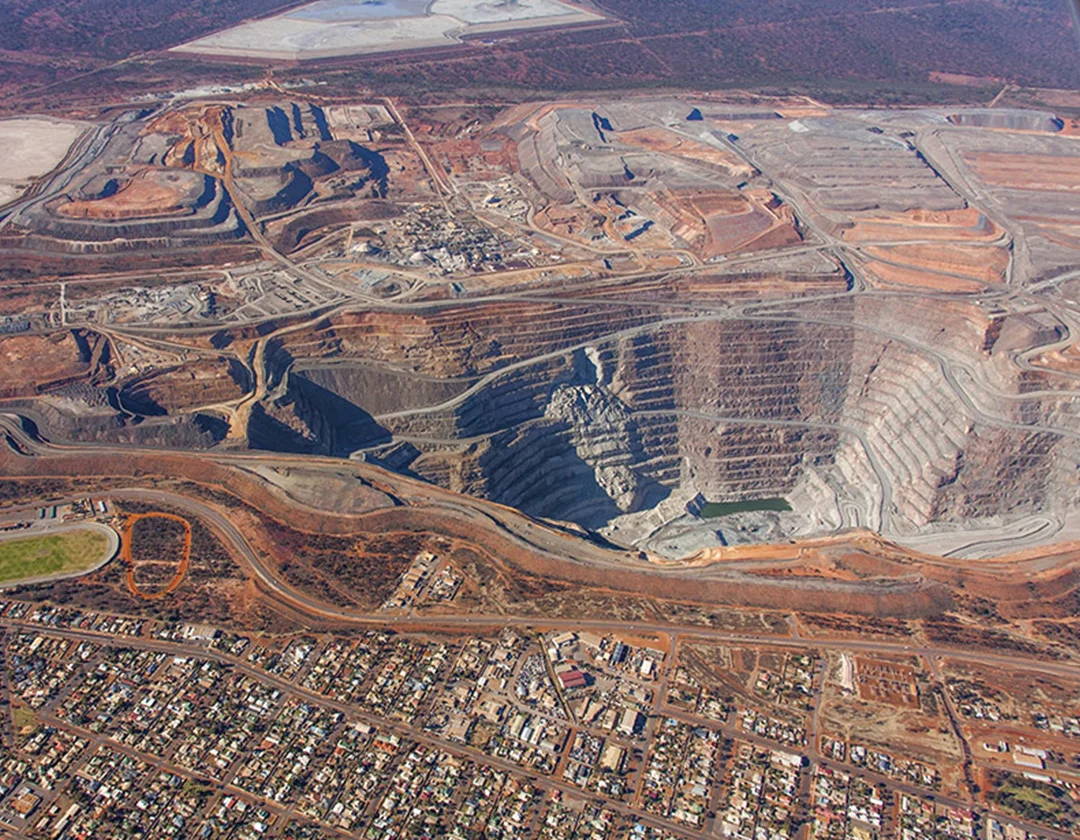
Mining operations depend on reliable pipelines to move water, slurry and tailings across challenging terrain. Corrosive fluids, abrasive particles, changing elevations and outdoor exposure all influence pipe selection. Choosing the right pipeline helps operators manage maintenance, water use and production continuity.
HDPE pipe for mining is used for mine dewatering, process-water supply, slurry transport, tailings transfer and water recovery. Its corrosion resistance, flexibility and fusion-joint capability make it a practical option for many mining applications, provided the pipe system is designed for the actual operating conditions.
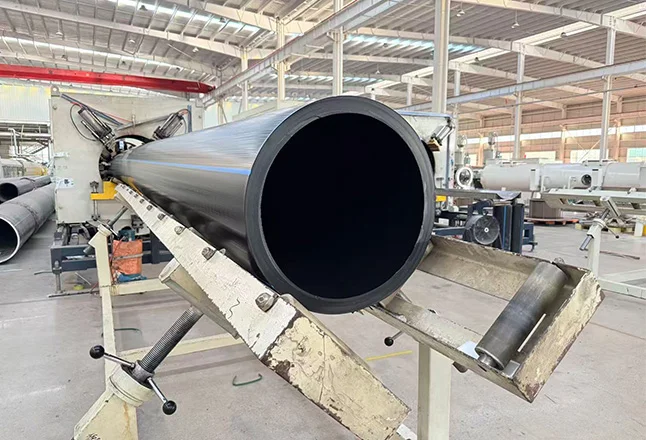
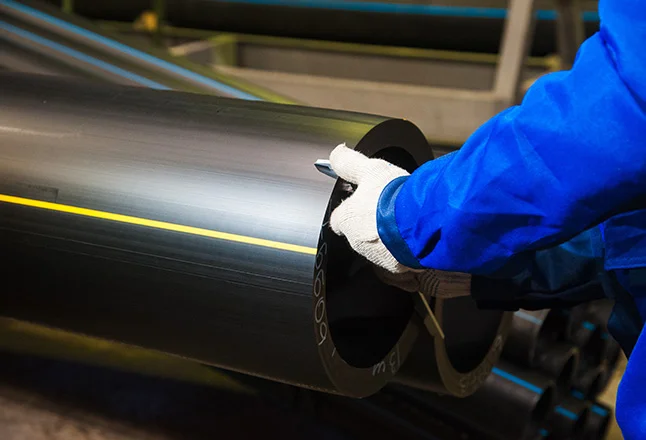
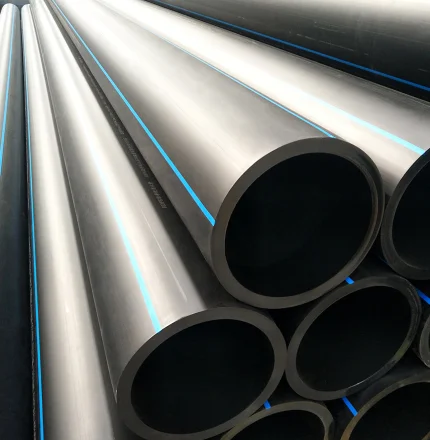
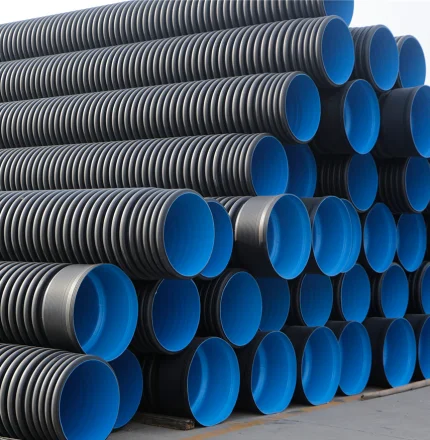
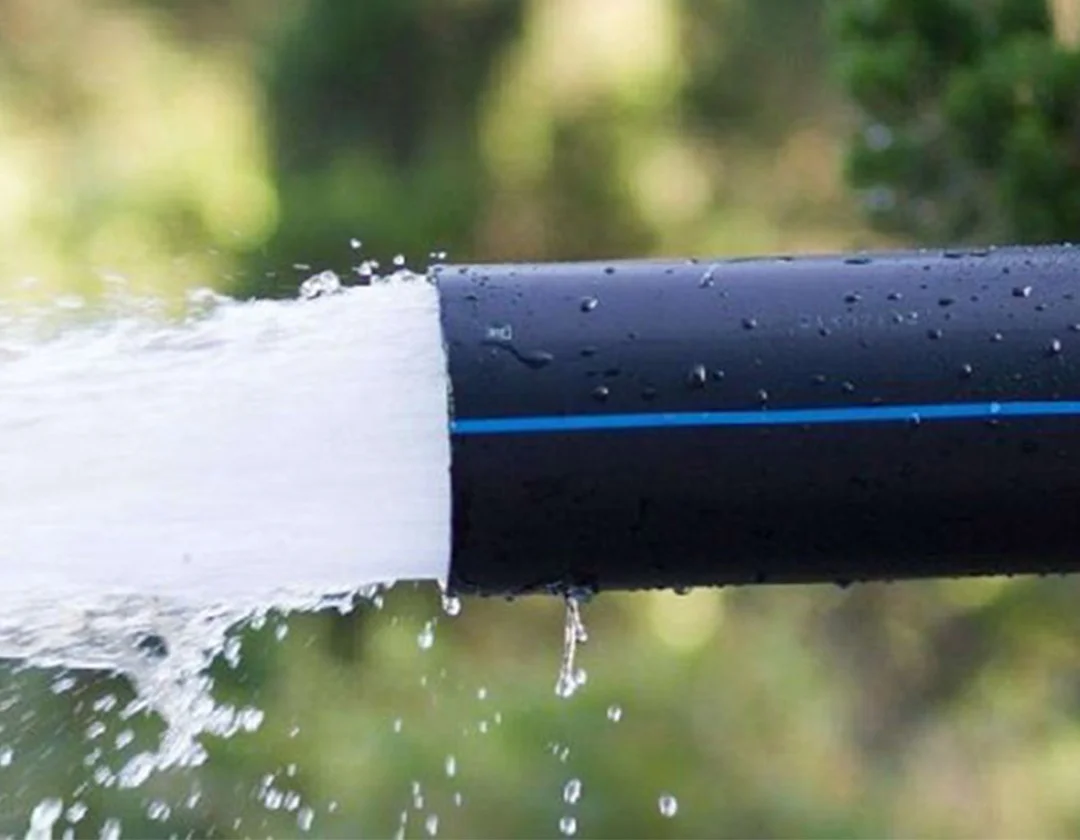
Shandong SIFFO Plastic Technology Co., Ltd. manufactures both black HDPE pipe and white co-extruded HDPE pipe. Both types can serve mining projects. Black HDPE is suitable for many buried and exposed installations, while white co-extruded HDPE offers an additional advantage for exposed routes where reducing solar heat absorption is desirable.
What Is HDPE Pipe for Mining?
HDPE stands for high-density polyethylene, a thermoplastic material used in pressure and non-pressure piping. In mining, HDPE pipe connects pumping stations, processing plants, water-storage facilities and tailings-management systems.
“Mining pipe” describes an application rather than one universal pressure class. A clean-water line and a mineral-slurry line may require different diameters, wall thicknesses and design allowances, even at the same nominal operating pressure.
Selection must consider the conveyed material, temperature, pressure, installation method and applicable specification. Pipe color alone does not determine whether a product is suitable for a mining service.
Main Applications of HDPE Pipe for Mining
Mine Dewatering and Drainage
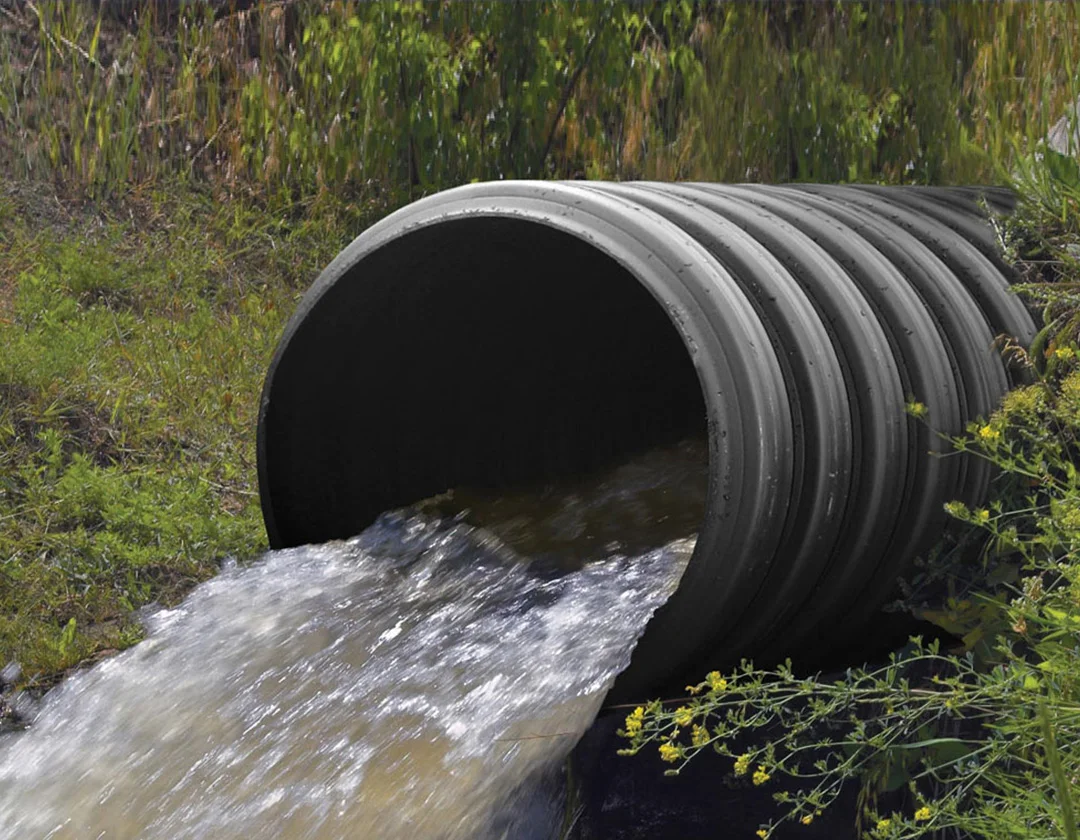
Groundwater and rainfall can accumulate in open pits and underground workings. Dewatering pipelines transfer this water to treatment facilities, storage ponds or approved discharge locations, helping maintain access and workable conditions.
HDPE provides a corrosion-resistant option for these lines. Its comparatively low weight can also simplify handling as working areas change. However, deep lifts and steep routes require careful assessment of static head, pump pressure and surge.
For suction sections, external-pressure resistance and possible vacuum collapse must also be checked.
Process-Water Supply
Mineral processing uses water for crushing, washing, separation and other production stages. HDPE pipelines can distribute water between reservoirs, pumping stations and processing equipment.
The smooth internal surface helps limit friction losses. The actual pumping requirement still depends on internal diameter, flow rate, route length, elevation and fittings.
For mine accommodation or drinking-water networks, specify the relevant potable-water approvals separately from the industrial pipe requirements.
Mineral Slurry Transport
Slurry contains solid mineral particles suspended in liquid. Depending on its characteristics, it can cause substantial wear inside a pipeline.
HDPE is used in many slurry applications because polyethylene can offer useful abrasion resistance. Its suitability must be evaluated against particle size, shape, hardness, concentration, velocity and temperature. Bends and areas of turbulent flow may experience different wear patterns from straight sections.
A slurry pipeline should therefore be designed using representative process data, with wear monitoring and replacement planning where necessary. A universal wear-life claim cannot describe every mining slurry.
Tailings Transfer
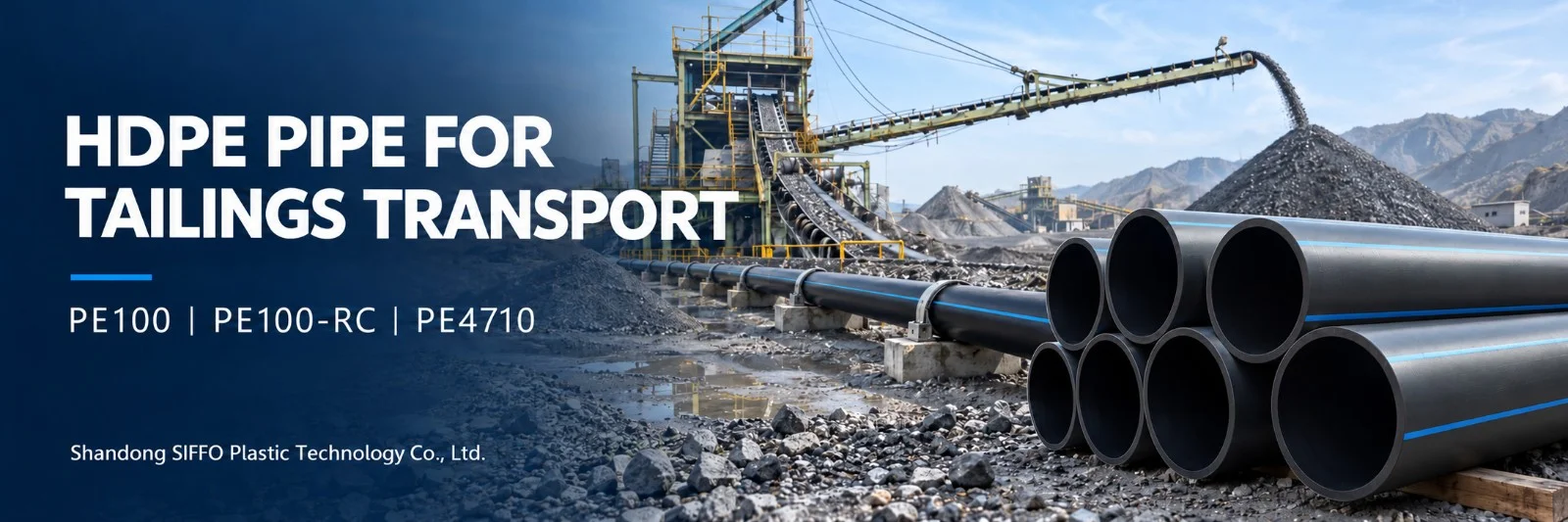
Tailings pipelines move residual material from processing plants to storage or treatment facilities. HDPE can be considered where chemical compatibility, wear behavior and pressure requirements support its use.
Properly made fusion joints help reduce leakage risk along the route. Reliable operation also depends on suitable supports, protected crossings, inspection and pressure control.
A tailings system must account for changing operating conditions, including solids concentration, route extensions and startup or shutdown procedures.
Reclaimed-Water and Return-Water Lines
Water recovered from tailings facilities or settling ponds can be returned to the processing plant. HDPE return-water pipelines support these recycling circuits and can help reduce reliance on fresh-water supplies.
Recovered water may contain chemicals or suspended solids. Its composition and temperature should be checked before specifying the pipe material and system components.
Selected Chemical-Service Pipelines
Some mineral-processing and leaching operations use chemically aggressive solutions. HDPE resists many chemicals, but compatibility varies with chemical identity, concentration, temperature and exposure conditions.
Selection should be based on chemical-resistance data for the complete service. Fittings, seals and valves must also be compatible. HDPE should not be described as suitable for every acid, solvent or oxidizing solution.
Key Features of HDPE Mining Pipe
Corrosion Resistance
HDPE does not undergo the electrochemical rusting associated with steel. This can reduce corrosion-related maintenance in suitable water and chemical services.
Corrosion resistance is especially useful where pipelines contact moist soil or carry chemically challenging water. Chemical compatibility remains a separate design check.
Abrasion Resistance
Polyethylene has an established history in mining applications involving abrasive material. This makes HDPE worth evaluating for slurry and tailings transfer.
Wear performance is application-specific. Material selection, particle behavior and operating temperature all matter; HDPE should not automatically be assumed to outlast every metal or lined-pipe alternative.
Flexibility and Easier Handling
HDPE weighs less than comparable steel pipe and can accommodate gradual changes in direction within the specified minimum bend radius. This can assist installation across uneven terrain and reduce the need for some fittings.
Flexibility does not eliminate the need for supports, bedding or mechanical protection. Mine traffic, sharp rocks and dragging damage can still harm a pipeline.
Fusion-Joint Capability
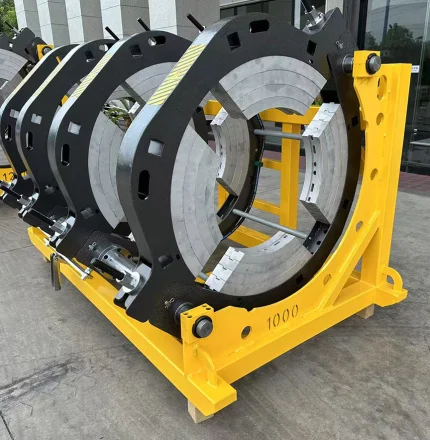
Butt fusion and electrofusion can create continuous connections between compatible polyethylene components. Joint quality depends on correct preparation, equipment, procedures and operator competence.
At pumps and valves, flanged or other engineered connections may be required. These transitions deserve the same attention as the pipe itself.
Smooth Internal Surface
A smooth bore is useful for hydraulic design and does not develop rust-related roughness. For slurry, flow velocity must balance solids transport, pressure loss and wear.
Selecting a larger pipe does not always improve a slurry system: excessive diameter can reduce velocity enough to encourage settling.
Black HDPE vs. White Co-Extruded HDPE Pipe for Mining
SIFFO offers two HDPE pipe options for mining projects. The choice depends on exposure conditions and the engineering specification.
| Selection factor | Black HDPE pipe | White co-extruded HDPE pipe |
|---|---|---|
Construction | Black HDPE pipe wall | Black HDPE pipe body with an integrated white outer layer |
Typical mining uses | Dewatering, water supply and suitably designed slurry or tailings lines | Similar services, especially exposed pipeline routes |
Sunlight exposure | A correctly formulated black compound provides UV protection | A suitably formulated white layer provides a reflective exterior |
Solar heat absorption | Dark surfaces tend to absorb more solar energy | White exterior can reduce solar heat absorption |
Buried installations | Common option | May be specified, although solar reflectivity offers little benefit underground |
Pressure selection | Based on material, dimensions, temperature and specification | Requires the same checks and confirmation of layer construction |
Jointing | Approved procedures for compatible components | Follow the approved procedure for the specific co-extruded construction |
Why Choose Black HDPE Pipe?
Black HDPE pipe is a practical option for a broad range of mine water and process-fluid systems. A correctly formulated carbon-black-containing compound provides protection against UV degradation during outdoor exposure.
It is particularly suitable for buried routes and projects that do not require a reflective exterior. Exposed black pipe still requires temperature assessment because sunlight can raise the pipe-wall temperature above ambient air temperature.
Why Choose White Co-Extruded HDPE Pipe?
White co-extruded HDPE pipe combines a black HDPE body with a white external layer formed during extrusion. The reflective exterior can reduce solar heat absorption compared with a conventional black surface under similar exposure conditions.
This can be useful for long above-ground routes across open mining areas. Actual temperature reduction depends on sunlight, wind, fluid flow, surface condition and installation.
The white exterior does not create a higher pressure class by itself. Designers must still apply the relevant temperature adjustment and confirm how the outer layer is treated in the product's pressure-bearing wall specification.
SIFFO Manufacturing Scale and Export Supply Advantages
Shandong SIFFO Plastic Technology Co., Ltd. operates two modern production bases in Linyi, Shandong, and Nanjing, Jiangsu, covering more than 150,000 square metres in total.
The company's manufacturing network includes more than 60 production lines, with 20 dedicated HDPE extrusion lines. SIFFO's stated annual HDPE production capacity exceeds 200,000 tonnes, while total annual capacity across its product portfolio exceeds 450,000 tonnes.
This scale supports procurement planning for projects requiring multiple pipe sizes and staged deliveries. Available specifications and production schedules should be confirmed for each order.
For international mining buyers, SIFFO's export supply advantages include:
Two HDPE product options: black pipe and white co-extruded pipe for different exposure conditions.
Coordinated system supply: pipe and compatible fittings can be specified together.
Project-specific preparation: production lengths, markings, packaging and inspection requirements can be agreed before manufacture.
Technical documentation: buyers can request datasheets, dimensional information and agreed quality records.
Shipment planning: pipe lengths and packing can be coordinated with container capacity, unloading arrangements and site handling.
These capabilities help buyers assess the complete delivered piping package. Export quotations should identify the governing standard, material grade, dimensions, pressure requirements, delivery terms and documentation scope.